Richemont and the Damiani Group, a prestigious, family-run Italian global luxury group, announced yesterday that they have signed an agreement for the Damiani Group to acquire full ownership of Baume & Mercier in a private transaction. This represents a moment of reckoning for heritage manufactures navigating the increasingly polarized luxury watch market, and raises uncomfortable questions about what happens when an almost 200-year legacy isn't enough to secure your place in a conglomerate's future.
Richemont's language in the press release is telling. The statement that Baume & Mercier's "long-term potential will be best realised as part of the Damiani Group" is corporate diplomacy, but the underlying reasoning is transparent: strong footprint in Italy, multi-brand wholesale distribution model, and positioning in the "accessible" luxury watch segment. These aren't strengths within Richemont's current strategic vision—they're incompatibilities. Baume & Mercier was the only entry-level watch brand that, despite its rich history, never fit in.

The timing matters. This separation comes as Richemont reports strong momentum, with third-quarter sales up at constant rates. This isn't a distressed seller making difficult choices in crisis. This is a conglomerate that has concluded, during favorable market conditions, that a manufacture with close to two centuries of history simply doesn't align with where the group is heading. That calculated assessment should concern anyone paying attention to the industry's structural evolution.
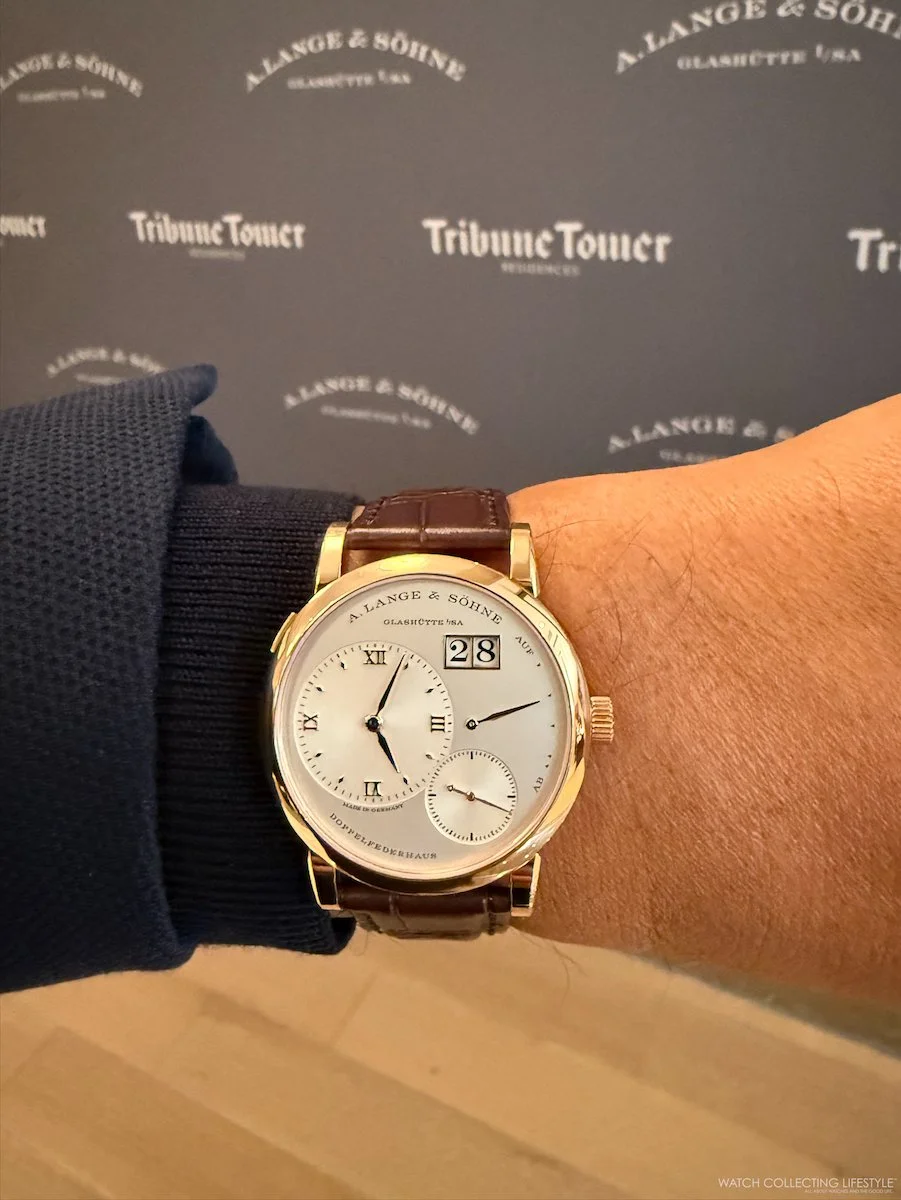
Richemont's current specialist watchmaker portfolio includes A. Lange & Söhne, IWC Schaffhausen, Jaeger-LeCoultre, Panerai, Piaget, Roger Dubuis, and Vacheron Constantin, and even when Montblanc and Cartier fall within the Fashion & Accessories and Jewellery Maisons, respectively, Richemont still maintains a strong focus on watch offerings from these two brands.
Each of these watch manufactures occupies clear strategic territory—whether in haute horlogerie, sports luxury, or contemporary complications. Baume & Mercier, despite its heritage, occupied increasingly uncertain ground in an entry-level segment that demands operational models and distribution strategies different from those that make sense for Richemont's other specialist watchmakers.
The Damiani Group is a family-owned and operated Italian jewellery group. On paper, the fit looks sensible. Damiani operates Rocca, Italy's only luxury jewellery and watch retail chain, providing immediate distribution infrastructure. The group understands multi-brand wholesale models and entry luxury positioning. They've successfully managed complementary brands across jewellery and glassmaking. These capabilities could provide Baume & Mercier with focused attention and resources calibrated to its market position.
However, we see this transaction as the final demise of a slow-dying horse that struggled for the last 20 years to make a mark in the watch industry, despite its credentials. Perhaps the sudden revival and facelift of the Riviera collection was the last straw that broke the camel’s back. But we should be clearheaded about the challenges.

Photo Above: The Damiani Family (Giorgio, Silvia and Guido Grassi Damiani)
Damiani is acquiring a manufacture that Richemont, with vastly greater resources and industry relationships, determined couldn't be optimally developed within its structure. The Damiani Group will need to invest substantially in brand visibility and distribution expansion—the press release mentions plans to "enhance the Maison's visibility" and open "select mono-brand boutiques in strategic locations over time." That requires capital commitment and operational expertise at scale.
The 12-month transition period during which Richemont will provide operational services suggests recognition that this handover requires careful management. Manufacturing operations, supplier relationships, technical service networks—these complex systems don't transfer seamlessly. That Richemont committed to maintaining these operational connections for at least a year indicates a genuine interest in ensuring continuity, not simply divesting a problematic asset as quickly as possible.
The market has become increasingly unforgiving of brands occupying an undefined middle ground, regardless of their historical significance or the quality standards that built their reputation.
Second, it highlights the growing divergence between manufactures positioned for ultra-luxury collectors and those serving the entry-luxury segment. These are increasingly distinct businesses requiring different distribution models, marketing approaches, and operational strategies. Conglomerates are choosing where to focus resources, and the answers aren't always comfortable for heritage manufactures with proud histories but uncertain contemporary positioning.
Third, it raises questions about sustainability for independent and smaller group-owned manufactures in an industry dominated by LVMH, Richemont, and Swatch Group. If a well-capitalized conglomerate with deep industry relationships concludes that a heritage manufacture no longer fits, what does that suggest about market conditions for smaller players? The news about Richemont selling Baume & Mercier takes us back to revisit the rumors that LVMH will sell Zenith and perhaps even TAG Heuer.
The Damiani Group acquisition could prove successful. Focused ownership, aligned distribution strategies, and concentrated resources might enable Baume & Mercier to thrive in ways that weren't possible within Richemont's portfolio. The brand's strong Italian market presence and wholesale model could prove more valuable under ownership that sees these as core strengths rather than strategic complications.
But this transaction should prompt reflection about what we value in the watch industry and what ensures long-term viability. Heritage matters, but it doesn't guarantee relevance. Manufacturing excellence matters, but it requires distribution that reaches customers effectively. Brand positioning matters, but it needs to occupy defensible territory in an increasingly competitive market.
Baume & Mercier's future under Damiani Group ownership remains to be written. What's already clear is that even 200 years of history and the backing of one of the world's largest luxury conglomerates couldn't prevent fundamental questions about strategic fit and optimal ownership structure. That reality should concern anyone who cares about preserving the diversity and heritage richness of Swiss watchmaking as market forces continue reshaping the industry's competitive landscape.