There is a particular irony in the story of the Patek Philippe reference 5712. For the better part of two decades, it existed in the shadow of its simpler sibling, the 5711, which commanded waiting lists, secondary market premiums, and a cultural presence that transcended horology entirely. Yet it was the 5712—quieter, more mechanically ambitious, more horologically serious—that offered the clearer window into what Patek Philippe actually does best. The watch that matters more remains, to this day, the one fewer people talk about.
Understanding the 5712 requires going back not to 2006, when the reference was introduced, but to 1976, when Gérald Genta's sketch became the Nautilus ref. 3700/1A—a luxury sports watch in steel, with an integrated bracelet, a porthole-inspired case sealed to 120 meters, and a movement thin enough to keep the profile elegant. Genta's genius was in understanding that a sports watch from Patek Philippe had to remain, above all, a Patek Philippe. That principle would define every Nautilus that followed, but none more faithfully than the 5712.
From 3712 to 5712
The idea of a complicated Nautilus did not begin with the 5712. That distinction belongs to the ref. 3712/1A, introduced in 2005—the first Nautilus to carry a power reserve indicator, moon phase, and date indication subdial. It housed the same calibre 240 PS IRM C LU that would define its successor, but within the older case architecture inherited from the 3710/1A-001 ‘The Comet’. Production lasted roughly one year, making the 3712 one of the shortest-lived and most sought-after modern Nautilus references. It was a proof of concept; the 5712 was the conviction.
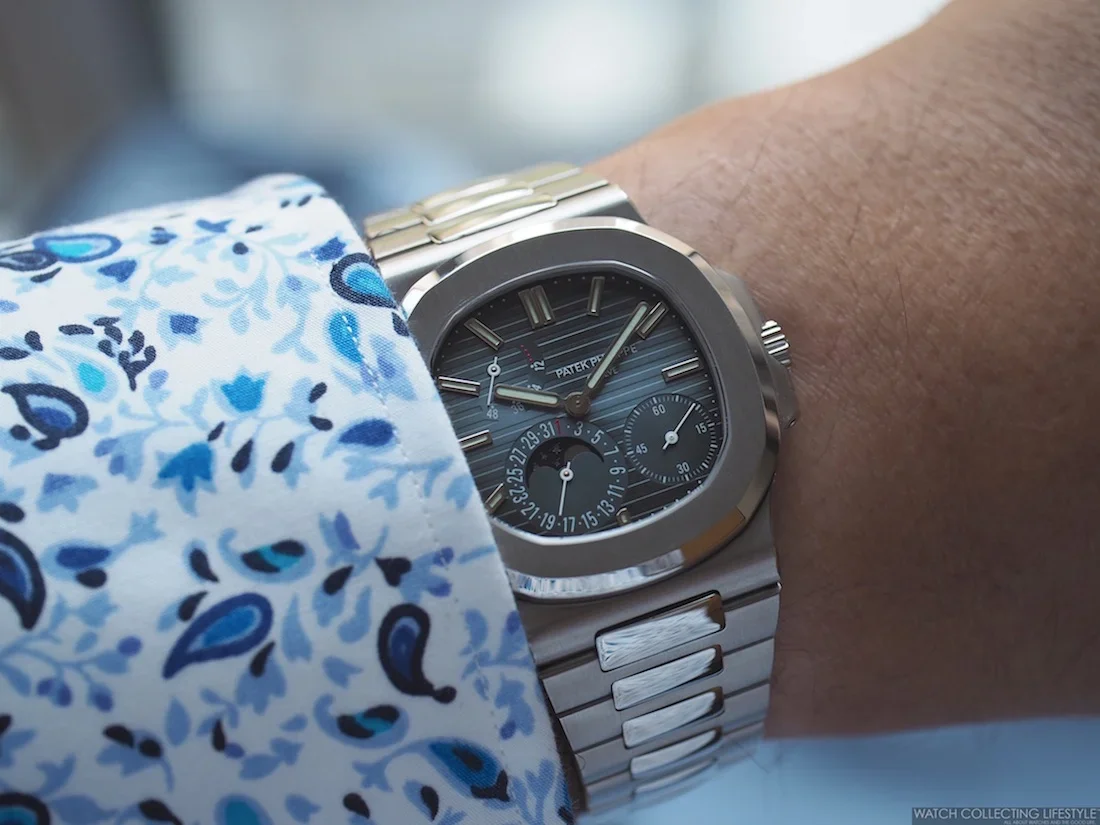
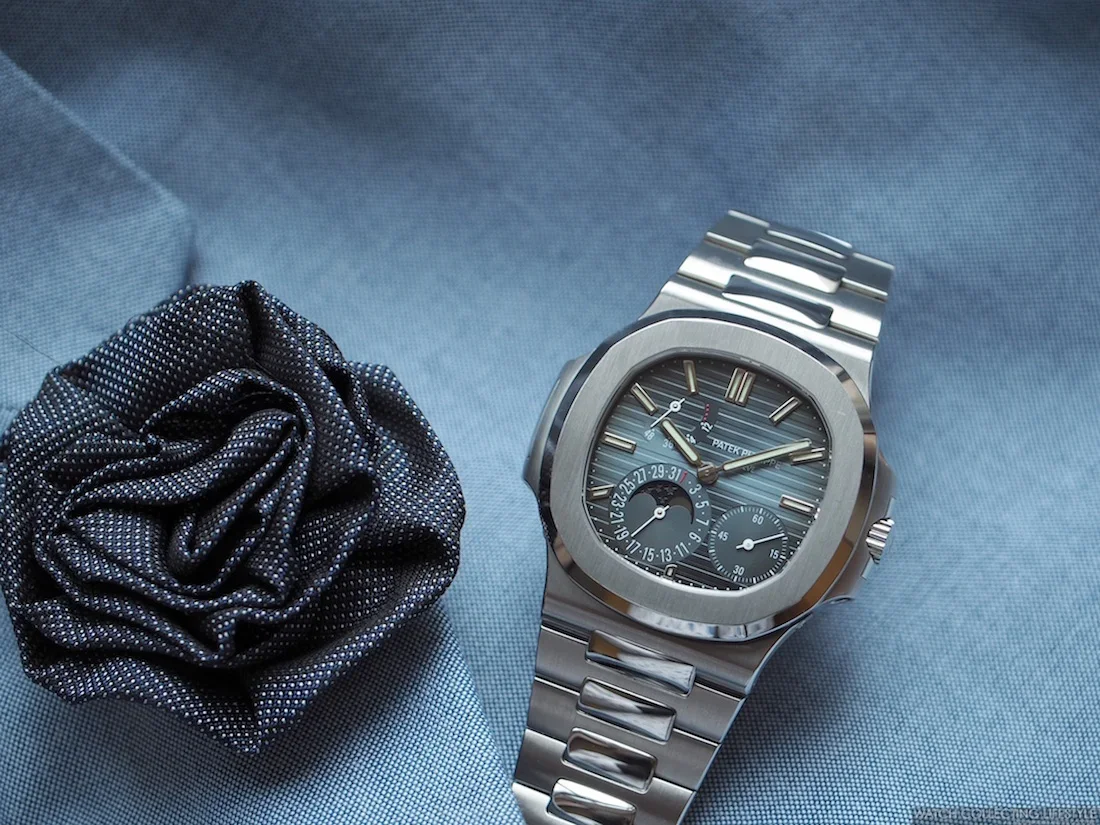
At Baselworld 2006, Patek Philippe simultaneously introduced the ref. 5711/1A and the ref. 5712/1A-001, which housed the 3712's complications inside an entirely modernized case: power reserve at 10 o'clock, moon phase at 7 o'clock, pointer date at 2 o'clock. The asymmetric layout offered a visual complexity that the symmetrical 5711 could never match.
At 40 mm and approximately 8.52 mm thick, the 5712 wore with a discretion that belied its mechanical content.
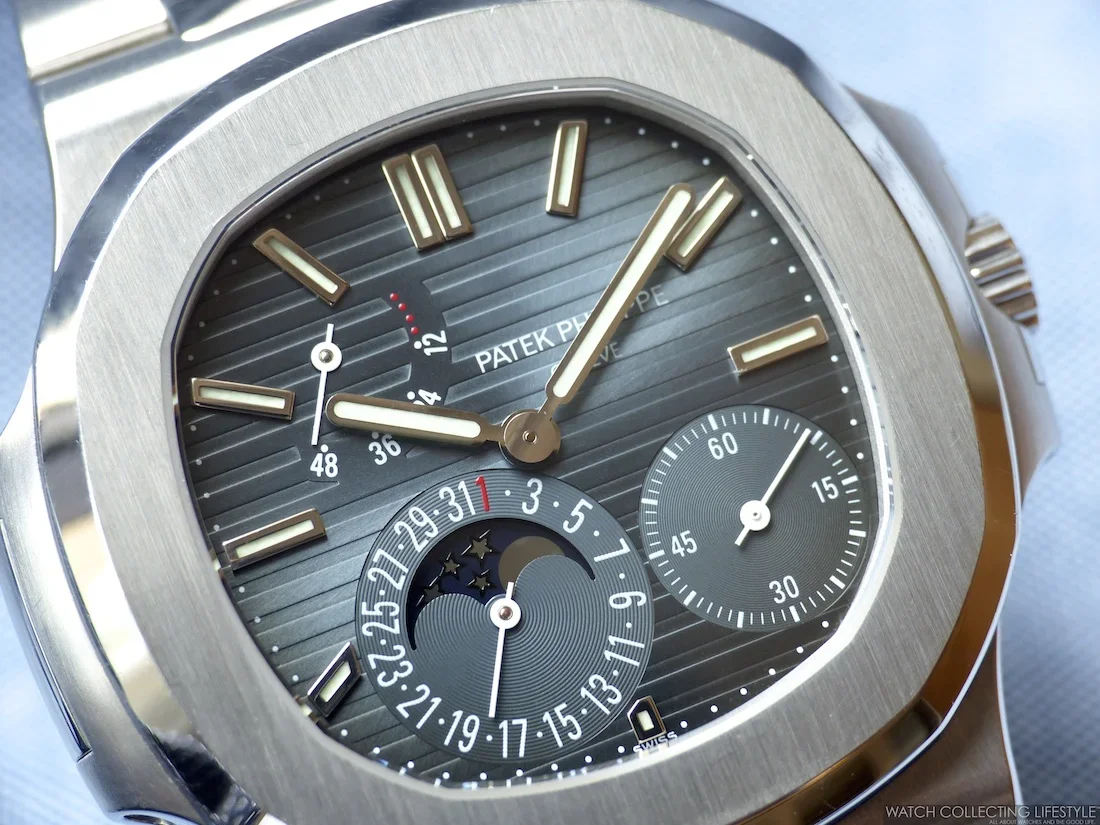
For those familiar with its predecessor, the Nautilus ref. 3712, it is very easy to recognize a ref. 3712 against a ref. 5712 is based solely on certain nuances on the dial. For those of you not that familiar, here are the main differences between the two watches and the telltale:
On ref. 5712, the power reserve indicator includes four red dots before the number '12' instead of only three on ref. 3712.
The numbers on the date indicator are considerably bigger on the ref. 5712 vs. the ref. 3712. Also on ref. 3712, the numbers from '11' through ‘23' are upside-down. Not that way on ref. 5712.
The dial on ref. 5712 includes only 10 markers vs. 11 markers on the ref. 3712, which happens to include a tiny marker at 7 o'clock. Additionally, the marker at 8 o'clock is slightly longer on the dial of ref. 3712 and the 6 o'clock marker is complete, unlike the one on ref. 5712, which is slightly cut by the date indicator.
The color of the moon and stars on the moon phase disc of ref. 5712 is more of a gold color rather than a dark silver on ref. 3712.
Thinner hour and minute hands on ref. 5712.
A more grayish blue hue on the dial of ref. 3712.
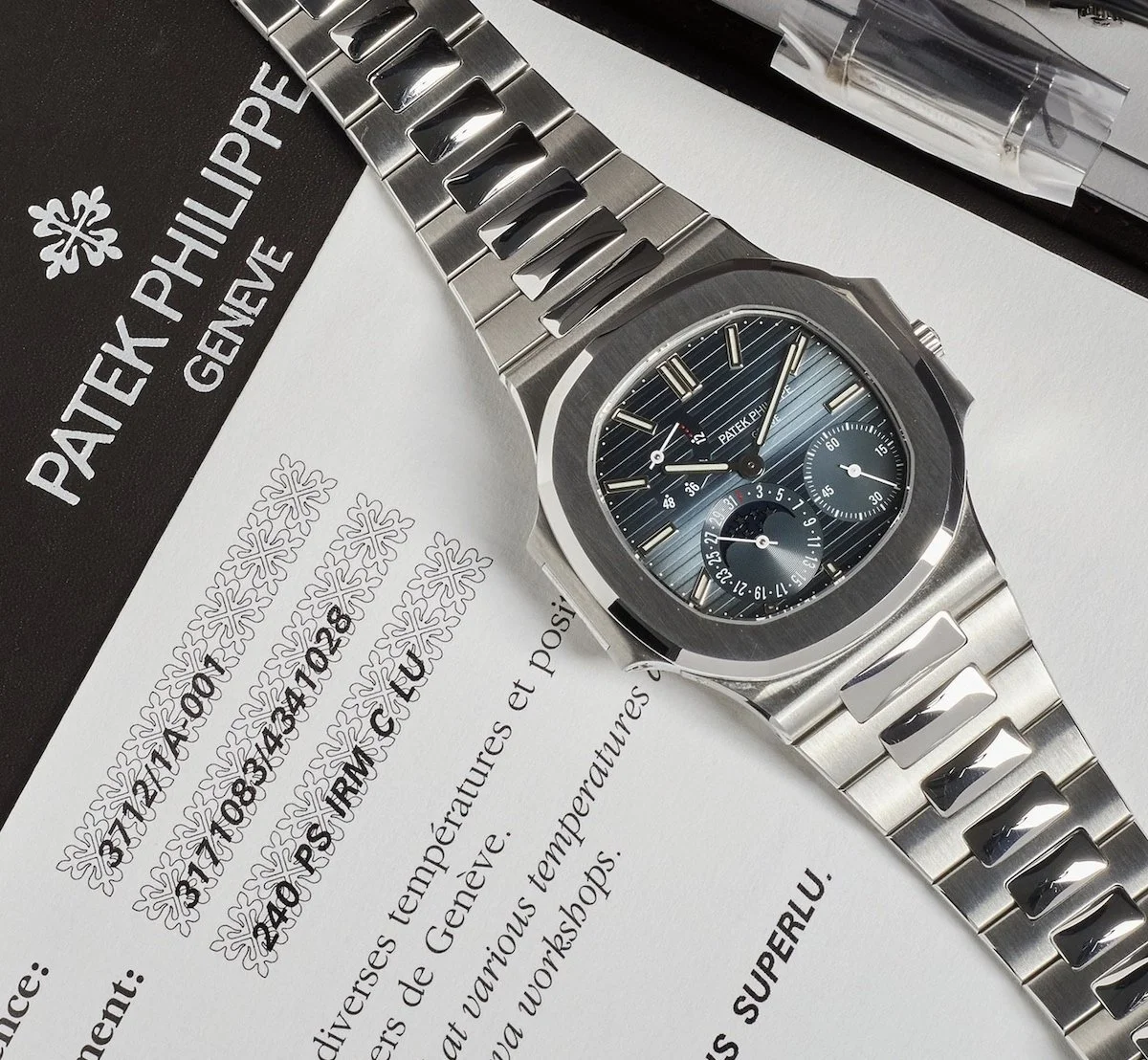
Photo: ©Phillips Watches
Calibre 240 PS IRM C LU
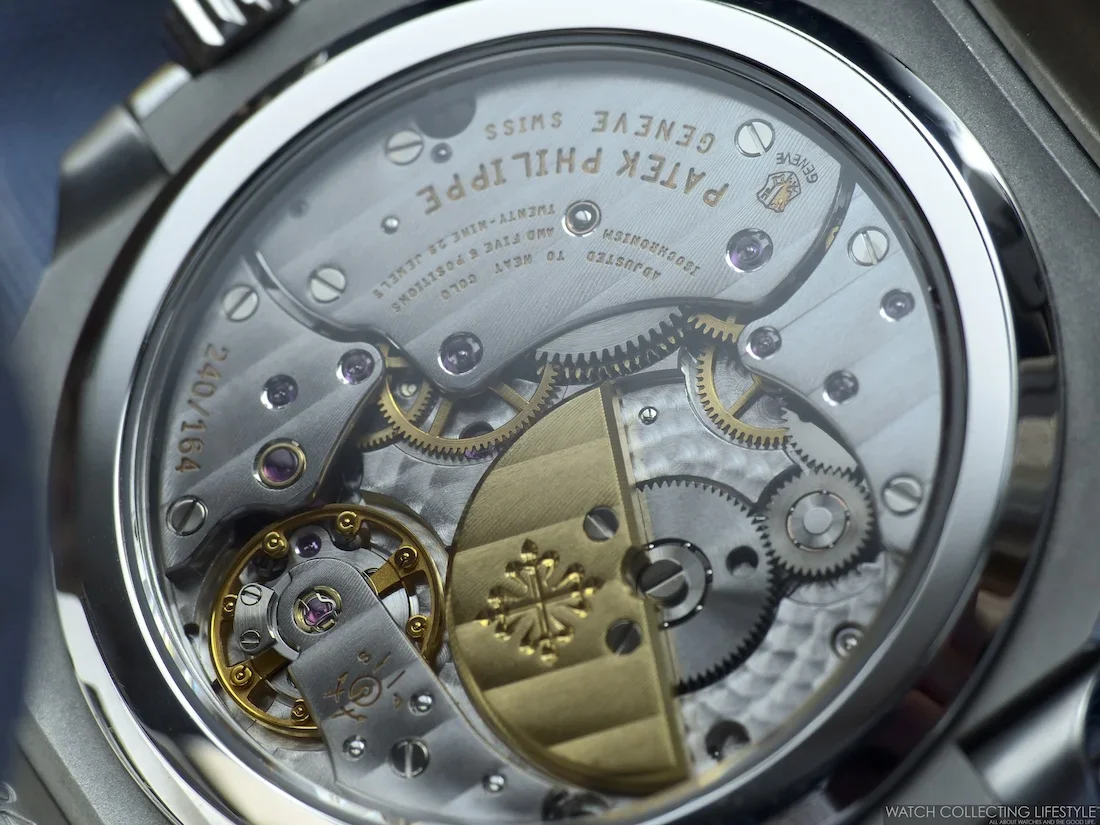
The base calibre 240, introduced in 1977, is among the most significant movements in Patek Philippe's modern history. At just 2.53 mm thick, it was one of the thinnest automatic movements in existence, made possible by a 22K gold micro-rotor integrated into the mainplate rather than sitting atop the movement as a conventional full rotor would.
The suffix PS IRM C LU tells the rest: Petite Seconde, Indicateur de Réserve de Marche, Calendrier, and Lune. Despite this complication load, the complete movement measures only 3.88 mm in height—a figure that borders on the absurd for what it delivers. Patek Philippe chose to build outward from the calibre 240—a movement conceived for dress watches—and prove that complications and sports-watch proportions were not mutually exclusive.
Three Metals, Three Characters
The ref. 5712/1A-001 in stainless steel, with its blue-black gradient dial, was the icon—the version that appeared on waiting lists, launched a thousand "if I could only own one Patek" conversations, and after its discontinuation in January 2021, saw secondary market prices surge to multiples of retail.
The ref. 5712G-001 in 18K white gold paired with the same blue dial with precious metal and on an alligator strap, offering collectors an alternative path that bypassed years-long steel waiting lists. White gold brought a gravitas that steel, for all its cultural cachet, does not possess.
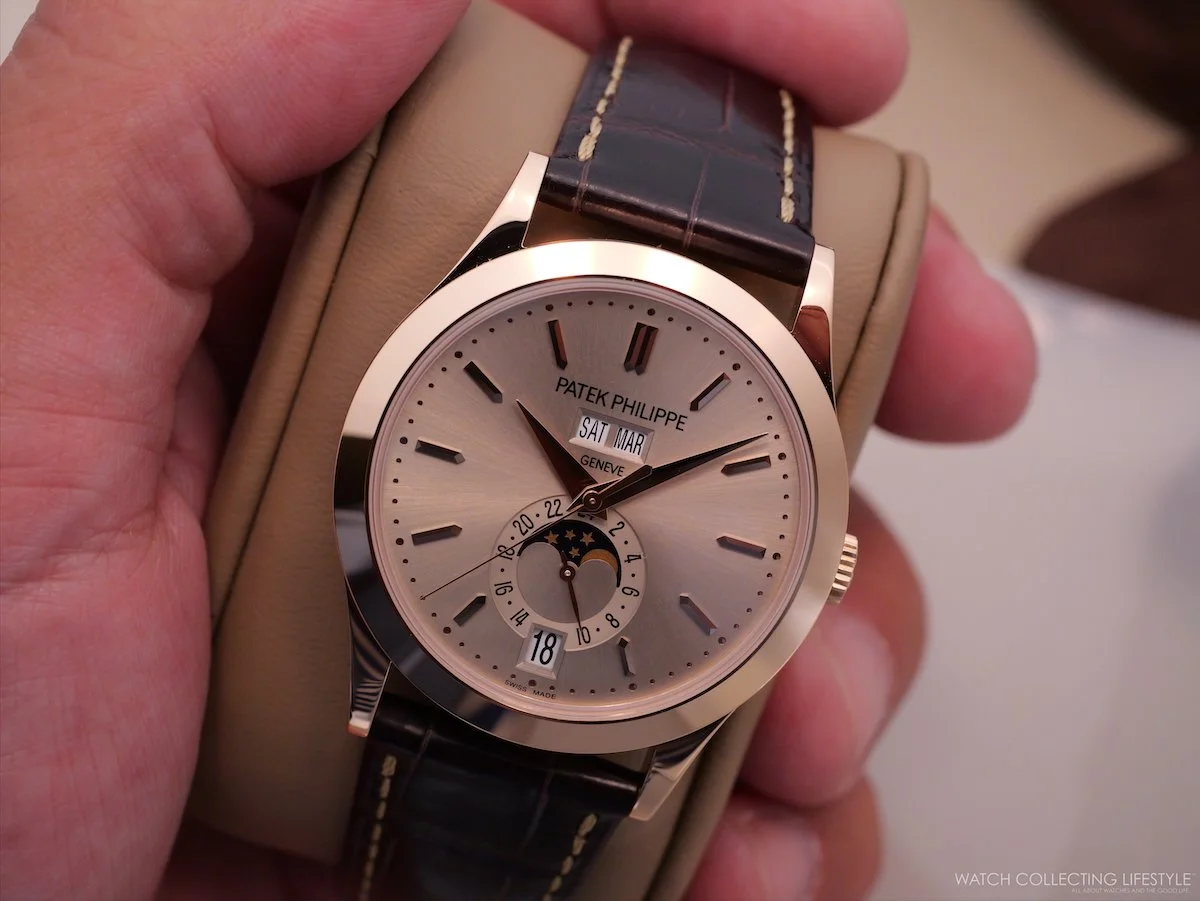
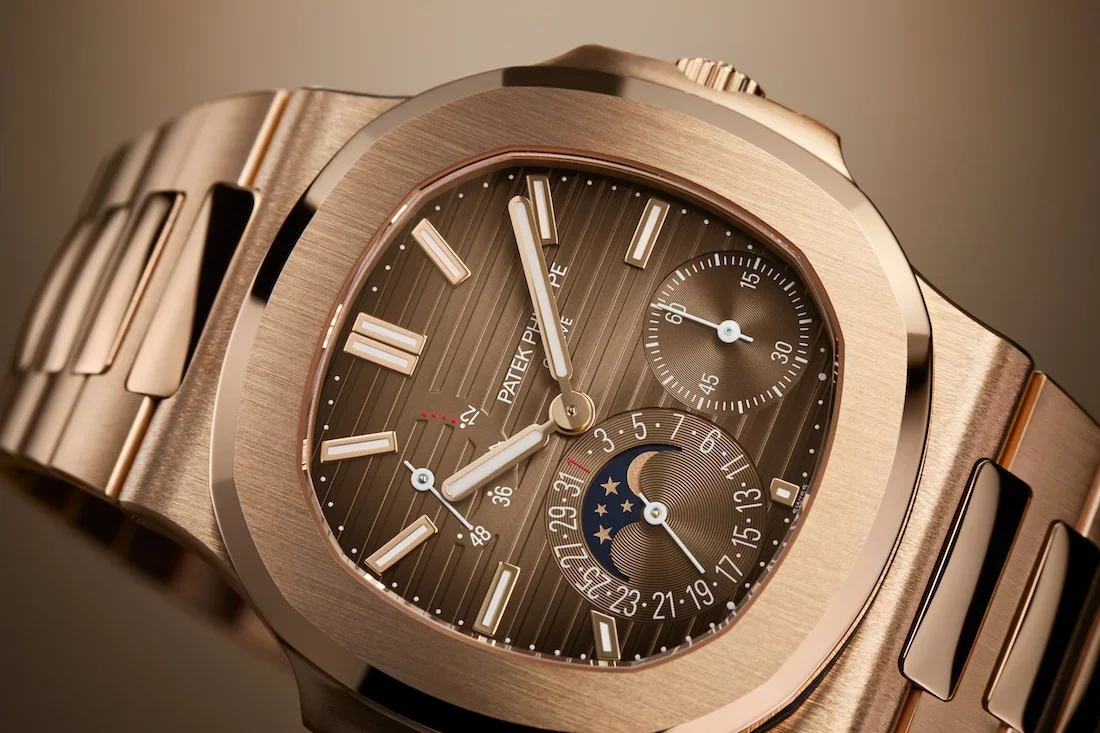
Then in 2022, the ref. 5712/1R-001 in 18K rose gold took a different approach entirely. Its brown-black gradient dial softens the Nautilus's industrial origins into something warmer, more classical. It remains the least discussed variant and, arguably, the most beautiful. It is also critically, the only 5712 still in current production—a fact that carries considerable significance as the Nautilus collection approaches a milestone year.
What the Market Missed
For most of the 5712's production life, its secondary market premium was a fraction of the 5711s. This made it somewhat of a sleeper. The 5712 offered a more complex movement, a more interesting dial layout, a more distinctive visual identity, and a slightly smaller case size—all attributes serious collectors traditionally value. Yet the 5711's clean simplicity made it the object of desire for a generation of buyers whose interest in watchmaking was often more social than mechanical.
The 5712 attracted a different buyer: someone who valued horological substance over recognizability. It was the "insider's Nautilus"—a designation that was both a compliment and a curse. When Patek Philippe discontinued the steel version in 2021, prices corrected with startling speed. The white gold followed out of the catalogue. Yet the rose gold 5712/1R endures—a quiet signal that Patek Philippe never intended this chapter to close entirely.
Legacy — And What Comes Next
The Nautilus turns fifty in 2026, and as we analyzed in our Perspective on the Nautilus 50th anniversary, every signal from Geneva points toward precious metals and elevated complications rather than a return to steel. Mr. Thierry Stern has been explicit: Patek Philippe belongs in the gold and platinum league, and the strategic discontinuation of the steel 5711, 5980, and 5712 was doctrine, not accident.
Within this framework, the survival of the 5712/1R in rose gold is not incidental. It keeps the calibre 240 PS IRM C LU alive in the Nautilus lineage. Whether Patek Philippe marks the anniversary with new complications on the Nautilus platform—a minute repeater, a split-seconds chronograph, an annual calendar travel time—or revisits existing references in precious metals, the 5712's DNA remains in production.
The 5711 was the Nautilus the world wanted. The 5712 was the Nautilus Patek Philippe needed to make. Fifty years after Genta's sketch changed the industry, the more interesting question may be whether the 5712's story is approaching not its conclusion, but its second act.
More information on Patek Philippe, here.