Insider: Four of Our Favorite Glashütte Original Timepieces. Four Great Examples of Saxonian Watchmaking.

This time we decided to feature four of our favorite Glashütte Original watches. These watches not only feature some of the most fascinating complications, but will also provide you with the best value for your money. Here are four exceptional examples of Saxonian watchmaking for your viewing and reading pleasure.


Glashütte Senator Chronometer Regulator in 18K White Gold

A 'régulateur' a.k.a. regulator, is a watch with non-coaxial hour and minute hands, which means, that the hour and minute hands do not share the central pinion position on the dial but are independently placed. On regulators, the minute hand is traditionally the most important hand and it is typically placed on the central pinion at the center of the dial. The new Senator Chronometer Regulator presented at Baselworld 2013 features a very well balanced silver-grainé dial that is not only beautiful but very easy to read. The dial features a Panorama Date aperture at 3, running seconds small dial at 6, hours small dial with Roman numerals and day/night indicator at 12 and power reserve indicator at 9 o'clock.

This exceptional timepiece in 18K white gold  —also available in 18K red gold— measuring 42mm in diameter is fitted with a gorgeous semi-matte black alligator strap with folding clasp. The beating heart inside this watch is the manual-wound Glashütte Original calibre 58-04 with 58 jewels and which provides a power reserve of 44 hours and 40 minutes when fully wound. One great thing about this calibre, is that it is fitted with three very interesting features. The first one is a day/night indicator —from 6 in the morning until 6 in the evening, the small circle in the region of the hour display is white; from 6 pm until 6 am it is black— to ease the time setting. The second feature is the now traditional second-zero-stop-mechanism that when the crown is pulled out to adjust the time, the second hand jumps to zero and remains there. Lastly, the third feature of this calibre is a minute-to-minute adjustment where once the crown is pulled out to adjust the time, the minute hand is moved from one minute marker to another for exact adjustment of the time.

Ref. 1-58-04-04-04-04 Sticker Price $33,300 USD.


Glashütte Original PanoInverse XL in Stainless Steel

The PanoInverse XL from Glashütte Original was the first watch from this manufacture to reveal its inner beauty by bringing an extraordinary element from the interior to the visible surface of the watch by showcasing the double swan-neck fine adjustment in full splendor against the anthracite colored plates and bridges. The individual components are treated in a galvanic bath to give them a black rhodium-plated surface, which serves to highlight clearly and effectively such characteristic features as the screw-mounted gold chatons and the double swan-neck fine adjustment with hand-engraved balance cock.

The anthracite colored plates along with the off-centered hour and minute dial, the small seconds sub-dial, the power reserve indicator and the double swan-neck fine adjustment, create a mosaic of elegance that is just extraordinaire. This exceptional timepiece is available in stainless steel or 18K red gold in a case measuring 42mm in diameter that comes fitted with a gorgeous dark grey alligator nubuck strap in the case of the stainless steel model and brown alligator nubuck for the 18K red gold version. The beating heart inside this stainless steel watch is the manual-wound Glashütte Original calibre 66-06 with 31 jewels and which provides a power reserve of 41 hours when fully wound.

Ref. 1-66-06-04-22-05 Sticker Price $12,600 USD.


Glashütte Original Senator Perpetual Calendar in Stainless Steel

The Glashütte Original Senator Perpetual Calendar is another one of those perpetual calendar watches that comes with a very reasonable price tag and great value for your money in a timepiece with superb craftsmanship and great pedigree. For your peace of mind, this watch will not need adjustment Until March 1, 2100, when the next secular year of the Gregorian calendar is taking place. This watch is fitted with a very elegant silver-grainé dial with Roman numerals chapter railroad ring, a day aperture at 10, a month aperture at 2, a Panorama Date at 4, a moon-phase indicator at 8 o'clock and a discreet leap year indicator that shows a red dot to indicate a leap year, followed by yellow, black and white dots for successive years. On the black dial versions, the phases of the moon are revealed by a black disk adorned with silver stars and a radiant silver moon, while the silver dial models like the one we are featuring here, comes with a silver moon on a blue disk.

This great looking watch in a stainless steel case measuring 42mm in diameter is fitted with a gorgeous black alligator strap that rounds out the elegant look of it. The beating heart inside this watch is the automatic Glashütte Original calibre 100-02 with 59 jewels and which provides a power reserve of 55 hours when fully wound. This watch is also available on stainless steel bracelet for an extra $1,100 USD.

Ref. 100-02-22-12-05 Sticker Price $22,000 USD.


Glashütte Original Senator Flying Tourbillon in 18K White Gold

Also presented earlier this year as one of the manufacture's novelties for Baselworld 2013, this fascinating timepiece comes equipped with a Flying Tourbillon at 6 and the distinctive panorama date at 12 o'clock. While the traditional tourbillon mechanism is designed to counter the effect of gravity on rate precision and is anchored at both the top and the bottom, the flying tourbillon —created by Alfred Helwig— features a cantilevered mechanism anchored on one side only, which led to it becoming known as a ‘flying’ tourbillon. The balance, pallet lever, and escape wheel are housed in a cantilevered carriage that turns 360 ° once a minute, thus neutralizing rate deviations of the balance due to gravity.

The matte dark grey-grainé dial along with the tourbillon, the date aperture —with white font—, the Roman numerals in a milled railroad chapter ring and the white gold 'poire' hands creates the perfect symphony in a superb timepiece that is not only elegant but a fascinating example of Saxonian watchmaking. This exceptional timepiece in 18K white gold comes with a case measuring 42mm in diameter and equipped with a gorgeous dark grey alligator nubuck strap with folding clasp. The beating heart inside this watch is the automatic Glashütte Original calibre 94-03 with 50 jewels and 2 diamond end stones. The movement provides a power reserve of 48 hours when fully wound.

Ref. 1-94-03-04-04-04 Sticker Price $118,600 USD.

For more info on Glashütte Original click here.

Insider: JEANRICHARD Aquascope. A Great Diver's Watch Priced Under $4K.

Photo of whale on the background by Doug Allan & Sue Flood.

If you are looking for a diver's watch that is elegant but understated at the same time, rich in history and with great craftsmanship but you can't spend more than $3,500 USD, then look no further, this JEANRICHARD Aquascope ref. 60400-11B401-11A in stainless steel is the best value for your money.

JEANRICHARD—sister company to Girard-Perregaux— takes its name from a legendary name in watchmaking, Daniel Jeanrichard. This genius pioneered the development of the watchmaking industry in the Neuchâtel mountains in the late 17th century. Daniel Jeanrichard was born in the hamlet of Les Bressels, midway between La Chaux-de-Fonds and Le Locle. In 1681, he created his first watch, then set up his watchmaking workshop. Daniel Jeanrichard was also a major driving force behind the watchmaking industry. He was ahead of his time, demonstrating a talent for innovation. In addition to the production of watches, the region’s watchmakers are indebted to him for the invention of machines and tools, and for establishing the basis for learning the art of watchmaking itself.

This massive cushion-shaped diver's watch weighing —approximately 260 grams— more than an Audemars Piguet Royal Oak Offshore Diver on bracelet or a robust Omega Seamaster Planet Ocean XL is fitted with a very solid vertically satin-brushed finished stainless steel case with blue PVD coating around the corners —these PVD coating makes the case appear like there's a case within another case. The case measures 44m in diameter and its satin-brushed finish is only comparable to the grain on the finish of Audemars Piguet Royal Oaks or Royal Oak Offshores. We promise we are not exaggerating.

The blue dial on this watch is also perfectly finished with a vertical satin-brushed finish to match the superb craftsmanship of the case. The dial is reminiscent of timepieces from the 70s with that same hue that varies depending on lighting conditions and the angle at which you look at it. The dial features applied rhodium-coated indexes and rhodium-coated hands both with luminescent material that glows strong and long lasting. The seconds hand features a red arrowhead tip, the minute hand is sword shaped and the hour hand is arrow shaped. The dial features a date aperture between the 4 and 5 o'clock markers with a black calendar disc. The anti-reflective coating on the crystal allows the wearer to appreciate the dial without unnecessary glares or reflections.

The bezel made of stainless steel is properly graduated with markers and minutes in dark blue that depending on the light can look slightly lighter in color. The unidirectional bezel rotates very smoothly and it is fitted with teeth that are easy to grip even when using gloves. The construction of the bezel is very solid and its design is very well balanced with a 12 o'clock marker with luminescent material. The screw-down crown was designed to perfectly match the teeth on the bezel and just like the solid case back, it is nicely engraved with JEANRICHARD's logo. This watch is waterproof rated to a depth of 300 meters or 30 Atmospheres.

The beating heart inside this watch is the JEANRICHARD automatic calibre JR60 with 26 jewels and which provides a power reserve of 38 hours when fully wound, while beating at a frequency of 28,800 vph. This diver's watch is fitted with a sturdy and very well crafted elegant bracelet with double-folding clasp. Unfortunately the only two downsides of this watch come from the bracelet as it does not include a diver's extension —almost unthinkable; however but we've also seen that on the Tudor Heritage Black Bay— and it is not fitted with screws for easy removal of links —surprising considering that the watch is extremely well crafted.

Regardless of the bracelet downsides, we really feel that this watch gives you great value for your money and unparalleled wrist presence. This watch wears considerably larger than 44mm —perhaps more like a 46mm watch— and the bracelet makes this watch wear very comfortably. This timepiece looks great with a casual attire or while wearing a suite. This is definitely one of the nicest diving watches in the market and so well crafted that you can almost forget you are wearing a sports watch. The Aquascope is also available on rubber strap and with grey, white or black dial.

Sticker Price $3,500 USD. For more info on JEANRICHARD click here.

News: Vacheron Constantin Presents The Legend of the Chinese Zodiac 2014 Year of the Horse. Only 12 Pieces Available of Each Model.

Press Release

Introducing a fresh tribute in the ongoing saga of the Métiers d’Art collection, Vacheron Constantin presents The Legend of the Chinese Zodiac —a series of captivating timepieces based on the 12-year cycle. A symbol of a lively and independent spirit, the sign of the horse will take over from the snake on February 1st 2014. To mark this occasion, the Manufacture presents two new watch creations magnificently enhanced by enameling and engraving.

Since its founding in 1755, Vacheron Constantin has excelled in the field of precious ornamental techniques and cultivates passionate ties with the artistic crafts that it has consistently promoted by nurturing the transmission of expertise from one generation to the next. This know-how provides the Geneva-based watchmaking Maison with the opportunity to highlight its fundamental values —including of course its constant quest for excellence, as well as sharing passion, passing on knowledge and openness to the world expressed through unconditional support for both native and foreign forms of artistic expression. Paper-cutting, at the crossroads of Western and Eastern cultures
China, a land with which Vacheron Constantin first began establishing a trust-based relationship from 1845 onwards, is famous for numerous discoveries including the invention of paper and also known as the initiator of the art of paper-cutting or Jianzhi. This technique appears on the UNESCO Intangible Cultural Heritage list and is echoed in Scherenschnitt, the popular art of paper-cutting born in the Pays d’Enhaut region of Switzerland. Sculpted in paper according to the principles of Jianzhi, the animals of the Chinese zodiac provide a remarkable demonstration of the art of using full and empty spaces. A challenge that Vacheron Constantin has taken up and translated into the field of watchmaking thanks to the skill of its experienced artisans. Engravers and enamelers have worked alternatively on this Year of the Horse model, crafted in pink gold or platinum and limited to 12 pieces each, reserved for Vacheron Constantin Boutiques exclusively.

The leaf motif, stemming from classic Chinese iconography, is directly engraved in the gold dial. The pattern remains semi-embedded and stands out from its gold base by a subtle stage-setting of variously accentuated reliefs creating a depth effect. The raised bamboo stalks appear to be floating over the dial. With the horse engraving, on which the details of the mane and coat measure a mere fraction of a millimeter, the artisan provides a tangible expression of the artistic vision behind this creation.

Then comes the stage of 'Grand Feu' enameling, a technique invented in Geneva and which remains the exclusive preserve of a rare breed of artisans. By applying the enamel in successive layers, the enamel specialist further enhances the visual intensity of the blue or bronze-toned dial. The necessity of maintaining tight control of the color and the reactions to the firing process that takes place in a kiln at around 800 to 900°C, calls for a specific way of reasoning that takes years to acquire. A final layer of enamel is then applied before a final firing operation that vitrifies the dial and lends a shiny glazed effect that gives added definition to the floral motif. The horse is delicately applied to the center of the dial, poised as if ready to gallop through the sapphire crystal and thus creating a truly striking effect.

Métiers d’Art The Legend of the Chinese Zodiac collection owes its superb scope for expressing the decorative arts notably to Calibre 2460 G4. In keeping with its longstanding tradition of offering a broad variety of original displays, Vacheron Constantin perpetuates the art of watchmaking by providing a hands-free display of time. It does so through four windows respectively revealing the hour, the minutes, the day and the date. The first two indications are of the dragging kind and the last two of the jumping type, and each appears through one of the four apertures arranged around the central dial motif. Beating at a rate of 28,800 vibrations per hour, the mechanical self-winding movement is equipped with a 22-carat gold oscillating weight adorned with a dynamic geometrical motif inspired by the shape of the Maltese Cross, the historical House emblem. All its parts are treated to exceptionally sophisticated finishing that meets the criteria laid down by the Hallmark of Geneva – one of the highest tokens of horological craftsmanship created in 1886 and recognized around the world. This requirement now applies to the entire timepiece, which is duly certified by the Hallmark of Geneva. The 2014, year of the horse model, part of the Métiers d’Art The Legend of the Chinese Zodiac collection, is endowed with that unique touch of soul possessed by watches bearing the Hallmark of Geneva. With this exceptional collection, Vacheron Constantin intends to pursue its special ongoing dialogue with collectors and devotees of Fine Watchmaking.

For more info on Vacheron Constantin click here.

TECHNICAL DATA
References 86073/000P-9752 - Platinum and 86073/000R-9751 - Pink gold
Automatic In-House Vacheron Constantin Caliber 2460 G4
Movement diameter 31.00 mm (11’’’ ¼ )
Movement thickness 6.05 mm
Number of jewels 27
Frequency 4Hz (28,800 vibrations/hour)
Number of components 237
Indications Hours, minutes, day of the week and date
Power reserve Approximately 40 hours
Case Platinum 950 / 18K 5N pink gold case
40 mm diameter and 12.74 mm thick
Dial 18K gold hand-engraved, coated with “Grand Feu” blue / bronze enamelling
Hand-engraved platinum 950 / 18K 5N gold Horse
Strap Dark blue / Brown Mississippiensis alligator, large square scales, hand stiched, saddle-finish
Clasp Platinum 950 / 18k 5N pink gold folding clasp
Half Maltese cross
Limited edition of 12 pieces for each model
“2014” engraved at the back of each timepiece
Note: Only available through the Vacheron Constantin Boutiques

News: Girard-Perregaux Constant Escapement L.M. Selected 2013 Grand Prix "Aiguille d'Or" at The Grand Prix d'Horlogerie de Genève.

November 15, 2013 — The 13th edition of the Grand Prix d'Horlogerie de Genève —Geneva Watchmaking Grand Prix— was held this evening at the Grand Théatre de Genève. Fourteen prizes were awarded to timepieces across different categories and a Special Jury Prize was given to Philippe Dufour. As most people in the industry were expecting, the Grand Prix "Aiguille d'Or" Watch of the Year Prize was given to the fascinating Girard-Perregaux Constant Escapement L.M. The prize was received by the CEO of the Sowind Group —Girard-Perregaux and JEANRICHARD— Mr. Michele Sofisti. Congratulations!!!!

Here's a video produced by Girard-Perregaux, showing how this fascinating timepiece works so you can further understand why this watch won the Grand Prix.

The rest of the winners of this edition of the Grand Prix are the following:

Grande Complication Prize and Public Prize - A. Lange & Söhne 1815 Rattrapante Perpetual Calendar

Men's Complications Watch Prize - Romain Gauthier Logical One

Men's Watch Prize - Voutilainen V-8R

Innovation Prize - Vianney Halter Deep Space Tourbillon

Sports Watch Prize - Zenith El Primero Stratos Flyback Striking 10th

Horological Revelation Prize - Ressence Type 3

Revival Prize - Tudor Heritage Black Bay

"Petite Aiguille" Prize - Habring2 Jumping Second Pilot

Jewelry Watch Prize - Chopard L'Heure du Diamant

Ladies' Complications Watch Prize - Van Cleef & Arpels Lady Arpels Ballerine Enchantée

Artistic Crafts Watch Prize - Chanel Mademoiselle Privé Camélia Brodé

Ladies' Watch Prize - DeLaneau Rondo Translucent Champagne

For more info the Grand Prix d'Horlogerie de Genève click here.

Experience: Chicago's Father Time Clock at The Jewelers' Building. A Chicago Icon and a Gift by Elgin Watch Company in 1926.

Dating circa 1926, the Father Time clock situated at the Northeast corner of the iconic Jewelers' Building in Chicago —35 East Wacker Drive— is without a doubt, the most beautiful clock in the Windy City.

The Jewelers' Building is a 40-story historic landmark facing the Chicago river. The building was completed in 1926 and it was once considered the tallest building in the world located outside of New York City. The building was originally conceived for the city’s diamond merchants and fitted with a central car elevator that could lift cars as high as the 22nd floor in order to reduce the chances that its tenants would be mugged walking between their cars and their offices.

According to the Smithsonian American Art Museum's Inventories of American Painting and Sculpture database, the bronze base of the Father Time clock weighs eight tons and it was a gift presented by the Illinois based Elgin Watch Company to the Chicago Jeweler's Association.


The octagonal domed top of this iconic clock is topped with a five feet tall sculpture of Father Time. This character was the symbol for the Elgin Watch Company which, at the time of the building's completion in 1926, had general offices in the building. While the Father Time sculpture on the clock is somewhat different to the actual logo used by the Elgin Watch Company, it's been confirmed by historians, that the logo was indeed the inspiration for the sculpture on top of this magnificent clock.

Father Time is usually depicted as an elderly bearded man, dressed in a robe and carrying a scythe and an hourglass —which represents time's constant one-way movement. This character derives from the Grim Reaper and Chronos the Greek God of Time. It is also known that a number of copies of this winged sculpture were produced by the same unknown artist; however, nobody really knows where these could be located.

This magnificent clock is composed of four white dials —each of them approximately five feet in diameter— with black Arabic numerals, black adorned hands and black minute markers. Each dial is fitted with a bezel with fifty-six red lights and four amber lights that light up after dusk. The top of the structure where the sculpture of Father Time stands, is intricately adorned with three bald eagles —each eagle is located between the top of two dials— and at the base of the clock structure, right underneath each dial, we find the word 'Time'. The word 'Time' just like the lights on the bezel, lights up after dusk.

Next time you are walking around the streets of Chicago make sure you pay a visit to the iconic Father Time clock and make a wish. Remember "the clock of life is only wound once and nobody knows when it will stop". The estimated value of this clock remains unknown; however, to us, it is just 'priceless'.  

Lastly, enjoy a picture of the famous Jewelers' Building in its full splendor. 


News: Linde Werdelin Presents the Oktopus Moon Tattoo. A 59-Piece Limited Edition in 18K Rose Gold.

Press Release

Oktopus Moon Tattoo, limited to 59 pieces worldwide is a unique state-of-the-art timepiece. “Testifying to Linde Werdelin’s commitment and skill, the latest addition to our dive series represents the most prestigious and lavish piece of our collection yet”, says visionary co-founder Jorn Werdelin.

An 18K solid rose gold case, intricately engraved with a hand drawn octopus, this masterpiece reflects the mystery and intrigue surrounding this powerful creature.
Featuring their in-house moon-phase complication, elements of the first generation Oktopus have been enriched, proving that Linde Werdelin is a company alert to the most contemporary creative offerings; continually looking to progress in terms of materials, movements and design.

Linde Werdelin’s creative mind, Morten Linde explains, ‘the marriage between modern thinking and traditional craftsmanship resonates throughout an LW timepiece. The Oktopus Moon Tattoo is the perfect balance of contemporary art, technology and innovation; transporting poetry and imagination into the world of time keeping”.
Due to the complexity of building the case, movement and dial, Linde Werdelin has challenged the ability of some of Switzerland’s finest craftsmen and succeeded in pushing the limit of what is possible, achieving such ornamental and revolutionary masterwork. Oktopus Moon Tattoo is an exclusive series of 59 pieces. The limited number signifies two moon cycles of 29.5 days each, before the moon returns to the same point on the celestial sphere. Moon phase complication is an ideal function to plan your night dives.

The engraving on the solid 18K rose gold case has been executed at different depths to create a three dimensional effect; an extremely challenging job resulting in a unique masterpiece. Linde Werdelin introduced the Oktopus series at Basel 2012 with a five-part case construction, which seals the titanium inner cylinder protecting the movement and the dial from water. Selective materials such as rose gold, ceramic and titanium have been implemented to guarantee superb anti-corrosiveness. The entire surface is subsequently treated with microbillé, followed by a gentle hand satin finish. A firm black ceramic bezel seals protects the entire case. The movement is sealed in the chamber by a titanium DLC screw in back-case featuring the iconic hand-drawn octopus. “This is the most substantial LW product launch to date”, says Morten Linde.

Oktopus Moon Tattoo takes Linde Werdelin on a further challenge since the launch of Oktopus Moon in January 2013, uniting both the in-house complication and a newly designed dial. Oktopus Moon Tattoo complication displays luminous, imaginary and hand-drawn moons-phases on its dial. Each moon is drawn and printed several times and delicately inlaid inside the pierced disk one by one. As the moon moves clockwise through its monthly cycle, more of its surface is illumined. The dial consists of multiple skeletonized layers, conveying an immediate depth to the watch. On the lower part lays the moon disk; a metallic cut out surface carrying each luminous moon.
The upper dial is skeletonized. Featuring three diamond-cut hands, it bears a beautifully engraved hand-drawn octopus in the center. All indices are deliberately luminous to enhance readability. The full moon is always indicated with a red mark visible through the lower dial. Numerals 11, 10, 9, displayed between 1 and 2 o’clock allow a more precise track of the lunar cycle.

Sticker Price CHF 42,500 ex VAT. For more info on Linde Werdelin click here.

Technical Specifications
Case:
Entirely crafted in 18K rose gold, / Hand satin finish and microbillé / Constructed with 19 components / 2.2 mm anti-reflective sapphire crystal / Screw in back case with engraved octopus drawing / screw in crown with engraved octopus symbol
Dimensions:
44mm (w) by 46mm (l) by 15mm (h)
Dial:
Multiple-layered skeletonized dial / Hands: diamond-cut hands
Movement:
In-house developed moon phase complication / Power reserve: 42 hours / Balance frequency: 28800vph, 4Hz
Water Resistance:
300m

News: Breguet Acquires Three Antique Watches at Christie's Auction in Geneva. Over 1.5 Million Swiss Francs Paid.

Press Release

November 13, 2013. Geneva, Switzerland—The Breguet Museum and its President, Marc A. Hayek, have acquired three exceptional Breguet watches that made their mark on Fine Watchmaking history, for a price of nearly 1.5 million Swiss Francs. Among the purchased lots, an extremely rare, highly complicated pocket watch, the Breguet No. 4691. Bought at Christie’s and Sotheby’s auctions in Geneva on Monday November 11th and Tuesday 12th respectively, these masterpieces complete the already important collection of the House.
 
Sold on July 3, 1833 to the Marquis d’Abercorn, the first watch, No. 5015 went for the price of 38,000 Swiss Francs. This pocket watch is one of the very first watches ever made by any watchmaker featuring a keyless stem winding and hour setting system. Created in 1830, this invention is the ancestor of all modern winding mechanisms, consisting of a knurled winding button to be turned from left to right until a stop was reached. Spanning three Breguet generations, from founder Abraham-Louis and his contribution to the development of the keyless winding and hour setting mechanism, to his son Antoine-Louis who perfected and commercialized it, then the latter’s son Louis-Clément who sold it only 6 weeks after taking reigns of the firm, the No. 5015 is an important witness of the work and legacy of the House of Breguet.

The second antique piece, well-known as the No. 4420 is a historically important 18K gold and silver hunter case cylinder watch. With eccentric hour and minute dials, gold Breguet hands and surmounted by the advance/retard slide, it was purchased for more than 240,000 Swiss Francs. This pocket watch was bought on October 3, 1825 by King George IV of Great Britain. Like his father, King George IV was an aficionado of fine watches and clocks and one of A.L. Breguet’s earliest clients, admirers and most loyal customers. With this acquisition the House took the exceptionally scarce opportunity to acquire one of the Breguet’s “Royal” watches.

Last but not least, the third watch is an extremely rare extra-flat half-quarter repeating pocket watch. Sold on October 13, 1831 to Lord Henry Seymour Conway, the No. 4691 is one of the most complicated watches to have been made by Breguet in such a slim case. With a thickness of 7.7 mm, this Repeater watch displays equation of time, power reserve indication, calendar and moon phase based on chronometer principles. Reflecting the constant search for innovation that has characterized Breguet’s production since the 18th century, boasting an exceptionally large number of complications for a watch of this time, this prestigious timepiece was purchased for more than one million Swiss Francs.

Montres Breguet is proud to announce the arrival of these treasures at its museums. This unique event confirms Breguet President and CEO Marc A. Hayek’s commitment to preserving the Manufacture’s historic and cultural legacy.

For more info on Breguet click here.

Macros: Tudor Heritage Black Bay ref. 79220R. Enough Reasons to Get One.

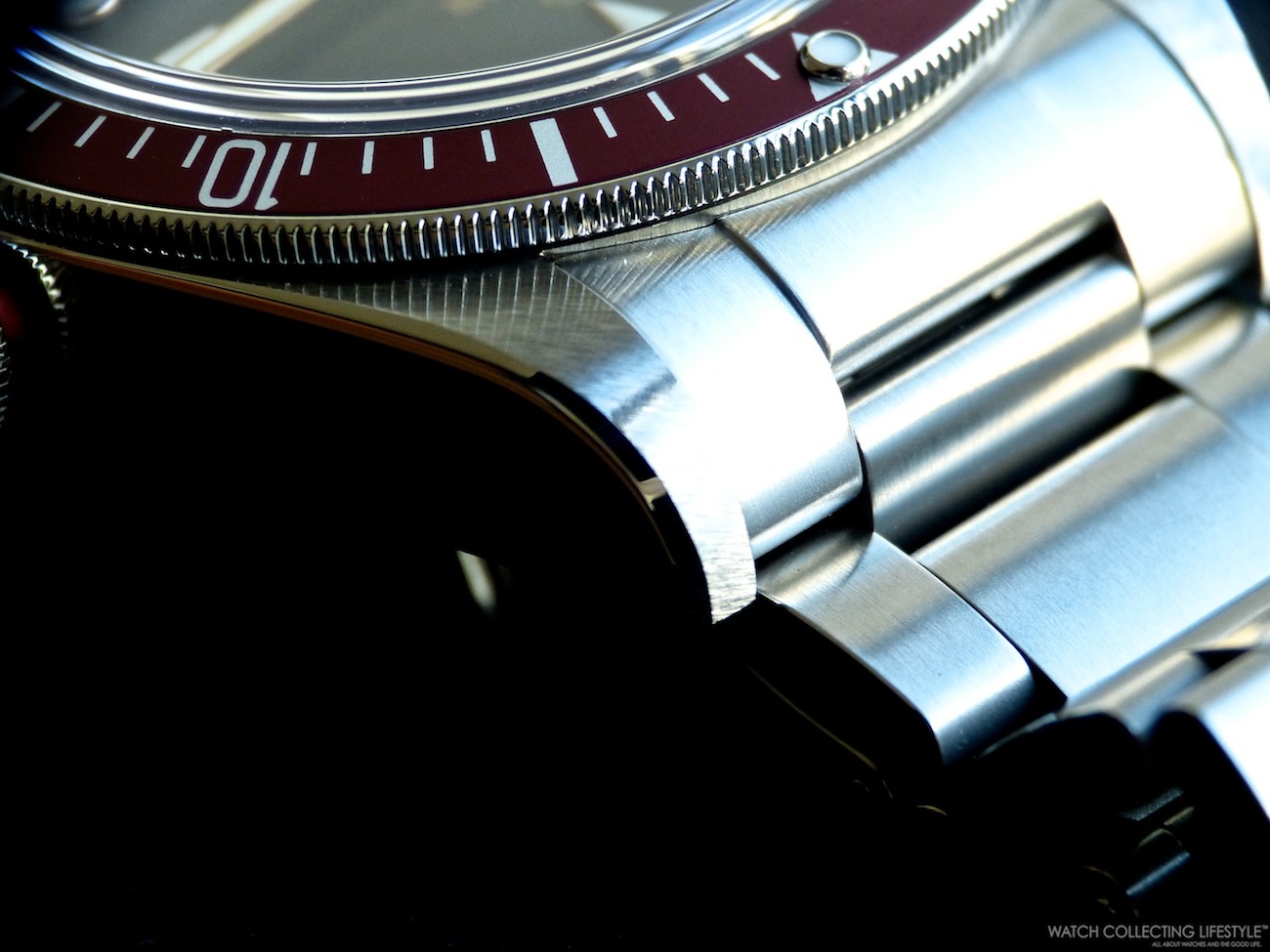
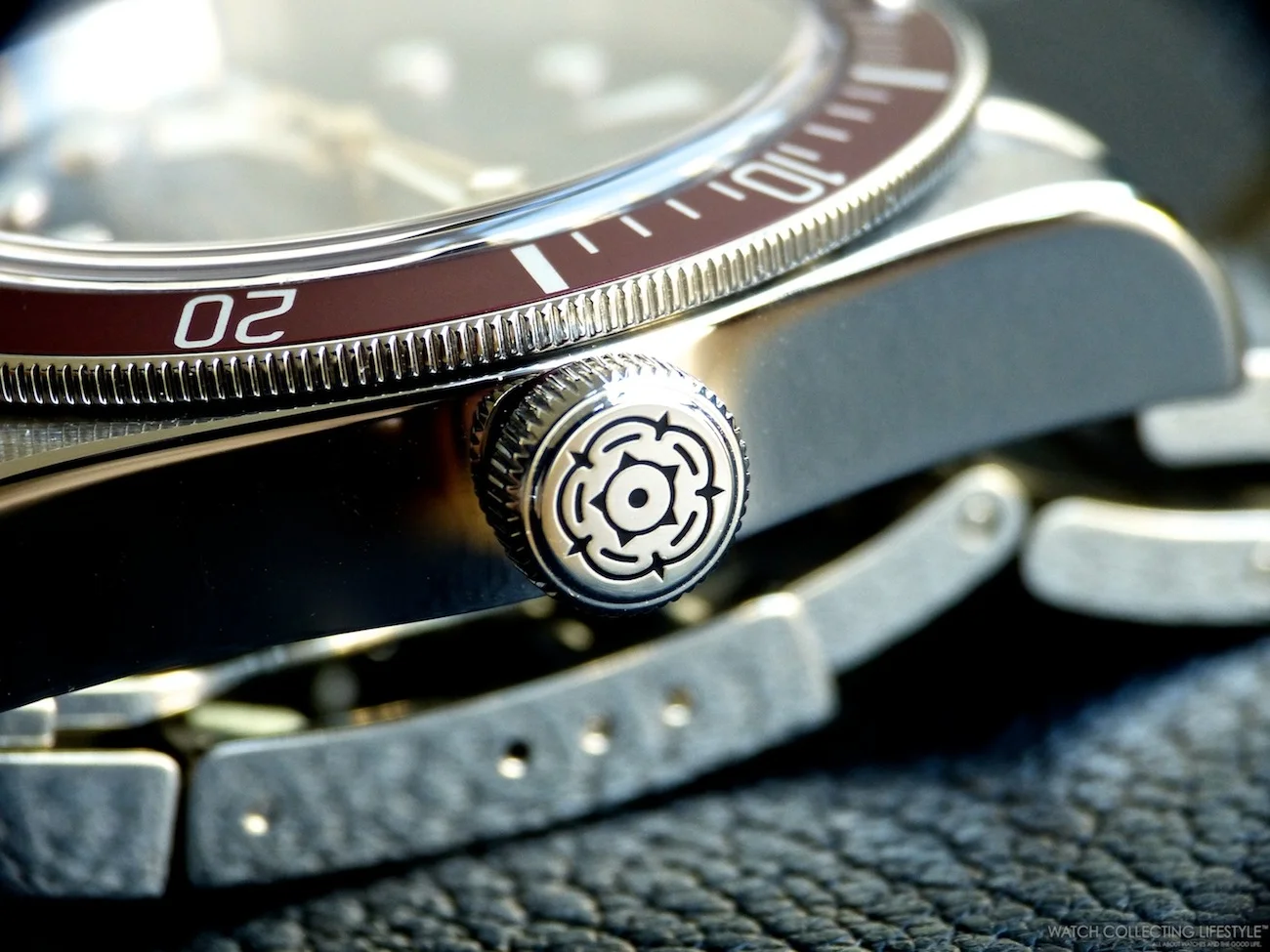
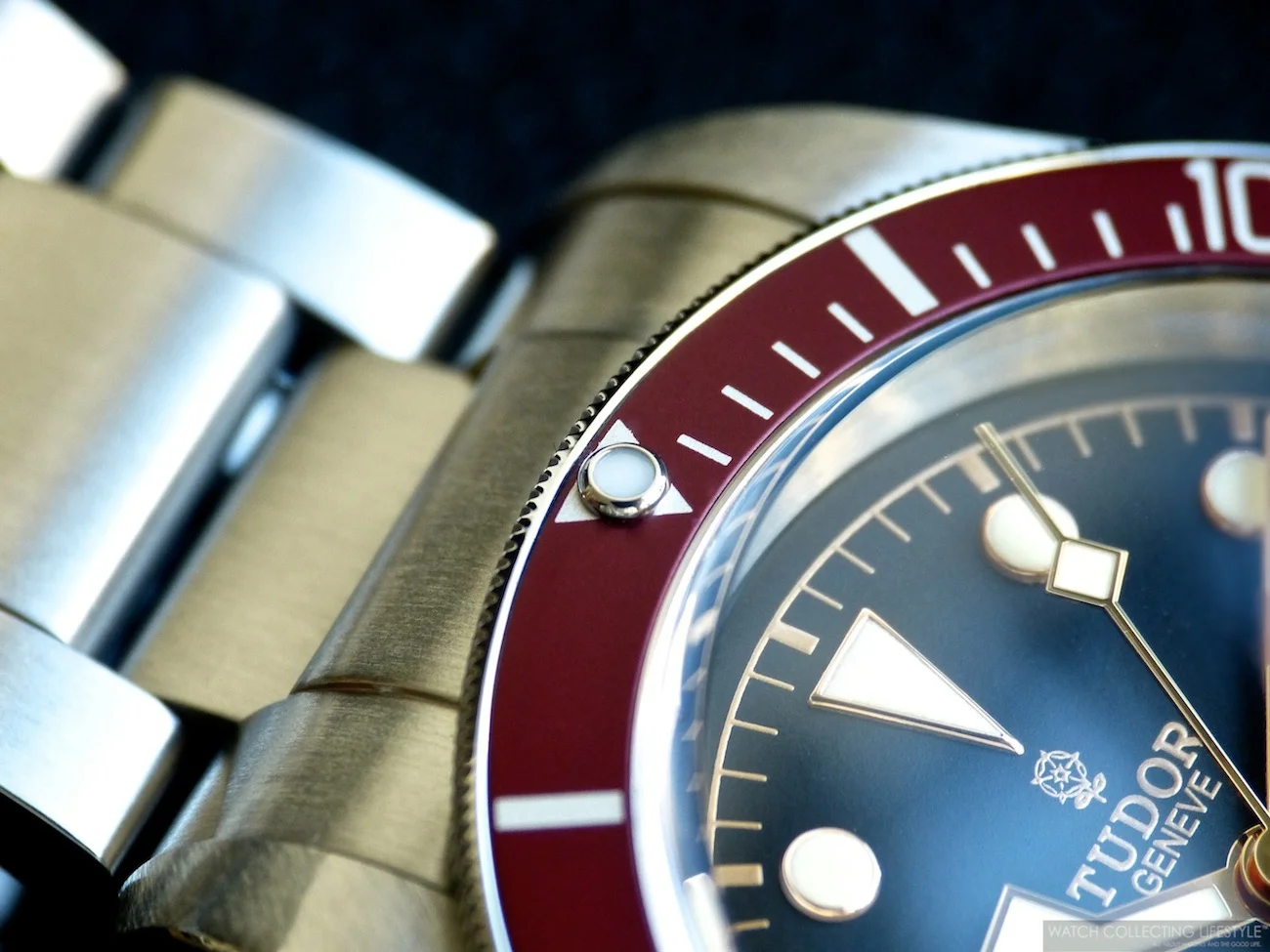
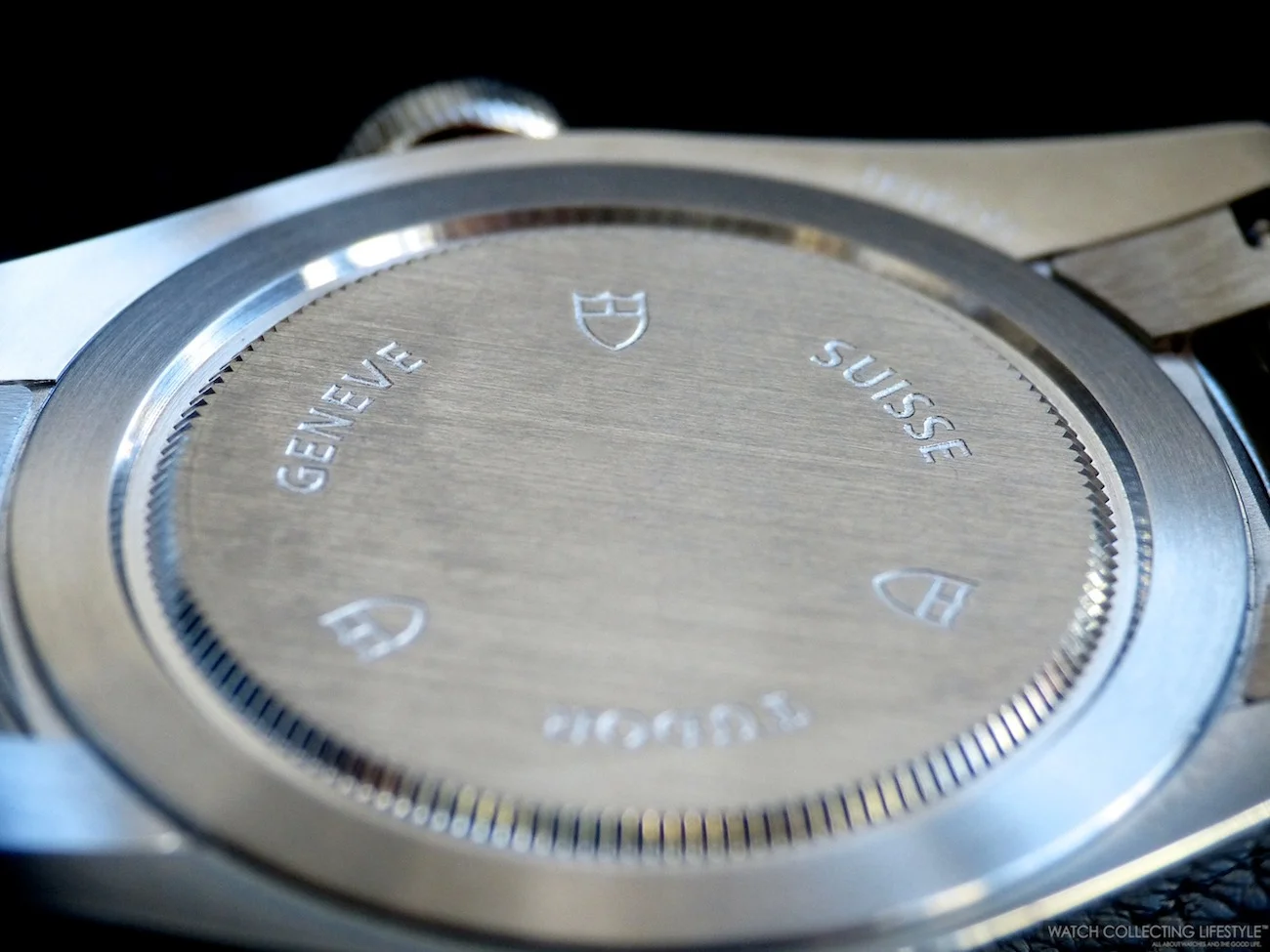
While the Tudor Heritage Black Bay ref. 79220R was launched last year at Baselworld 2012, it wasn't until September 12 of this year that the brand relaunched in the U.S. and the watch became readily available at very few select authorized dealers that Tudor cherry picked. While this watch has enjoyed plenty of media coverage and thorough reviews since last year, most U.S. collectors were eager to see the watch in person before buying it. For many watchlifestylers, the Tudor Heritage Black Bay was some sort of fad during 2012 and the watch has been up and down in popularity since then. This is one of those timepieces that you either hate or love and all we can say is that we've loved it since day one. Kudos to Tudor for launching this homage watch honoring the first Tudor Sub from 1954 in a perfectly sized 41mm case with a great vintage feel to it and those mesmerizing snowflake hands.

While we've seen the advertising campaign with the Tudor Heritage Black Bay almost everywhere —bus shelters, print, online— we feel that the stock images don't do fair justice to this amazing timepiece. While stock images depict the bezel insert as being bright red, is not until you see the watch in person that you realize that the bezel is really burgundy —as Tudor refers to it— or even a dark cherry in color. Here at WatchCollectingLifestyle, we like to call the color of the bezel a perfect 'Rioja' wine color.

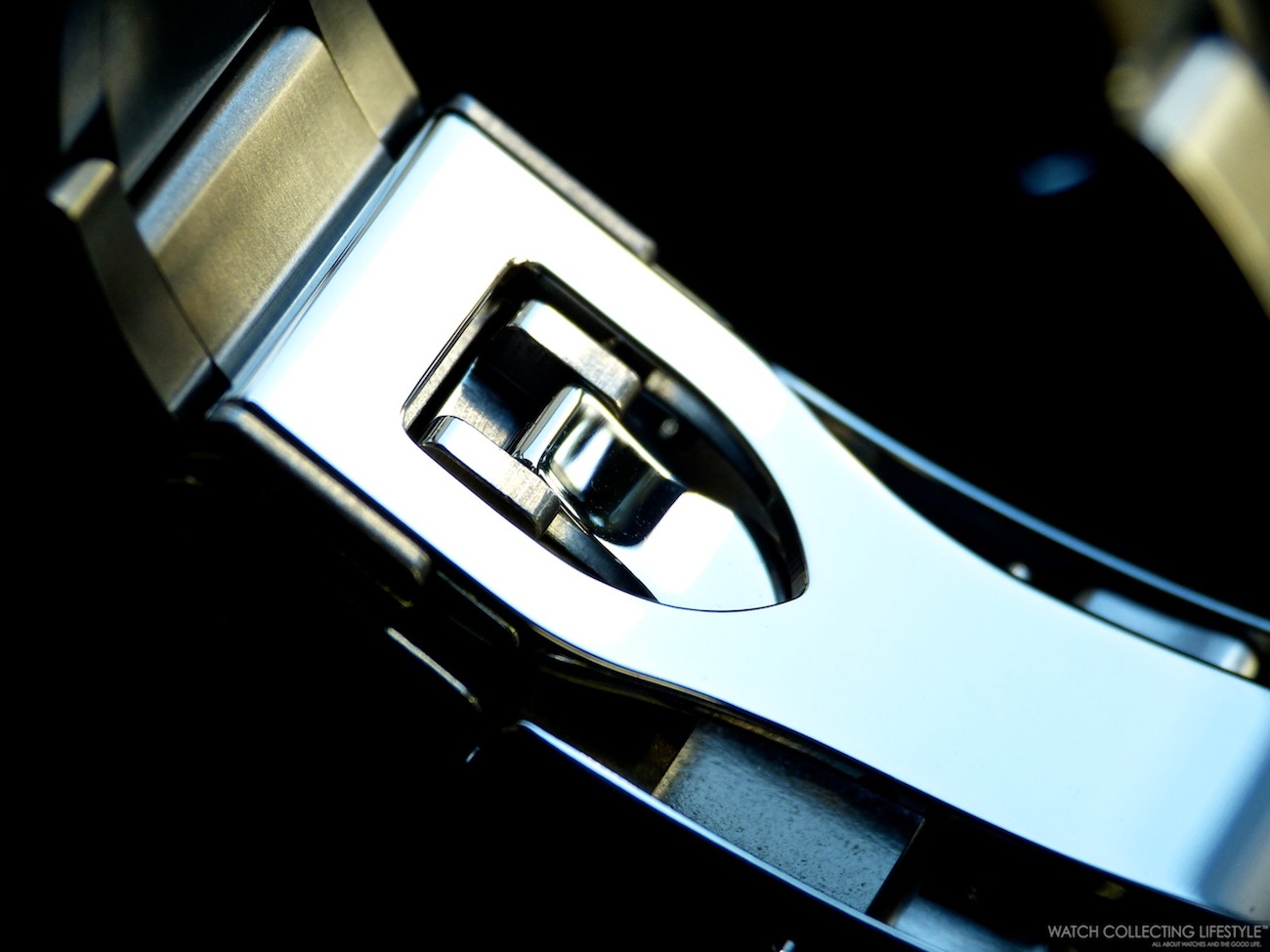
Now, please enjoy these macro photos—under natural light— we prepared for you and get ready to go get one as soon as you're done. We really know you will once you get hypnotized by those amazing chamfers, that matte dial with pink gold imprinting, the snowflake hands and the bright glowing and long lasting luminova on its markers and hands. Available on Stainless Steel bracelet with additional black fabric strap or aged leather with additional black fabric strap.

Sticker Price $3,425 USD. For more info on Tudor Watch click here.

Posted on November 14, 2013 and filed under Tudor.

News: Zenith Unveils the Academy Christophe Colomb Hurricane Grand Voyage. Entirely Hand-Finished in a 10-Piece Limited Edition.

This year, the Manufacture is pursuing its tribute to the famous navigator Christopher Columbus by introducing this heir to marine chronometers in a splendid interpretation calling upon the finest artistic crafts such as enameling, engraving and micro-painting. It thereby expresses perfect mastery of these historical skills that have been adorning Zenith creations for almost 150 years. This exceptional entirely hand-finished model issued in a 10-piece limited edition is accompanied by three major horological discoveries: a patented gravity control system; a fusée and chain transmission mechanism; and an exceptional frequency of 36,000 vibrations per hour.  

A pioneering spirit, a love of challenges and a thirst for exploration: the very same passion and the same quest for uncharted horizons guided Christopher Columbus and Georges Favre-Jacot —the former when he set sail across the vast expanse of ocean to open up a westward route towards the Indies; and the latter when he founded Zenith in 1865 by inventing the very first industrial watch manufacturing company or “Manufacture”. Almost a century and a half later, the brand with the guiding star is still faithful to this pursuit of precision and innovation, as is notably illustrated by over 300 patents. The Manufacture proved this determination in 1969 by creating the legendary El Primero automatic movement, which is still the world’s most accurate series-made chronograph. Moreover, fine watchmaking is not confined to the realm of mechanisms. Confirming its tradition of refined watch exteriors, notably embodied in a number of enameled pocket watches, Zenith once again delights collectors and connoisseurs of rare models by presenting the Academy Christophe Colomb Hurricane Grand Voyage —a limited edition that stands out from the rest of the line by its magnificent décor. It represented a challenge not only for the artisans, but also for the watchmakers and engineers who had to rework the movement. They occasionally pushed the boundaries of feasibility in seeking to accommodate these ornamental elements within the same 45mm diameter case in rose gold and beneath the same domed sapphire crystal —while making no compromises on precision and reliability. The result is a vivid illustration of Zenith’s creative daring and of its ability to combine a dream mechanism with exceptional decorative touches stemming from the most prestigious artistic crafts.

Technical sophistication reigns supreme on the front. On the dial side, Zenith opted to give pride of place to the horological feats incorporated in the watch, while maintaining an open architecture providing a chance to admire its three original mechanisms in action: the barrel with its fusée and chain transmission —at 10.30 and 1.30—, gyroscopic gravity control system and the high-frequency regulating organ at 6 o’clock. Yet this technical, three-dimensional appearance does not preclude considerable aesthetic sophistication, as well as the use of the finest artistic crafts that Zenith is devoted to perpetuating. The three gold subdials (hours/minutes at 12 o’clock, small seconds at 9 o’clock, power reserve at 4 o’clock) are finely guilloché, enamelled in white and fitted with blued steel hands and screws echoing the grand watchmaking traditions. The plate has been entirely hollowed out by hand so as to leave only the Zenith logo and a flurry of stars standing out in relief; and the troughs thus created have been filled with midnight blue lacquer.

The counterweight of the gravity control system has also been enhanced with a sophisticated and poetic touch by a hand-crafted micro-painted depiction of the Southern hemisphere.

The back is an open travel invitation. The back of the Academy Christophe Colomb Hurricane Grand Voyage springs a big surprise with a vividly colored and lively evocation of the famous navigator’s many adventures. This authentic miniature painting was created by the finest specialists in various artistic crafts using a sophisticated system of gold appliques fixed directly on the movement. In the foreground, on either side of the mechanism reminiscent of the gimbal suspension typical of marine chronometers, one may admire the finely engraved portrait of Christopher Columbus along with a sextant, the astronomical instrument serving to calculate longitude. The background bears a reproduction of the Santa Maria, the flagship with which Columbus sailed on his first voyage in 1492. The tiny manually cut-out and micro-engraved décor depicts the vessel in abundantly rich detail, particularly in terms of the ropes and rigging.

The various sails, crafted in enamel on a cloisonné base using an engraved champlevé technique, are adorned with the famous red cross – replaced on one of them by Zenith’s famous guiding star in a nod to connoisseurs. Behind the sailboat, the going-train bridge has been chosen to represent the ocean with a background engraved with tiny waves and then coated with a layer of translucent lacquer.

In the background, the barrel bridge opens up the horizon with a micro-painted décor depicting a sky divided into day and night. In a subtle detail, the watchmakers of the Manufacture have arranged the movement structure in such a way as to reveal a small gilded gear train evoking sunrise or sunset. Integrating this décor called for a wealth of ingenuity, including finding points to which the applique elements could be fixed, while reducing the movement thickness and the spaces between the calibre and the ornamentation to an absolute minimum —less than a tenth of a millimeter beneath the sails. Entirely hand-finished by artisans gifted with great dexterity, the fabulous adornment of the Academy Christophe Colomb Hurricane Grand Voyage makes each watch a unique work of art and a true collector’s watch.

The quest for precision at the very heart of the movement. While Christopher Columbus pushed back the frontiers of the known world, this model named after him pushes the boundaries of time measurement by combining three mechanisms guaranteeing enhanced precision: a regulating organ with a high oscillating frequency —36,000 vibrations per hour— for dividing time into tenths of a second; a fusée and chain transmission system compensating for the inevitable variations in the force of a barrel while it is unwinding; and a patented gravity control module serving to neutralize the effects of gravity on the rate of a watch. In other words, it successfully solves the problems relating to actually wearing the watch —gravity— and to the length of time it can run independently —a drop in torque—, while simultaneously ensuring remarkable precision in time measurement —linked to the oscillation speed of the balance. These feats are achieved by an exceptional movement comprising 939 parts, including 354 for the calibre itself that in turn houses the 173 elements of the gravity control module; while the fusée and chain system comprises 585 parts. Fusée and chain transmission ensuring constant force. As a mechanical watch gradually winds down, the movement loses amplitude —corresponding to the balance-wheel’s angle of oscillation— and thus becomes less accurate. The fusée and chain transmission system serves on the contrary to keep the driving force perfectly stable throughout the full power reserve – with the helicoidal shape of the fusée compensating for the progress reduction in the force of the barrel. The majority of 16th, 17th and 18th century pocket watches were equipped with a fusée, but today very few watch manufacturers are capable of transposing and fitting this mechanism within the confines of a wristwatch. With the Academy Christophe Colomb Hurricane Grand Voyage, stemming from two full years of development, Zenith has now entered this highly exclusive club. Transmission between the barrel and fusée is handled by an 18cm long chain comprising 585 parts. This highly complex construction features alternating double and intermediate links. Once assembled, it is capable of withstanding a traction force of more than 3 kilos. 

Throughout the power reserve, the mainspring transmits its energy to the fusée via a chain that wraps itself around the barrel. By adjusting the variations in tension, the fusée regulates the force that is passed on to the going train – and thence to the silicon escape-wheel fitted inside the gyroscopic carriage. While it takes more than 50 hours —the power-reserve duration— for the chain to wrap itself around the barrel, winding via the stem provides a fascinating sight. These few seconds enable the fusée and the barrel to turn in opposite directions so that the chain wraps itself back around the fusée. The shape of the fusée was dictated by the optimal force that the Zenith master-watchmakers wished to give the barrel. Its grooved conical contours as well as its dimensions are the result of lengthy and particularly complex complications performed for each of the seven construction stages. This fusée could doubtless never have been created without the full integration of all professions —notably including movement prototype making— cultivated in the Manufacture Zenith, nor without the use of sophisticated equipment. Such is indeed one of the core strengths of an integrated Manufacture. While fusée and chain transmission eliminates variations in isochronism —the equal duration of the oscillations—, the Academy Christophe Colomb Hurricane Grand Voyage also cancels out another effect that is detrimental to the rate of a mechanical watch: the influence of gravity. Working on the principle that keeping the regulating organ in a horizontal position engenders the best possible balance-wheel amplitude and thus results in optimal timekeeping precision, Zenith devised and patented a revolutionary module enabling the “heart” of the movement and the escapement to remain constantly in this position. An avant-garde system brilliantly illustrating the creative daring of the Manufacture, the gravity control system is also a tribute to history, since it is inspired by the marine chronometers that Zenith used to produce, borrowing from these legendary instruments the principle of gimbal suspension introduced in the 16th century on marine compasses so that they would stay horizontal despite the pitching and rolling of the boat.

The gravity control system with its self-regulating gyroscopic mechanism serves to maintain the regulating organ in a permanently horizontal position whatever the angle of the wrist and thereby represents the ultimate evolution of the marine chronometer. The brand with the guiding star is the only watch manufacturer to master this system —duly rewarded in the “Best Complicated Watch” category at the 2011 Geneva Watchmaking Grand Prix— that it invented after five years of intense development.

Such an exceptional model deserved to be presented to its best advantage. The Academy Christophe Colomb Hurricane Grand Voyage comes in a precious mahogany box featuring ox bone inlays and that can also serve as a humidor with a capacity of 80 cigars. In homage to Christopher Columbus, this box is adorned with a screen-printed motif on parchment-style papyrus reproducing Waldseemüller’s planisphere (1507), the first world map to mention the name “America”.

A magnificent ocean voyage and a splendid voyage to the heart of the infinitely small: with this limited edition combining fine watchmaking and artistic crafts, Zenith is setting out to conquer fascinating new horizons, inspired as ever by a blend of daring, authenticity and pleasure.

For more info on Zenith click here. 

Technical Data

El Primero 8805, hand-wound. A unique gyroscopic mechanism that maintains the regulating organ in a perfectly horizontal position.

Calibre: 16 ½’’’ (diameter: 37 mm)

Thickness: 5.85 mm

Parts: 354

Gyroscopic carriage composed of 173 parts

Chain made of 585 parts

Jewels: 53

Frequency: 36,000 vph (5 Hz)

Over 50-hour power reserve


FUNCTIONS

Off-centered hours and minutes at 12 o’clock

“Gravity Control” self-regulating module at 6 o’clock

Small seconds at 9 o’clock

Power-reserve indication at 3 o’clock

Fusée and chain transmission beneath the hours/minutes dial

Case, dial and hands

18-carat rose gold

Diameter: 45 mm

Thickness: 14.80 mm/21.80 mm
(with domed sapphire crystal)

Cambered sapphire crystal glare-proofed on both sides, domes protecting the Christophe Colomb module

Water resistance 3 ATM

Dial: 3 enameled gold dials

Hour-markers: black lacquered

Hands: blued steel

Reference 18.2211.8805/36.C713 —Brown alligator leather strap with rose gold triple folding clasp.

Experience: Twenty Exceptional Timepieces Sold at Christie's Auction in Geneva. Here's Our In-Depth Review on Them.

With over $30 Million USD —inclusive of buyer's premium— sold in watches, the Important Watches Auction held by Christie's in Geneva on November 11, 2013 was a record breaking and extremely successful auction where most timepieces were sold exceeding their estimates —even Longines watches fetched extremely high amounts. The Important Watches Auction featured 406 lots —not all sold— with 122 Patek Philippe timepieces, 107 Rolex discontinued and modern references, several modern and vintage Panerais, a unique A. Lange & Söhne in stainless steel, Audemars Piguet assorted timepieces, Breguet museum quality watches and a Dürrstein & Co. Glashütte Uhrenfabrik Union Pocket Watch amongst others.

Aurel Bacs, International Head of Christie's Watch Department, mentioned: “On November 10th and 11th, Christie's dispersed over 370 fine watches in an historical ten-hour auction marathon, which set a new record total for any series of watch sales. In the past months, we exhibited highlights in Taiwan, Japan, Hong Kong, New York, Paris, Dubai and in all locations we noticed an ever-growing appetite for high quality collector’s watches. This trend was demonstrated by a fiercer-than-ever competition generated by both experienced and new international bidders, in the room, on the telephone and online."

Now, for your viewing and reading pleasure, here are twenty amazing timepieces —not Patek Philippe— that are just exceptional and worth talking in-depth about. All hammer prices are in USD and are inclusive of the buyer's premium. All images from Christie's.com

1. Rolex "Padellone"  18K Gold Triple Calendar with Moon Phase ref. 8171 from 1962. This watch was produced in a very limited number between 1949 and 1952. With an incredibly sharp case and sharp engravings, this watch is a "safe queen" with only two owners —Father and Son— before the auction. Hammer Price $684,626.

2. Rolex Submariner ref. 6200 "Explorer" dial from 1954. The ref. 6200 is considered by most the real first Submariner. This watch not only features an amazing "Explorer" dial that includes the "Officially Certified Chronometer" writing —perhaps the only known example of this configuration— but it also features the original hands. Hammer Price $527,891

3.  Rolex 18K Gold Triple Calendar with Moon Phases ref. 6062 from 1952. This reference features a full calendar on top of the chronograph automatic movement. This watch was produced just for a few years in the 50s and is considered by most collectors as the most important Oyster model ever made by Rolex. Not only this watch comes with a perfectly preserved dial but the watch was also featured in John Goldberger's 100 Superlative Rolex Watches book. Hammer Price $501,769.

4.  A. Lange & Söhne Stainless Steel Double Split Seconds Flyback Chronograph with Power Reserve ref. 404.035X from 2006. This is known to be the only piece ever made of this model in Stainless Steel and included box and papers. It seems like in 2007 A. Lange & Söhne created this one single prototype featuring a stainless steel case. Hammer Price $501,769.

5. Dürrstein & Co. Glashütte Uhrenfabrik Union 18K Pink Gold Ultra Complicated Pocket Watch. This watch is fitted with an Audemars Piguet movement, openface, minute repeater, perpetual calendar, split seconds chronograph, moon phases, instantaneous minute recorder, flying fifths of a second and grande and petite sonerie. Audemars Piguet was known to supply complicated ébauches to other companies during the period the watch was made.  This watch took two years to make from 1891 to 1893 and finished right on time for its presentation at the 1893 World's Columbian Exposition here in Chicago —the watch comes with the entrance ticket to the fair— where it sold for 5,000 Marks, price of a Villa in Dresden at the time. Hammer Price $475,646

6. Rolex Stainless Steel Triple Calendar Chronograph ref. 6236 from 1958. This watch also known as the "Dato-Compax" or "Killy" included the original guarantee papers and is fitted with a two-tone silvered dial. The watch was nicknamed "Killy" as French Olympic skiing legend Jean-Claude Killy sported one of this watches. The three other "Dato-Compax" watches in the series are references 4767, 5036 and 6036.  Produced between 1958 and 1962, this is a rare example with a dial in very good condition with open 6s and 9s. Hammer Price $397,279

7. Rolex Stainless Steel Triple Calendar with Moon Phases ref. 6062 from 1953. This is a very rare example as stainless steel models of this reference are quite scarce and this one is in remarkable condition with sharp and crisp serial number and reference engravings between the lugs and a very well preserved original dial. Hammer Price $371,156.

8. Panerai Stainless Steel ref. 3646 "California" dial from 1940. This particular watch is one of the few examples left from the collaboration between Rolex and Panerai. Panerai Radiomir watches like this ref. 3646 were made by Rolex for Panerai and the so-called black lacquered "California" —half Arabic and half Roman numerals— dials were fitted on them. Some of these earlier Radiomir watches do not bear any Rolex markings or hallmarks. It is known, that approximately thirty of these watches ref. 3646 were intended to be presented to high ranking Navy officials during a ceremony. However, the delivery never took place and the watches were forgotten in a warehouse. Rediscovered decades later, these watches that had remained in unused condition are living testament of that era. Hammer Price $358,095.

9. Rolex Milgauss ref. 6541 with "Honeycomb" dial from 1958.  This watch with 'open' papers features the sought-after honeycomb dial, consisting of two cross aluminum layers to protect it even further against magnetic fields. This example in excellent condition, still shows the traditional Rolex chamfers on the lugs. Hammer Price $345,034.

10. Breguet No. 4420 'Montre Simple Plate à Deux Cadrans Excentriques d'Heures et Minutes' 18K Gold and Silver Hunter Case Pocket Watch. This watch was originally sold to His Majesty King George IV of Great Britain on October 3, 1825 for 2,900 Francs. The watch comes with its original red Morocco box no. 4420. According to Christie's "it is unknown when King George IV parted with his watch but it can safely be assumed that he presented it to a member of the Scottish noble family Douglas-Hamilton, most likely to his close acquaintance Alexander Douglas-Hamilton, 10th Duke of Hamilton (1767-1852), a Scottish politician, art collector and well-known dandy. According to entries in Breguet's books, watch no. 4420 was returned for a complete overhaul in 1850 by the Marquis de Douglas, furthermore mentioning "sold in 1825, never returned". In 1851, the crystal was replaced, also by order of the Marquis de Douglas. The watch was then returned to Breguet for a complete overhaul in 1860 by the Dutch de Hamilton and for a servicing in 1863 by the Duchess de Hamilton. After its servicing at Breguet in 1863, the tracks of watch no. 4420 vanish until around 1920-1921 when it reappears in the family of the celebrated inventor, scientist and watch collector Sir David Lionel Salomons (1851-1925)". Hammer Price $318,912.

11.  Panerai Marina Militare ref. 6152/1 made by Rolex in 1955. This watch ref. 6152/1 was exclusively supplied to the Italian navy with or without crown guard with locking lever and with a rounded case band opposed to the case band on the ref. 6152 that features a sharp angle on the center of it. This watch features a simple Rolex crown without crown guard, Rolex movement, 'sandwich' dial and Rolex markings on the case. Following the production of ref. 3646, Panerai requested an improved model without wire lugs and increased water-resistance, the result was ref. 6152 and ref. 6152/1 widely known as the "Luminor" —tritium luminescent material that replaced the Radiomir mix used. Early examples of ref. 6152 still feature the "Radiomir Panerai" signed dials but the majority of these watches feature cases and movements made by Rolex. Most watches supplied to the Italian Naval Forces were requested to bear the designation "Marina Militare" on the dial. Hammer Price $266,667

12. Rolex 18K Gold GMT Master ref. 6542 with Bakelite bezel, Dauphine hands and Champagne dial from 1959.  This fascinating watch all original, barely polished and with box and unsigned papers is as good as any vintage full-set gets. The untouched and unmolested champagne dial features the 'ghost' gold imprinting that is so subtle that it is only visible when holding the watch at certain angle or upon close inspection. The bakelite bezel in excellent condition and the hands with very little corrosion. Hammer Price $266,667

13. Bovet 18K Gold, Enamel and Pearl-set Openface Duplex Pocket Watch from 1820. This watch especially made for the Chinese market, combines Bovet's Chinese calibre movement and a finely painted enamel miniature case by enamelist Jean-François-Victor Dupont. During the turmoil of the late Manchu China, Bovet watches became increasingly popular there. Fleurier —Edouard Bovet's hometown— is the European centre for the manufacture of Chinese watches, with several brands dedicated only to that market. This watch features cloisonné, champlevé enamel  and pearl-set borders. Hammer Price $266,667.

14. Rolex 'Patent Pending' Double Red Sea-Dweller ref. 1665 with Prototype Bracelet and Mark I Dial from 1969. The ref. 1665 is a very sought-after watch and it's known that maybe about 150 of this watches were ever made. Since its helium valve had been developed and the patent had been applied, but Rolex had not received final approval the case back features the engraving in parenthesis “Patent Pending". This fantastic reference was only produced between 1969 and 1977. While most Mark I dials on this reference show that the Double Red writing has faded to a light pink or even white color, the dial on this watch is still as red as when it left Rolex. Additionally, this perfect example contains the last three digits of the serial number inside the case back along with the reference number as it should be. Lastly, this rare piece features a prototype bracelet with the Rolex crown located sideways on the clasp. Hammer Price $247,075.

15. Rolex 18K Gold GMT Master ref. 6542 with Bakelite bezel and burgundy brown nipple "Exclamation" Dial with Dauphine hands from 1958. This amazing example with very little polishing features the very desirable and ultra-rare burgundy brown so-called "exclamation" dial with gold printing. For those of you that don't know, the name comes from the luminous dot positioned right underneath the 6 o'clock hour marker making it look like an 'exclamation' symbol. After the US Atomic Energy commission asked Rolex to recall the first batch of the 6542s due to their supposed radiation risk, the dials were marked with a small dot below the six o'clock marker to note that the issue had been corrected. From the second batch on, the watches were either fitted with a dash or with the now well-known 'Swiss T<25' writing that indicated that tritium had been used but that the small amount of it presented no risk to the wearer. Hammer Price $214,422

16. Rolex Submariner ref. 5512 "Square Crown Guards" Retailed and Marked by Serpico & Laino from 1959.  This reference was introduced in 1959 featuring crown guards with square ends. It is known that very few of these watches were ever made with this type of crown guards and the serial numbers are in the low 478,000s. This watch fitted with a very well preserved gilt dial comes with the depth rating in silver and the retailer signature 'Serpico y Laino' —from Caracas, Venezuela— above said rating. The case back features a Serpico y Laino engraving as 'S&L ACERO'. The bezel insert features the red triangle at 12 o'clock common only in the Big Crown Submariners ref. 6538. It is very possible that this is the only example of a watch featuring these characteristics. Hammer Price $207,891.

17.  Rolex GMT Master ref. 6542 with Tropical dial, Bakelite bezel, Red Font Calendar disc and no bracelet from 1958. This amazing example comes with a bakelite bezel in very good condition, a highly "tropical" dial with matching hands, a fascinating red font calendar disc but unfortunately no bracelet —the strap does match perfectly the color of the dial. Hammer Price $188,299.

18. Panerai ref. 3646 made by Rolex in 1943. This watch is another one of those Panerai timepieces commissioned to Rolex for its manufacturing. This is one of the so-called "no name" series with blank dial, generally reserved for the German Navy's Special Forces. The watch features a sandwich dial and a smaller than usual crown. Hammer Price $108,844.                                                                  

19. Rolex Submariner ref. 6204 from 1963 . This watch features pencil hands and seconds lollipop hand, there is no depth rating on the dial and it features the bezel with no graduation on the first 15 minutes. Hammer Price $72,109

20. Longines Stainless Steel Monopusher Flyback Chronograph ref. 5681 from 1950. According to the Archives of Longines this watch has originally sold in Amsterdam, Holland on September 8, 1950. A watch originally designed for military purpose with a chronograph that can be start/stop/reset with just one button. It was surprising to see a Longines fetch such a high amount on money at the auction. Hammer Price $50,340.

In addition to all the fascinating timepieces we featured on this post, there were many more that commanded high amounts and that are true collector's examples of some fascinating references across an array of brands.

As you can imagine, we are already looking forward to the upcoming Christie's auctions in Hong Kong —Important Watches Auction on November 27—, London —Jewelry and Watches Auction on December 11— and New York —Important Watches Auction to be held on December 17, 2013.

For more info on Christie's click here.

Experience: Twenty Amazingly Rare Patek Philippe Timepieces Sold for More Than $12 Million Dollars at Christie's Auction in Geneva.

The Christie's Important Watches Auction held in Geneva today Monday November 11, 2013 included a total of 122 amazing Patek Philippe timepieces of which only ten didn't sell. The total dollar amount fetched by all watches sold at the auction exceeded $30 million, of which Patek Philippe made more than half of it.

For this in-depth review of what happened at the auction around the Patek Philippe timepieces, we have picked the twenty Patek Philippe watches that fetched the highest amounts —all of them above a quarter of a million dollars each— and which all combined, sum up a total amount of $12,020,680 USD. All hammer prices are in USD and are inclusive of the buyer's premium. All images from Christie's.com

1. The star of the auction and the watch that fetched the highest amount was the Patek Philippe 18K Pink Gold Perpetual Calendar Chronograph with Moon Phases ref. 2499 manufactured in 1951 and encased in 1957. According to the Patek Philippe archives, the watch was originally sold on December 15, 1960. This reference is one of the most legendary Patek references and features raised hard enamel printings of all elements on the dial. Hammer Price $2,160,544.  

2. Patek Philippe 18K Gold Split Seconds Chronograph ref. 1563 with Luminous Breguet numerals, rounded pushers and screw case back from 1947 that was originally sold on June 30, 1950. Few complicated Patek Philippe references are as rare as this reference of which only three examples are known to exist. Hammer Price $1,572,789.

3. Patek Philippe 18K Gold Perpetual Calendar Chronograph with Moon Phases ref. 2499 with Cartier on the dial —probably a unique piece— from 1966 originally sold on April 29, 1968. The watch was sold with Cartier's certificate of authenticity stating that the watch was delivered to Cartier New York in 1968. Hammer Price $1,024,218.

4. Patek Philippe 18K Pink Gold Perpetual Calendar Chronograph with Moon Phases ref. 1518 with an ultra rare two-tone dial —possibly a unique piece dial— from 1950 and originally sold on December 16, 1952. What makes this watch even more desirable is the two-tone silvered dial fitted on this watch, that has never been seen before on any other ref. 1518. The two-tone dial provides a unique visual effect depending on the lighting conditions and the angle at which the light hits the dial. Hammer Price $1,024,218.

5. Patek Philippe 18K Gold Perpetual Calendar with Moon Phases ref. 3448 Blue dial —probably a unique piece— with raised gold markers from 1978. The watch originally  sold on November 10, 1978. The uniqueness of this watch —besides the beautiful color of its dial— comes from the fact that it is known that only four watches ref. 3448 were fitted with color dials —other than the traditional silvered— and while three feature champagne dials, it appears like this is the only one with a blue dial. Hammer Price $684,626

6.  Patek Philippe 18K Rose Gold Chronograph ref. 530 sold by Astrua Torino in 1941. The ref. 530 was launched in 1937 and it is one of the rarest Patek chronographs, furthermore, the Astrua ref. 530 is one of the most impressive oversized chronographs by this manufacture and it is known that this is the only ref. 530 featuring the Astrua marking on the dial. Additionally, this is the first time that it's been offered at auction and the case and dial are as sharp and original as it gets. Even the lugs still display the original satin finish pointing towards the strap. Hammer Price $658,503

7. Patek Philippe Calatrava 18K Pink Gold Dual Time Zone ref. 2597 with independent adjustable second time zone hand manufactured in 1963 but originally sold until January 8, 1981. This particular reference is one of the rarest Pateks ever and it was such unpopular that it was discontinued quite quickly. Interestingly enough, this watch —among other four of this same reference in pink gold— is living testament of that unpopularity as it sat unsold for 18 years after its production. This watch is also the only example to feature luminescent material on its hands. This watch was auctioned in mint unworn and unpolished condition. Hammer Price $501,769.  

8.  Patek Philippe Stainless Steel Chronograph ref. 1463 with Breguet numerals and rounded pushers manufactured in 1945 and originally sold on July 29, 1946. The Breguet numerals on this watch are ultra rare —less than twenty examples in stainless steel known to exist up to date. Described by Italian collectors as the "tasti tondi" for its rounded pushers, this watch was also featured in the book Patek Philippe Steel Watches by John Goldberger, pp. 286 - 287. Hammer Price $501,769.  

9. Patek Philippe 18K Pink Gold Split Seconds Chronograph ref. 1436 with pink dial from 1940 and originally sold on April 13, 1942. This pink gold reference is one of the rarest Pateks sold at auction and less than ten examples have sold at auction in the last 30 years —only four were fitted with pink dials. Additionally, the watch is a only two-owner watch. Hammer Price $423,401.

10. Patek Philippe 18K Gold Minute Repeater ref. 2524/1 manufactured in 1954 and sold on August 11, 1960. This watch is one of four examples that does not have a seconds sub-dial at 6 o'clock and its repeater lever mechanism is activated by pushing it downwards. Hammer Price $397,279.

11. Patek Philippe 18K Gold Perpetual Calendar with Moon Phases ref. 2497 with box and papers manufactured in 1953 and originally sold on September 8, 1956. This rare example features a sweep center seconds hand which is very uncommon for this Patek reference. Hammer Price $384,218

12. Patek Philippe 18K Pink Gold Perpetual Calendar with Moon Phases ref. 1526 with pink dial manufactured in 1948 and originally sold on October 18, 1949. It is known that of this very rare reference in 18K pink gold only a little bit over 200 watches were ever made by Patek and even fewer feature a pink dial like this one. Furthermore, this watch remains in unpolished condition. Hammer Price $345,034.  

13. Patek Philippe 18K Pink Gold Split Seconds Chronograph ref. 1436 with two-tone silvered sector dial manufactured in 1950 and subsequently originally sold on November 1, 1952. The Split Seconds Chronograph is a very rare Patek and this particular watch features a sector/aviator dial that was added after its original purchase to enhance its look even more —completely stunning in our opinion. Hammer Price $331,973.

14. Patek Philippe 18K Gold Perpetual Calendar with Moon Phases ref. 2438/1 with box and service papers from 1954 and originally sold on June 23, 1958. This watch just like the ref. 1436 that sold for $428,406 is also a only two-owner watch. This reference is fitted with a screw case back to make it water-resistant. Hammer Price $305,850.

15. Patek Philippe Stainless Steel and 18K Pink Gold Chronograph ref. 130 with two-tone pink dial from 1947. The watch was originally sold on June 25, 1948 and its reference marks the first chronograph to be fitted with calibre 13 and in production from 1936 until 1964. This two-tone model is known to be quite rare and up to date there are only other seven pieces to be known to exist. Hammer Price $305,850

16. Patek Philippe 18K Gold Split Seconds Chronograph ref. 1436 manufactured and sold in 1946. This watch was auctioned with an additional silvered dial that the previous owner had purchased to give the watch a more current look. Hammer Price $292,789.

17. Patek Philippe 18K Gold Minute Repeater ref. 3979 with white porcelain white dial with box and papers. The watch was originally sold on March 30, 1992. This reference was launched in 1989 to commemorate Patek Philippe's 150th anniversary, discontinued only nine years later and replaced by ref. 5078. Hammer Price $292,789

18. Patek Philippe Platinum Flared Sides ref. 2442 with diamond-set dial manufactured in 1949 and originally sold on February 11, 1950. This watch is powered by a rare rectangular movement with only 150 watches ever made of which only three examples of the platinum model are known to exist. Hammer Price $292,789

19. Patek Philippe 18K Gold Openface Keyless Lever Tourbillon Pocket Watch with Breguet numerals and Bulletin d'Observatoire manufactured in 1930, encased in 1951 and originally sold on December 21, 1951. This watch comes with a certificate from the Geneva Observatory attesting that the pocket watch participated in a timing contest in 1946 obtaining the third prize. for Hammer Price $266,667.

20. Patek Philippe 18K Gold Openface Minute Repeater Perpetual Calendar Split Seconds Chronograph ref. 658 Keyless Lever Pocket Watch with Moon Phases and box manufactured in 1931, encased in 1955 and originally sold on July 18, 1955. This watch is known to be one of only five examples of this reference. Hammer Price $253,605.


As expected from such an array of exceptional timepieces, the prices went up through the roof. Congratulations to all the collectors that added this amazing creations to their vaults.

For more info on Christie's click here and for Patek Philippe here.  

News: Patek Philippe ref. 2499 Perpetual Calendar Chronograph with Moon Phases Fetches Over $2 Million Dollars at Christie's Important Watches Auction in Geneva.

Today, November 11, 2013, another historical day is setting records in Geneva at the Christie's Important Watches Auction. This time the auction comprising 406 lots overall, is led by an exceptionally rare 18K pink gold Patek Philippe perpetual calendar chronograph with moon phases, ref. 2499, manufactured in 1951 and encased in 1957 with an original estimate between $1,101,301-1,651,951 USD, that has fetched the incredible amount of $2,186,081 —inclusive of buyer's premium.

The Important Watches auction is still in progress and during intermission at this time. The auction will resume at 3pm —Geneva time— for the lots 194-406. We will be reporting the results upon completion of the auction as there are other very rare and important timepieces being auctioned today. Stay tuned!
For more info on Christie's click here. 

Making History: Rolex Daytona Paul Newman ref. 6263/6239 From 1969 Sells for $1,089,186 USD at Christie's Rolex Daytona "Lesson One" Auction in Geneva. Over $13 Million Dollars Sold in 50 Timepieces.

Today, November 10, 2013 Surpassing all expectations, the Rolex Daytona "Lesson One" Auction —a prestigious single-themed evening auction featuring 50 exceptional examples of the world's most celebrated chronograph wristwatch, totaled CHF 12,032,850 —$13,248,167 USD— selling 100% by lot and by value, at Christie's Geneva. 

The watch that fetched the highest amount was an all original Rolex Cosmograph Oyster Paul Newman ref. 6263/6239 Case No. 2,197,870 manufactured in 1969 with box and papers selling for $1,089,186 USD. This amount —inclusive of the buyer's premium— as well as the price for any other Rolex Daytona sold at this auction, breaks all previous records set on any auctions of this reference up to date.

Created by Aurel Bacs to mark the 50th anniversary of Rolex's most iconic model, this unique sale presented only the best and most mythical Daytona wristwatches ever produced. Aurel Bacs, who is the International Head of Christie's Watch Department, commented: “Christie's first ever evening auction dedicated to wristwatches proved an unprecedented success. With four hundred people in the saleroom and plenty more queuing outside, I rarely experienced a similar rock concert atmosphere from the rostrum. Possibly the most rigorously curated watch auction ever staged, each lot was selected by Christie's watch department in partnership with Mr. Pucci Papaleo according to a disciplined approach to originality, condition and provenance. Setting 50 world records for 50 watches as well as achieving an absolute record price for any Rolex Daytona ever sold at auction, Rolex Daytona "Lesson One" will be remembered as an historical event”.

Along with this amazing ref. 6263/6239 Paul Newman from 1969, other fascinating Daytonas fetched serious money above the $150,000 USD range all of them exceeding their estimates. In second place comes an extremely rare Rolex Daytona ref. 6263 from 1974 especially made for Sultan Qaboos Bin Said Al Said with box —sold by Asprey to Oman— selling for $864,521 USD —inclusive of the buyer's premium. 

In third place, an extremely rare Rolex Daytona with pulsations dial from 1967 ref. 6239 sold at $838,090 USD —inclusive of the buyer's premium.

Below you will find six other Daytonas that fetched the highest amounts above the $400,000 USD range. The estimates on all these watches were exceeded, fetching amounts two to three times higher than those estimates.

For more info on Christie's click here.

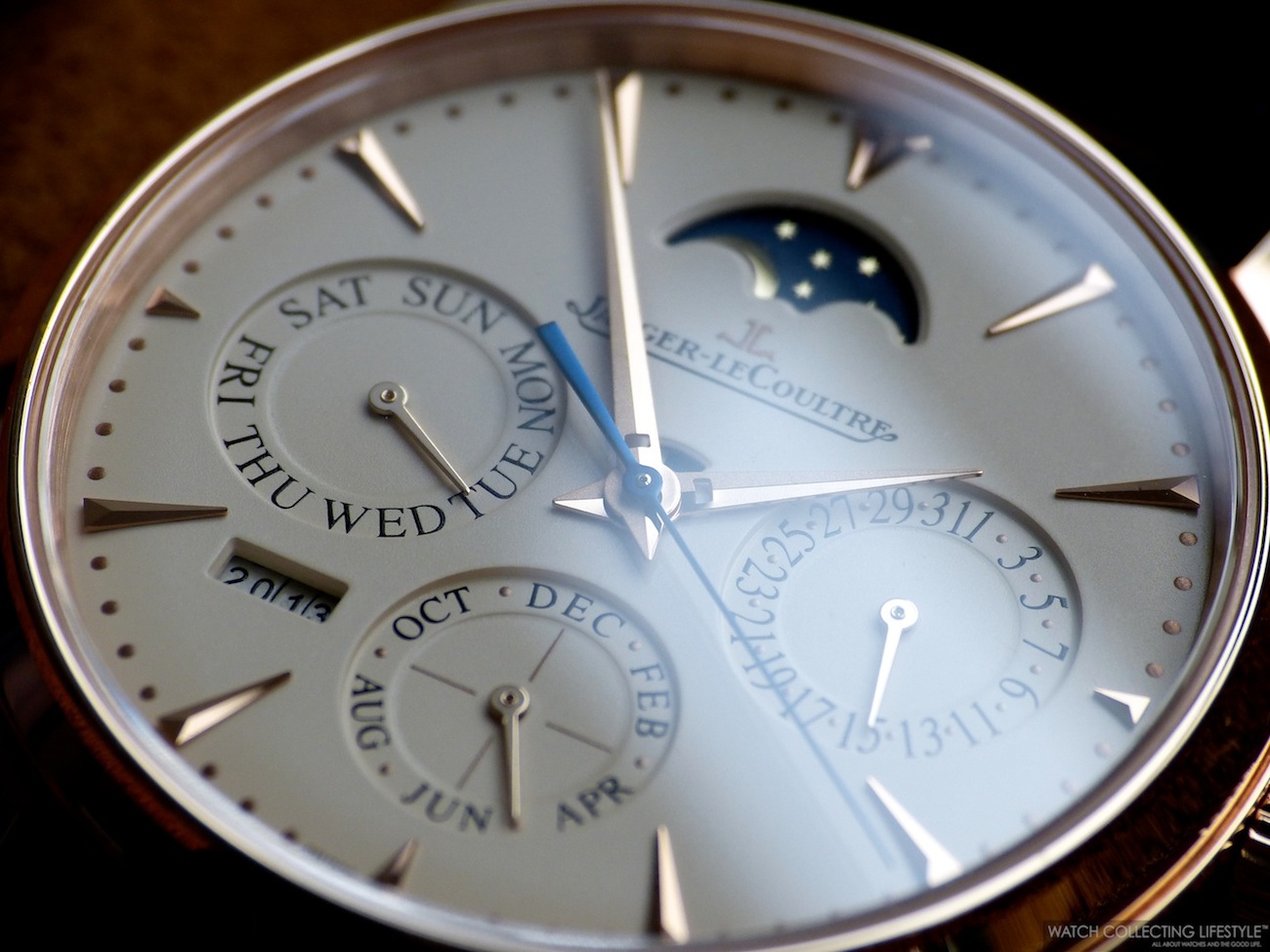
Experience: Three Fairly Unknown Long Filler Habanos Alongside Three Very Well-Known Jaeger-LeCoultre Watches.

If you like good cigars, you definitely can appreciate the difference between Habanos and cigars made outside of Cuba. These three fairly unknown Habanos pictured here —Diplomaticos 'No. 2', Juan Lopez 'Coronas' and Quai d'Orsay 'Coronas Claro'— are as amazing as any of the most popular Cuban brands that even non-connoisseurs know about.

While these cigars are not as well-known as Montecristo, Cohiba, Partagas or Romeo y Julieta, these three cigars can play at the level of those very well known brands. Unfortunately, today only refined Cuban cigar connoisseurs know them well. Alongside, these fantastic Habanos, we have three very well-known classic Jaeger-LeCoultre timepieces that embody the essence of their manufacture as well as these Cubans embody the essence of Habanos S.A.

Let's start talking about Diplomaticos 'No. 2'. This brand fairly unknown outside of Cuba and hard to find is somewhat of a recent brand dating from the 1960s. It bears a marked resemblance to Montecristo and it uses numbers instead of names to describe its sizes. This delicious cigar is completely handmade with long fillers a.k.a. 'tripa larga' using leaves from the renowned region of 'Vuelta Abajo'. This is a long cigar measuring 6.14" in length with a 52 ring gauge. With hints of leather, pepper and coffee this cigar is rich and medium to full flavored. The flavor profile stays even for the first two thirds of the cigar and becomes stronger on the last third. Around one full hour of burning time in a perfectly rolled cigar with perfect draw and very even burn. 

Juan Lopez 'Coronas' is a full-bodied cigar that evokes the notes of a Partagas. This is another brand fairly unknown outside of Cuba as it is considered more of a local brand and very limited amounts of it are ever exported. This cigar is named after its founder, Juan Lopez Diaz, a Spanish businessman that founded the brand in the 1870s. This superb cigar is also handmade with 'tripa larga' from 'Vuelta Abajo'. This cigar measures 5.6" in length with a 42 ring gauge. With hints of cocoa and leather this cigar is quite rich but not overpowering. The flavor profile is very even throughout the whole cigar and it provides around 45 minutes of burning time. A nice long white ash characterizes this delicate cigar.

Lastly, let's talk about Quai d'Orsay 'Coronas Claro', another very local brand that owes its origin to the refined taste of the French market. Created in the 1970s, the name is taken from a well-known street in Paris right next to the left bank of the Seine river. This brand has become increasingly popular among French connoisseurs that visit the island and among those that can find it in limited quantities outside of Cuba. This mild cigar measuring 5.6" in length with a 42 ring gauge is made of a light tasting blend of long filler leaves from 'Vuelta Abajo' and its wrappers are mainly distinguished by their 'Claro' — light brown— and 'Colorado Claro' —mid-brown— colors. Hints of caramel and leather come to mind when smoking this cigar with a very creamy flavor profile. The flavor evolves after the first half and the burning time is approximately 35 to 40 minutes. This is a perfect cigar for the inexperienced cigar smoker or for the ladies that enjoy the good life.

If you have the refined taste to appreciate fascinating timepieces like these three Jaeger-LeCoultre, you definitely understand that certain things in life need to be experienced at least once. Therefore, find these three Cubans and have yourself a wonderful evening in the company of your timepieces and your favorite drink. 

For more info on Jaeger-LeCoultre click here.  

Insider: Romain Jerome Spacecraft. Like Wearing a Mini Spacecraft on The Wrist.

With a shape somewhat reminiscent of the shape of the Bulova Driver with red LED from the 70s —first watch that comes to mind, no pun intended—, the Romain Jerome Spacecraft ref. RJ.SC.AU.001.01 is a watch that needs to be seen in person to be fully appreciated. Below you will find two images of the Bulova Driver to see the similarity in the shape and of its retro-futuristic design. While the Romain Jerome stands apart from the Bulova at a very different level due to its design, craftsmanship, materials, horological complexity and price point, we feel the similarity is there.

This fascinating unconventional watch is product of the work between Manuel Emch —CEO of Romain Jerome— and two of the top names in the watch industry: Eric Giroud and Jean-Marc Wiederrecht. The three men pooled their ideas and their creativity to give rise to a unique timepiece they named Spacecraft. Right from the first sketches, Manuel Emch and Eric Giroud imagined a very different type of product, combining retro-futuristic aesthetics and horological complexity. “The design evolved in step with our discussions and our numerous exchanges. That is what makes it such a singular object”, explains Eric Giroud.

The Romain Jerome Spacecraft is an unusual trapeze-shaped watch featuring a black PVD-coated titanium case measuring 50mm x 44.5mm x 18.5mm, that surprises and intrigues. To add to the complexity of this watch, the case is fitted with black PVD-coated titanium elements, beadblasted titanium plates and anti-reflective metallised sapphire crystals. With its rectilinear profile and its faceted surfaces it clearly echoes the aesthetics of a spacecraft. The black rotating disc with white numbers and a red indicator transferred on the sapphire crystal indicates the minutes on the top of the case, while the linear red lacquered retrograde jumping hour display is read off laterally, giving time telling a whole new dimension.

As expected from this manufacture, the level of design, the finish of the case and the intricate components of this watch are not only mesmerizing but worthy of admiration. The watch is fitted with a black polyamide mesh strap with titanium pin buckle that wears quite comfortably while maintaining the sidereal look and feel of this timepiece. The black PVD-coated titanium crown almost appears as if it were made of ceramic and it accentuates the facets on the top of the case superbly. The faceted design of the watch also prevails on the case back that protects the automatic calibre RJ2000-A fitted with 54 jewels and which provides a power reserve of 38 hours when fully wound while beating at a frequency of 28,800 vph. Additionally, the watch is waterproof to a depth of 30 meters.  

Because of its design the watch wears big and high on the wrist but very comfortably. In all honesty, the only way you can fully appreciate the craftsmanship behind this watch is by seeing it in person. We really consider ourselves very lucky to have been able to peruse one in person and work on this review with no stock images. If you used to watch the original Star Trek series while growing up, we are confident that this watch will fascinate you as much as it fascinated us. This watch is available in a limited edition of only 99 pieces.

Sticker Price $24,900 USD. For more info on Romain Jerome click here.  

Insider: Blancpain Fifty Fathoms Bathyscaphe. Commemorating 60 Years of the World's First Modern Diving Watch.

To commemorate the 60th anniversary of the Blancpain Fifty Fathoms —the world's first diving watch—, this manufacture presented the Fifty Fathoms Bathyscaphe ref. 5000-1110-NABA during Baselworld earlier this year. Now, here's our review with live pictures and the mandatory wrist shot.

This watch, features a 43mm in diameter satin-brushed stainless steel case with anti-magnetic protection, display case back, a flat black ceramic rotating bezel with a meteor grey sunburst dial with applied markers, rectangular shaped hands with luminescent material and a date aperture between the 4 and 5 o'clock markers.

The tip of the seconds hand features a luminous dot and a red tip to provide some contrast to the dial and the somewhat bland or simple look of the timepiece. Now, don't misunderstand us, the watch might look simple; however, the craftsmanship, history and Blancpain in-house workhorse movement are present in this timepiece. Depending on the lighting conditions and the angle, the bezel can appear black, grey or sometimes even somewhat brownish.

The watch features very sharp angles on the case, lugs, buckle and on all steel fittings on the strap, a perfect satin-brushed finish, a large easy-to-use crown and a black NATO strap or sail-canvas strap —straps also available in olive green. The Bathyscaphe looks like a rugged timepiece made to take on the abuse of the most experienced divers and non-divers. With its look completely reminiscent of 'tool watches', the Blancpain Bathyscaphe pays solid tribute and homage to the most legendary of all diving watches.  

Just as in all other modern Fifty Fathoms, the beating heart inside this timepiece is the  the legendary Blancpain calibre 1315 with a 5-day power reserve —120 hours— that can be fully appreciated via the display case back. The movement features a blackened 18K gold rotor, 227 parts and 35 jewels. 

On the wrist, the watch wears true to its size but unfortunately not very comfortable due to the NATO strap fitted on it. The wrist presence is nice but somewhat 'too shiny' due to the shape of the raised markers on the dial, other than that, this watch is sure to become one of the legendary modern Fifty Fathoms in no time. For those of you that use mechanical watches for your dives, the Fifty Fathoms Bathyscaphe is waterproof rated to a depth of 30 bar —300m/984 ft. This watch is also available in a ceramised titanium case with black dial and olive green NATO strap as ref. 5000-12C30-NAKA.

Sticker Price $10,500 USD. For more info on Blancpain click here. 

News: MB&F Unveils the Horological Machine No.5 RT in Red Gold. A New Limited Edition of Only 66 Pieces.

Press Release

Horological Machine No.5 is back 'On the Road Again', with a new 'RT' limited edition in red gold. After the original HM5 in zirconium presented in 2012, most would wonder why is the manufacture crafting another 66 pieces in red gold? Well, gold is highly resistant to corrosion; it conducts heat or electricity and reflects infrared radiation. Gold is highly malleable: a single gram can be beaten into a sheet of 1 micron. Gold is precious: all the gold ever mined in human history would fit in a cube of just 21 meters on each side. But let's get to the point: the real reason why MB&F is crafting this edition in red gold is because they think it looks damn beautiful!

HM5 RT is full of surprises: Hour and minute displays look straightforward, but they are bi-directional jumping hours with indications inverted, reflected 90° and magnified 20%. HM5 RT has a futuristic case design, but it’s from the 1970s. HM5 RT has a mechanical movement, but inspired by an era when quartz was King. The rear louvers on super cars block light, but on HM5 RT they let light in. Befitting its automotive heritage, HM5 RT has exhaust pipes, but they drain water. The gold endowing the HM5 RT case with such a rich lustrous glow was found on earth, but was actually created billions of years ago in deep space.

While we might still be waiting for flying cars, with the HM5 RT you can put a high-tech golden super car on your wrist! As with any super car, the best often lies under the hood and ‘lifting the hood’ of the HM5 RT case reveals a surprise: an inner case! Like a Russian Matryoshka doll, peeling away one layer reveals a second case in titanium. The reason for housing the Engine in an inner container is for water resistance. Those super car louvers let in water as well as light —the reason for those dual exhaust ports— so to protect the high-performance Engine from moisture as well as shocks, it is housed in its own titanium shell. This inner case is similar to the rigid chassis of a car on which the external coachwork/body is attached. Jean-François Mojon, Vincent Boucard and the team at Chronode developed the HM5 Engine. It may appear simple, but it’s complicated! Jumping hours are bi-directional, enabling the time to be easily set both forwards and backwards. The two mineral glass disks of the hours and minutes are supported by a flat wide bridge. The disks overlap to maximize their diameter and space for large legible numerals. Turning HM5 RT over reveals the Engine, with its 22k gold battle-axe shaped ‘mystery’ winding rotor, fast oscillating balance and stunning hand-finished bridges, through a sapphire crystal display back that is set into the water resistant container.

Horological Machine No. 5 RT retains all the key features of  the HM5: a hand-finished automatic movement with bi-directional jumping hours; a vertical time display reflected and magnified by a sapphire crystal optical prism; 'light convector' flaps which allow to charge the superluminova hour and minute discs and to compensate for the higher weight of the external red gold case, they've modified the inner protective compartment from stainless steel to titanium. While HM5 RT has a generously sized 51.5mm x 49mm case and gold is known for its weight as much as its beauty, thanks to the discrete use of ultra-light titanium, HM5 RT is a very comfortable machine to wear.

Technical Specifications

ENGINE

Three-dimensional horological engine developed by Jean-François Mojon and Vincent Boucard of Chronode. Powered by a Sowind gear train. Battle-axe 22k gold ‘mystery ’ automatic winding rotor.

Power reserve: 42 hours

Balance frequency: 28,800bph/4Hz

Number of components: 224

Number of jewels: 30

Engine housed in a water resistant, titanium inner container

FUNCTIONS / INDICATIONS

Minutes and bi-directional jumping hours displayed by reflective sapphire crystal prism with integrated magnifying lens. Slide to open/close louvers on case top.

CASE

18K Red gold and titanium with internal water resistant titanium engine container. Slide button to open/close louvers. Exhaust ports to drain water.

Dimensions: 51.5mm x 49mm x 22.5mm

Number of components: 80

Water resistance of engine container: 30 meters

SAPPHIRE CRYSTALS

Smoked optical grade sapphire crystal with anti-reflective coating and 20% magnification. Sapphire crystal on back with anti-reflective treatment on both faces.

STRAP & BUCKLE

Sculptured rubber strap, titanium tang buckle.


Sticker Price $82,000 USD. For more info on MB&F click here. 

News: Armin Strom Presents the Gravity Fire. A Limited Edition of 100 Pieces with a Micro Rotor.

Armin Strom Gravity is the first watch from the Biel-based Manufacture to feature an automatic winding mechanism with a micro-rotor. With this first series of automatic watches driven by the Manufacture’s new AMR13 calibre, Armin Strom wanted to express the essence of a fundamental law of physics —that of gravity. Thus, the laws of gravity are used in an automatic watch to transform movements into a mode of indicating the time. However, the Armin Strom Gravity does not simply provide a glimpse of how this transformation works, rather, the dial is designed to proudly display the micro-rotor, which captures the power of the movements and transforms them into energy. The visibility of this mechanism is made possible thanks to an innovative concept of transmission for the rotor, which remains smaller in size than the diameter of the going barrel.

The Armin Strom Gravity collection is available in four colors that represent the four elements: Fire, Earth, Water and Air. The Armin Strom Gravity boasts the same exceptional level of finishing that has contributed to the reputation of the brand and of its eponymous founder. This is a timepiece that will appeal to connoisseurs of fine watchmaking wishing to celebrate the movement in all its forms.

Technical Specifications of the Armin Strom ref. RG13-GF.90 Gravity Fire

Manufacture movement
Armin Strom Calibre AMR13: Automatic, 5-day power reserve, small seconds and off-centered time indications
Frequency: 18,000 A/h
Jewels: 32
Number of components: 171

Case
18K Rose gold
Sapphire crystal and case back with anti-reflective treatment
Diameter: 43.40 mm
Total height: 13.00 mm
Water-resistance: 50 m

Dial ring
Black with founded appliques

Hands
Mirror polished

Straps
Delivered with a genuine brown alligator horn-back strap and 18K rose gold ardillon buckle as well as an additional brown rubber strap. A double-fold clasp in 18K rose gold is available on option.

Edition
Limited to 100 pieces

For more info on Armin Strom click here.  

News: Jaeger-LeCoultre is The Official Sponsor of the 120th Argentine Polo Open of Palermo.

Press Release 

In 2013, Jaeger-LeCoultre enjoys the honour of becoming the official sponsor and timekeeper of the 120th Argentine Polo Open of Palermo – the oldest polo tournament in the world, which is celebrating its 120th anniversary this year. From November 16th to December 7th 2013, polo aficionados will be able to enjoy this fascinating championship featuring three weeks of competition pitting the world’s eight best teams against each other. The event created in 1893 was initially named the River Plate Polo Championship and acquired its definitive name in 1923 when the River Plate Polo Association became the Argentine Polo Association. Ever since, the Open of Palermo is held each year at the Campo Argentino de Polo in Palermo, a Buenos Aires district popularly known as the 'Cathedral of Polo'. The polo stadium can accommodate up to 16,000 spectators during the tournament around the two grass playing fields providing an oasis of greenery amid the Buenos Aires skyscrapers. 

Organized by the Argentine Polo Association —AAP—, the Argentine Polo Open of Palermo is the world’s most prestigious polo tournament. Together with the Tortugas Open-Argentina and the Hurlingham, the Argentine Polo Open of Palermo form the famous Argentine Triple Crown, one of the most spectacular and eagerly awaited fixtures on the annual polo calendar and reserved exclusively for teams with a 28 to 40-goal handicap.

No watch can claim to be as closely linked to the world of polo as the Reverso by Jaeger-LeCoultre. It was created in 1931 at the request of British colonial army officers in India who were tired of seeing their watches damaged by their polo matches – thereby sparking the invention of the famous swiveling case that protected the glass and dial by exposing only the metal back to potential knocks. Ever since, the ties between the legendary reversible case and polo have remained deeply embedded in the DNA of the Reverso watch, which has constantly evolved and adapted to changing times. Today, Jaeger-LeCoultre is more inseparably bound up than ever with polo through its regular involvement in sporting partnerships around the world thanks to its internationally recognized ambassadors such as Argentinean polo player Eduardo Novillo Astrada.

For more info on Jaeger-LeCoultre click here. 

Insider: Jaeger-LeCoultre Master Ultra Thin Perpetual. An Impressive, Easy-to-Read Perpetual Calendar in a Very Thin Case.

The Jaeger-LeCoultre Master Ultra Thin Perpetual ref. 1302520 is nothing but elegant and a very easy-to-read perpetual calendar featuring the traditional Jaeger-LeCoultre one push piece corrector for all complications on the calendar. Once the calendar is set, it needs no adjustment until 2100. The perpetual calendar mechanism takes into account the length of each month and takes into account the 29th of February for every leap year.                                                                                                             

This elegant watch is fitted with a very thin rose gold case measuring 39mm in diameter and only 9.2mm in thickness. The cream color eggshell dial is perfectly balanced with an uncluttered configuration featuring rose gold applied markers, recessed indicators for the moon phase at 12, day of the week at 9, date at 3, month at 6, a small year aperture between 7 and 8 o'clock and a small night/day indicator via a very small aperture above the central pinion. To round up its elegant look, the watch is fitted with dauphine hands and a blue anodized seconds hand that provides the ultimate contrast.

This watch is fitted with a dark brown alligator strap with pin buckle that is comfortable but somewhat short. Those with wrists larger than 7-7.25" will find it difficult to wear this watch unless the strap is secured on its last hole.  

The Master Ultra Thin Perpetual is fitted with a display case back that allows for full view of the beautifully finished Jaeger-LeCoultre automatic calibre 868 composed of 336 parts, 46 jewels and which beats at a frequency of 28,800 vph providing a power reserve of 43 hours when fully wound. 

On the wrist, the watch wears very light —it weighs only 77 grams— and true to its size. The wrist presence and understated elegance of this timepiece is unparalleled. A fascinating perpetual calendar that wears as nice with a suit, as it does with casual clothes, which is something we don't say often about timepieces that are this elegant. This watch is also available in white gold —featuring a silver moon on the moon phase disc— and in stainless steel which is the best value for your money when it comes to a perpetual calendar with this pedigree priced right under $20,000 USD.

Sticker Price $31,600 USD. For more info on Jaeger-LeCoultre click here.