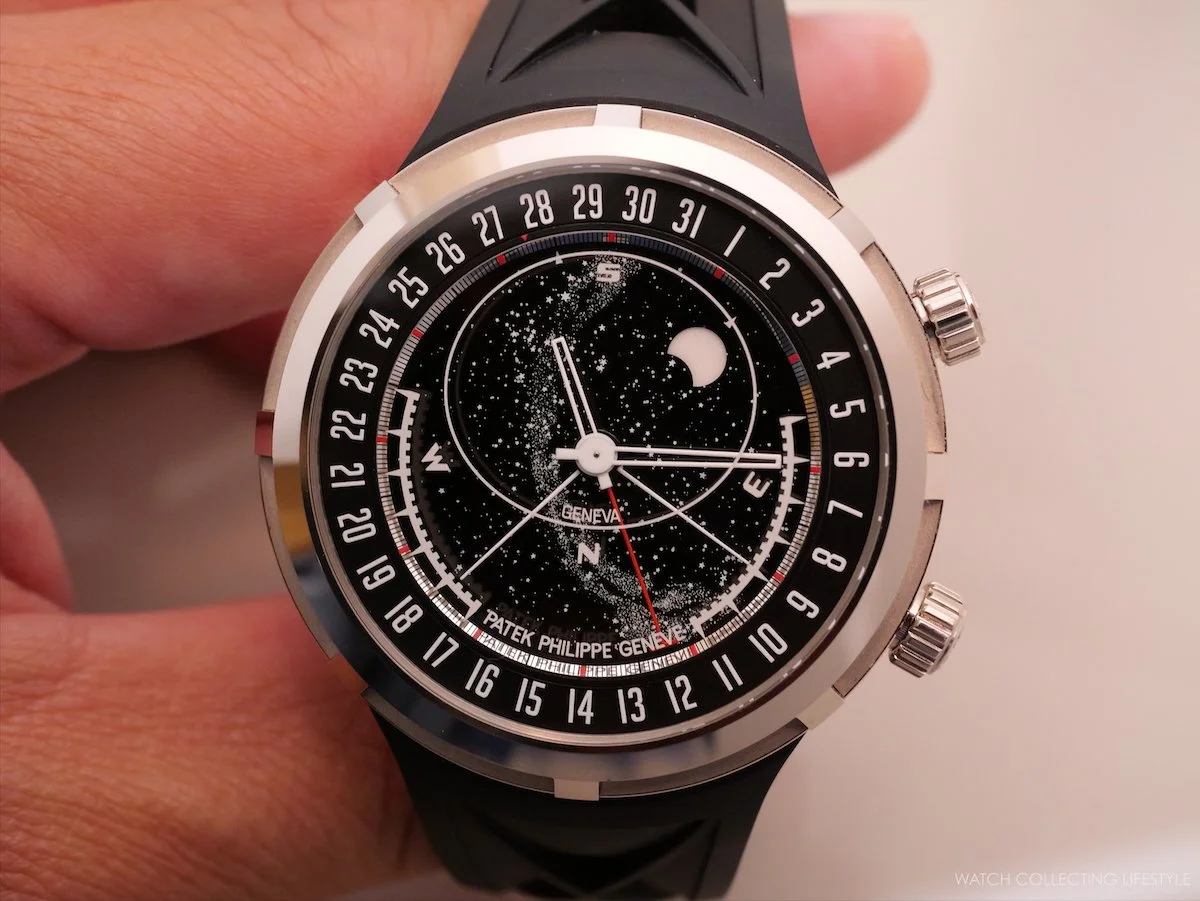
Patek Philippe's Celestial complication occupies its own category as a watch that displays not just the time but the sky itself, mapping the apparent motion of stars, the moon's orbit and phases, and the arc of the sun as seen from a specific latitude in a celestial chart. The reference 6105G-001 is the newest iteration of this idea, and it arrived at Watches and Wonders Geneva 2026 with an architecture that genuinely surprises.
Featuring a white gold case inspired by space module design—not sure why Patek Philippe chose to go this route—, a sapphire-crystal dial showing the Geneva sky in real time, and the first Celestial in the manufacture's history to indicate both sunrise and sunset times, as well as summer time to winter time correction. This watch required more than five years of development and six patent filings. This is not a watch that arrived quickly or easily.
Things to Know About the Watch and How it Works
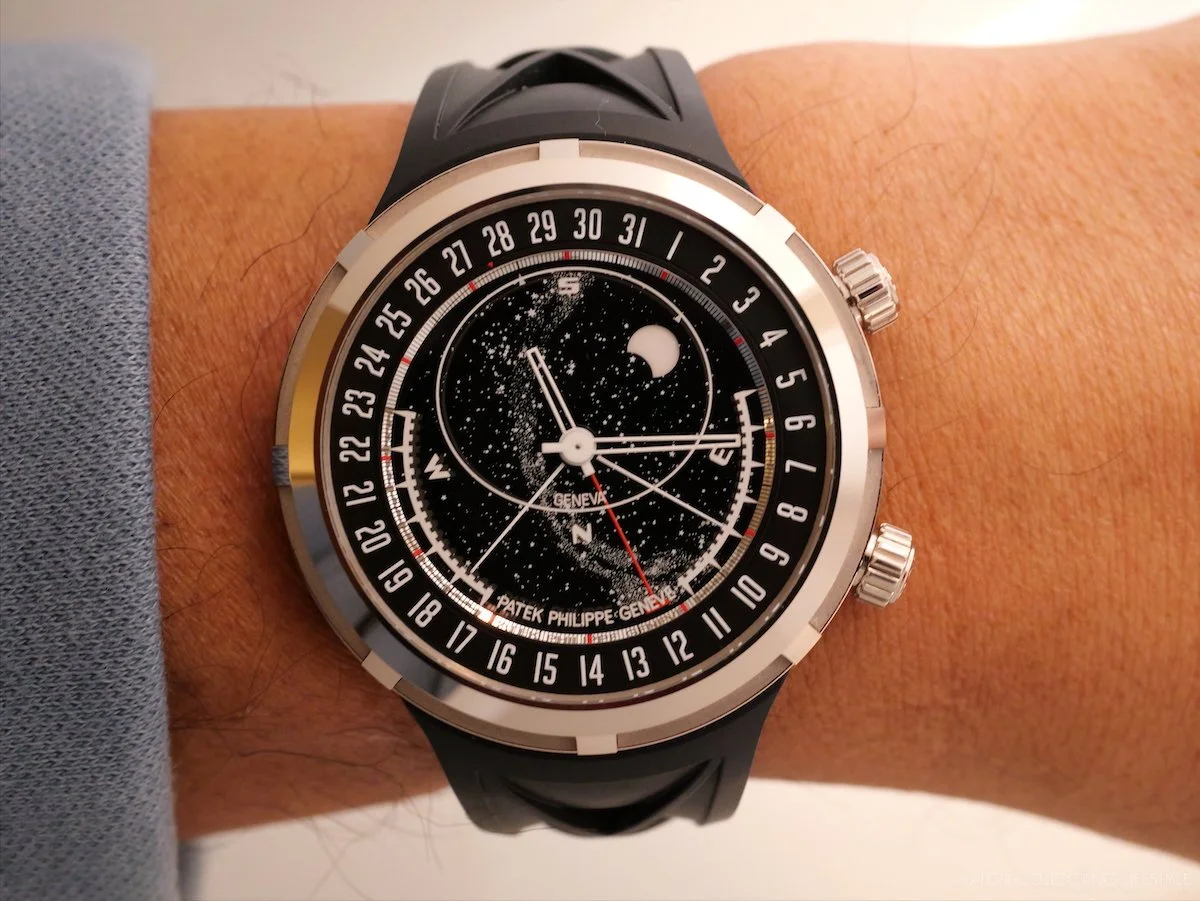
The Patek Philippe Celestial Sunrise and Sunset is equipped with an 18K white gold case that measures 47 mm in diameter and 12.39 mm in thickness, which is extremely massive for any Patek Philippe we can think of. Although the size seems justified by what it contains and displays, it wears differently than a conventional 47 mm watch, given that the visual weight is borne almost entirely by the dial rather than the case.
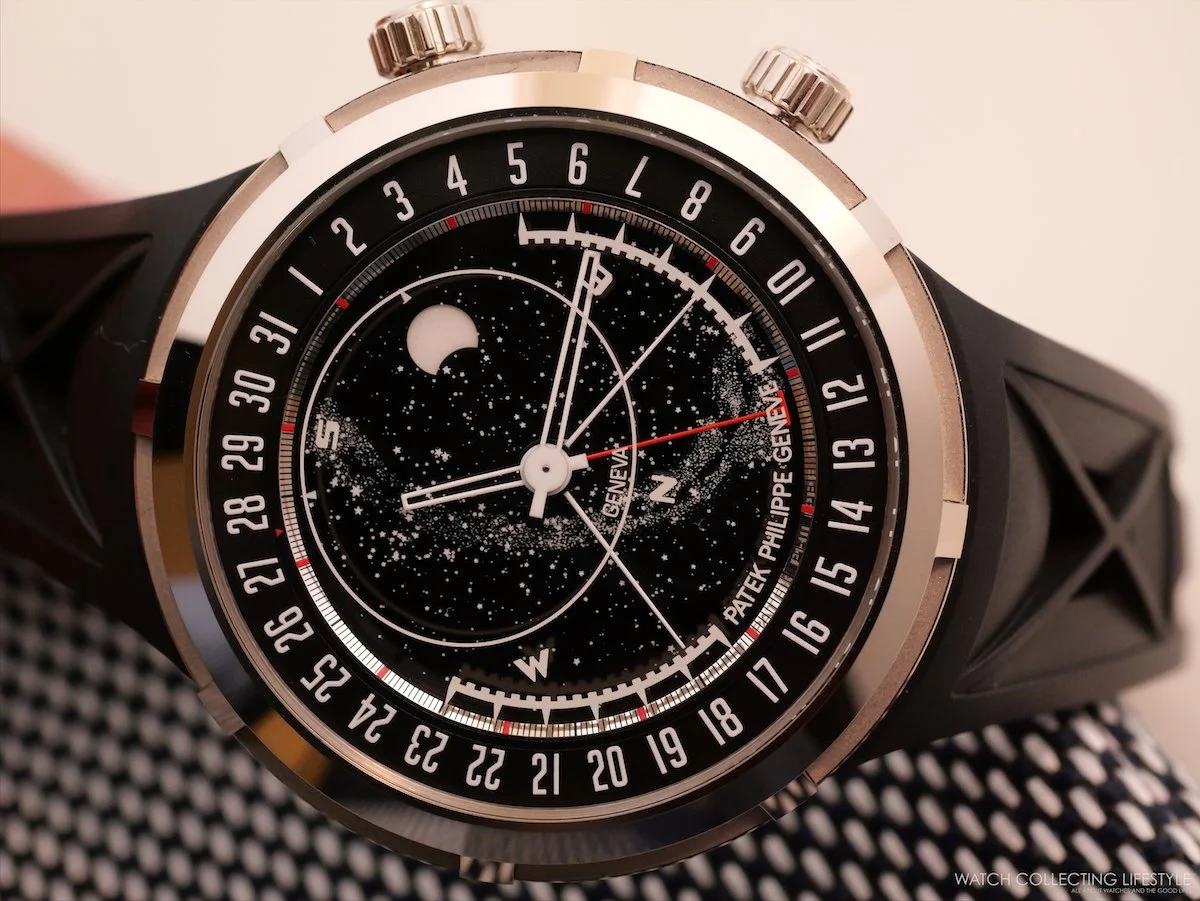
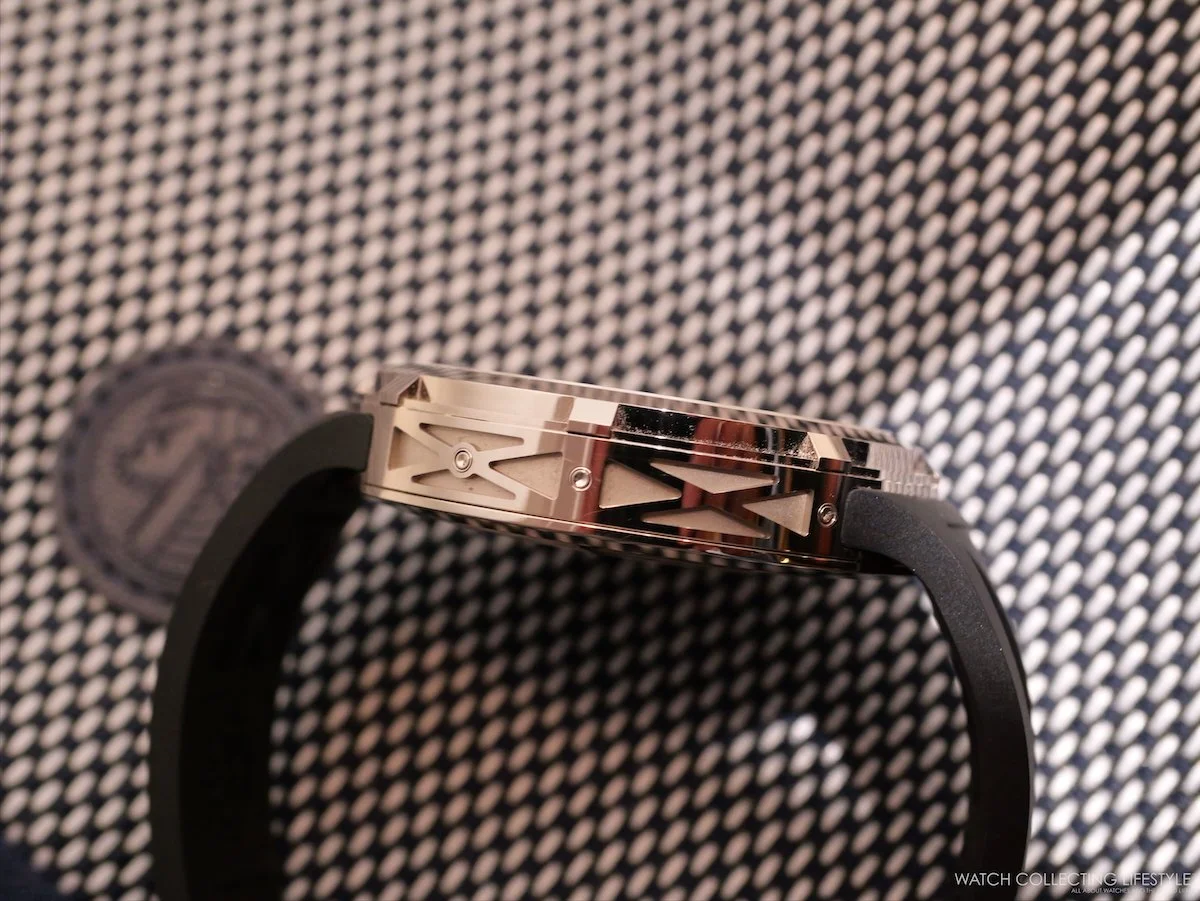
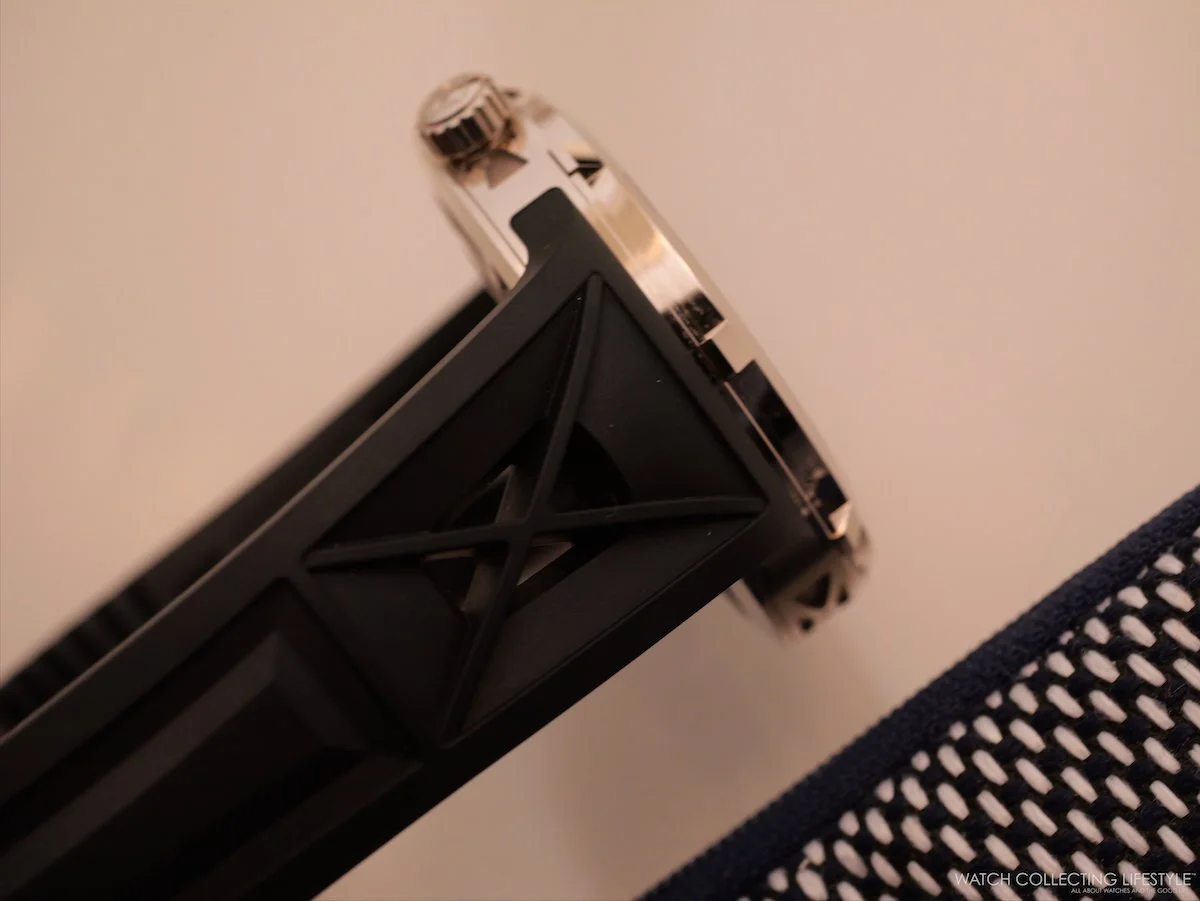
The surfaces combine polished and sandblasted finishes with deliberate contrast, and the ‘X’ shape geometric pattern applied to the case flanks and solid case back is drawn directly from the architecture of space modules with a vaguely futuristic approach that we personally don’t like, and we think that it has no room in a watch from Patek Philippe, and furthermore, at this price point. The lugs and crown follow the same logic, giving the 6105G-001 certain visual language from every angle. Three case correctors are used to set the date (7 o'clock), the summer time +1 hour (9 o'clock), and the winter time −1 hour (10 o'clock).
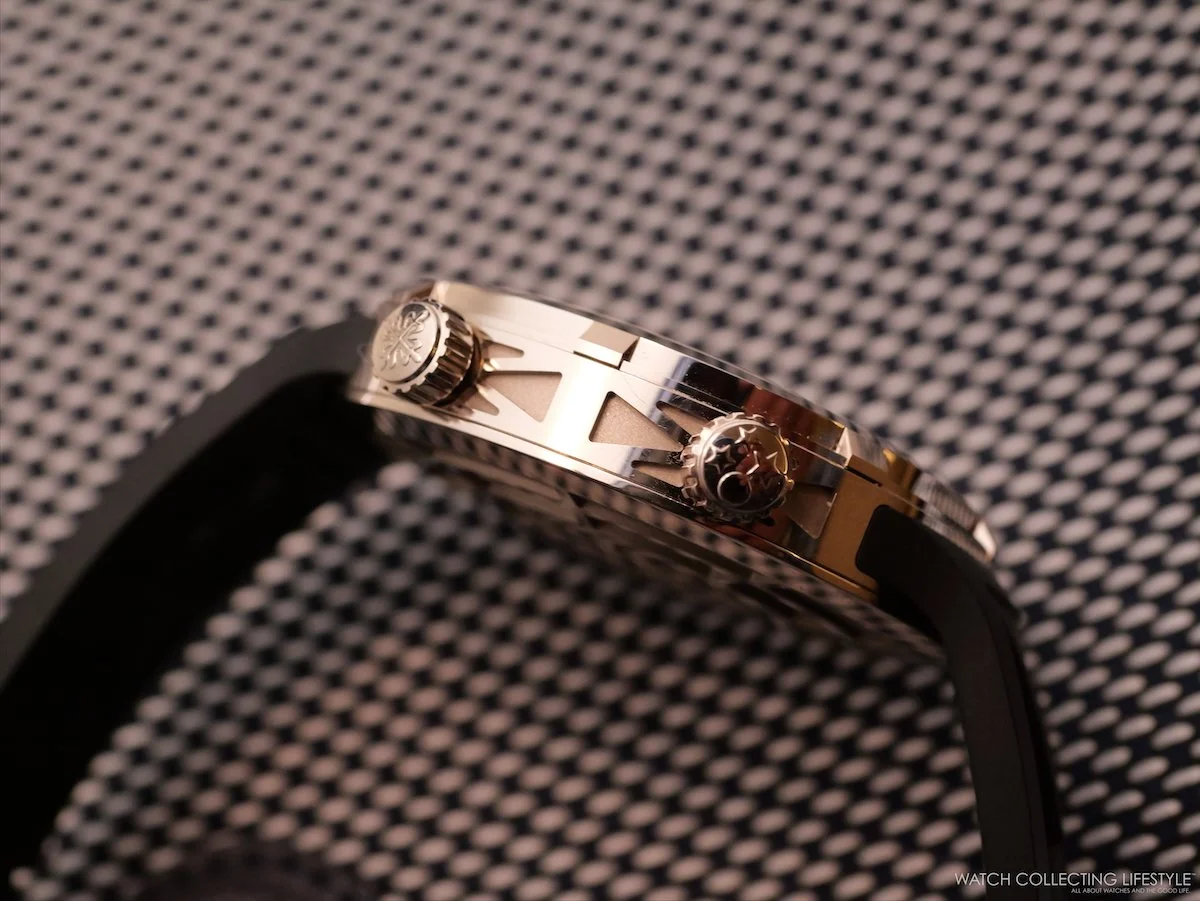
The crown at 4 o’clock features the Calatrava cross, while the crown at 2 o’clock features a moon and stars on bass relief. These two crowns govern everything. The 4 o'clock crown handles winding while pushed in and time-setting when pulled out. The 2 o’clock crown features a disengageable system: turning it clockwise produces no effect. To put it in position 2, the wearer must first press the crown, then rotate it to engage the setting function. Once the adjustment is complete, pressing the crown while rotating it clockwise returns it to its initial position, safely disengaging all correction functions. The 2 o'clock crown adjusts the annual index counterclockwise when the crown is pushed in and engaged; the moon when pulled out and rotated clockwise (position 2), and the sky chart while pulled out and rotated counterclockwise (position 3).
The Dial and Its Indications
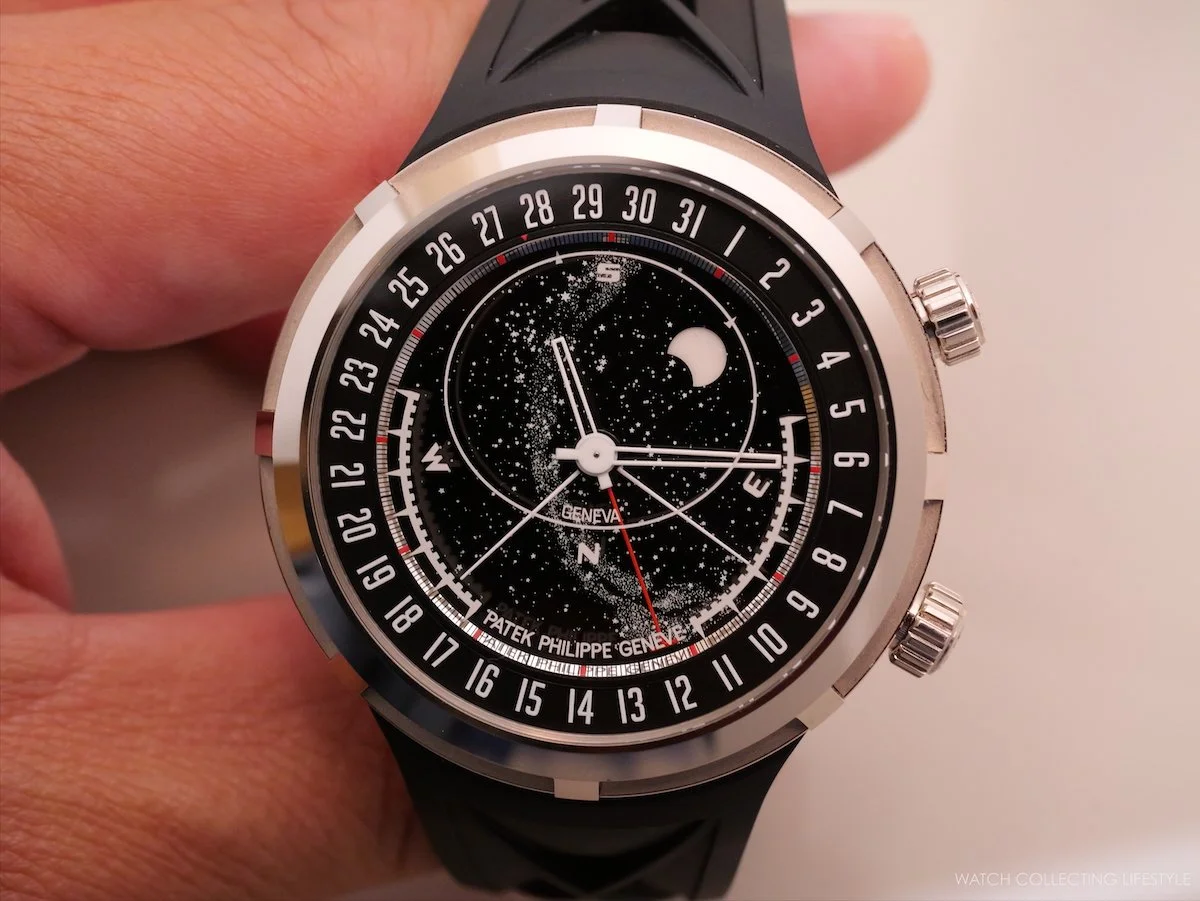
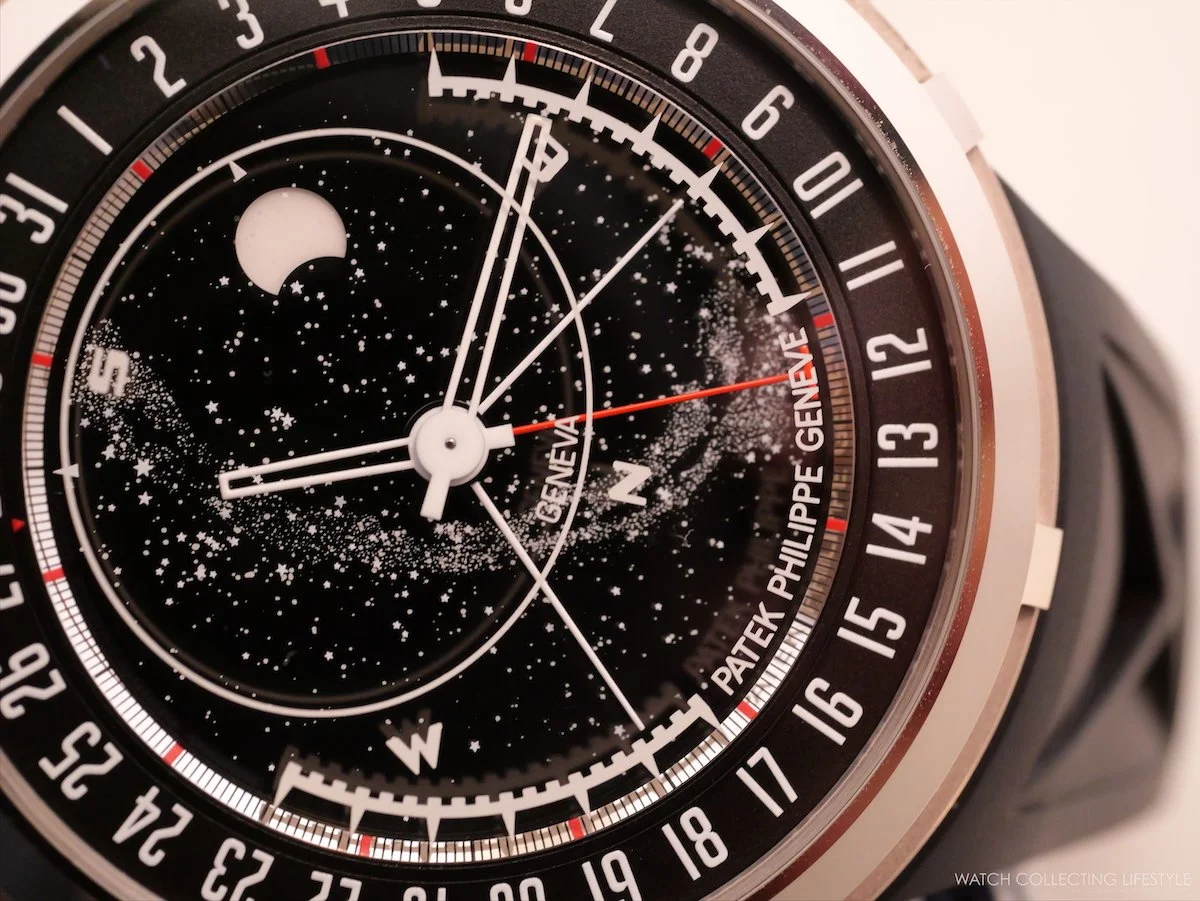
The sapphire-crystal dial is where the watch earns its place in the conversation. The dial is indeed a live sky chart with an ellipse representing the precise portion of the sky visible from Geneva—and from any city sharing its latitude. Three superposed rotating disks—each just 0.2mm thick—are used to simulate the apparent movement of stars, moon phases, and the moon's angular motion in real time.
The bottom shapphire disk—with 279 teeth—tracks the moon's orbital position and drives a planetary gear system displaying moon phases. Above it, a 356-tooth wheel rotates a transparent disk depicting the sky chart on one side and the Milky Way on the reverse. The sapphire crystal's inner elliptical contour frames the portion of sky visible from Geneva's latitude. This required precision across 25 billion gear-ratio combinations. The optimized results yield remarkably small deviations—0.05 seconds per day for the lunar day, 0.088 seconds per day for the sidereal day, and just 4.203 seconds per lunation for moon phases.
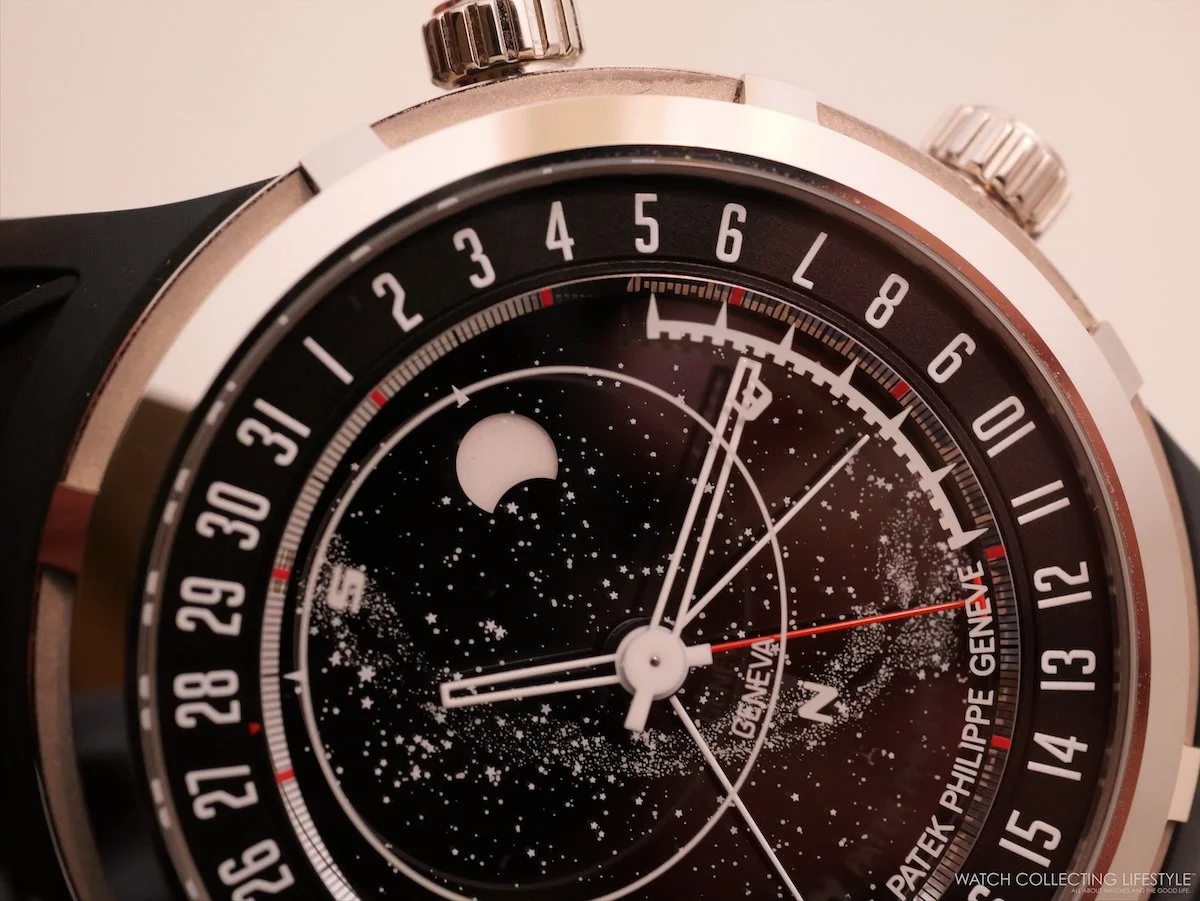
The moon is tracked across its full orbit, with both its phase and its angular motion displayed. Dedicated thin white hands indicate the exact time of sunrise and sunset for the current date, updating continuously per daily daylight variation as the year progresses and the solar arc shifts. The sunrise and sunset times are indicated on two white quadrant scales—quarter-circular gauge-style imprinted white—located between 3 and 5 o’clock—marked ‘E’ for East: Sunrise—and between 9 and 7 o’clock—marked ‘W’ for West: Sunset. A meridian function tracks the passage times for both Sirius and the Moon. A summer/winter time correction mechanism is operated by dedicated pushers at 9 and 10 o'clock.
The date is displayed on a peripheral disk running around the outer edge of the dial, indicated by a red-varnished hand that serves as a useful chromatic anchor against the black backdrop of the rotating celestial chart, executed over a smoked translucent sapphire crystal. Skeletonized hour and minute hands in white gold with white varnish sit above the dial, readable without disrupting the celestial display beneath them.
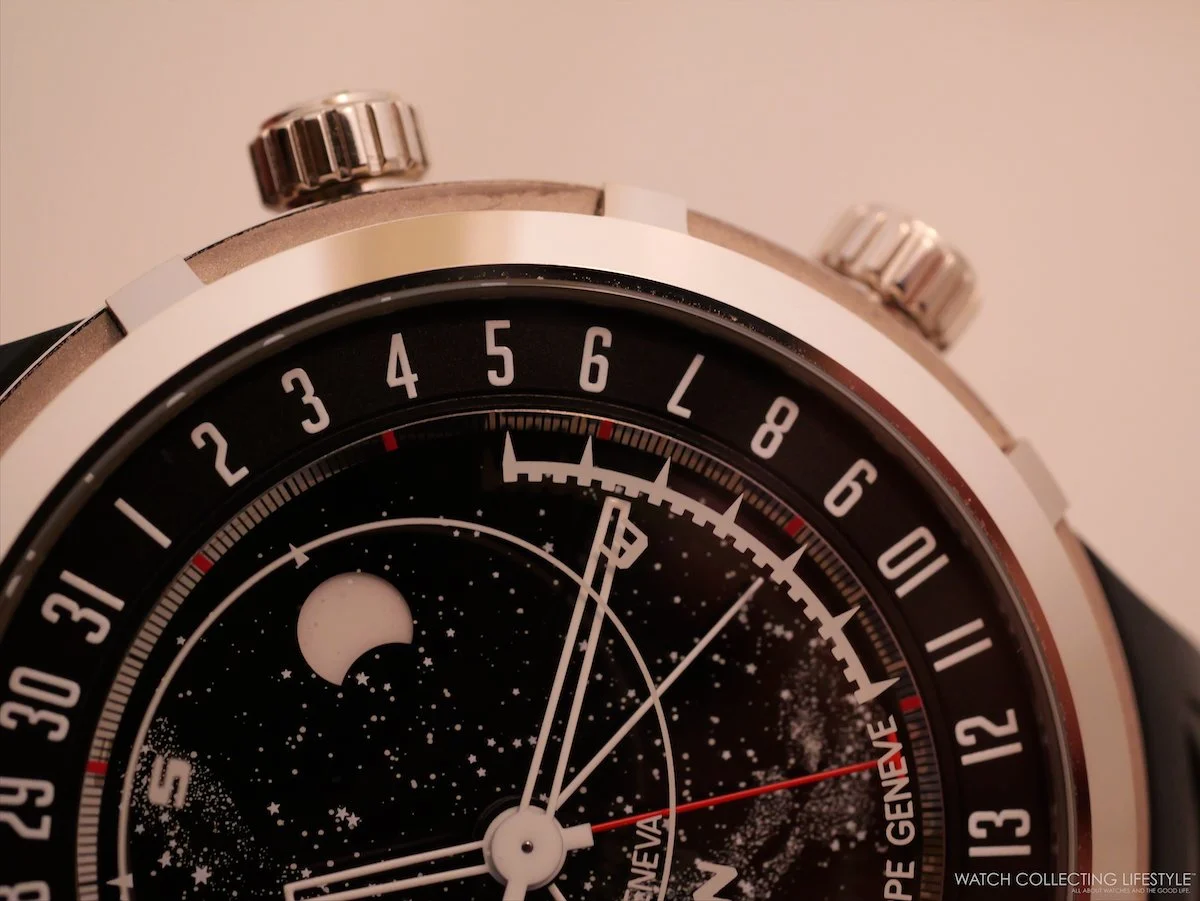
A patented corrector system allows the wearer to adjust the displayed time and the sunrise and sunset indications simultaneously during daylight saving transitions—a practical function that speaks to the level of thought invested in making this complication genuinely usable rather than merely spectacular.
The integrated, ventilated black composite strap features a distinctive X-shaped pattern that echoes the case’s geometric language, fastened with a patented fold-over clasp in white gold. Honestly, the design of the strap is nice but we feel that Patek Philippe is trying too hard to make this watch look sportier than it should be and reminding us to certain extent of a territory that is more suitable for a brand like Audemars Piguet.
The Movement
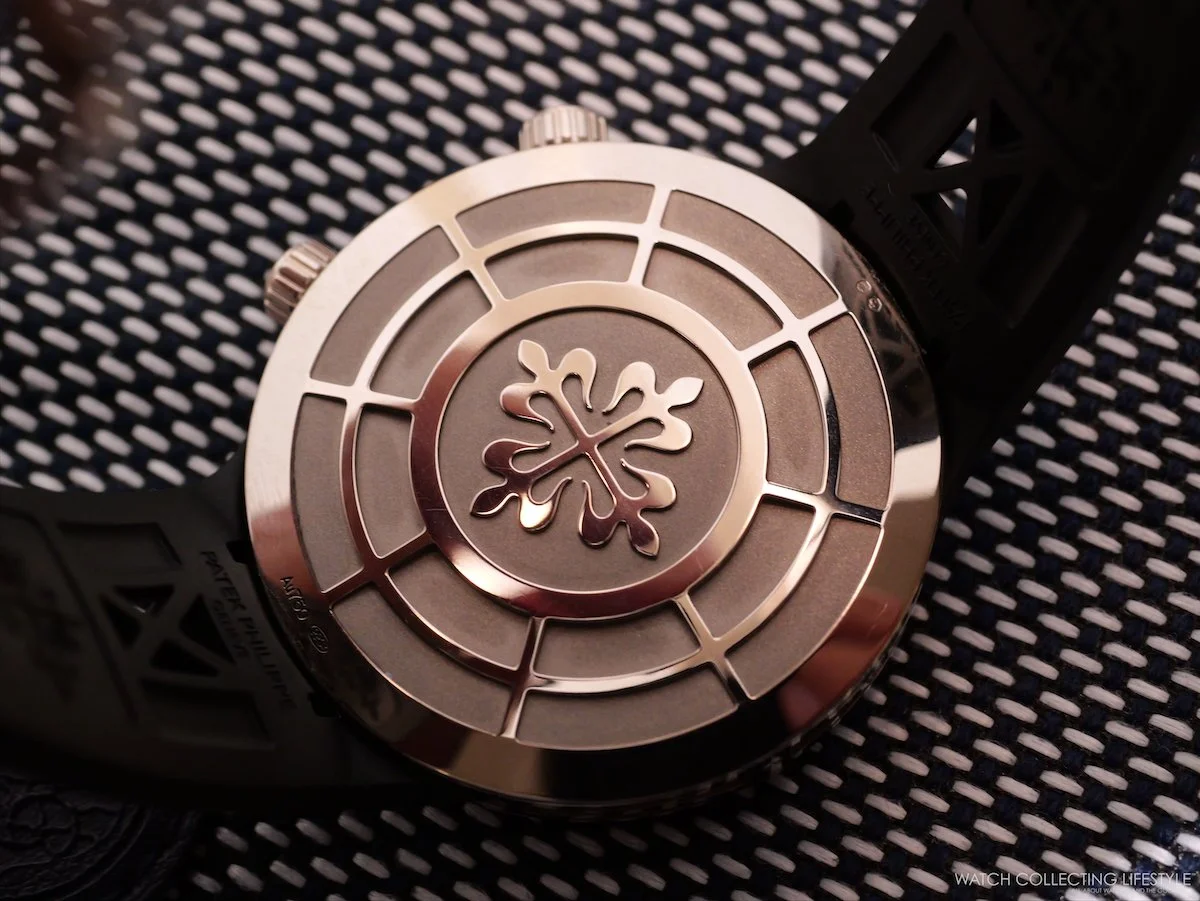
Powering the Celestial Sunrise and Sunset ref. 6105G-001 is the in-house self-winding calibre 240 C LU CL LCSO that took more than five years to develop. This automatic movement is equipped with a 22K gold off-center micro-rotor, and the movement is just 7.93 mm thick, a remarkable achievement given that the sunrise and sunset mechanism alone adds 121 components to the base of the previous Celestial movement. Composed of 426 parts, the movement provides a power reserve of 48 hours. The movement is protected by a solid case back that carries the same ‘X’ space-module patterning as the flanks, as well as a Calatrava cross at the center, with polished and sandblasted finishes.
On the Wrist & Price
On the wrist, the Celestial ref. 6105G-001 wears big but is not uncomfortable. This is a watch built for the collector who treats the wrist as a display surface for genuine horological intellectual curiosity. Due to its case and strap construction, this watch looks more like a precision instrument that was purposefully calibrated as a tool, more than a timepiece.
The sunrise and sunset functions elevate it beyond the existing Celestial family in a meaningful way. Without a doubt, one of the most singular watches introduced at Watches and Wonders Geneva 2026, and one that for sure will not accommodate just any wrist because of its 47 mm case size.
Sticker Price USD 437,610. For more info on Patek Philippe click here.