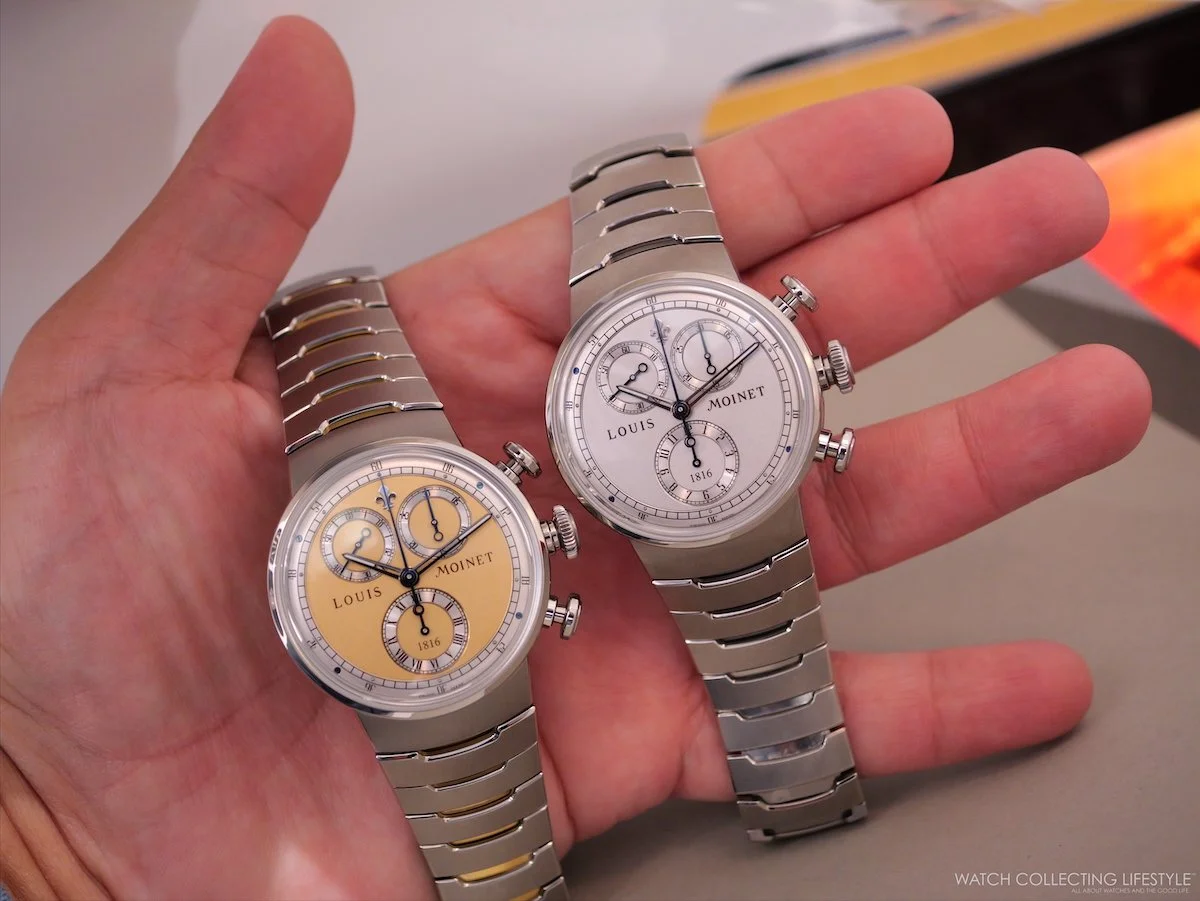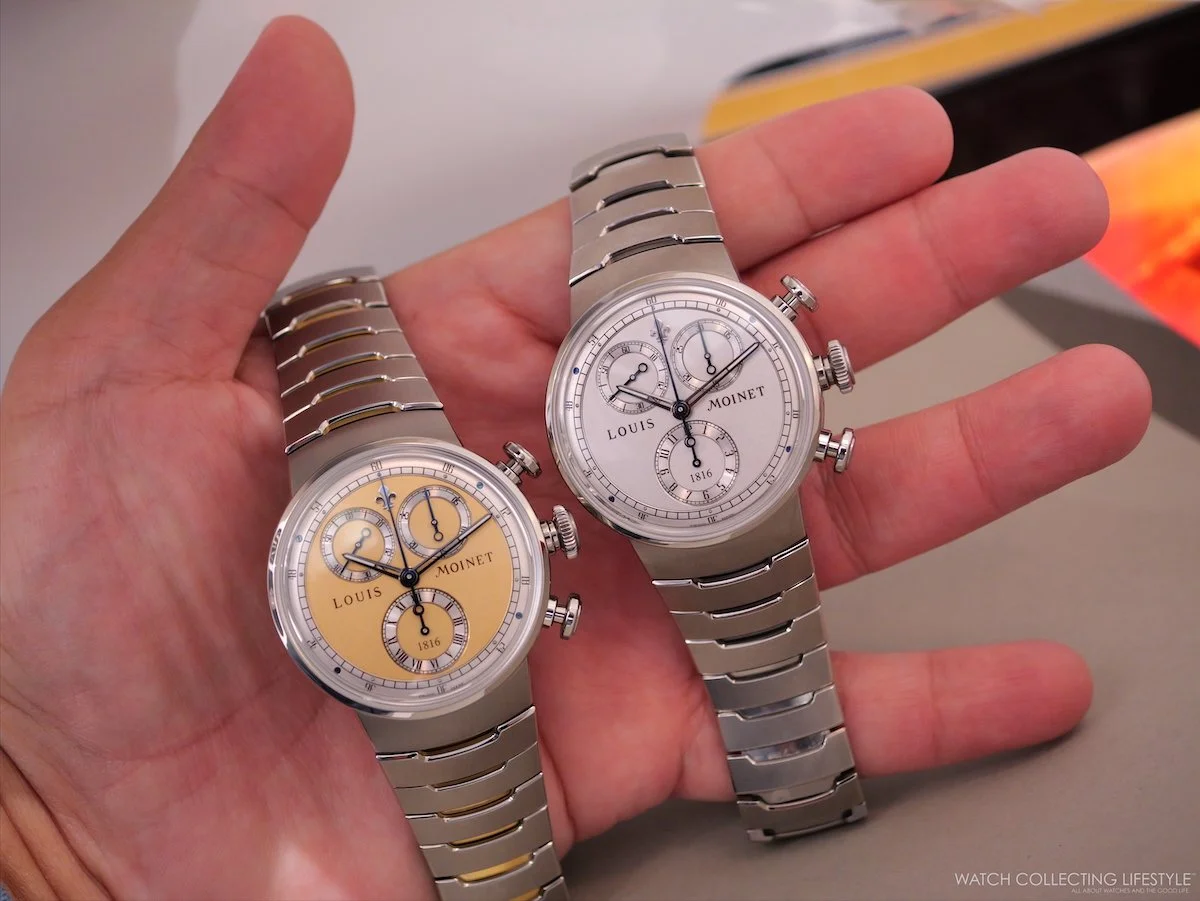
For Watches and Wonders 2026, Les Ateliers Louis Moinet returned to the 1816 Chronograph—introduced here last July—with a new edition that adds a touch of color to an already compelling timepiece. The architecture remains unchanged: named for the year its creator invented the chronograph, built around a dial layout drawn directly from the original compteur de tierces. What changes this time is the palette. This pair of watches celebrates the 210th anniversary of Louis Moinet's invention, and the latest iteration’s chosen hue is champagne.
Things to Know About the Watch
The grade 5 titanium case arrives unchanged from the original 1816 Chronograph measuring 40.6 mm in diameter with a double-gadroon profile that alternates between polished and satin-finished surfaces, and assembled from 51 individual components. Louis Moinet's Directoire-era semi-bassine silhouette is preserved in full, the fleur-de-lys winding crown—emblem of Bourges, Moinet's birthplace—still anchoring the profile between two quietly placed pushers.
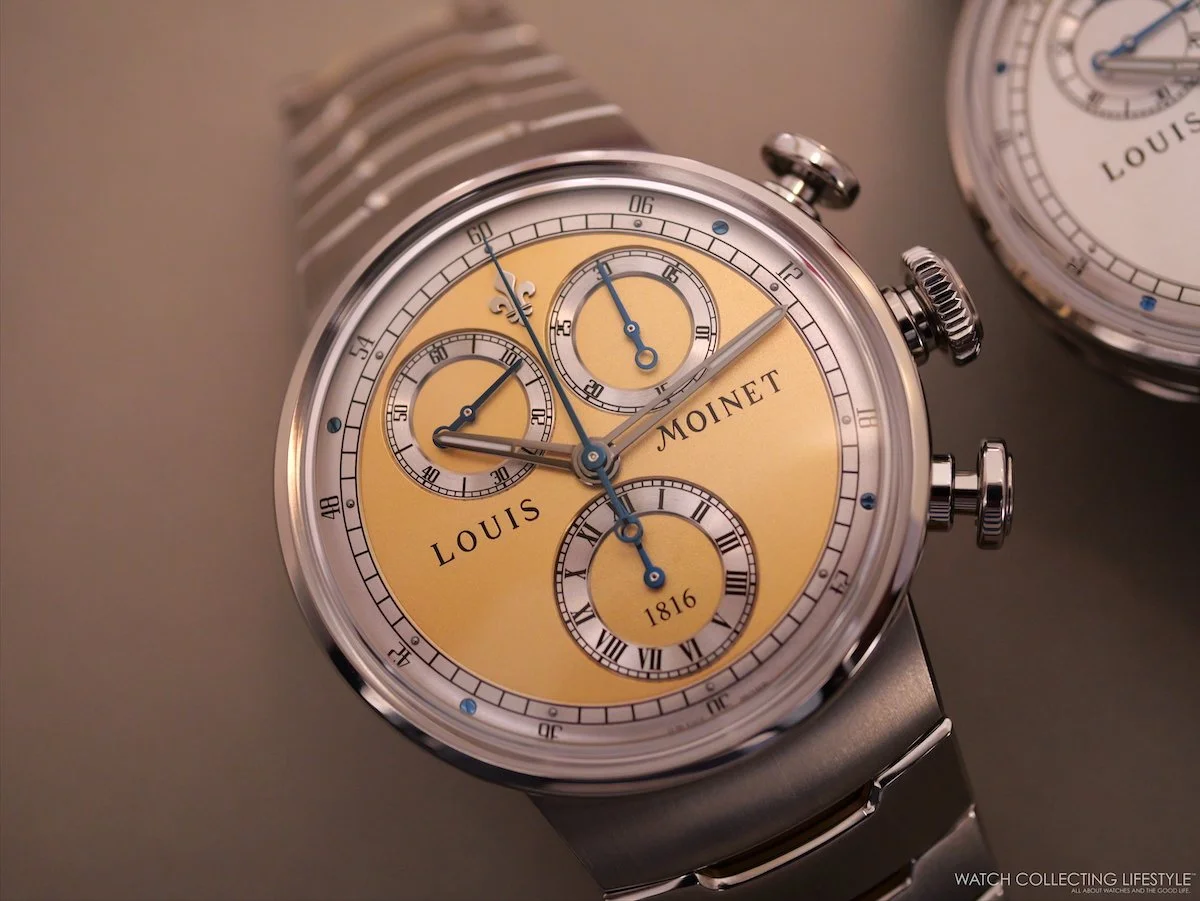
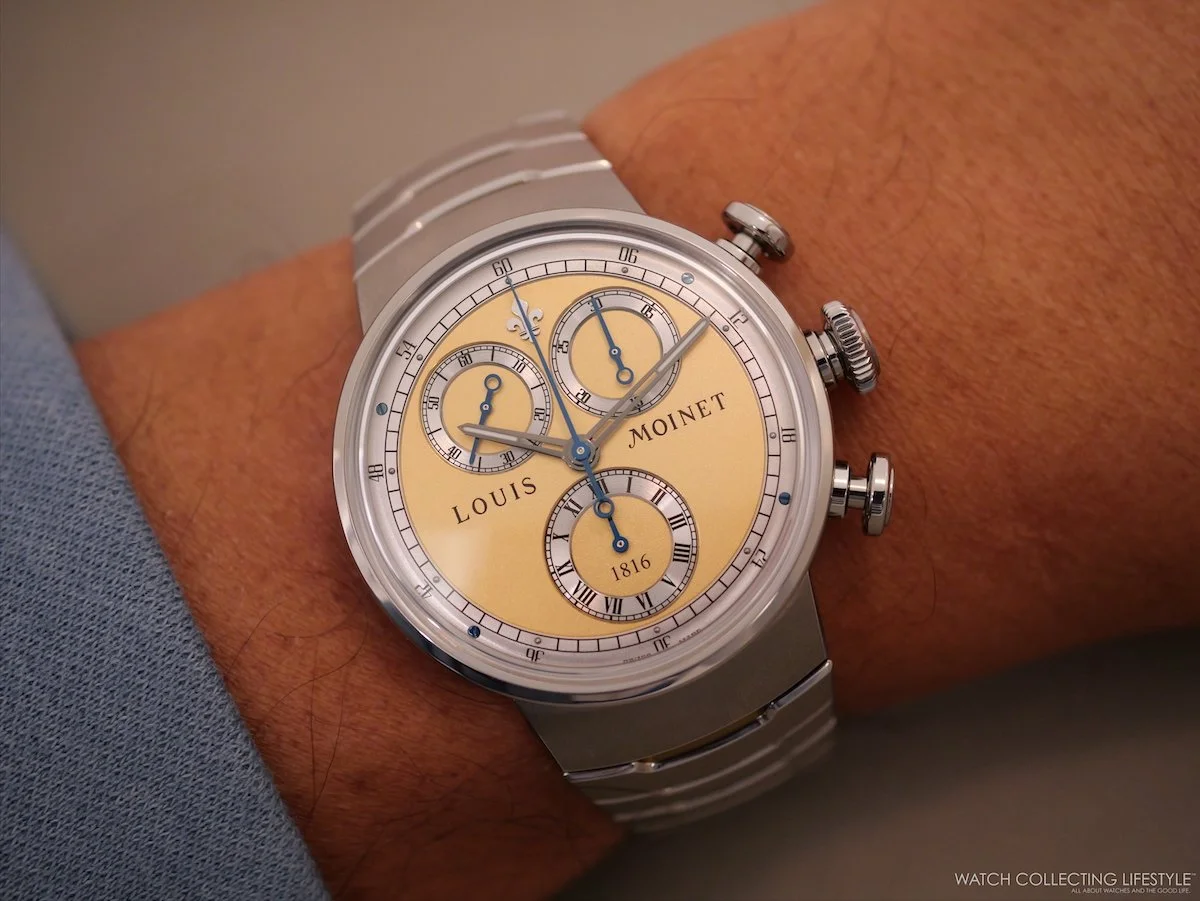
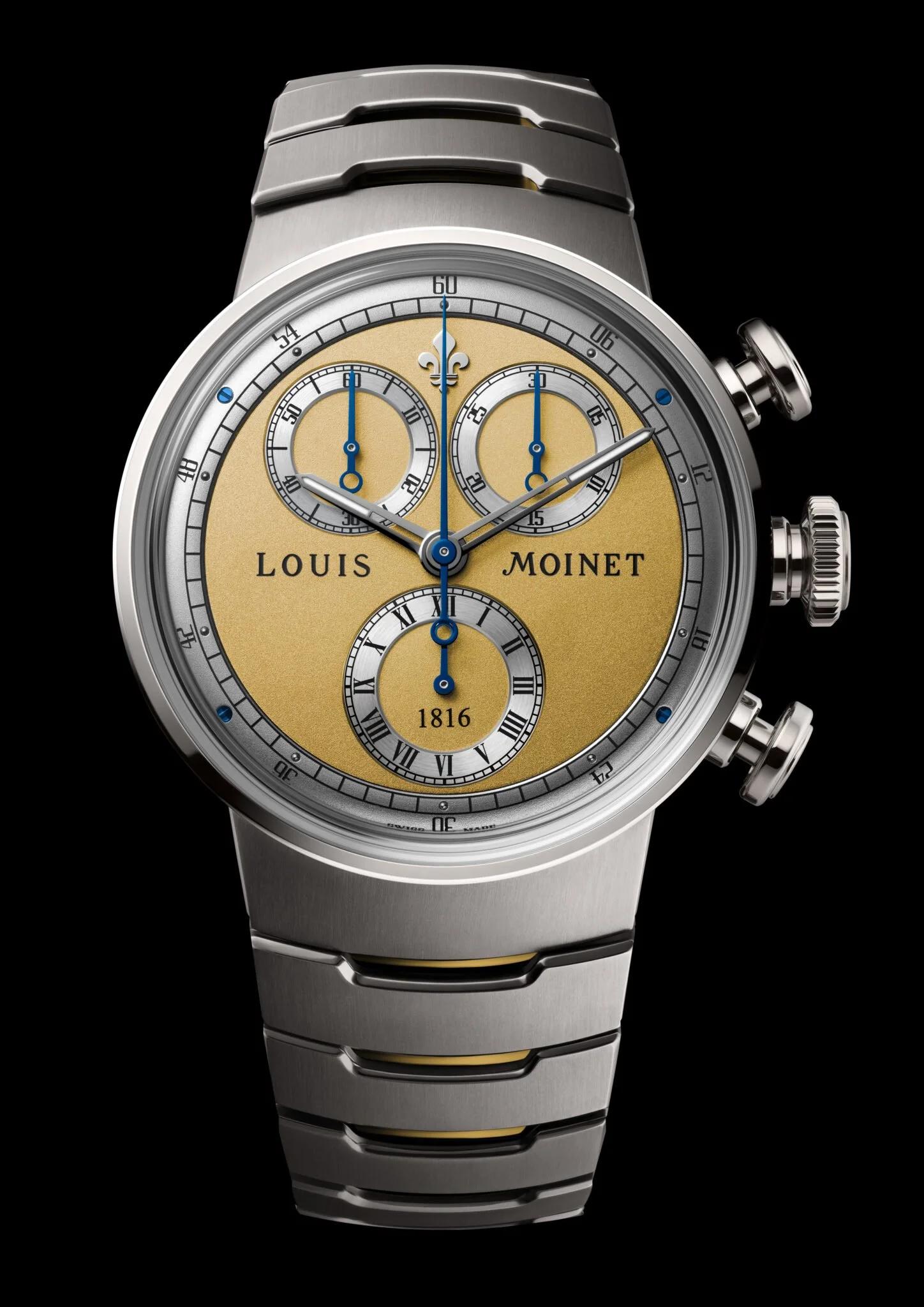
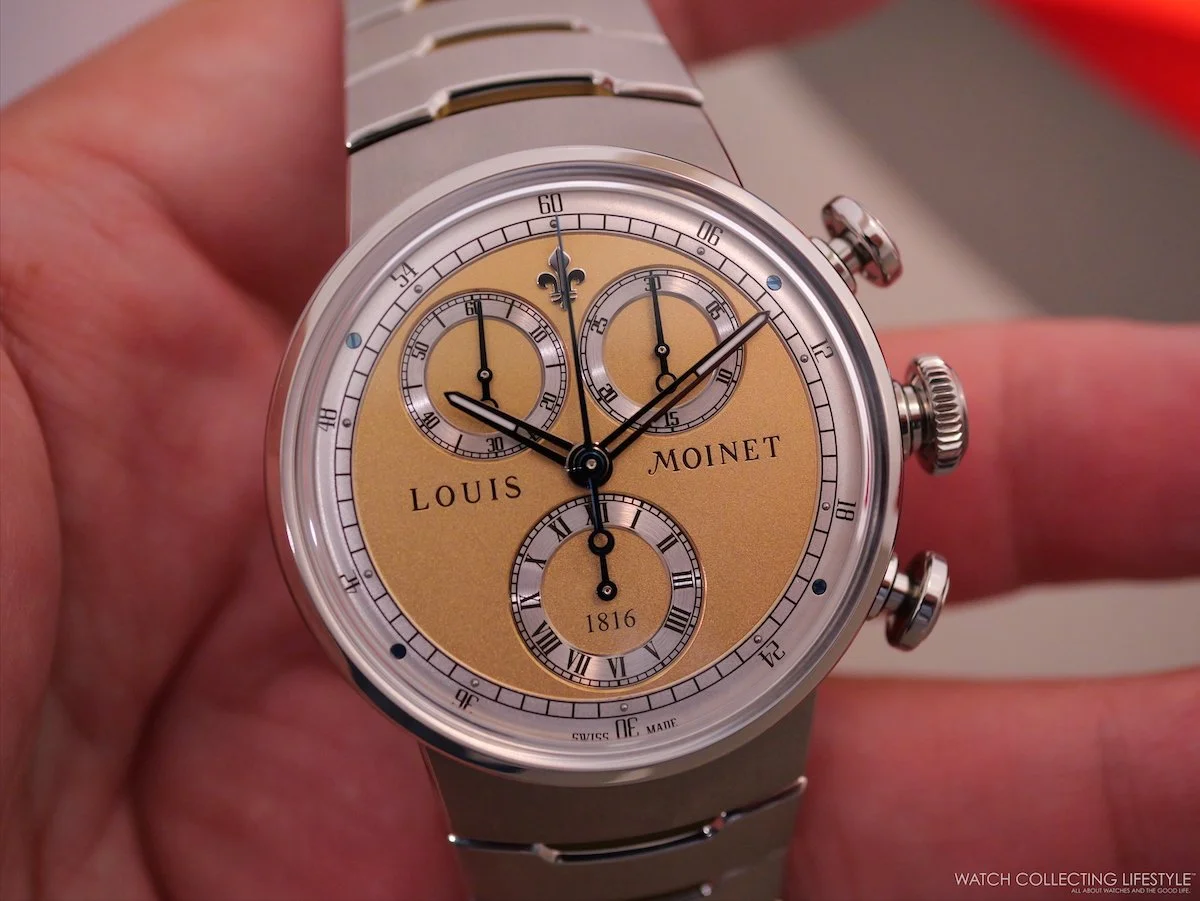
The dial is what differentiates this edition. A warm champagne tone saturates the dial plate and the three subdial centers, introducing depth and warmth in place of the rhodium original's deliberately cool restraint. The reference point here isn't decorative, it's mechanical.
The hue is intended to echo the gilded bridges of the LM1816 calibre itself, allowing the movement's character to define the watch's palette. Rhodium-plated rings on the counters establish a clear visual hierarchy, maintaining legibility against the warmer ground. Heat-blued steel hands across the chronograph, totalizers, and openworked hours and minutes’ hands provide the necessary contrast.
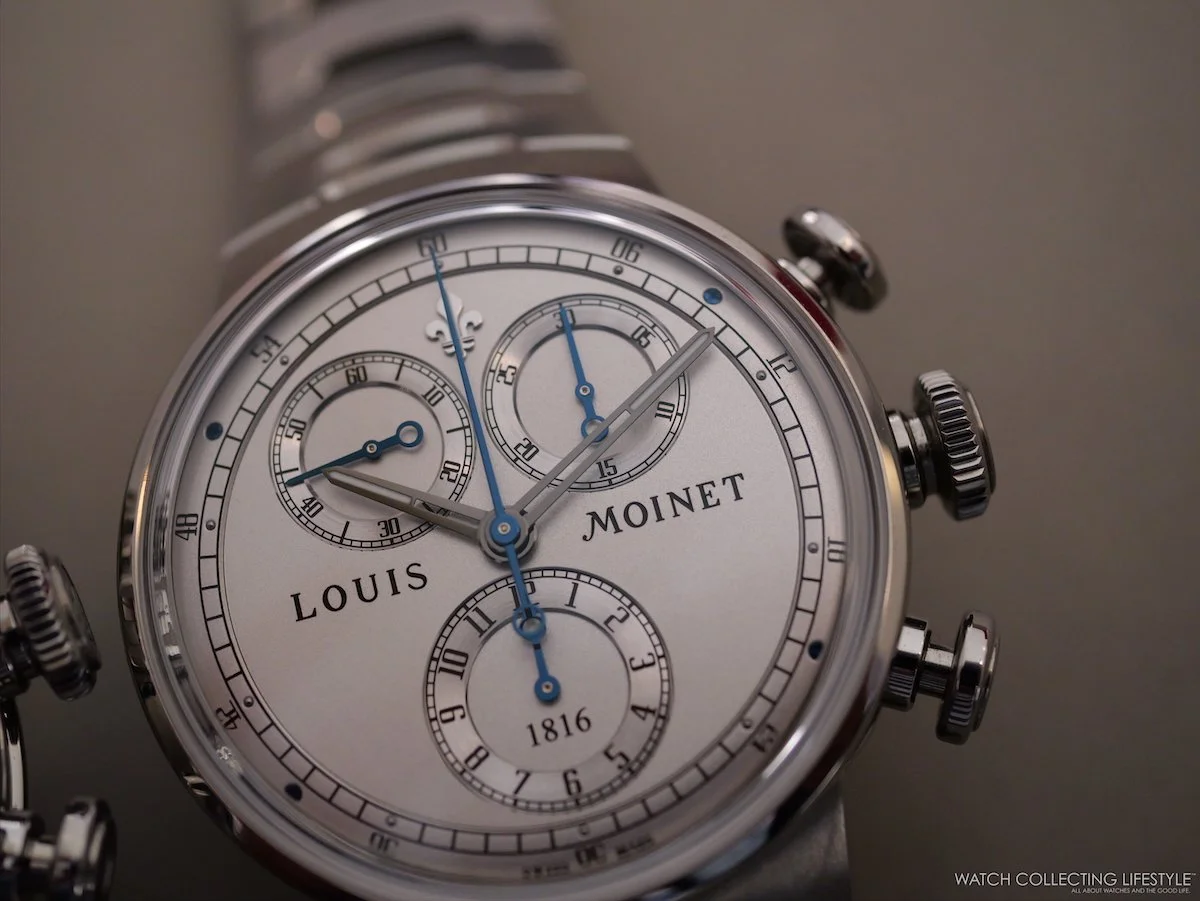
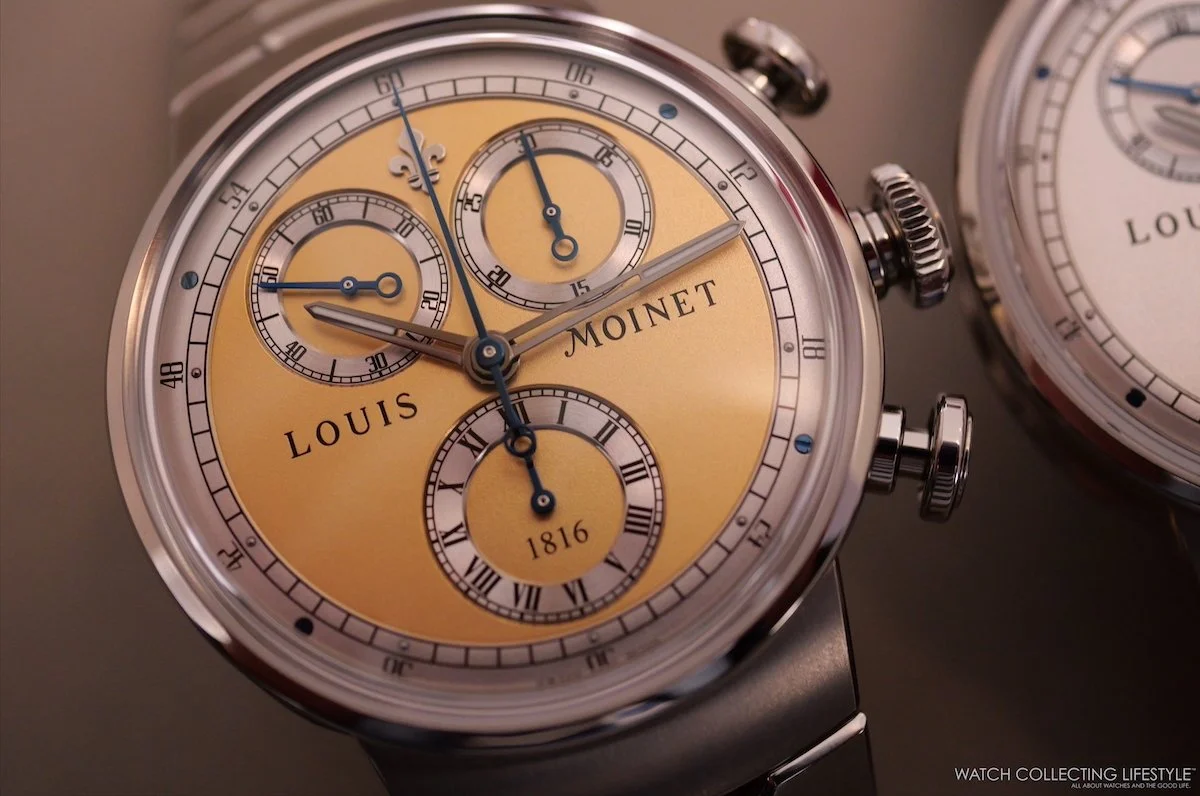
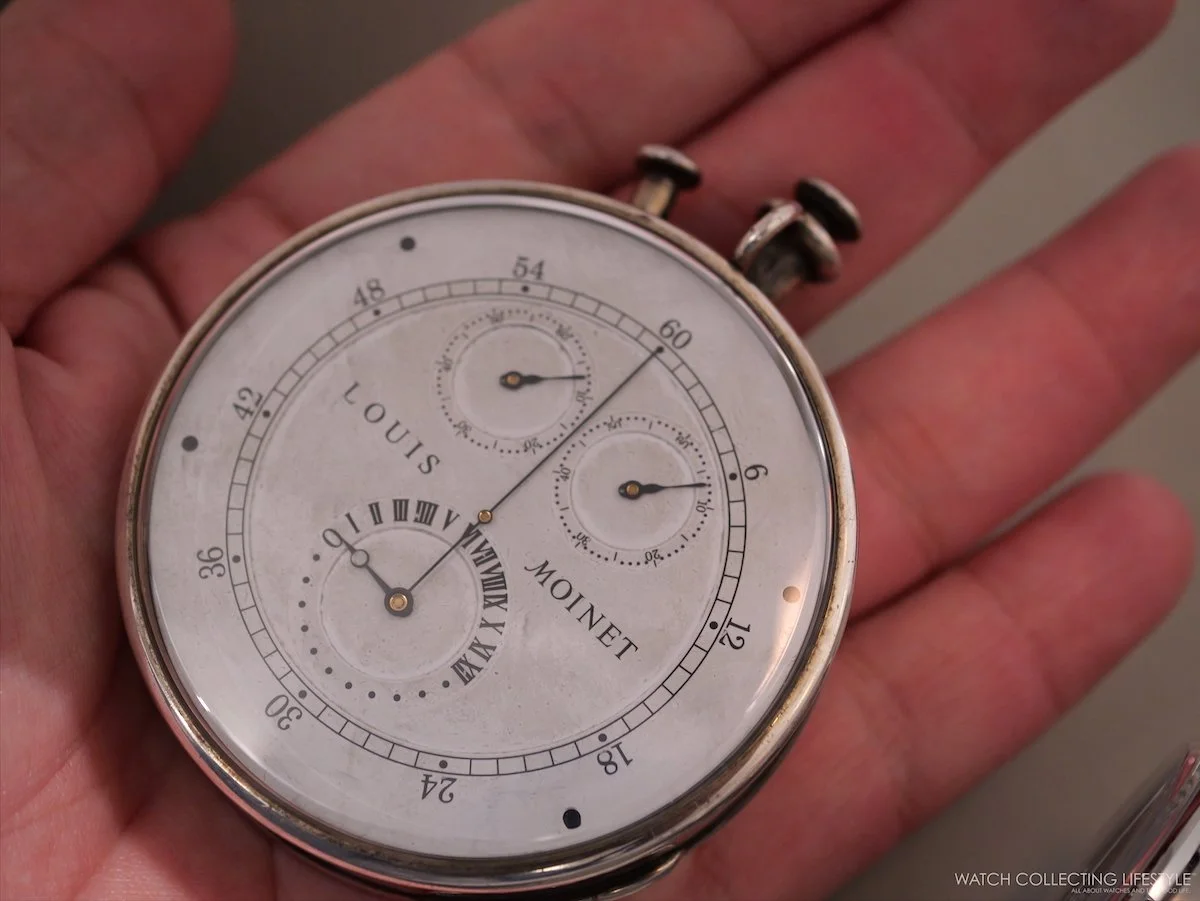
The most historically deliberate change appears on the 12-hour totalizer, which now carries Roman numerals in place of Arabic ones, a direct citation of the 1816 instrument from which this watch descends. On paper, it is a small shift; in practice, it reads differently—more archival, more directly connected to the source pocket watch.
The dial layout is unchanged, with a small running seconds subdial at 10 o’clock, a 30-minute jumping chronograph totalizer at 2 o’clock—arranged symmetrically across the upper half of the dial—, and the 12-hour chronograph totalizer at 6 o’clock, the outer flange is divided into six-minute-increment steps and secured with four blued-steel screws.
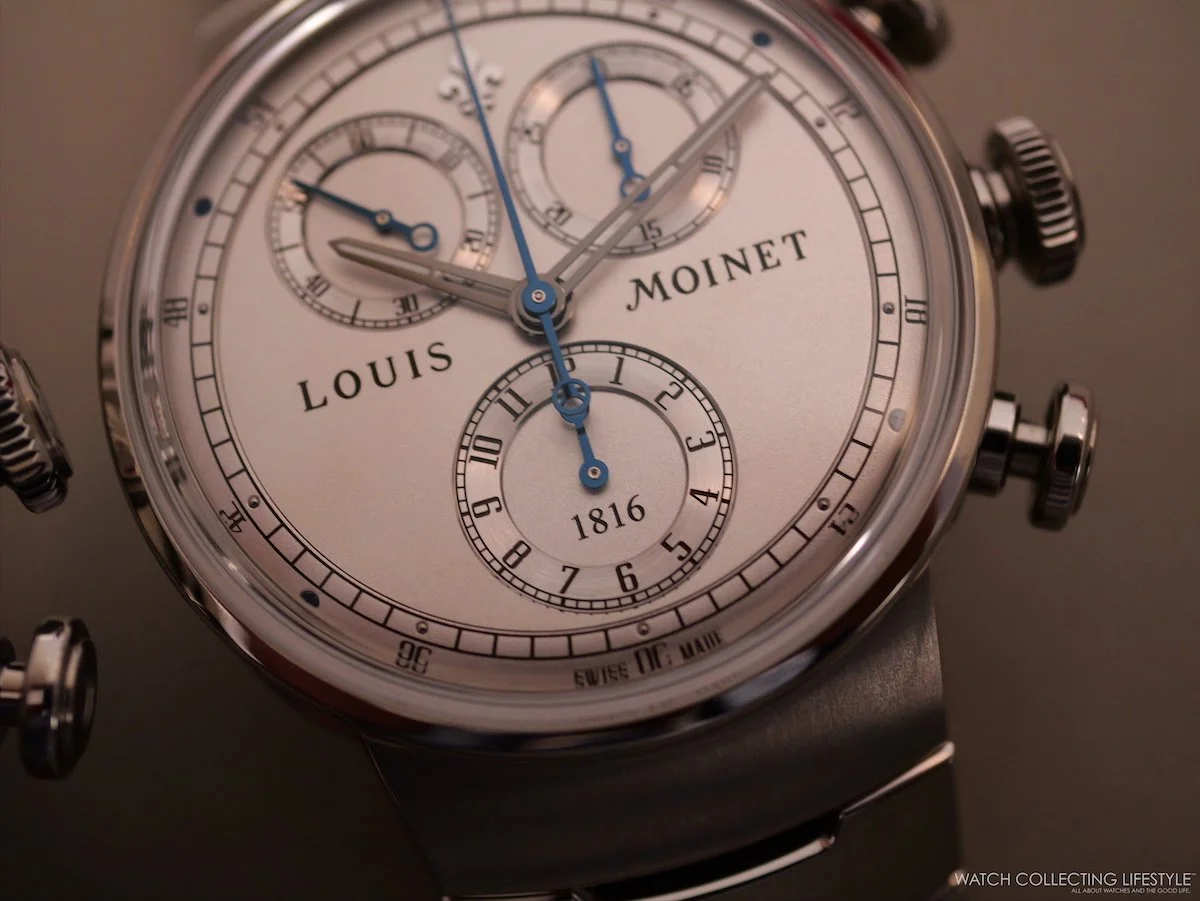
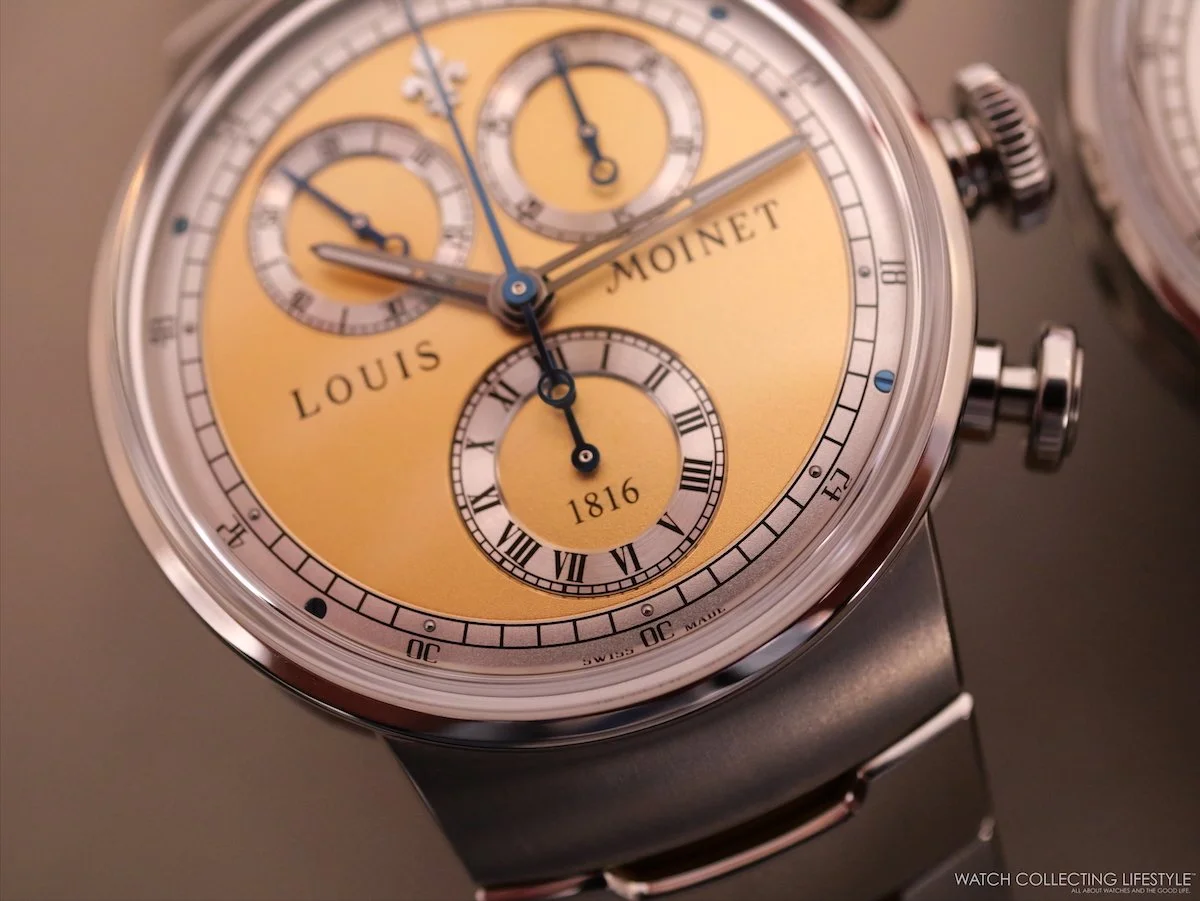
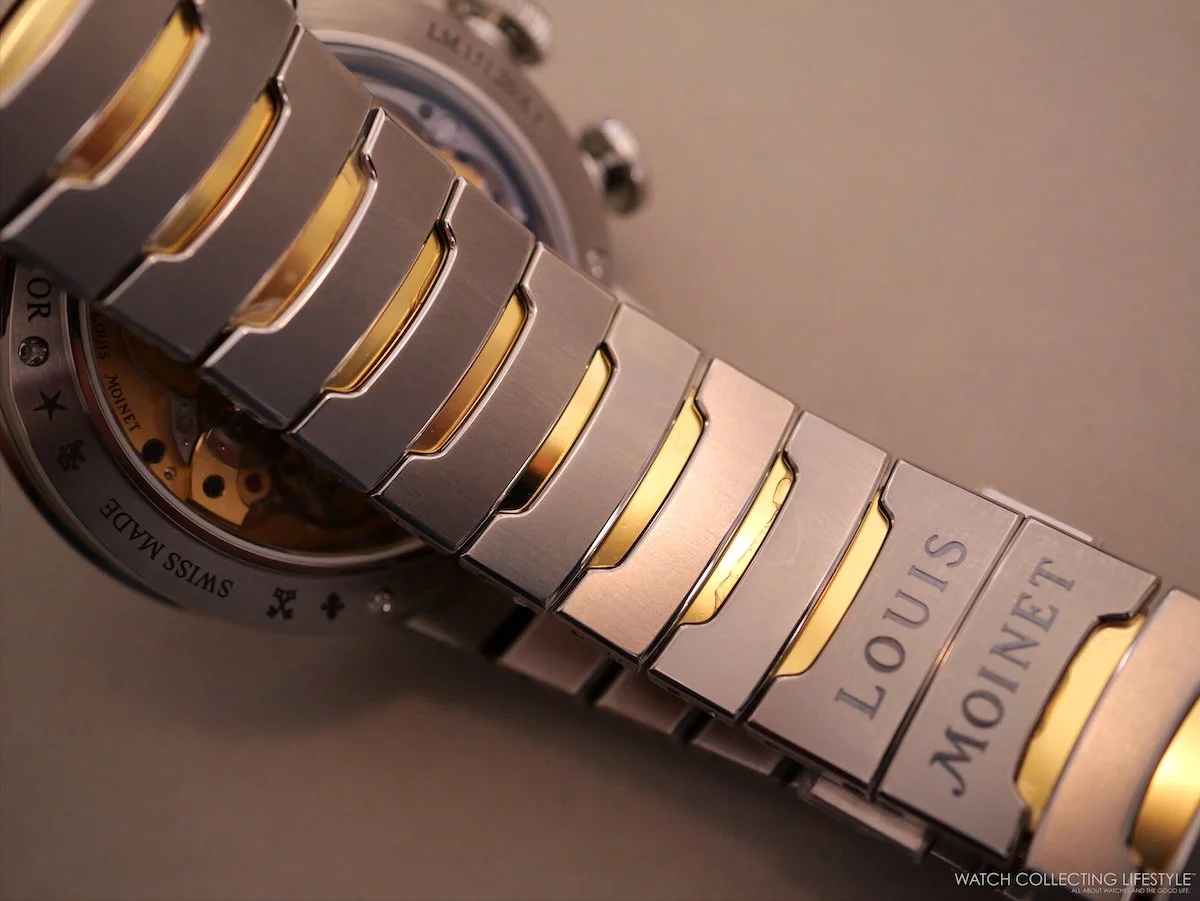
The grade 5 titanium bracelet with its "Project BRIDGE" design marks the first metal bracelet Louis Moinet has ever produced for his watches, and this time it receives champagne DLC coating on its intermediate links. The finish picks up the dial color at the wrist, tracing the U-shaped architecture of those links and drawing the bracelet into visual conversation with the dial without forcing the association. The bracelet is equipped with a double-folding deployant clasp.
The Movement
Powering the Louis Moinet 1816 Chronograph in both of its versions is the Calibre LM1816 that was developed from scratch in collaboration with Concepto. The dial defined the movement, not the reverse. The result is a manual-wound column-wheel chronograph composed of 330 parts and 34 jewels, and which beats at 28,800 vph to provide a 48-hour power reserve when fully wound. Through the display sapphire case back, one can admire the beautiful movement—one of the nicest chronograph movements we’ve reviewed—finished with gold-plated bridges, blued screws, and synthetic ruby jewels in sharp relief. A movement that rewards the look.
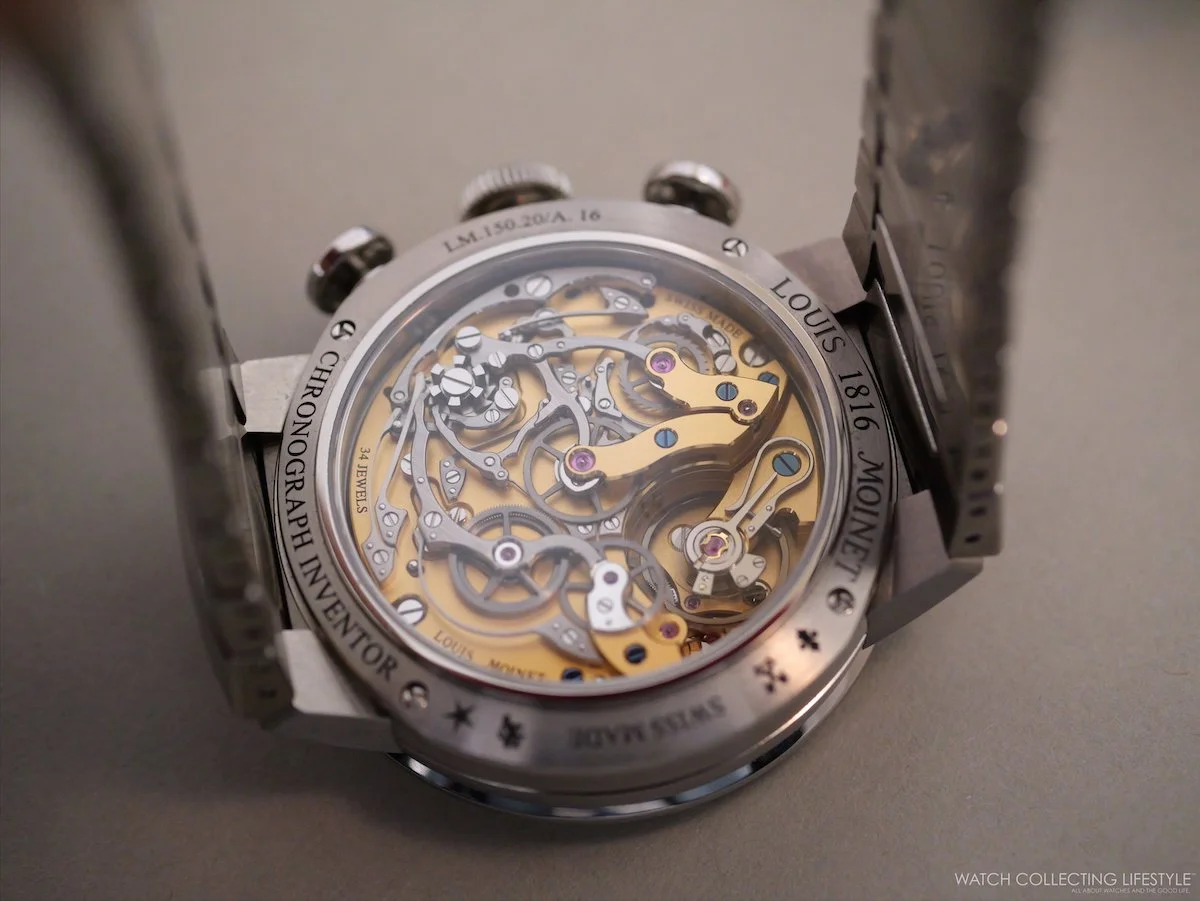
The instantaneous jumping minute counter is the mechanical centerpiece of this movement. Where a trailing chronograph counter advances continuously, the jumping mechanism snaps the totalizer hand to the next minute precisely at the 60-second mark, enabling error-free elapsed-minute readings at a glance. A wolf-tooth wheel, cam, rocker, and pawl execute this, with an isolator built into the reset to protect the mechanism on flyback. Meanwhile, the column wheel coordinates start, stop, and reset with the smooth, deliberate engagement expected at this level.
On the Wrist & Price
The 1816 Chronograph wears slightly smaller than its actual size and is very light on the wrist, weighing 117.8 grams. Both versions confirm what Louis Moinet understood about proportion when the original 1816 was conceived: a chronograph of this complication doesn't require size to communicate authority.
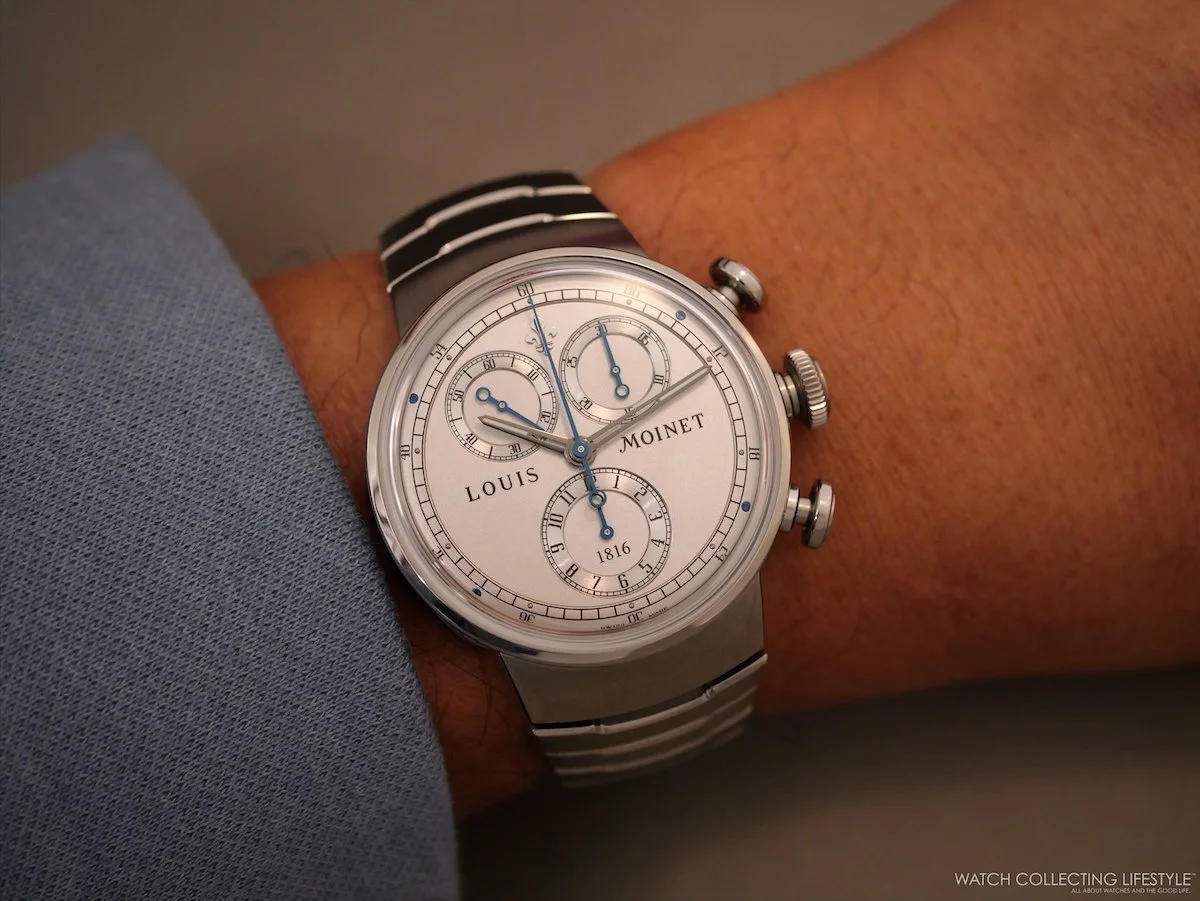
The champagne edition commands more attention with its warm dial, which immediately draws the eye, and the heat-blued hands gain contrast against it, reading more dramatically in person than in press photography. The Project BRIDGE bracelet's champagne DLC intermediate links earn their keep: the color relationship between bracelet and dial feels considered rather than coordinated. On the other hand, the rhodium version is the quieter proposition with its monochromatic cloak. The blued hands do their work with less impact against the silver dial in a more restrained way that is closer in character to the original instrument.
Sticker Price USD 43,500 for the champagne dial and USD 42,500 for the rhodium silver dial. For more info on Louis Moinet click here.