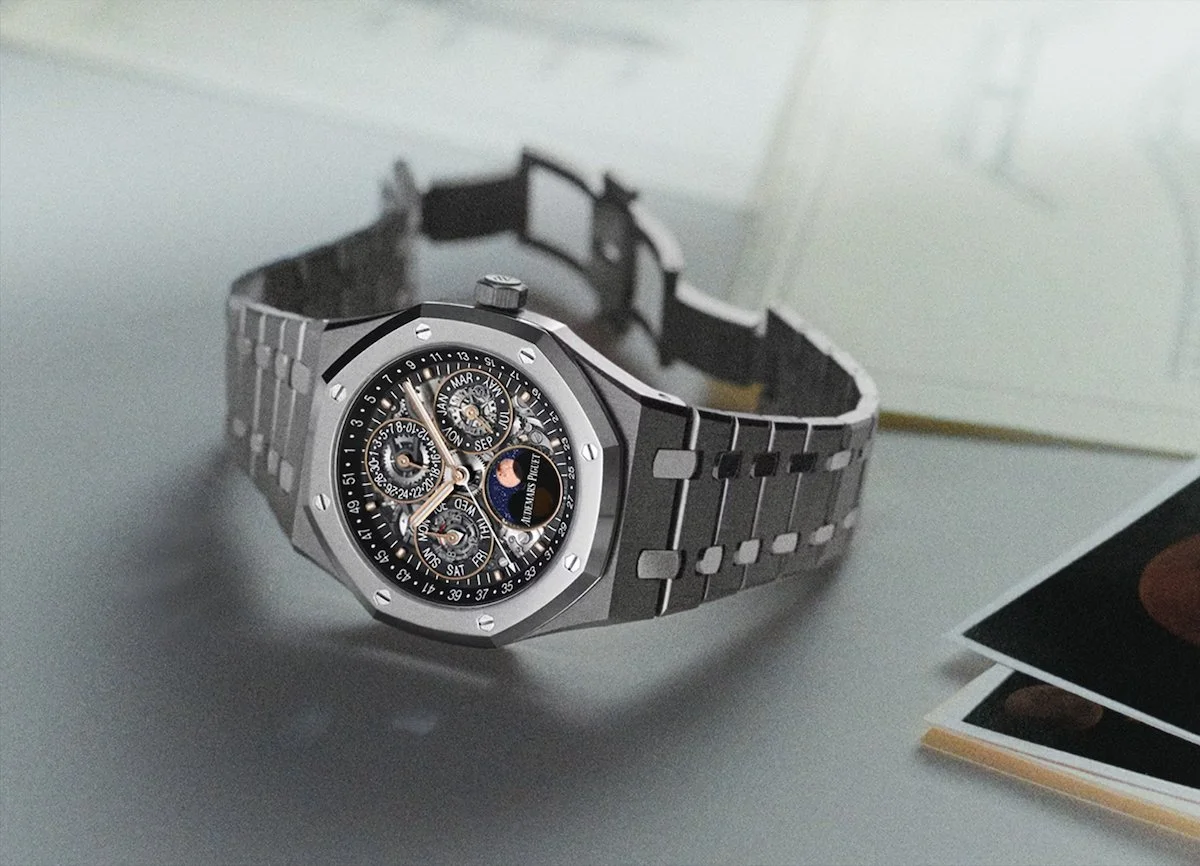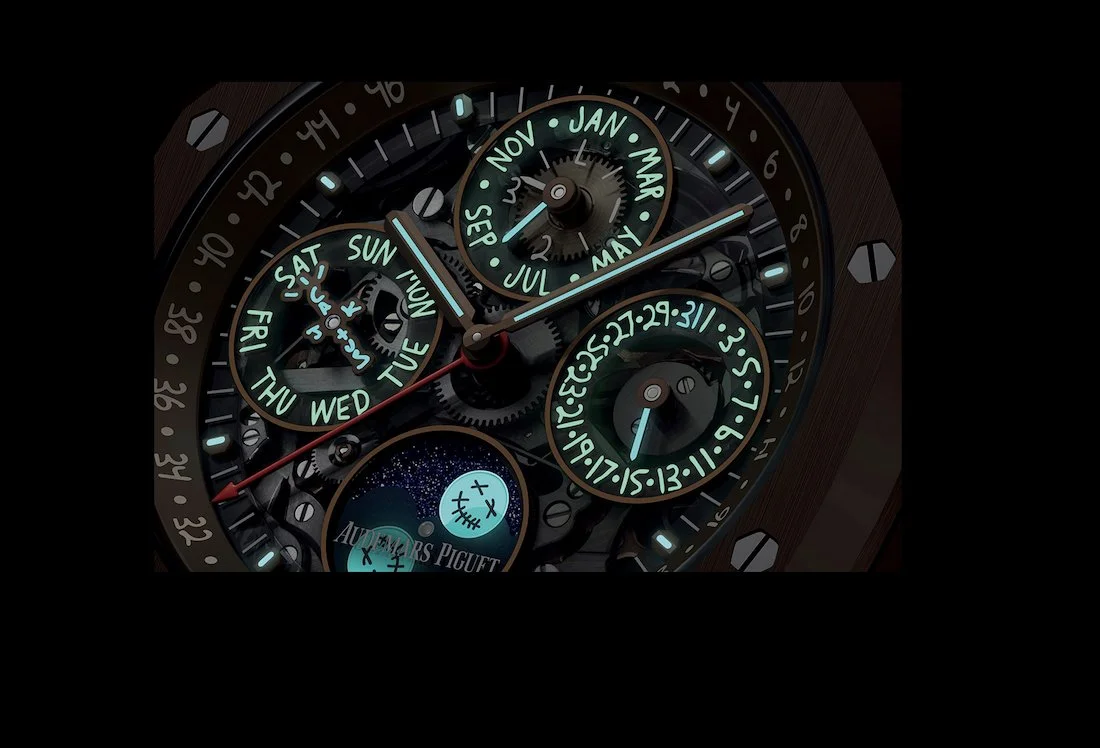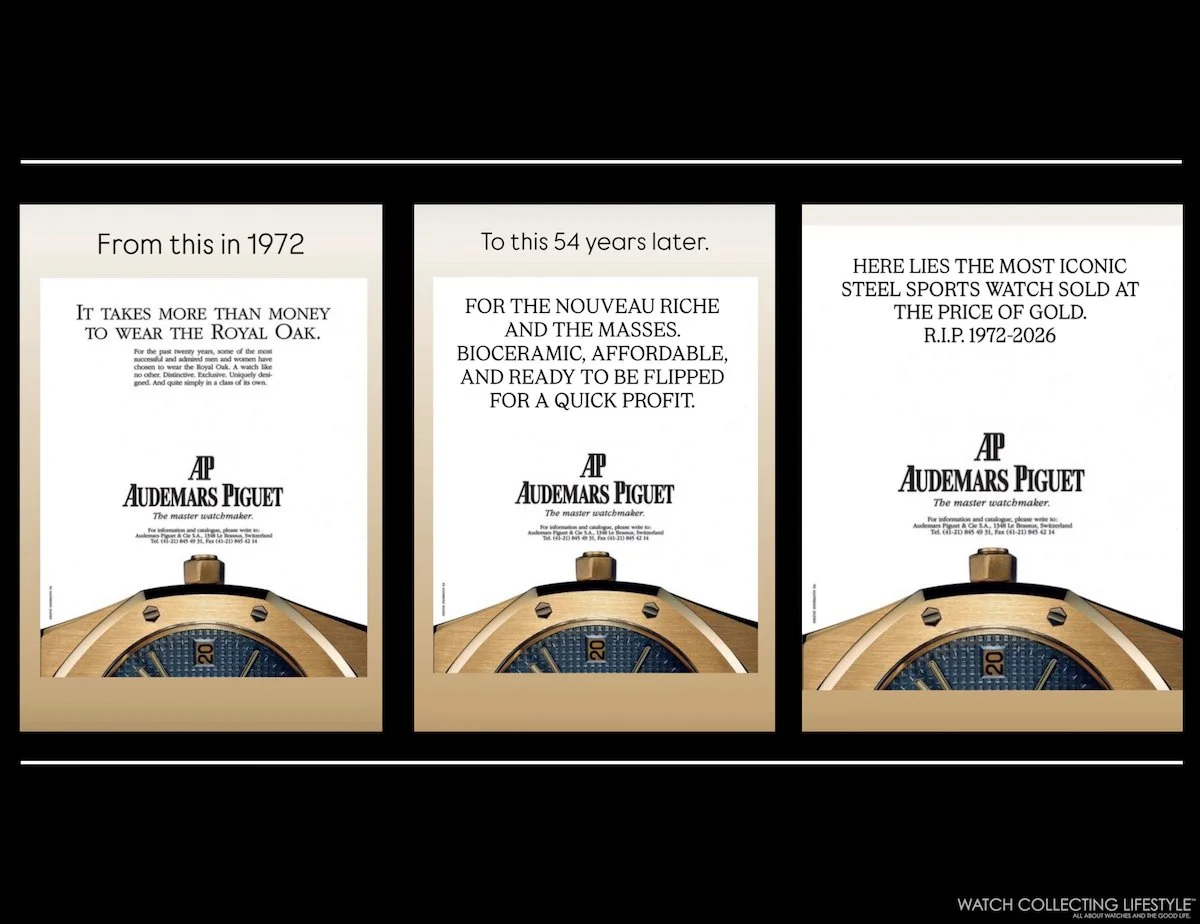
When I first saw the teasers a few days ago, I sat with them for a long time before I could write a single word. Since there have been rumors for the last two years that AP might be acquired by LVMH or another watch holding group, I even wondered: Is this how the Swatch Group will communicate they are finally acquiring Audemars Piguet?
I've been an Audemars Piguet collector since 1998. I fell in love with the brand long before the Royal Oak became the go-to status symbol for people who wouldn't know a tourbillon from a chronograph. Back then, only real collectors could identify what was on your wrist. That anonymity was a privilege, and AP deliberately destroyed it, one collaboration at a time, starting in 2021.
I won't pretend I didn't see this coming. I called it years ago when the Royal Oak Cactus Jack dropped, and I said it plainly:
“This brand has become the staple of the nouveau riche.”
The Black Panther, the Spider-Man, the KAWS, and the Royal Oak Offshore Music. Each one chipping away at what AP once meant. Each one chasing a headline instead of a legacy. But collaborations are only part of the story. The deeper rot is structural. Five CEOs in twelve years for North America alone—several of them with more experience in beauty and cosmetics than in horology—tells you everything about the institutional chaos underneath the polished surface.
And while loyal clients like myself who've supported this brand for decades still can't secure an allocation at a boutique, production is being pushed toward 70,000 units annually. Let that number sink in. That's nearly double AP's historical output, and it makes a mockery of every conversation about exclusivity.
The secondary market has already been responding over the last year and a half. Royal Oaks that commanded absurd premiums two years ago are retreating. A ref. 5402ST C-Series sold at Phillips New York for USD 57,150, a price that would have been unthinkable not long ago. The scarcity premium is evaporating, and with it, the rationale for positioning AP alongside Patek Philippe and Vacheron Constantin in the so-called Holy Trinity.
The brutal irony is that the clients AP has spent years courting—the ones buying a Royal Oak for bragging rights—won't be back for a second one. And the collectors who would have been customers for life have quietly moved on. Now, with this absolute nonsense of a collaboration with a mass-produced watch company like Swatch, everything will be long gone.
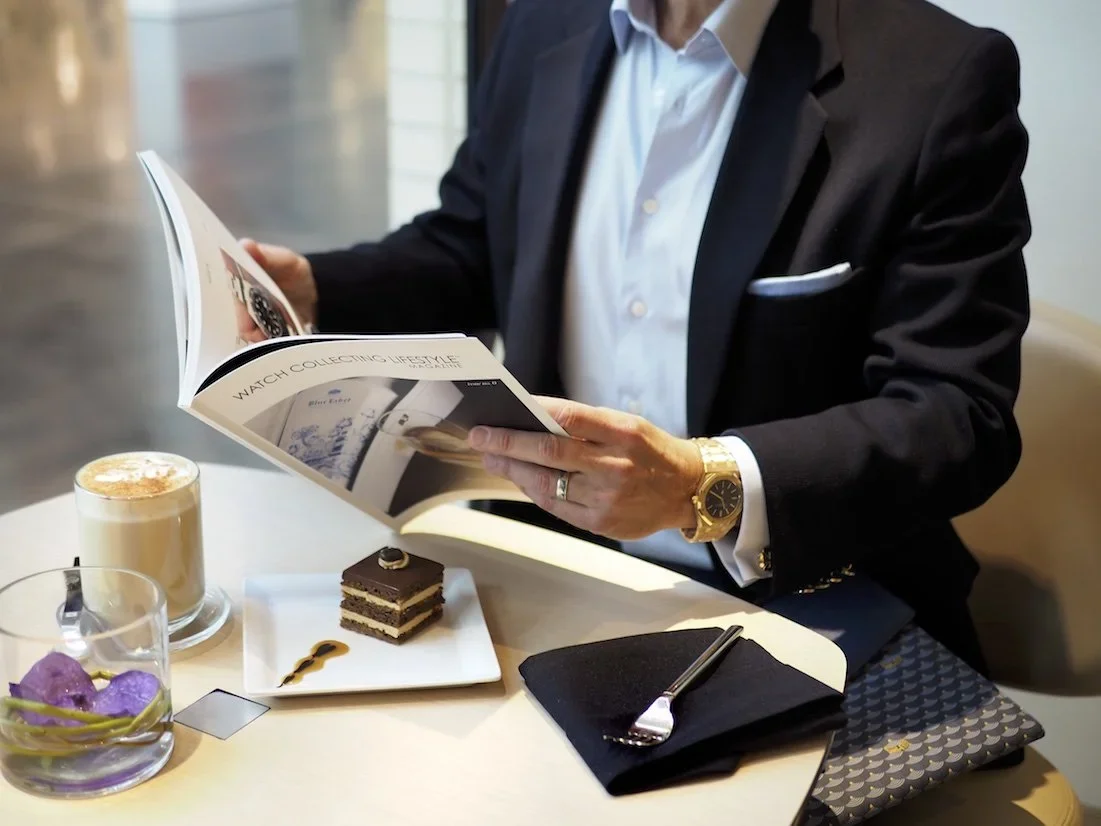
Last year, I’d still wear my Royal Oak Offshore Perpetual Calendar Chronograph in titanium. Not to flex, but because real AP connoisseurs were the only ones who could even identify it. It was a faithful reminder of the brand I once loved. That watch is the real deal. The question is whether AP still is. Luckily, I sold that watch at the end of last year after losing a lot of money.
You all know that I started wearing the AP Royal Oak back in 1998 when no one could even recognize what was adorning my wrist. I still remember that my affluent Mexican friends—starting watch collectors at the time, all wearing Rolexes—would refer to my watch as a very 70s-looking watch and then ask what I was wearing. There was something special about the anonymity of my timepiece. Much like today’s quiet luxury in a world inundated by big logos, loud brands, and the intersection of luxury and pop culture, which has ruined, at least for me, brands like Audemars Piguet, Gucci, and Burberry. Imagine I am now putting AP next to these other two brands.
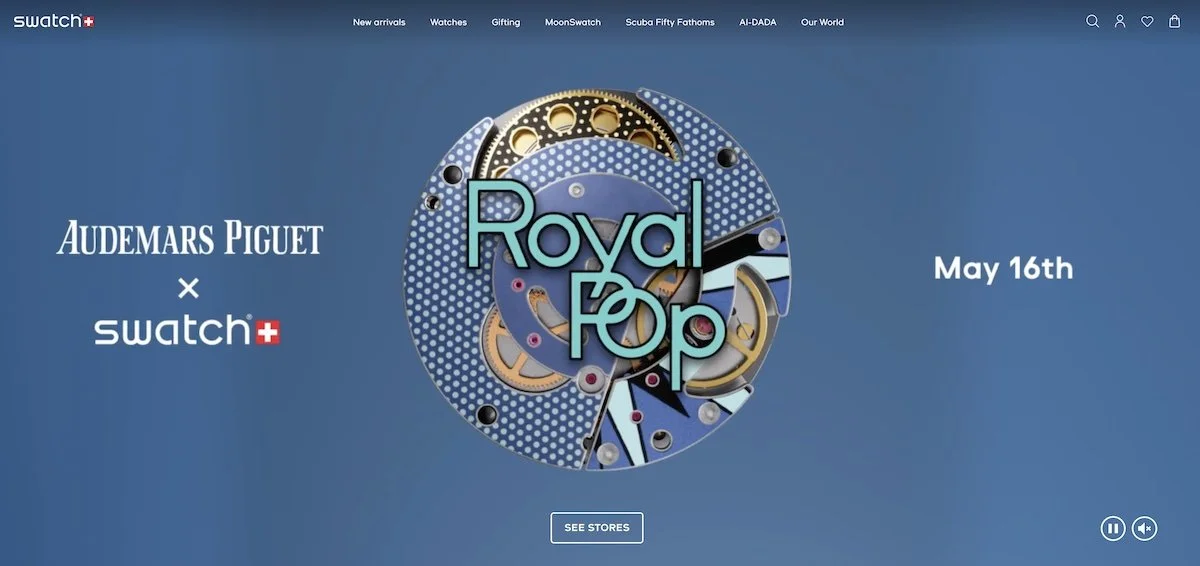
And now, just as I thought we had reached peak absurdity with AP, comes the Royal Pop—the just-confirmed Swatch x Audemars Piguet collaboration dropping May 16. A BioCeramic Royal Oak silhouette powered by a Swatch movement, sold in Swatch boutiques, aimed at "bringing future generations to the world of mechanical watches." I've heard that line before. What it really means is that the most iconic integrated sports watch bracelet in history—Gerald Genta's masterpiece—is about to share shelf space with a Pop Swatch. The same octagonal bezel that once required a waitlist and a relationship will be attainable by anyone who camps outside a mall kiosk next Saturday morning. If the erosion in the secondary market wasn't enough to signal what's happening to this brand's equity, this should settle the debate once and for all.

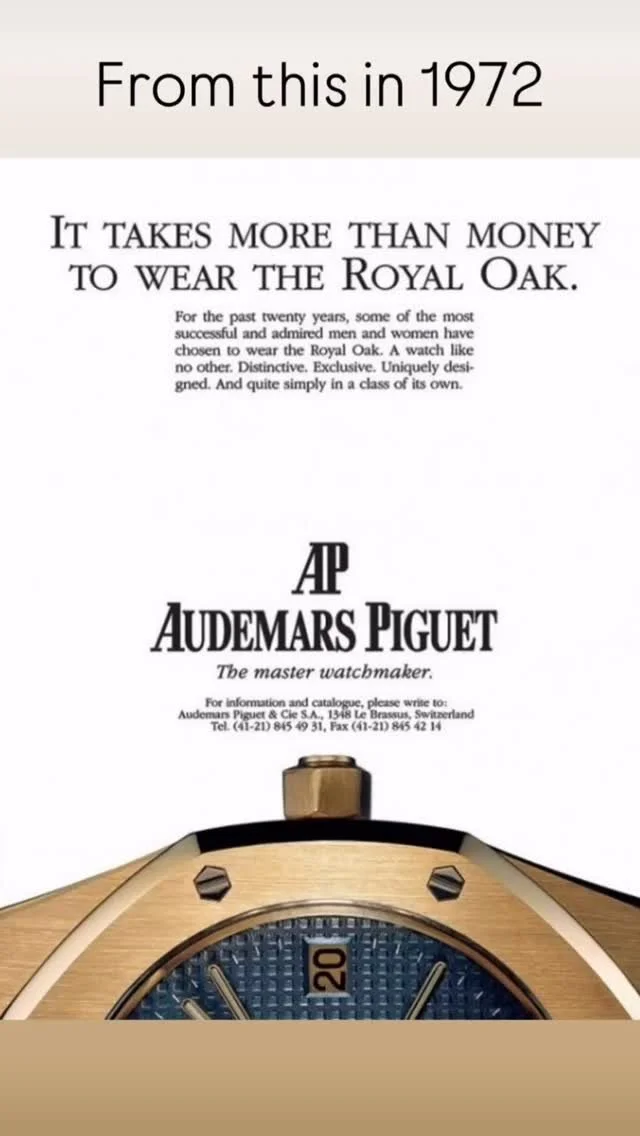
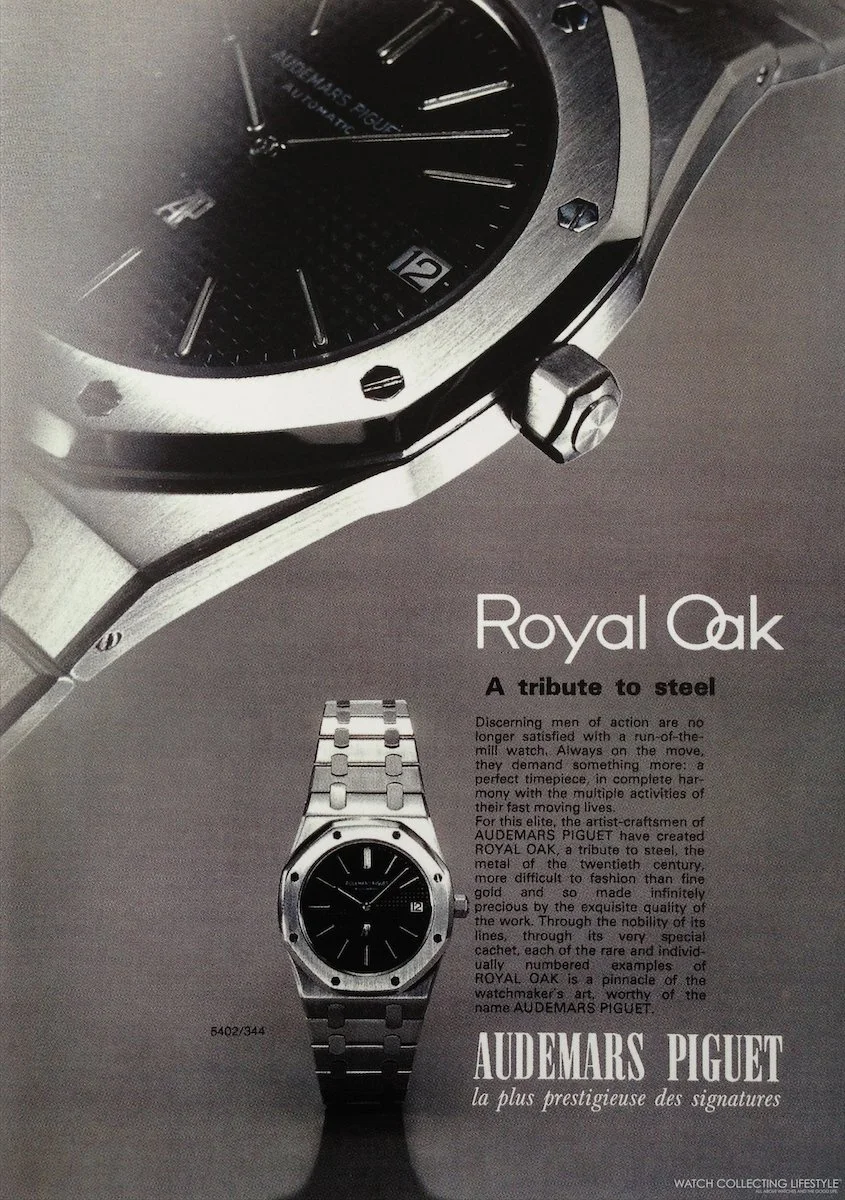
Below is the copy from the original advertisement for the launch of the Audemars Piguet Royal Oak in 1972. Make sure you read it twice and remember the words: elite, artist craftsmen, harmony, nobility of its lines, very special cachet, rare, and individually numbered.
“A TRIBUTE TO STEEL.
Discerning men of action are no longer satisfied with a run-of-the-mill watch. Always on the move, they demand something more: a perfect timepiece, in complete harmony with the multiple activities of their fast moving lives.
For this elite, the artist craftsmen of AUDEMARS PIGUET have created ROYAL OAK, a tribute to steel, the metal of the twentieth century, more difficult to fashion than fine gold and so made infinitely precious by the exquisite quality of the work. Through the nobility of its lines, through its very special cachet, each of the rare and individually numbered examples of ROYAL OAK is a pinnacle of the watchmaker’s art, worthy of the name AUDEMARS PIGUET.”
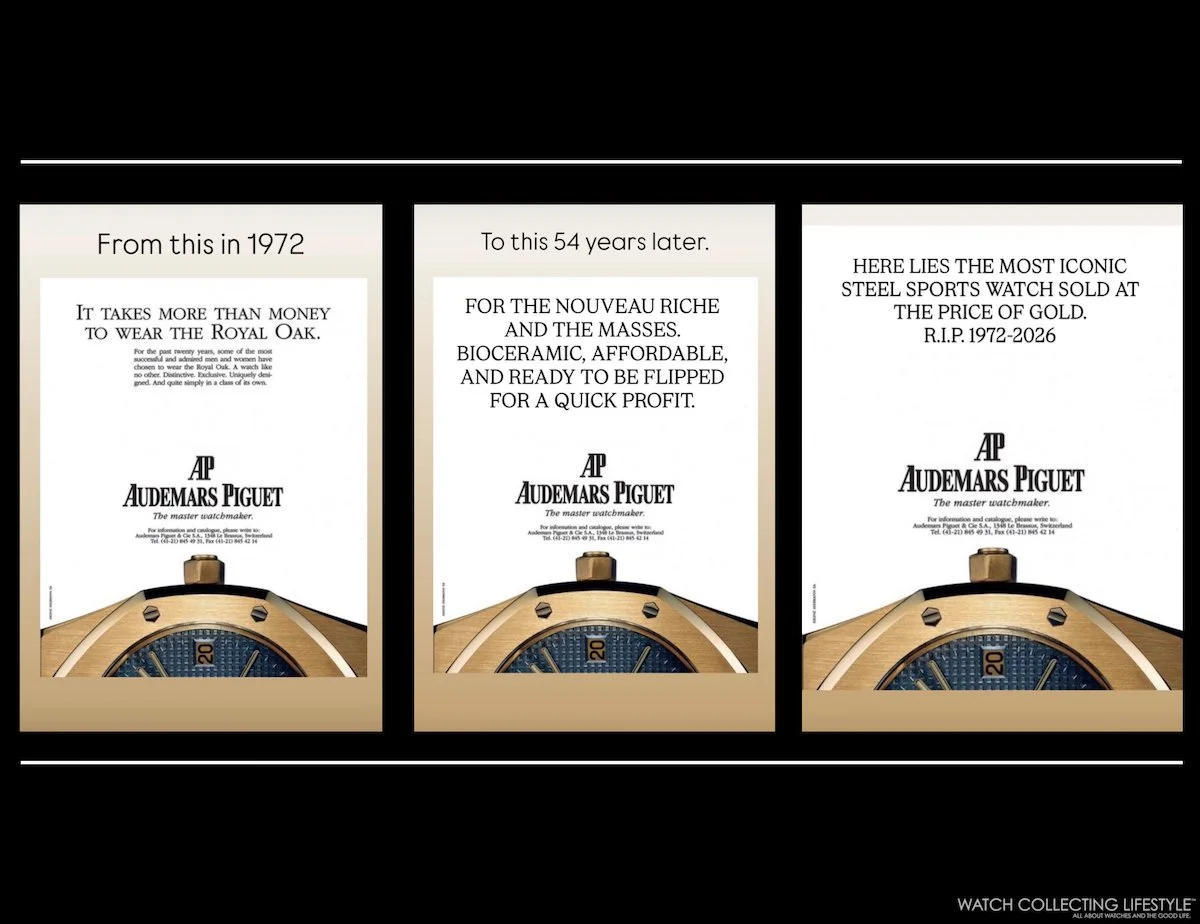
Going from these marketing taglines and copy—see vintage advertisements below—to a collaboration that makes the Audemars Piguet Royal Oak a mass-produced brand with zero exclusivity, no longer distinctive, and not in a class of its own is the biggest fail I have yet to witness in the watch industry and in my marketing career.
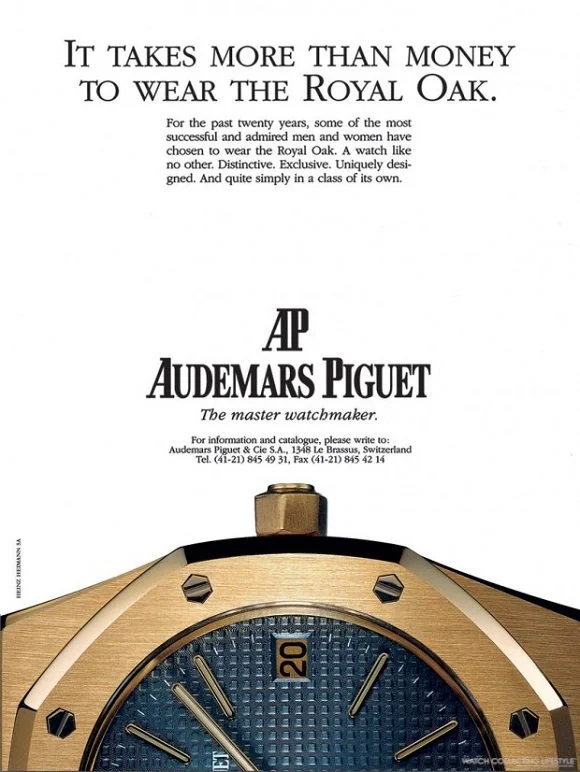
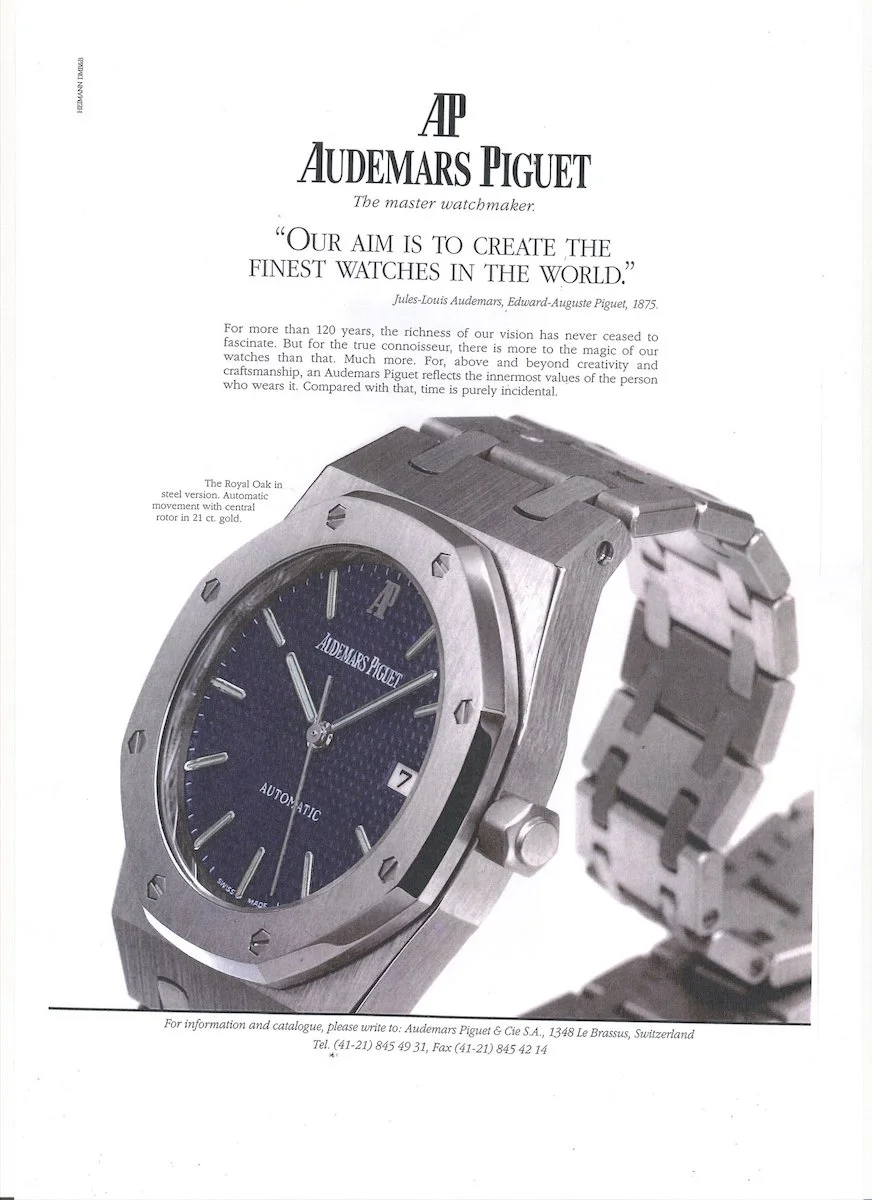
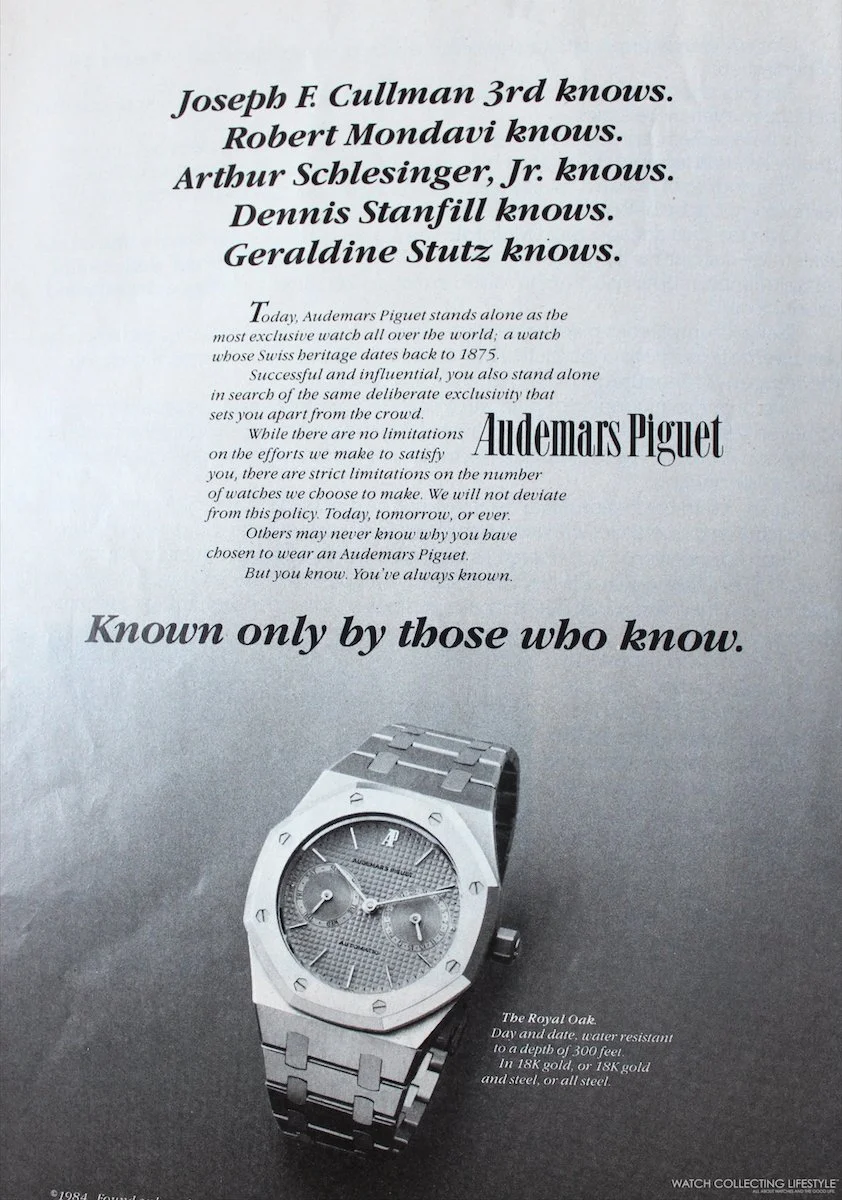
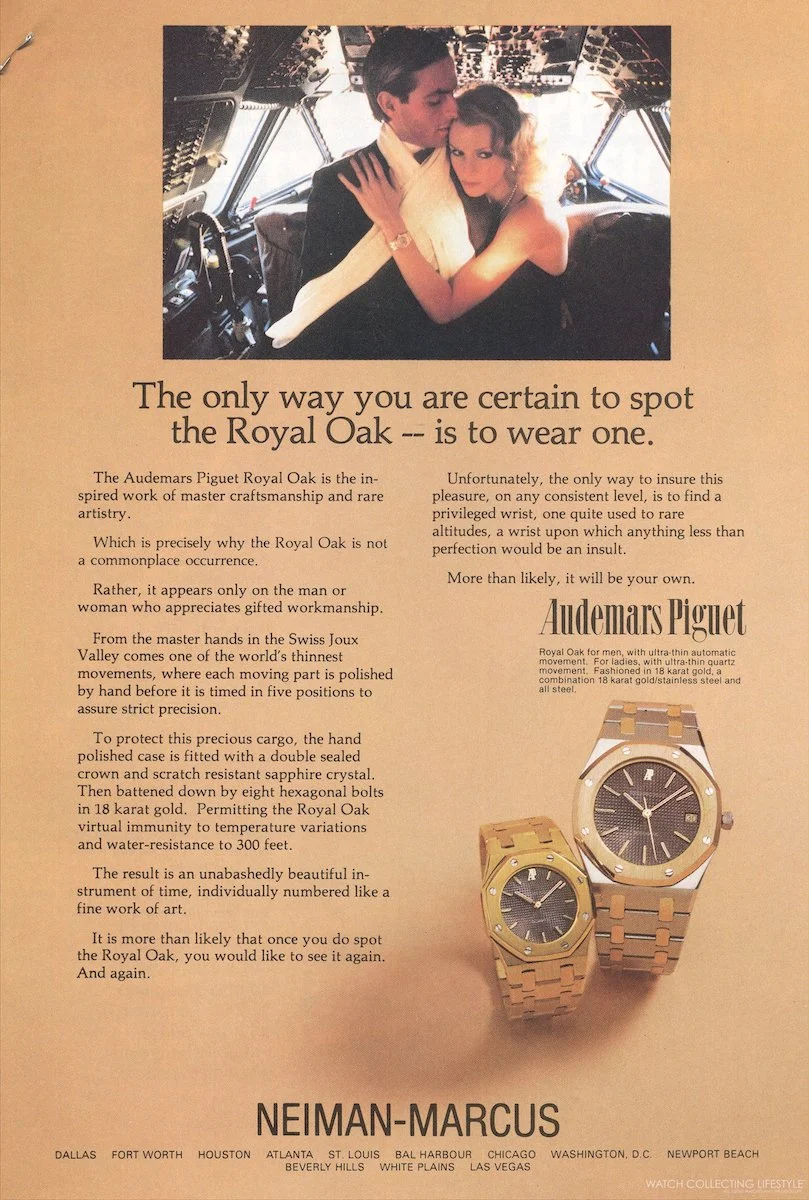
“IT TAKES MORE THAN MONEY TO WEAR THE ROYAL OAK.
For the past twenty years, some of the most successful and admired men and women have chosen to wear the Royal Oak. A watch like no other. Distinctive. Exclusive. Uniquely designed. And quite simply in a class of its own.”
“Known only by those who know.”
“The only way you are certain to spot the Royal Oak — is to wear one.”
By now, I have been a watch collector for more than 36 years, with a journey that spans owning 50 Audemars Piguet Royal Oaks and Royal Oak Offshores at different points in my life, and no fewer than 150 watches across virtually every brand worth owning, including Vacheron Constantin, Patek Philippe, Piaget, and A. Lange & Söhne, among 20 more. When I decided to become a journalist and founded this magazine, I never imagined that the brand I loved most—the one that started it all for me—would be the one I'd end up writing an obituary for.