News: Pre-SIHH 2014 Cartier Unveils Two Amazing Rotonde Timepieces. Presenting the Rotonde de Cartier Earth and Moon and the Rotonde de Cartier Astrocalendaire.

Celebrating Cartier style in Fine Watchmaking is the Maison's creative approach for 2014. Style is a question of elegance and balance. It is the fountain-head of constant research, supported by technical expertise with a drive that redefines and questions watchmaking conventions by reinventing traditional complications such as the perpetual calendar or by transforming the timeless Tank model. Cartier's achievements in Fine Watchmaking are the fruit of a constantly innovative approach at the service of highly distinctive aesthetics. Its past as an inventor and designer has given rise to a style that favors volume and shapes. The same drive can be seen in the Maison's technical concepts: their freedom and importance have enabled Cartier to revolutionize the representation of time with Fine Watchmaking pieces that adhere to the Manufacture's highest standards. For this 2014 edition of the Salon International de la Haute Horlogerie, Cartier expresses the excellence of its craftsmanship with the launch of innovative timepieces bearing the Maison's creative seal.

The Rotonde de Cartier Earth and Moon watch is the fruit of a technical and creative ambition that for Cartier consists of bringing together two complications in a daring display. Removed from its strictly horological role, in which it serves as a guarantee of precision and prestige, a tourbillon has been incorporated into a moon phase complication, with each one dependent on the other. The watch owes its name to the stylized portrayal of the globe and the moon represented by a tourbillon. Together, they form a creative and animated world with skeletonized Roman numerals surrounding this dynamic feat of watchmaking. The moon-phase mechanism of the Rotonde de Cartier Earth and Moon watch is founded on a creative and complex design that combines a tourbillon, moon phase on demand and a second time zone. The Tourbillon mechanism is a complex complication that falls within the expertise of a limited number of watchmakers. Its main function is to fight against the effects of gravity when the watch is in a vertical position. Because it appears in its original form and exists only when its user wishes it to, the moon phase on the Rotonde de Cartier Earth and Moon watch reveals a technical creativity that is doubly innovative. By pressing the push-button situated at four o'clock on the side of the case, a panels descends and partially obscures the Tourbillon carriage. The crescent thus formed reproduces exactly the moon's shape in the sky.

The second time zone of the Rotonde de Cartier Earth and Moon watch is indicated by a 24-hour disc that was entirely redeveloped by for the calibre 9440 MC due to the sophistication of its disc display. The result of painstaking work, polished lapis lazuli is used for the dial and the moon panel on the Rotonde de Cartier Earth and Moon watch. The hours and the second time zone are surrounded by a meticulously polished grid in 18-carat white gold. A three-dimensional dial is one of the signature features of the Cartier Fine Watchmaking collection, alongside Roman numerals that are openworked and chamfered by the hand of a master decorator in a manner akin to a skeleton movement. The exceptional finishes of the 9440 MC are all the more remarkable because the semi-skeletonized bridges on the back of the movement are structured in a star shape, echoing this precious timepiece's lunar and terrestrial character on the case back. With the the Rotonde de Cartier Earth and Moon watch, the Maison Cartier has created a timepiece that displays an exceptional level of creativity and craftsmanship.

Technical Specifications of the Rotonde de Cartier Earth and Moon

Case: platinum
Diameter: 47 mm
Crystal: sapphire
Case back: sapphire
Crown: beaded in platinum set with a blue sapphire cabochon
Dial: Lapis lazuli with an 18-carat white gold grid in the form of Roman numerals
Bezel: platinum
Hands: sword-shaped blued-steel
Casing-up diameter: 47 mm
Case thickness: 16.65 mm
Strap: black alligator-skin
Clasp: double adjustable folding buckle in 18-carat white gold
Water-resistance: 30 meters / 3 bar / 100 feet
Movement: Manufacture mechanical with manual winding, calibre 9440 MC, tourbillon, second time zone, moon phase on demand
Casing-up diameter: 17¼ lines, i.e. 38.8 mm
Total diameter: 40 mm
Thickness: 5.65 mm
Number of jewels: 40
Number of parts: 362
Balance: 21,600 vibrations/hour
Power reserve: approx. 3 days
Limited series of 50 numbered pieces.


The Rotonde de Cartier Astrocalendaire watch transforms the very essence of the perpetual calendar's functioning and appearance. The Maison's idea involves inventing a creative central display that stems from a revolutionary concept. Designed like an amphitheater, with the intention of clarifying the perpetual calendar's indications, the Rotonde de Cartier Astrocalendaire's display is an incredible watchmaking feat. It overcomes numerous readability issues that are specific to the traditional approach to this complication, which requires the juxtaposition of twelve months, seven days, the date and the type of year in a diameter of just a few centimeters. Arranged three-dimensionally in concentric levels, the display of the perpetual calendar's functions is spread over the different levels: the day is indicated on the first. It is followed by the month on the second, which is itself surmounted by the date. Thin windows move along these tiers. The perpetual calendar's final function is indicated by a hand located on the back of watch and shows what type of year it is: a leap year or a normal year.

Consisting of gear trains, the construction of the Rotonde de Cartier Astrocalendaire watch's movement is a watchmaking feat that solves all the functional and ergonomic problems connected with this type of complication. It breaks away from the design of traditional perpetual calendars and introduces an alternative that enables any risk of breakage to be anticipated, adjustment errors to be resolved and chronometry to be improved. Partially patented, the gear train system of the Rotonde de Cartier Astrocalendaire's 9459 MC movement replaces the traditional lever and spring mechanisms with a gear train mechanism that substantially limits the risk of breakage when the watch is over-wound at inadvisable times. The traditional design of a perpetual calendar prohibits any manual correction several hours before and after midnight at the risk of breaking the mechanism. The adjustments made using four minuscule push-pieces on the side of the case are impractical and never clearly identified. This operating problem no longer exists with the Rotonde de Cartier Astrocalendaire watch's movement thanks to a setting system that uses the crown.
In addition to the traditional setting of the hour and minute, the crown also controls the date and month indicators. This ease of use is further increased by the possibility of correcting the functions both forwards and backwards. Wearers of the Rotonde de Cartier Astrocalendaire watch need no longer fear going beyond the current date as this error is easily corrected.

The Rotonde de Cartier Astrocalendaire watch houses at its heart a flying tourbillon: a complication that is emblematic of the Fine Watchmaking collection. The Rotonde de Cartier Astrocalendaire watch is certified "Poinçon de Genève", in accordance with the new regulations' requirements. The self-winding calibre 9459 MC is assembled and adjusted in the new Cartier Fine Watchmaking workshops located in the heart of Geneva, upstairs from the Cartier boutique on the rue de Rhône. Its finishes were carried out according to the standards of the most prestigious watchmaking certification. Combining watchmaking innovation and technical creativity, the Rotonde de Cartier Astrocalendaire watch follows in the footsteps of the Rotonde de Cartier Astrorégulateur and Rotonde de Cartier Astrotourbillon watches, thus taking its place as a major complication in Cartier's repertoire of watchmaking craftsmanship.

Technical Specifications of the Rotonde de Cartier Astrocalendaire

Case: platinum
Diameter: 45 mm
Crown: beaded in platinum, set with a blue sapphire cabochon
Crystal: sapphire
Case back: sapphire
Dial: silver-colored Bezel: platinum
Hands: sword-shaped blued-steel
Casing-up diameter: 45 mm
Case thickness: 15.1 mm
Strap: black alligator-skin
Clasp: double adjustable folding buckle in 18-carat white gold
Water-resistance: 30 meters / 3 bar / 100 feet
Movement: Manufacture mechanical with automatic winding, calibre 9459 MC, tourbillon and perpetual calendar with circular display, "Poinçon de Genève" certified timepiece
Casing-up diameter: 14 lines, i.e. 31.38 mm
Total diameter: 32 mm
Thickness: 8.1 mm
Number of jewels: 51
Number of parts: 382
Balance: 21,600 vibrations/hour
Power reserve: approx. 50 hours
Limited series of 100 numbered pieces.

For more info on Cartier click here.

News: Pre-Baselworld 2014 Zenith Presents the Pilot Montre d'Aeronef Type 20 GMT 1903. A Limited Edition of 1,903 Pieces.

In their bicycle shop in Dayton Ohio, Wilbur and Orville Wright dreamed of wideopen spaces and freedom. These natural-born inventors conceived a first glider that they launched on the Kitty Hawk dunes in North Carolina. At the same time, they built a wind tunnel to study various technical aspects such as the profile of the wings. Constantly perfecting their prototypes, they installed a stabiliser at the front of a second glider, and then a steering rudder at the back of a third that could thus be controlled: a world first in the field of aeronautics! After hundreds of trials, the two brothers decided to move a step forwards by equipping their glider with an engine. Lying face down on the lower wing of the twin-propeller aircraft named “Flyer”, Orville Wright achieved the first powered, heavier-than-air controlled flight in history, on Kitty Hawk beach. The young man covered a distance of 40 metres at a height of 60 centimeters off the ground. The date was December 17th 1903. Representing a major milestone in aviation history the year 1903 now gives its name to a timepiece created by Zenith as a tribute to the Wright brothers: Pilot Montre d’Aéronef Type 20 GMT 1903.

Zenith was one of the first watch manufacturers to create flight instruments to equip various aircraft and spaceships manned by the aviation pioneers. Known for their precision and exceptional ability to withstand vibrations, magnetic fields and variations in temperature, the Zenith altimeters, watches, onboard and wristworn chronographs became extremely popular with pilots, who were thus accompanied in their feats by the brand with the guiding star. In just over a century, Louis Blériot, Léon Morane, or more recently Felix Baumgartner, accomplished their destiny and put their name in the history books with a Zenith instrument on their wrist or on their cockpit controls.

Drawing upon these historical roots, the piece features a case made of black DLC-coated titanium that is therefore ultra-light despite its 48mm diameter. The ratcheted crown typical of historical aviator watches ensures a perfect grip even with pilot’s gloves. The five-time sandblasted black dial reproduces the generous original Arabic numerals ensuring perfect readability day or night. The luminous glow of these delightfully vintage figures stems from a first “old radium” treatment covered with a more classic superluminova treatment. The effect is fascinating and the resulting appearance truly unique, since this ingenious combination creates a creamy shade enlivened by tiny retro accents that cannot be identically reproduced from one watch to the next. Each dial thus becomes unique and further heightens the exclusive character of the 1903-piece limited edition, of which the individual number appears on a special plate screwed to the case band, like an aircraft rivet.

The piece serves as an invitation to travel thanks to a second time-zone indicator powered by the Elite Calibre 693 movement. Finelyadorned with a Côtes de Genève motif even though it remains hidden from sight, it ticks off time at the rate of 28,800 vibrations per hour and has a 50-hour power reserve. Beneath this elegant mechanical heart, the case-back, is adorned with a stamped insignia depicting Orville Wright about the “Flyer”, with his brother Wilbur running along Kitty Hawk beach to follow the feat being accomplished on December 17th 1903.

A sturdy wristband crafted in beige suede leather sets the finishing touch to this model. Its lining features a heat-embossed motif in which connoisseurs will note the inscription “Zenith Flying Instruments” as well as the brand’s historical logo, thus underlining the spirit of an era in which the skies were still waiting to be conquered.

Sticker Price TBC For more info on Zenith click here.

Technical Specifications of the Zenith Pilot Montre d'Aeronef Type 20 GMT 1903 ref. 96.2431.693/ 21.C740

MOVEMENT
Elite 693, automatic
Calibre: 11 ½ ‘‘‘ (Diameter: 25.6 mm)
Thickness: 3.94 mm
Components: 186
Jewels: 26
Frequency: 28,800 VpH – (4 Hz)
Power-reserve: min. 50 hours
Finishes: Oscillating weight with “Côtes de Genève” pattern

FUNCTIONS
Hours and minutes in the center
Small seconds at 9 o’clock
24-hour second time-zone indicator

CASE, DIAL & HANDS
Material: Titanium case with DLC (Diamond Like Carbon) coating
Diameter: 48 mm
Diameter opening: 40 mm
Thickness: 15.80 mm
Crystal: Box-shaped sapphire crystal with anti-reflective treatment on both sides
Case-back: Zenith Flying Instruments logo
Water-resistance: 10 ATM
Dial: Matte black
Hour-markers: SuperLuminova SLN Old Radium
Hands: Black ruthenium, satin-finished with
SuperLuminova SLN Old Radium

REFERENCE
96.2431.693/ 21.C740
Vintage-effect nubuck heat-embossed with “Zenith Flying Instruments” logo
Steel pin buckle with black DLC coating

Time Machine: Visiting a Very Impressive Collection of Vintage Timepieces in Chicago. Part One.

Today, we are starting a new series of posts called the 'Time Machine'. On the 'Time Machine' you will be able to experience with us some of the most fascinating collections of vintage and rare watches from private collectors around the world. This time, is the turn for a private collector in Chicago that has chosen to remain anonymous. Our friendship with this collector started after spotting a beautiful Jaeger-LeCoultre AMVOX5 World Chronograph on his wrist inside an elevator. After a very brief conversation with him, he asked us to follow him to his office to show us the real good stuff. This collector owns close to 500 timepieces and this is just the first of many posts we will be publishing regarding his vintage timepieces, clocks and assorted watch paraphernalia. Now, keep in mind we will be featuring all sorts of watches within these collections regardless of their price, just because we love watches as much as you do and because some of these timepieces have an interesting place in the history of horology.

Experience: Happy New Year 2014. May All Your Dreams Come True.

Today on the first day of the New Year 2014, we want to wish everyone health, love, happiness and wealth for the new year that just started. We would also like to thank you for your undivided support last year and may all your dreams come true this year.

Meanwhile —as we get ready to go back to our usual schedule and publishing frequency tomorrow—, enjoy this image of the Jaeger-LeCoultre Master Grande Tradition Gyrotourbillon 3 Jubilee ref. 5036420.

Happy New Year 2014!!!!

Experience: 2013 The Year in Review. 12 Amazing Watches in 24 Pictures.

As we wrap up the year and we say goodbye to the old to welcome the new, here are twelve amazing timepieces we reviewed this year to celebrate each month of the year. These 24 images tell a story and capture the best of these fascinating watches. If you want to check the full review for each timepiece, just click on the watch's name.

While there are many more amazing timepieces that we reviewed or that were presented in 2013, we feel that these timepieces are some of our favorites and all of them are great examples of fine horology.

May the new year bring you and your families lots of health, love, happiness and wealth to buy more watches!!! Happy New Year 2014 from Watch Collecting Lifestyle!!!.

Now, enjoy.

A. Lange & Söhne 1815 Rattrapante Perpetual Calendar

Experience: Doucal's Five Eyelet Wing Tip Shoes. A Shoemaker Founded the Year After the Audemars Piguet Royal Oak was Born.

Nestled in the enchanting Marche Region of Italy is the town of Montegranaro —located a 110 miles East of Perugia— home to Italy's heart for handcrafted glamorous footwear and the place where Mario Giannini founded Doucal's in 1973, the year after the Audemars Piguet Royal Oak was born.

The brand, known initially as Duca —meaning "Duke”— to identify a product which was developed for an elite clientèle. Mario's dream and his passion for English shoes took him to England where he took an internship in the British Shoe Manufacturer District and learned all the secrets of the various construction methods and the rules of English style. After several months of training, his desire was to create shoes that endured through time, but that were also comfortable to wear in comparison to the rigidity of English shoes. Following his passion and everything he learned in England, Mario decided to anglicize the name of his company from Duca into Doucal's.

Doucal's shoes are now conceived to look like English shoes while incorporating the comfort of an Italian shoe that is guaranteed by a liner in the insole with an activated carbon coating which guarantees the foot great comfort and freshness, combined with anti-bacterial action. This peculiarity has given Doucal's shoes an advantage that has been much appreciated by new emerging markets, more interested in comfort than rigidity. Always evolving, Giannini's second generation guards well the traditions of the “Made in Italy” elegant Italian craftsmanship while embracing the modern perspective of fashion and style.

If you are ready to wear an exclusive brand that comes with history, handmade craftsmanship, amazing details and design straight from Italy, Doucal's is the brand. These shoes are as well crafted and durable as Bally, Church's or Allen Edmonds. The first three words that come to mind when wearing a pair of Doucal's are elegance, comfort and Italy.

Sticker Price $350 USD. For more info on Doucal's click here.

Experience: Rob Montana The Strap Smith. Enhancing the Vintage Look of Watches.

Rob Montana the man behind The Strap Smith comes from a lineage of leather makers and son to a 4-H leather instructor. Rob is one of six children that grew up surrounded by the world of leather in a small town in northwest Montana and a man that enjoys the outdoors, racing motorcycles, sailing, traveling, backpacking, rock climbing and skiing and someone that became a full time strap maker in 2007 after quitting his day job.

Since he was a little kid he had been fascinated with watches but never thought he would be able to afford a really nice watch. Through his appreciation for high quality hand made items with great attention to detail he runs one of the most successful vintage strap businesses in the watch world and a name that is synonym for some of the best vintage aftermarket straps for Panerai, Bell & Ross, Rolex, IWC, U-BOAT, Breitling, Tudor and many others. Rob had even outfitted Jay Leno's watches with his straps.  

Few leather straps come with so much passion as those from The Strap Smith handmade by Rob in Whitefish, Montana. Whitefish is a small town with a population of 6,357 and home to a ski resort on Big Mountain called Whitefish Mountain Resort right next to Glacier National Park. Rob Montana's name is not only very well known in the Paneristi community but also at the headquarters of Detroit based Shinola, whom he's been working with on everything leather related. Rob is an adventure seeker and watch collector that started his collection with a Fortis Chronograph and quickly grew into Panerai with a PAM 88. Today, the Panerai PAM 243 is his favorite and daily wearer.

Rob's vintage straps are made out of World War I vintage ammo pouches from Sweden. Even though, Rob offers a wide selection of custom straps through his website, nothing compares to the rugged and vintage nature of these straps with their particular musty smell that you can even notice when your watch is sitting next to your bed on your night stand.

All Rob Montana straps are hand cut, hand stitched and marked by Rob out of his workshop in Montana. What makes these straps even more unique —other than the interesting provenance of the leather— is that Rob is one of the few true full-time custom strap makers in the U.S.; therefore, every order is personal, from the first email a customer receives to the postage label that was placed with Rob's hands. All straps are custom made to order and you can choose everything from the the type of leather to be used for your strap to the length, the width, type of buckle, strap perforations and even the stitching. You could also just choose no buckle and use your own OEM buckle. In this case we wanted to add a little bit more character to the strap and decided to go with the PIG/SLC in negative relief.

If you are looking to enhance even more the vintage look of your your PAM 372 Luminor 1950 3 Days or any other Panerai from the historical collection, make sure you get one of these vintage straps fitted with a PIG buckle. As you can see, the color on the strap we fitted to the 372 is a perfect match to the luminova on the dial and with this change the watch became even more appealing and way more vintage looking.

On the wrist, the strap feels very solid, comfortable and the desired vintage look is just unparalleled. The strap is very thick but very supple at the same time and the contrast stitching is the cherry on top of the cake.

Sticker Price Starting at $200 USD. For more info on The Strap Smith click here.

Insider: Omega Seamaster Aqua Terra >15,000 Gauss. A Truly Anti-Magnetic Watch with a Display Case Back.

Before we go into our in-depth review of the new Omega Seamaster Aqua Terra >15,000 Gauss ref. 231.10.42.21.01.002, let's start by providing you with some historical context and explaining what is truly considered an anti-magnetic watch. An anti-magnetic watch is one that is able to run with minimal deviation when exposed to a certain level of magnetic field. The ISO —International Organization for Standardization— issued a standard for magnetic resistant watches, which many countries have adopted and which is referred as the ISO 764 Horology—Magnetic Resistant Watches. According to ISO 764, a watch must resist exposition to a direct current magnetic field of 4,800 Amperes by meter and keep its accuracy to ± 30 seconds/day as measured before the test in order to be acknowledged as a magnetic resistant watch. To give you some context of electromagnetic fields in gauss, a small neodymium-iron-boron NIB magnet creates a field of 2,000 gauss and an MRI machine anywhere between 600-70,000 gauss.

The first recorded experiments in anti-magnetic watchmaking date back to 1846 when the watchmakers from Vacheron Constantin were among the first to experiment with anti-magnetic features assembling the first anti-magnetic watch only several decades later in 1915. Their watch was able to withstand magnetic fields because some of its parts were made of non-magnetic metals with a palladium balance wheel, balance spring and lever shaft. Later, in 1929, Tissot assembled the first ever non-magnetic wristwatch.

Image from Christie's.

Since their appearance, anti-magnetic watches have been favored by people who deal with high magnetic fields. They are widespread among electronic engineers and in other professions where strong magnetic fields are present. Today, even divers' watches according to ISO 6425 must be anti-magnetic. There are two ways of creating an anti-magnetic watch, the first is by using different non-ferrous alloys —like the Glucydur balance and Nivarox hairsprings— in the movement components and the second one is to house the movement in a casing made of soft iron like on the Rolex Milgauss or the IWC Ingenieur.

This year, Omega created the first anti-magnetic watch in their line-up by launching the Aqua Terra >15,000 Gauss ref. 231.10.42.21.01.002, a very special stainless steel watch fitted with the Omega Co-Axial caliber 8508, one of the most dramatic technological innovations resistant to magnetic fields greater than 1.5 tesla —15,000 gauss—, exceeding the levels of magnetic resistance achieved by any other watch ever made. As a reference, the new Aqua Terra 15,000 Gauss can withstand 15 times more magnetism than the Rolex Milgauss —1000 gauss.

The Seamaster Aqua Terra > 15,000 Gauss is fitted with a 41.50 mm stainless steel case with brushed and polished areas and with a matching bracelet or on a brown leather strap —ref. 231.12.42.21.01.001. The watch is fitted with a very distinctive sunburst black lacquered dial with the traditional vertical lines of the dials on the Aqua Terra watches, applied markers with luminescent material, a yellow minute track, a date aperture at 3 o'clock, a yellow transferred legend that reads '> 15’000 GAUSS' and a very nice seconds hand in the traditional black and yellow colors of the magnetic field warning symbols.

The bracelet is nicely done with a double folding clasp and polished center links. The bracelet is extremely light but quite comfortable on the wrist.

The beating heart inside this watch is the automatic Omega in-house calibre 8508 fully made of non-ferrous components to guarantee its anti-magnetic properties. The movement provides a power reserve of 60 hours when fully wound. The technology developed by a team of ETA, Asulab, Nivarox FAR and Omega engineers led to the first prototype of the movement. Unlike other efforts to combat the effects of magnetism, this Omega movement does not rely on a protective case inside the watch case but on the use of selected non-ferromagnetic materials in the movement itself. Several patents are pending for the new movement which, even after exposure to a magnetic field greater than 15,000 gauss, still performs at a chronometric level as defined by COSC. The greatest advantage besides its anti-magnetic properties, is that the movement can be fully appreciated via the display case back, unlike the Rolex Milgauss or the IWC Ingenieur. The watch is also waterproof rated to a depth of 150 meters/500 feet.

On the wrist the watch wears nothing but comfortable. The case is quite thin making it quite easy to be tucked under the cuff of a shirt. This is a watch that is definitely one than can be a great conversation piece and a reliable timepiece with a movement that is a real workhorse.

We would like to provide special thanks to our friends at the Tourbillon Boutique in Chicago for letting us come in and review this timepiece now that the press loaners are quite scarce these days. 

Sticker Price $6,600 USD. For more info on Omega click here.

Insider: Richard Mille RM011 Le Mans Classic. Enough Blue and Yellow Accents to Make it Stand Out.

How often do you run into a Richard Mille watch in the wild? The most probable answer is, never. Now, the chances of running into a RM011 Le Mans Classic Limited Edition in the wild, are even more slim. The new Richard Mille RM011 Le Mans Classic Limited Edition is truly an amazing timepiece now fitted with a 24-hour chronograph instead of the traditional 12-hour chronograph on other Felipe Massa RM011s. As it is the norm with Richard Mille watches, the dial is skeletonized featuring white Arabic numerals, a 60-minute chrono-register at 9, a 24-hour chrono-register at 6, running seconds at 3 o'clock and month aperture between 4 and 5 o'clock as this watch is an annual calendar as well. The iconic big date display on Richard Mille watches at 12 o'clock provides a very unique touch to the skeleton dial and the blue and yellow accents on the registers provide a perfectly balanced dial with enough contrast to make the watch stand out. The 24-hour chrono register features a special yellow marker at the 16th hour to immortalize the time at which — traditionally until 2008— the race used to start on Saturdays at 16:00 hours. Only 150 pieces are available of this limited edition watch.

The Richard Mille Le Mans Classic Limited Edition is a very advanced time measuring device. Fitted with a tripartite titanium case measuring 50x40mm and a thickness of 16.15mm, the RM011 Le Mans Classic Limited Edition provides an amazing wrist presence with lightness and comfort that is just unbeatable. Richard Mille created this special chronograph to commemorate their involvement with the 2012 Le Mans Classic event as sponsor and official timekeeper. With its white carbon fiber flange around the edge of the dial, the white and green checkered Le Mans Classic logo located at 12 o'clock, the blue rubberized crown ring and the light blue and yellow accents, this watch is just exceptional.

This watch is fitted with the Richard Mille calibre RM011-S—an automatic movement with a rotor with variable geometry and power reserve of 55 hours— that is fully visible via the double-coated anti-reflective sapphire crystal on the case back. The details on the case are just exceptional and a real treat for the eyes. With a case assembled with 16 spline screws—in grade 5 titanium— and abrasion resistant washers—in copper-nickel-zinc alloy—, this piece is literally every watchlifestyler's dream.

 As you can see, every single detail on this watch has been meticulously taken care of and you definitely can't go wrong buying one. On the wrist, the watch wears extremely comfortably and with a wrist presence that is unparalleled. After reviewing several Richard Mille Felipe Massa watches, we think this is the nicest of all Felipe Massa RM011s ever made.

Sticker Price $125,000 USD. For more info on Richard Mille click here.  

Experience: Our First Nine Months in Pictures. This is Why Watch Collecting is Our Passion.

During the short but exciting existence of our blog —only nine months live— we've come to realize how fulfilling it is to have such a large following in such a short period of time. Our watch blog was launched on April 1st, 2013 and so far it has been a very exciting adventure.

We would like to thank our contributors, the manufactures that have allowed us review their collections, but foremost, we thank each and everyone of you that come read our content on a daily basis or a few times a week. To all those of you that have stumbled upon our blog while searching for that next grail or that special watch that you just have to have, we thank you deeply for bookmarking our site and becoming regulars.

As we approach the end of the year, looking forward to our new watch adventures that will kick-off at the SIHH 2014 in Geneva, we would like to do a quick recap of our first nine months with a photo essay that will show you why watch collecting is our passion and why we love what we do for you.

Now, click on the gallery below and enjoy the ride as much as we had so far.

Insider: Glashütte Original Sixties Square Chronograph. Reminescent of the Mad Men Era.

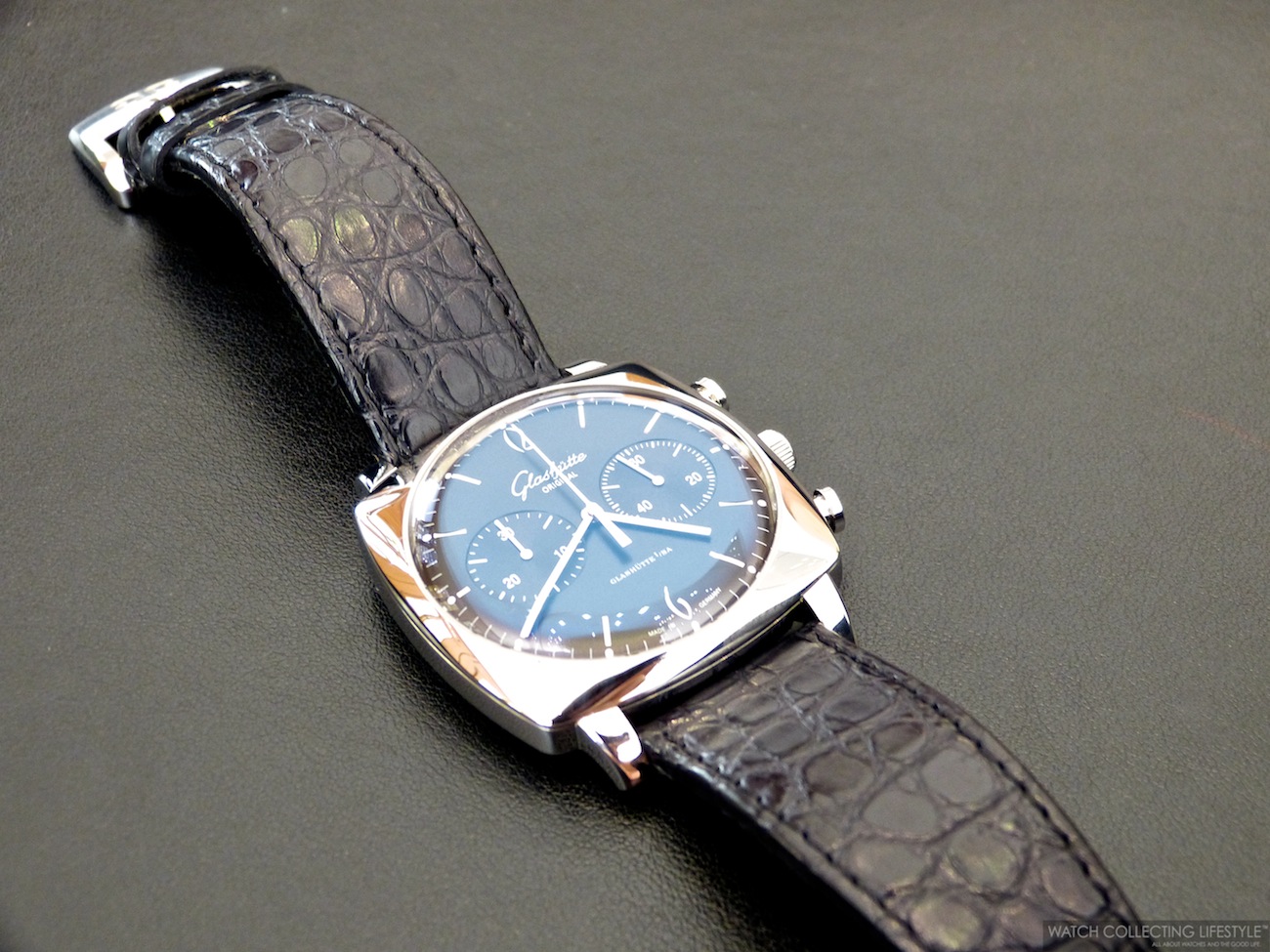
This time we decided to skip the long detailed review and focus on sharing some nice live pictures of this flawless vintage inspired timepiece. The Glashütte Original Sixties Square Chronograph ref. 1-39-34-02-32-04 is a timepiece that truly transports us back to the 1960s and the Mad Men era. With its perfectly square cushioned shaped case in stainless steel measuring 41.35mm by 41.35mm and its black domed galvanized dial, this 30-minute chronograph clearly evokes the early days of GUB and its transformation into Glashütte Original with the first Spezimatics and Spezichrons.

This exceptional example of Saxonian watchmaking is powered by the Glashütte Original automatic calibre 39-34 composed of 51 jewels and which provides a power reserve of 40 hours while beating at a frequency of 28,800 vph. Fitted with a gorgeous black alligator strap with pin buckle this watch is nothing but comfortable and elegant. The domed sapphire crystal on the front along with the domed sapphire crystal display case back complete the vintage essence of this timepiece.

Next time you get all envious while looking at Don Draper's wrist during one of those old classic Mad Men episodes, just relax and look at your wrist sporting this beautiful Sixties Square Chronograph. Then, tell yourself "What is there to be envious about?", at the end of the day you are wearing this flawless execution of a vintage inspired timepiece that looks and feels extremely vintage but without the potential headaches of a true vintage watch. Now, in case you don't fancy the black dial, this watch is also available with silver dial with rose gold markers, numerals and hands.

Sticker Price $9,300 USD. For more info on Glashütte Original click here.

News: Pre-Baselworld 2014 Jaquet Droz Unveils Three New Ateliers d'Art Watches. Commemorating the Chinese Year of the Horse.

In 2014, Jaquet Droz will be launching three new Ateliers d’Art models that pay tribute to the sign of the Horse. The horse has been a key part of Man's history since the beginning of time. In 2014, China will mark the arrival of a new year with this sign, the seventh in the Chinese zodiac, which is celebrated by Jaquet Droz every year. It is a way of remembering the connection between the brand's founder —the first watchmaker to walk through the gates of the Forbidden City— and the Middle Kingdom. The brand thus continues its annual tradition by honoring this trusty companion and symbol of loyalty, creativity and daring in its Ateliers d'Art series. Three exclusive models have been created using the exclusive know-how of Jaquet Droz's master craftsmen, specialized in highly complex techniques: engraving, painting and Grand Feu enamel. Two Arab thoroughbreds – considered the most beautiful horses in the world – have been delicately painted on the ivory enamel dial of the Petite Heure Minute 39 mm.

Captured in full gallop, they seem to want to catch up with the sculptural mustang that appears on the dial of the Petite Heure Minute 43 mm. Extremely wild and difficult to tame, this horse from the American Northwest —depicted in red gold and engraved in bas-relief— seems to jump out from the black enamel. The champlevé technique, used here for the first time by Jaquet Droz, highlights the movement of the mane and the tail, both filled in with black Grand Feu enamel.

On each of these models, a horse's head is also represented on the back of the white gold oscillating weight.

The dial of the Petite Heure Minute 41 mm has been chosen as the showcase to depict a horse rearing up on its hind legs against a backdrop of the Great Wall of China, engraved and patinated by hand on a mother-of-pearl dial. Bold, powerful and elegant, this fearless horse in 18-carat red gold appears to protect the Great Wall, which is also hand engraved on the 22-carat red gold oscillating weight next to the Jaquet Droz signature of two stars.

Loyal to its spirit of exclusivity, Jaquet Droz is offering each of these new models in a limited edition of 88 pieces with a red gold case and available on a brown or black alligator leather strap. An opportunity to celebrate all the promises of the new year with constant refinement.

For more info on Jaquet Droz click here.

Insider: Bell & Ross BR 126 Blackbird Limited Edition. A 500-piece Limited Edition is the Latest Addition to the Vintage Collection.

The recently released Bell & Ross BR 126 Blackbird is the latest addition to the Vintage collection and a watch that pays tribute to the legendary 1960s American spy plane, the Lockheed SR-71 "Blackbird" stealth plane, whose black paint absorbed radar waves. The Bell & Ross BR 126 Blackbird comes in a pelican case where the first thing that greets you way before you get to the watch is a Blackbird Flyback orange patch. The pelican case also includes a strap changing tool and an additional tropic rubber strap along with the watch. We really like when watch manufactures go the extra mile an add special packaging to a special watch in order to make it even more appealing. Kudos to Bell & Ross for this special packaging.

This watch is fitted with a stainless steel matte black PVD finished case measuring 43mm in diameter and equipped with a colorful bright orange heavy duty canvas strap lined with leather and fitted with a PVD pin buckle. The case is solid and well proportioned featuring a nice signed screw-down crown and chrono pump pushers that merely protrude on the case band. The case back is solid and properly engraved with the limited edition and depth rating —waterproof to a depth of 100 meters— information. The operation of the chronograph is nice and smooth when pressing the chrono pushers.

This watch is an aviation chronograph designed according to professional specifications and equipped with an automatic Flyback mechanism. The watch features a matte black dial that is very well balanced featuring recessed running seconds register at 3, a 12-hour chrono-register at 6, a 24-hour indicator at 9 and a date aperture between 4 and 5 o'clock. All chronograph hands are orange —matching the strap— for optimal readability while the hour and minute hands are black with white tips. The anti-reflective coated domed sapphire crystal provides excellent visibility under bright light conditions and the watch features luminescent material on the markers as well as on the hour and minute hands. 

On the wrist, the watch wears true to its size and very comfortably. While the movements inside Bell & Ross watches are not in-house calibres, we feel that the ETA calibres used are extremely reliable and great workhorses build to last a very long time. At the time we published this review, we have not received confirmation from Bell & Ross whether the beating heart inside this watch is a modified Lemania 1350 automatic calibre or an ETA movement with a Dubois & Dépraz module on it. Our best guess is that Bell & Ross decided to go with the ETA calibre instead of the Lemania.

Sticker Price $6,700 USD. For more info on Bell & Ross click here.

Experience: Fabian Oefner Presents Exploding Cars Images at the MB&F M.A.D. Gallery in Geneva. Just Amazing.

The MB&F M.A.D. Gallery is delighted to present a series of prints by Swiss artist Fabian Oefner. Fabian has carved out his reputation by fusing the fields of art and science, creating images appealing to heart and mind. He is constantly on the lookout for capturing life moments that are invisible to the human eye: phenomena like sound waves, centripetal forces, iridescence, fire and even magnetic ferrofluids, among others. The artworks on display at the M.A.D. Gallery from Fabian’s series are mind-boggling.

The three images of the Disintegrating series are exploded views of classic sports cars that Fabian has painstakingly created by deconstructing vintage roadster scale-models, photographing each component, piece by piece in a very specific position, to create the illusion of an exploding automobile. The images show exploded views of classic sports cars: intricate scale models of an eye-wateringly beautiful Mercedes-Benz 300 SLR Uhlenhaut Coupé with gullwing doors from 1954; an iconic sleek, black Jaguar E-Type from 1961; and a curvaceous sensual Ferrari 330 P4 from 1967.

The three other images on exhibition form his Hatch series, which explores the theme ‘the birth of a car’. Inspired by a picture of a hatching chick, Fabian decided to show a manufactured object being born just like a living organism – in this case a Ferrari 250 GTO breaking out of its shell, to create a witty high-octane take on the beginning of life. While both series feature cars, they both also involve fooling the observer into seeing the images as computer-generated renderings rather than the real photographs that they are. Fabian says: “I have always been fascinated by the clean, crisp looks of 3D renderings. So I tried to use that certain type of aesthetic and combine it with the strength of real photography. These images are also about capturing time: either in stopping it as in the Hatch series or inventing it as in the Disintegrating series.” Fabian started by making a latex mold from the model car, which was then filled with a thin layer of gypsum to create the shell. Several dozens of these shells were made in order to complete the next step: smashing the shell onto the car to create the illusion of the vehicle breaking out. This step had to be repeated a great many times until the desired results were achieved.

Fabian Oefner explains that photography usually captures moments in time; but his Disintegrating series is all about inventing a moment in time. “What you see in these images, is a moment that never existed in real life,” says Oefner. “What looks like a car falling apart is in fact a moment in time that has been created artificially by blending hundreds of individual images together. There is a unique pleasure about artificially building a moment…freezing a moment in time is stupefying.” Fabian first sketched on paper where the individual pieces would go, before taking apart the model cars piece by piece, from the body shell right down to the minuscule screws. Each car contained over a thousand components.

Then, according to his initial sketch, he placed each piece individually with the aid of fine needles and pieces of string. After meticulously working out the angle of each shot and establishing the right lighting, he photographed the component, and took thousands of photographs to create each Disintegrating image.

All these individual photos were then blended together in post-production to create one single image. With the wheels acting as a reference point, each part was masked in Photoshop, cut and then pasted into the final image. “These are possibly the ‘slowest high-speed’ images ever captured,” says Fabian. “It took almost two months to create an image that looks as if it was captured in a fraction of a second. The whole disassembly in itself took more than a day for each car due to the complexity of the models. But that’s a bit of a boy thing. There’s an enjoyment in the analysis, discovering something by taking it apart, like peeling an onion.” However, he adds: “The hardest part was actually setting up the camera, lens and light, because the biggest frustration is when you can't get any beautiful image out of it!”

With Hatch, Fabian Oefner presents his interpretation of how cars might be ‘born’. The first two images show a Ferrari 250 GTO from 1962 – again a detailed scale model – breaking out of its shell. The third image shows one of the empty shells left behind among several others yet to hatch. To capture the very moment where the shell hit the model, Fabian connected a microphone to his camera, a Hasselblad H4D, and flashes, so that every time the shell hit the surface of the car, the impulse was picked up by the microphone which then triggered the flashes and the camera shutter.

Representing a car as a living, breathing organism that has been gestated is a neat twist on car conception; it could be said Hatch is to the automotive world what a stork is to delivering babies.

Fabian Oefner was born in Switzerland in 1984. Coming from a family with an artistic background, he attended art school and gained a degree in product design. At the age of 14, Fabian discovered Harold Edgerton’s photo of a bullet piercing an apple, and this prompted him to get his first camera. “I have always experimented with all different kinds of art forms at a very early stage,” he says. “Photography turned out to be the form of art that I was most interested in.” Fabian has gone on to blend art with science: beautifully photographing ‘nebulae’ formed in a fiber glass lamp and feathery or cotton candy-like puffs made by bursting balloons filled with corn starch. He has shot crystals of color rising in reaction to a speaker's sound waves; spectacularly captured the patterns created by magnetic ferrofluids pushing paint into canals and he has taken color-crazy photos of paint modeled by centripetal forces. “I am trying to show these phenomena in an unseen and poetic way,” he pauses, “and therefore make the viewer pause for a moment and appreciate the magic that constantly surrounds us. I am inspired and influenced by the world that is around me. I have a deep interest in all kinds of fields of science. When I start with a new subject I rarely know how the final images will look. After experimenting with it, I start to get a feeling for it and after a while an idea for images develops.”

Fabian has a photographic studio in Aarau, 40 minutes away from Zurich in Switzerland. His work has only been sold through direct private sales around the globe. He has worked on assignments for big international brands, on ad campaigns and art projects, including a number of free projects, available to view on 500px.com. Fabian recently demonstrated his ideas and artwork during a TED Talk, as part of the non-profit’s initiative devoted to ideas worth spreading. His reputation has been growing steadily for the past two years. Check the amazing video at the bottom of the post showing exactly how these images were created.

Fabian Oefner’s artwork will be on show at the M.A.D. Gallery in Geneva until May 2014.

For more info on Oefner click here and for MB&F and the M.A.D. Gallery here.

MB&F M.A.D.Gallery

Rue Verdaine 11

1204 Geneva

Switzerland

Insider: Patek Philippe World Time ref. 5130. The Best and Most Elegant World Timer Ever Created.

The Patek Philippe World Time watch ref. 5130 is without a doubt the best and most elegant worldtimer ever created. Fitted with a beautiful case measuring 39.5 mm in diameter available in yellow gold, rose gold, white gold or platinum, and a silvery white guilloché sunburst dial with gold applied hour markers and 24 time zone ring with day/night indicator, this watch is not only very easy to use but also extremely beautiful and elegant. The understated look and classiness of Patek Philippe is present in every detail of this timepiece that is a joy to wear.

The beating heart inside this Patek is the automatic calibre 240 HU composed of 239 parts, a 22K gold off-centered mini rotor, eight bridges, gyromax balance and which provides a power reserve of 48 hours while beating at a frequency of 21,600 vph. The calibre is fully visible via the display case back and the Côtes de Genève finish on the bridges along with the perlage are a real treat for the eyes. Only when wearing a Patek Philippe one understands why you merely take care of it for the next generation.

This exceptional timepiece is very easy to use and all it takes is for the wearer to push the button at 10 o'clock to tell the time across 24 different timezones. The hour and minute hands display the local time in the middle of the dial. Surrounding it are two rings, one with the names of 24 cities that stand for the 24 time zones, the other with a 24-hour ring featuring a darker part with a moon symbol for the nocturnal hours and a brighter one with a sun symbol for the daytime hours. Local time is the time in the zone represented by the city at the very top of the dial in the 12 o’clock position. The time in any other zone is displayed by the 24-hour ring opposite the name of the respective city. When traveling, the easiest way to tell time in the destination city is the push the button at 10 o'clock until the the city you are traveling to appears at the 12 o'clock position.

Fitted with an elegant matte alligator strap that is hand-stitched and equipped with a folding clasp, this watch is extremely comfortable and one that wears true to its size. Next time you are traveling around the world in 80 days and you look at this timepiece on your wrist, you'll understand even further why this heirloom will be passed down to your descendants.

Sticker Price $47,000 USD. For more info on Patek Philippe click here.

Insider: Audemars Piguet Royal Oak Offshore Alinghi Team Limited Edition. A Beast in Rose Gold and Forged Carbon.

The other day, we ran into one of our favorite discontinued limited edition Audemars Piguet Royal Oak Offshore models and decided to work on this quick review for our readers that are AP fans. Alinghi’s victory at the America's Cup in 2003 inspired Audemars Piguet to design an innovative chronograph watch  —the Royal Oak Offshore Alinghi Polaris— with a special new movement featuring a regatta flyback function, the first of its kind to date.

The Audemars Piguet Royal Oak Offshore Alinghi Team Limited Edition ref. 26062OR.OO.A002CA.01 is a beast of a watch and one that you rarely run into in the wild. This watch of which only 600 pieces were made in rose gold, 1300 in forged carbon and 107 pieces in platinum —all three models with a forged carbon bezel. The Royal Oak Offshore Alinghi Team is fitted with an 18k rose gold case measuring 44 mm in diameter and 14.65 mm in thickness, a forged carbon bezel, a robust oversized ceramic crown, rounded ceramic pushers, and a black rubber strap with rose gold pin buckle. As expected, the case construction is very solid just as on any other Royal Oak Offshore and the solid case back is a work of art featuring a delicate relief motif of the 'Alinghi Team' in action and secured with special head screws not commonly present on other timepieces in the Offshore collection. As it is common with AP watches, the chamfers are to die for and just mesmerizing.

While the strap is very nice and supple —with a similar texture to the strap on the Rubber Clad—, unfortunately we can't say the same about the sharp special screws on the exterior of the buckle. These screws dig so much into the back of the wrist that it's almost impossible to wear this watch comfortably considering the top heavy 18k rose gold case.

The black dial with 'grande tapisserie' on the center and concentric circles pattern on the perimeter, features rose gold Arabic numerals, red chronograph seconds hand, red surrounds, the 'Alinghi Team' logo at 3 o'clock right next to the 10-minute regatta countdown aperture, a 20-minute register at 9 and a 6-hour chrono-register at 6 o'clock. The chrono and seconds hands are shaped like a ship's prow while the minute and hour hands are skeletonized with luminous material on the tips. The beating heart inside this watch is the automatic Audemars Piguet calibre 2326/2848 composed of 366 parts, fitted with 50 jewels and which provides a power reserve of 40 hours while beating at a frequency of 28,800vph. Even when most of the owners of this watch really don't use the watch for its intended purpose or even care about how the regatta functions work, we will explain it here for those that care.

During a regatta there are four warning signals that are given by the officials before the sailboats can cross the start line. Once the first warning signal is given 11 minutes before the crossing of the start line, the countdown should be started on the watch by pushing the top pusher —stop/start—, when the second warning signal is given ten minutes before the official start, the bottom pusher —flyback/reset— should be pressed advising the crew that there are only ten minutes left until the start of the race. When the third warning signal is given, the regatta aperture and the register at 9 o'clock will show that there are 5 minutes remaining. One minute before the official crossing of the start line, the regatta aperture shows the number one and the team knows that there is one minute left before the fourth warning signal is given announcing the beginning of the race. When the fourth signal is given, the regatta aperture will show the number ten and the wearer should then press the bottom pusher to start recording the length of the race without needing to stop the chrono thanks to its flyback function.

As mentioned before, the case back is a real treat for the eyes and one can stare at it for hours. The artists at Audemars Piguet really captured the spirit of the 'Alinghi Team' in action with an amazing level of detail on the relief.

On the wrist, the watch feels impressive and provides unparalleled wrist presence wearing way bigger than its actual size because of the protruding crown guards. While this massive watch is very sporty, the precious metal on it gives it enough elegance for it to be worn with a suit or even a tuxedo. For those of you wondering what happened to the partnership between AP and Alinghi, all we can tell you is that their partnership ceased a while back and now Hublot had become their official timekeeper. Go figure why?

Last known Sticker Price $61,100 USD. For more info on Audemars Piguet click here and for the Alinghi team here.

News: Pre SIHH 2014 Piaget Presents the Altiplano 38mm 900P. The World's Thinnest Mechanical Watch Merging Calibre and Case.

Neither entirely a movement nor exactly a case – or rather both at once: introducing the Altiplano 38mm 900P, the world’s thinnest mechanical watch. Merging the hand-wound calibre with the case elements, it is designed as a single entity in order to achieve record-breaking slenderness at just 3.65 mm thin. Representing a crowning achievement in over half a century of virtuoso skills displayed in the realm of ultra-thin watchmaking where Piaget reigns supreme, it conveys the excellence of the two integrated Manufactures run by the Maison. Places where the skills of the watchmakers, case constructors and designers converge in giving life to this masterpiece of reliability and precision.

2014 is a vintage year for Piaget! The Maison is celebrating its 140th anniversary and marks the occasion by launching a model that is set to defy the conventions of ultra-thin Fine Watchmaking for many years to come: the Altiplano 38 mm 900P. While clearly geared towards cutting-edge innovation, it is also a nod to history, since it gets the 900P part of its name from Calibre 9P, which was the first ultra-thin hand-wound movement made by Piaget in 1957. That particular mechanism measured just 2 mm thin and sealed Piaget’s destiny in the field of ultra-thin horology. By 1960, Piaget was ready to set a first record with its Calibre 12P, the world’s thinnest automatic movement at just 2.3 mm. The following years witnessed a spate of new slimness records in the fields of hand-wound and automatic models, with or without horological complications – like Calibre 600P, the world’s thinnest hand-wound shaped tourbillon movement; and 1208P, an automatic movement that was also the thinnest in its category, to mention just a couple of these feats. Constantly reaffirming its unconditional love of slim mechanisms, the Manufacture de Haute Horlogerie Piaget has produced no less than 23 ultra-thin calibres out of the 35 movements developed and produced in-house, of which 12 have set new records for thinness over the past few years and are now part of the collection.

While the Altiplano 38 mm 900P merges the case and movement to establish itself as the thinnest mechanical watch ever, it also stems from another fusion without which such a feat would have been impossible: that of the two Manufactures Piaget – one based in La Côte aux Fées, where the movements are traditionally made; and the other in Plan-les-Ouates, where the cases are crafted. These skills are now inextricably intermingled, since within the Altiplano 38mm 900P, the mechanism and the external components form a single indivisible entity. For a full three years, watchmakers, case constructors and designers worked together at each stage of development, production, adjustment and finishing in order to give life to this slender marvel. Each technical choice had an aesthetic impact, and vice versa. While each of the 145 parts composing the Altiplano 38 mm 900P has been trimmed to a size sometimes barely thicker than a hair’s breadth –including some wheels measuring a mere 0.12 mm thin compared with 0.20 mm on a classic movement– special care has been devoted to clearances. In other words, the process involved cleverly arranging the components to within the nearest hundredth of a millimetre so as to create optimal play between the fixed and mobile organs, while being careful to ensure that the later move freely and thus guarantee the smooth running of the mechanism.

Nonetheless, the true secret of this extreme slenderness lies in the structure of the case itself, of which the back also serves as the mainplate. Thereby merging calibre and case, the latter was machined directly from the case back in order to house the mechanical parts. This highly complex architecture meant reversing movement construction so as to fit the bridges on the dial side —an approach that also has an aesthetic effect by keeping them visible. To save another precious few millimetres, the entire mechanism and the hand-fitting system are contained within the thickness of the balance-wheel itself, thus entailing an off-centered display of the hours and minutes entirely in tune with the iconic design features of the Altiplano line. These characteristics are further enhanced by the entirely visible wheeltrain that invites the owner of the watch to plunge into the very heart of this supremely slender and technically sophisticated mechanism. Working within this extremely confined space, Piaget has devised a suspended barrel hanging from a single bridge on the dial side, contrary to classic barrels that are also fixed to the mainplate side. This highly unusual device is no way detrimental to the performance of the mechanism, since the Altiplano 38 mm 900P has a generous power reserve of around 48 hours.

When a watch is subjected to strong pressure, such as when immersed in water, its glass or crystal is slightly deformed. While this physical phenomenon goes relatively unnoticed on a classic timepiece, the same is certainly not true of an ultra-thin watch. Given the extremely confined space available, the glass would be liable to press on the hands when deformed, thus causing the movement to stop. To avoid this challenge to any ultra-thin model, Piaget has come up with a revolutionary device —patent pending— representing a major breakthrough in ensuring the reliability of this type of watch. Instead of fitting the hands above the bridges, Piaget has placed them underneath, thereby freeing up space between the cannon-pinion and the crystal. When the latter is deformed by the effects of pressure, it presses not on the hands – placed below the bridge level – but instead on the wheel-train bridge, thus avoiding any consequences on the rate of the movement. While for Piaget, the extreme slimming down of the parts in an ultra-thin watch must in no way compromise its reliability, the same goes for the level of finishing. The Altiplano 38 mm 900P is no
exception to the rule. Even though some of its 145 parts remain hidden from sight, all of them have been meticulously finished in keeping with the noblest horological traditions, through countless hours of patient work rendered even trickier by the extraordinary slenderness of the components. The mainplate carved out of the watch case-back has been satin-brushed and sandblasted, while the wheels are alternately sunburst or circular satin-brushed. Hollowed so as to reveal the subtle mechanical
intricacies at the heart of the Altiplano 38 mm 900P, the bevelled and satin-brushed sunburst bridges are black-coated to create elegant contrasts with the white gold case. The index-assembly bearing the Piaget “P” strikes a resounding signature note within this subtly orchestrated Fine Watchmaking symphony.

Sticker Price TBC. For more info on Piaget click here.

Technical Specifications

Piaget Altiplano 900P
Case Diameter: 38 mm. Thinnest ever mechanical in 18K white gold.
Calibre and case merge to form a seamless whole with a black-coated movement
Strap: Black alligator leather strap with 18K white gold pin buckle
Power reserve: approx. 48 hours
Frequency: 21,600 vph /3 Hz
Thickness: 3.65 mm (case + movement)
Number of jewels: 20
Number of components: 145 (case + movement)

Posted on December 12, 2013 and filed under News, SIHH, Piaget.

Watch Shopping: 10 Watches You Can Gift This Season Priced Under $11K USD. A Little Bit of Everything for Almost Everyone.

Whether you want to pamper yourself with a new timepiece or you are just looking to find the perfect watch for that special someone —a true watchlifestyler or not—, these are ten formidable watches you can gift this season. We have included in this list a little bit of everything for almost everyone including a couple of chronographs, a GMT complication, a complete calendar, a watch fitted with a power reserve indicator, a very unconventional looking watch that takes its inspiration from a manometer, a robust diver's watch, the winner of the Revival Prize at the Grand Prix d'Horlogerie de Genève, an upgraded Italian classic and even one of the best examples of watchmaking from Saxony.

The best part is that we have already reviewed them here and all are priced under $11K USD. If you want to check the full reviews by watch, just click on the name of the respective watch and you will be redirected to our review with live pictures.

Tudor Heritage Black Bay ref. 79220R, 41mm stainless steel case, automatic movement, depth rating to 200m, unidirectional rotating bezel, stainless steel bracelet and additional black nylon strap, gilt matte finished dial, Winner of the Revival Prize at the Grand Prix d'Horlogerie de Genève. Sticker Price $3,425 USD. For more info on Tudor click here.

Bell & Ross Sport Heritage BR 126 Chronograph, 41 mm stainless steel case, display case back, automatic movement, 30-minute chronograph, date indicator, rubber strap with pin buckle, vintage looking luminova on dial. Sticker Price $4,500 USD. For more info on Bell & Ross click here.

Baume & Mercier Clifton ref. 10055 Complete Calendar, 43 mm stainless steel case, display case back, automatic movement, includes day, date, month and moon phase indicators, black alligator strap with deployant buckle. Sticker Price $4,950 USD. For more info on Baume & Mercier click here.

Giuliano Mazzuoli Manometro, 45.2 mm stainless steel case, automatic movement, raw natural color leather strap and design inspired by a tire pressure gauge. $3,500 USD. For more info on Giuliano Mazzuoli click here.

Glashütte Original Sixties Panorama Date ref. 23947030204, 42 mm stainless steel case, display case back, automatic movement, big panorama date indicator at 6 o'clock, black dial and dark brown alligator strap with pin buckle. Sticker Price $9,200 USD. For more info on Glashütte Original click here.

Jaeger-LeCoultre Master Ultra Thin Réserve de Marche ref. 1378420, 39 mm stainless steel case, display case back, automatic movement, power reserve and date indicators, matte black alligator strap with deployant buckle and only 9.9 mm thick. Sticker Price $9,300 USD. For more info on Jaeger-LeCoultre click here.

JEANRICHARD Aquascope ref. 60400-11B401-11A, 44 mm stainless steel case, automatic movement, unidirectional rotating bezel, vertical satin-brushed finished blue dial with date indicator, depth rating to 300m and stainless steel bracelet. Sticker Price $3,500 USD. For more info on JEANRICHARD click here.

Zenith El Primero Limited Edition Chronograph ref. 03.2092.410/91.C496, limited edition of 500 pieces, 42 mm stainless steel case, display case back, automatic movement, 12-hour chronograph, day, date, month and moon phase indicators, black alligator strap with triple folding clasp. Sticker Price $10,600 USD. For more info on Zenith click here.

Panerai Radiomir Black Seal 3-Day Automatic ref. PAM 00388, 45 mm stainless steel case, display case back, 3-day power reserve automatic movement, black matte sandwich dial with super luminova, date indicator and black alligator strap with pin buckle. Sticker Price $7,700 USD. For more info on Panerai click here.
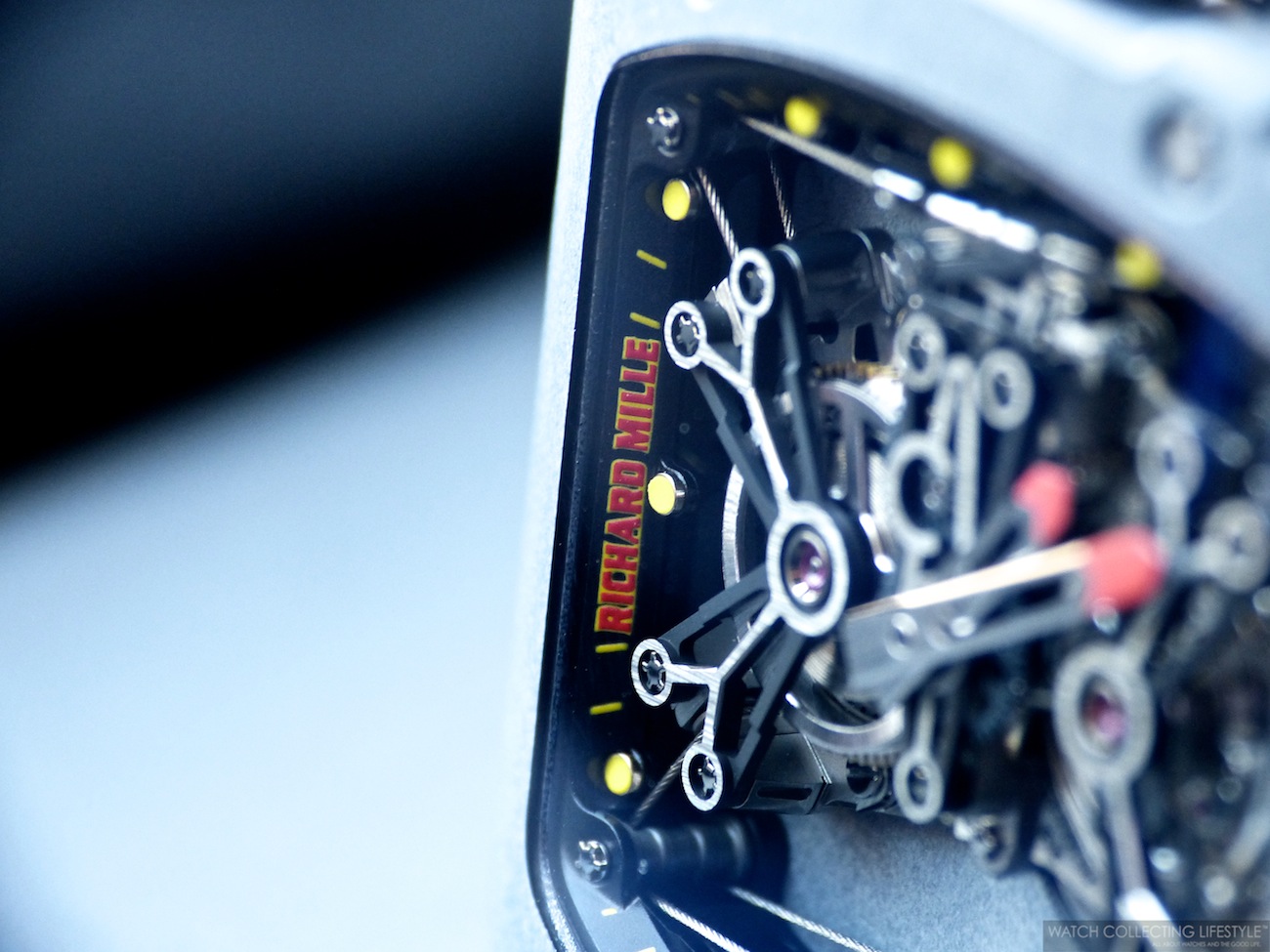
Omega Seamaster Planet Ocean 600M GMT GoodPlanet ref. 232.30.44.22.03.001 43.5 mm stainless steel case, display case back, automatic movement, GMT function with orange independent hand, rotating ceramic bezel, date indicator and stainless steel bracelet. Sticker Price $8,100 USD. For more info on Omega click here.

News: Pre SIHH 2014 Jaeger-LeCoultre Unveils the Grande Reverso Ultra Thin 1931 Chocolate Dial. Absolute Elegance in a Pink Gold Case.

Over the years, the Reverso has appeared in a number of different guises and been enriched with various unusual sizes and new horological complications – all the while remaining loyal to the spirit of the watch with two faces. On the occasion of the 80th anniversary of this timepiece that has become a cult object, Jaeger-LeCoultre chose to return to the very origins of a legend by presenting the Grande Reverso Ultra Thin Tribute to 1931, directly inspired by the aesthetic codes of the historical model. This creation, distinguished by an ultra-thin case, contemporary dimensions and remarkably faithfulness to the original, was enthusiastically received by devotees of the Reverso and by watch connoisseurs who expressed the wish that this vintage edition should not remain a one-off model. In response to their desires, the Manufacture already introduced the Grande Reverso Rouge with a deep red dial in 2012, followed the next year by the Grande Reverso Ultra Thin Duoface Blue. For 2014, Jaeger-LeCoultre unveils the third member of this splendid trilogy: the Grande Reverso Ultra Thin 1931 with a chocolate-toned dial.

The new model, entirely in keeping with its historical ascendance, vividly evokes the finest hours of Art Deco. Its shapes, its color and its materials are the ultimate expression of a movement that heralded the inception of industrial design while favoring hand craftsmanship executed to perfection. Entranced by this delightful color palette, the eye naturally lingers on the pleasing contrasts between the glowing chocolate shade of the watch face and the pink gold of the case, including the traditional gadroons framing the dial. This irresistible association is further underscored by the judicious reinterpretation of the aesthetic principles governing the original. Apart from the 12 o’clock numeral, the hours are shown by baton-shaped hour-markers, while the hour and minute hands feature a dagger-type profile. The small seconds at 6 o’clock perform a once a minute rotation on the dedicated rectangular subdial. This picture of pure, restrained refinement would not be complete without a mention of the “REVERSO” inscription exactly reproducing that appearing on the historical model. Everything might seem to have been said, and yet it is only now that the distinctive emotional ties uniting an owner and his Reverso can begin to be woven.

The usual chestnut brown alligator leather strap with pink gold pin buckle is just one of the options proposed by the Grande Maison in the Vallée de Joux for securing the Reverso Ultra Thin 1931 to the wrist. Polo players, who have been wild about the Reverso for over 80 years, are no less demanding when it comes to choosing the pair of boots they will wear to compete in various prestigious tournaments. They show no hesitation in confidently striding through the doors of Casa Fagliano, established since 1892 in the worldwide polo capital, Buenos Aires. For well over a century, the Fagliano family has been dedicated to a single craft of which it masters all the mysteries and intricacies: fine leather work. The descendants of the company founder continue to share the many duties involved in an authentic family-style division of labor. Their creations are keenly sought-after by the best polo players who simply could not imagine playing a match without their favorite boots. For the Manufacture Jaeger-LeCoultre, Casa Fagliano has agreed to produce hand-crafted straps in successive stages following the strict principles of time-honored tradition in working with cordovan leather, which is renowned for its exceptional resistance. Delivered along with each watch, the strap made in the Casa Fagliano workshops is distinguished by its elegant suppleness and hand-made mode of production that makes it truly one of a kind. The Manufacture Jaeger-LeCoultre is proud of this partnership that further strengthens the ties between polo and the Reverso. Over eight decades since its birth, aesthetes will be more delighted than ever to welcome the Grande Reverso Ultra Thin 1931, which combines passion and prodigious expertise with the legendary quality characterizing all timepieces bearing the Jaeger-LeCoultre signature.

For more info on Jaeger-LeCoultre click here.

Technical Specifications

Grande Reverso Ultra Thin 1931 Chocolate Dial ref. Q2782560.

Movement: Mechanical manually-wound movement, Jaeger-LeCoultre Calibre 822/2, crafted, assembled and decorated by hand. 21,600 vph, 19 jewels, thickness of 2.95 mm, 45-hour power reserve.

Dial: Chocolate dial with powdered numerals and hour-markers.

Hands: Baton-type, faceted, gold plated

Case: 18-carat pink gold with a height of 46.8 mm, a width of 27.4 mm and a thickness of 7.3 mm with a polished finish.

Water-resistant: 3 bars/30 meters.

Straps and buckle: Matte brown alligator leather 20/18 and 2nd strap in cordovan leather, crafted by “Casa Fagliano” of Buenos Aires fitted with a pin buckle in 18 carat pink gold.

Insider: Jaeger-LeCoultre Master Hometime Aston Martin. A Very Nice and Understated Dual Time Complication.

The Jaeger-LeCoultre Master Hometime Aston Martin ref. 162847N is perhaps one of the most elegant and understated dual time complications out there. With its Aston Martin-inspired design, this watch features a slim satin-brushed finished stainless steel case measuring 40 mm in diameter that wears relatively smaller on the wrist. The watch is very nice and quite useful for those traveling frequently between timezones.

The Master Hometime Aston Martin features a black sunray-brushed dial that appears more glossy than sunray due to its domed sapphire crystal and the reflections created by light. The dial is perfectly balanced featuring a nice symmetry between the 24-hour indicator at 12 and the running seconds at 6 o’clock that is divided in quarters and which features an overlapping date aperture. The two time zones are easy to read as the reference time is being indicated by a skeletonized hand with a red tip that provides unparalleled contrast. As it is common with Jaeger-LeCoultre timepieces, this watch features classic and elegant dauphine hands with a small touch of luminescent material. The registers on the dial are recessed and nicely texturized with a guilloché finish as you will be able to appreciate in the pictures.

The beating heart inside this beauty is the automatic Jaeger-LeCoultre calibre 975H composed of 230 parts, 29 jewels and which provides a power reserve of 48 hours when fully wound. The calibre is very nicely decorated and fully visible via the display case back. One advantage of this watch over other dual time zone watches, is that the 24-hour hand is not the one that moves independently but the home time, allowing for easy adjustment when traveling between time zones. If you keep your hour hand and the 24-hour hand synchronized, every time you travel it will be easy to adjust your time to the new time zone and always keeping track of the hometime with the 24-hour red tip hand. If you are not traveling you could always synchronize the 24-hour hand to the second time zone you want to keep as a reference without the need of a bezel.

This watch is fitted with a nice grayish blueish matte alligator strap with double folding clasp. Opposed to other JLC watches we have reviewed, the length on this strap is perfect. The strap has a very unique and nice color but is somewhat stiff. We are confident that after a week-long break-in period, the strap will perfectly mold to your wrist.

As mentioned earlier, this watch wears slightly smaller on the wrist but quite comfortable. The biggest down side to this watch, is that the dial along with the untreated sapphire crystal create unwanted reflections that make reading time somewhat hard. Regardless, we feel that this watch is very nicely done and an extremely great value for your money.
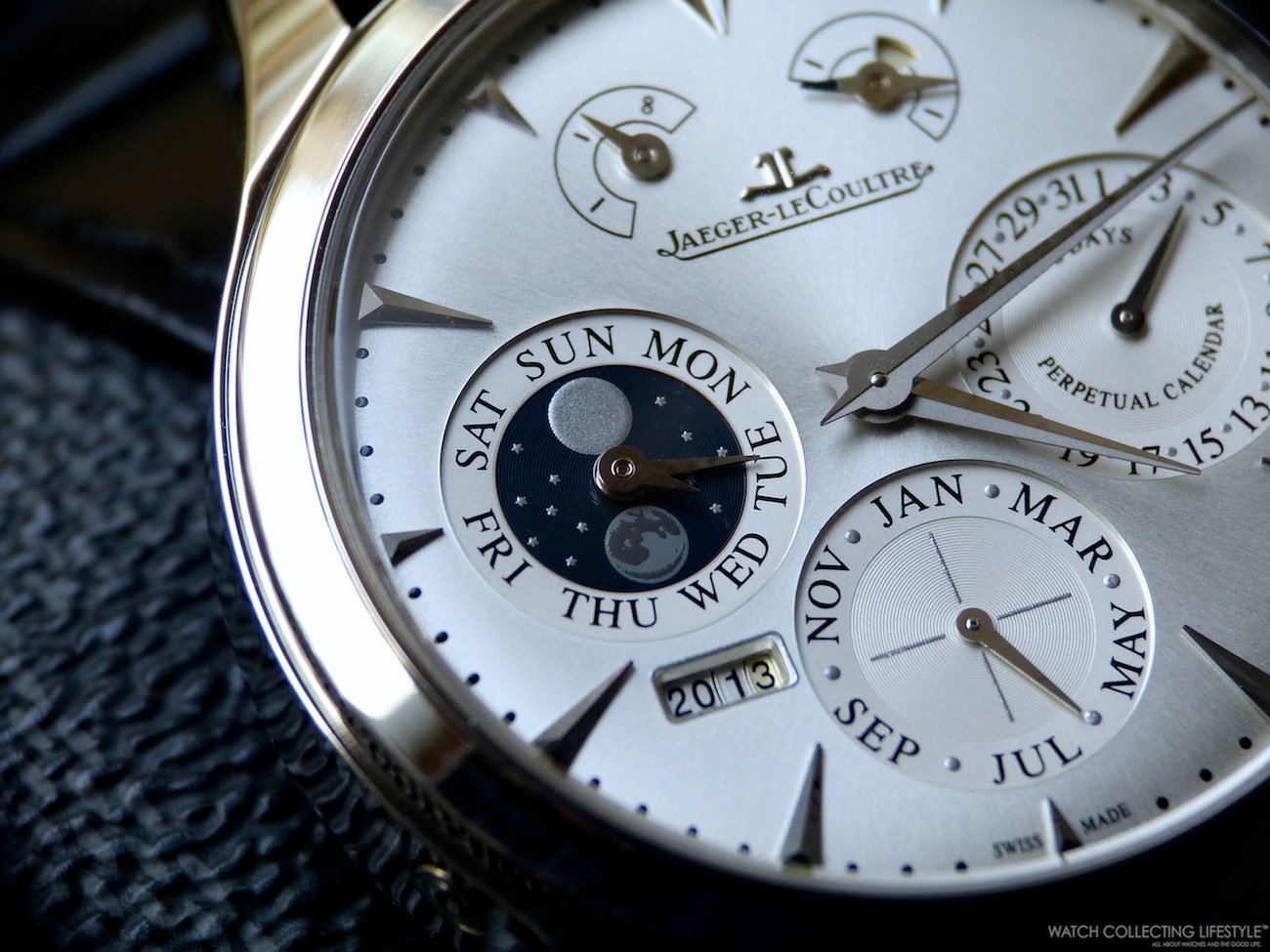
Sticker Price $9,000 USD. For more info on Jaeger-LeCoultre click here.