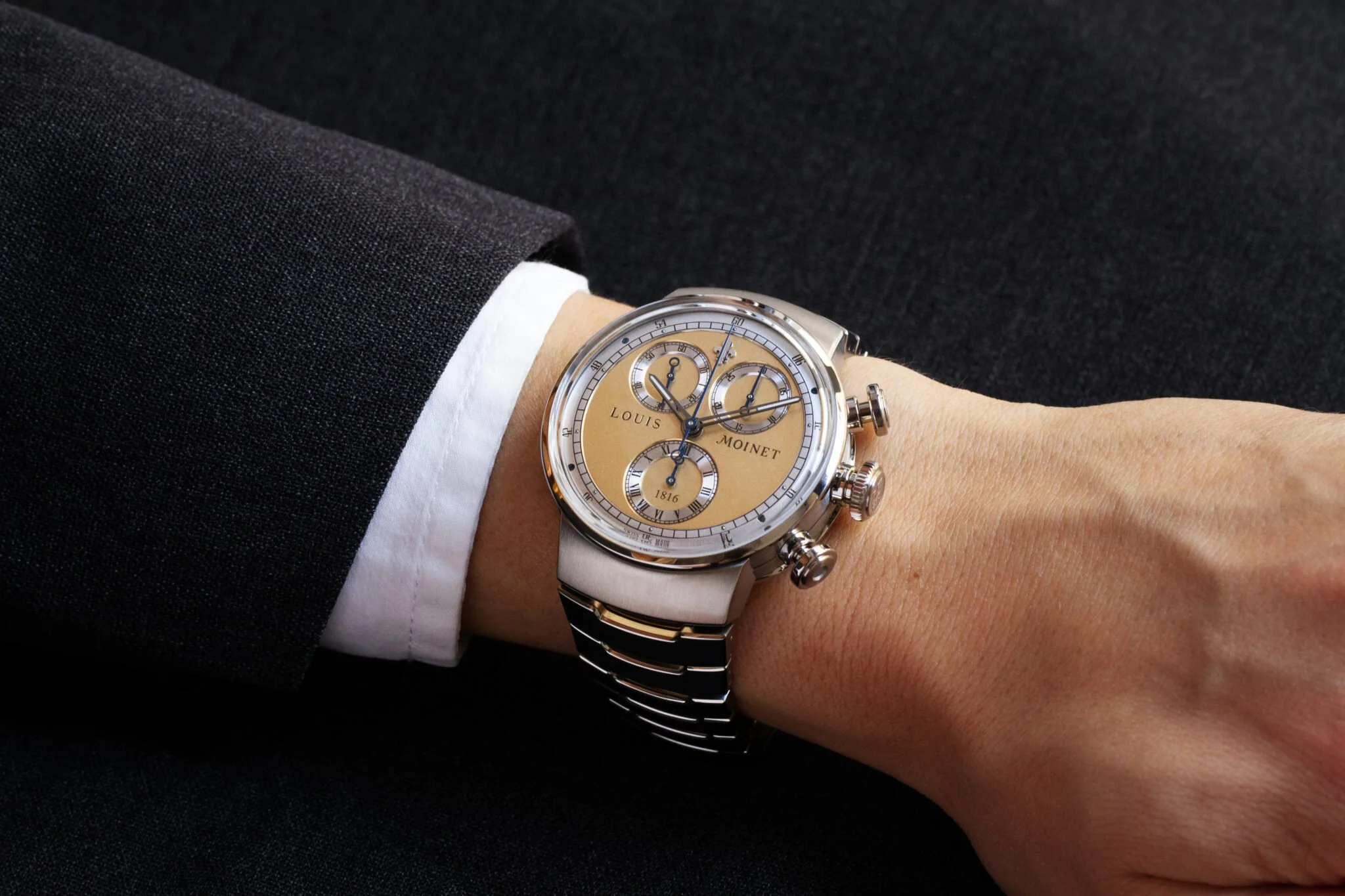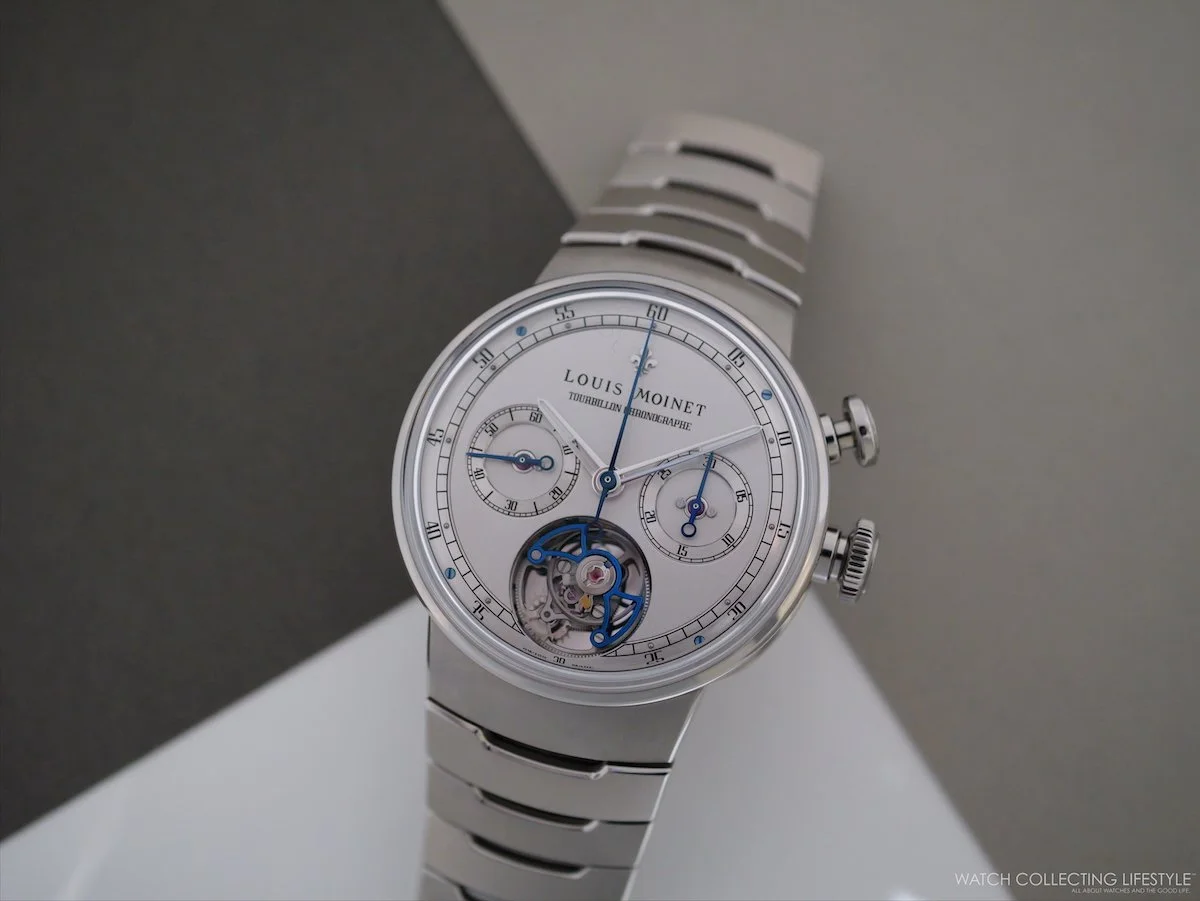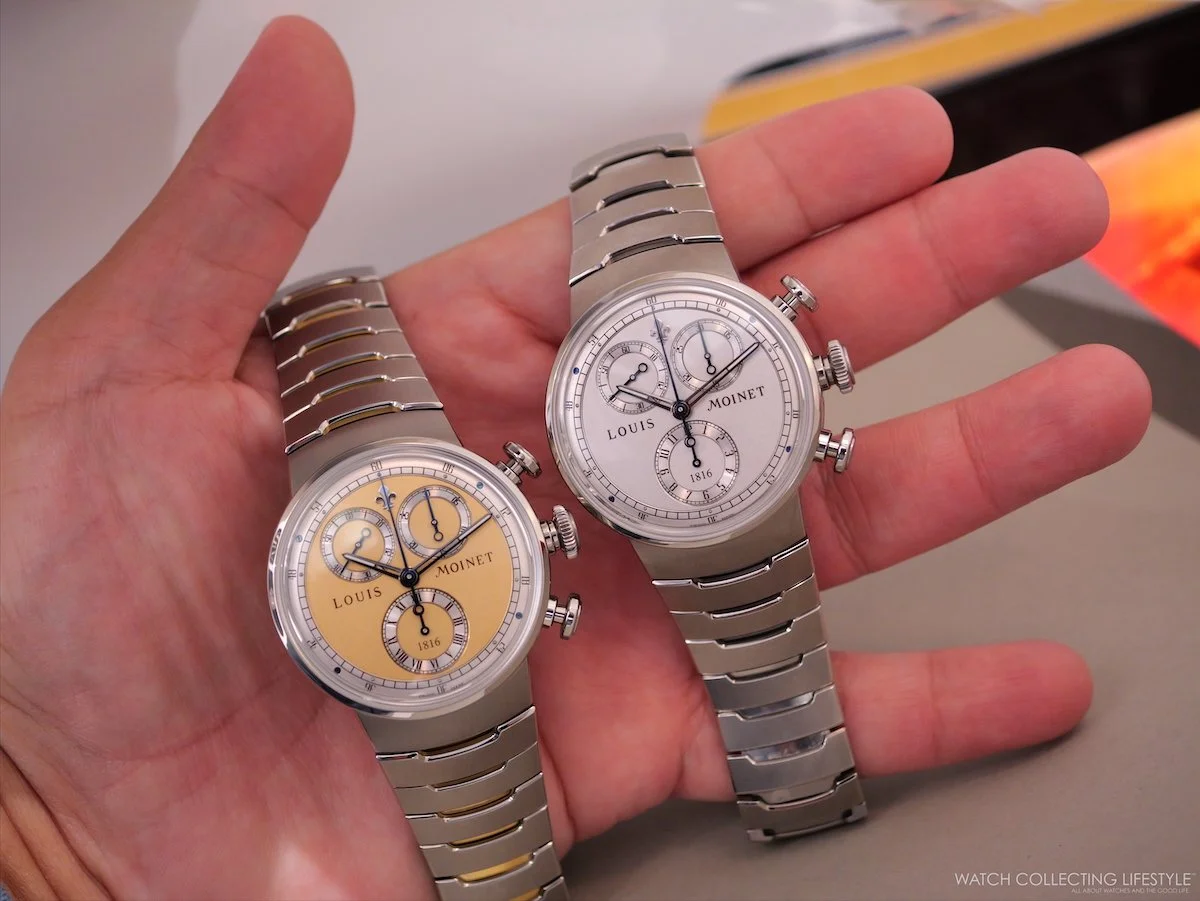
When we introduced the Louis Moinet 1816 Chronograph last July, we noted the strength of its founding argument: this is a watch named for the year its creator invented the chronograph, built around a dial layout lifted directly from the original compteur de tierces. For Watches and Wonders 2026, Les Ateliers Louis Moinet returns with a new edition of the 1816 Chronograph that adds something the original lacked—color. The occasion is the 210th anniversary of Louis Moinet's invention, and the chosen hue is champagne. It is a better choice than it might sound.
Things to Know About the Watch
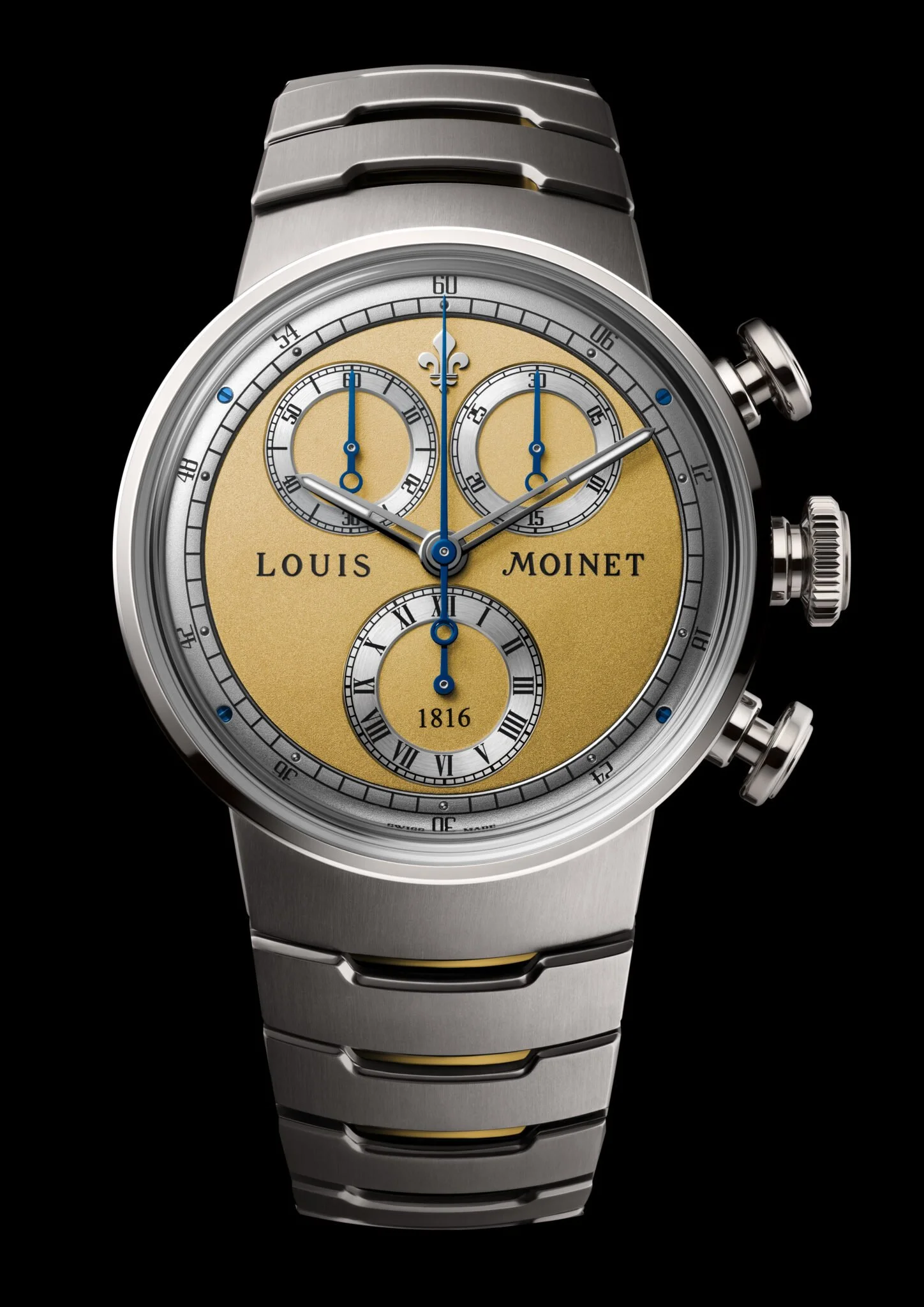
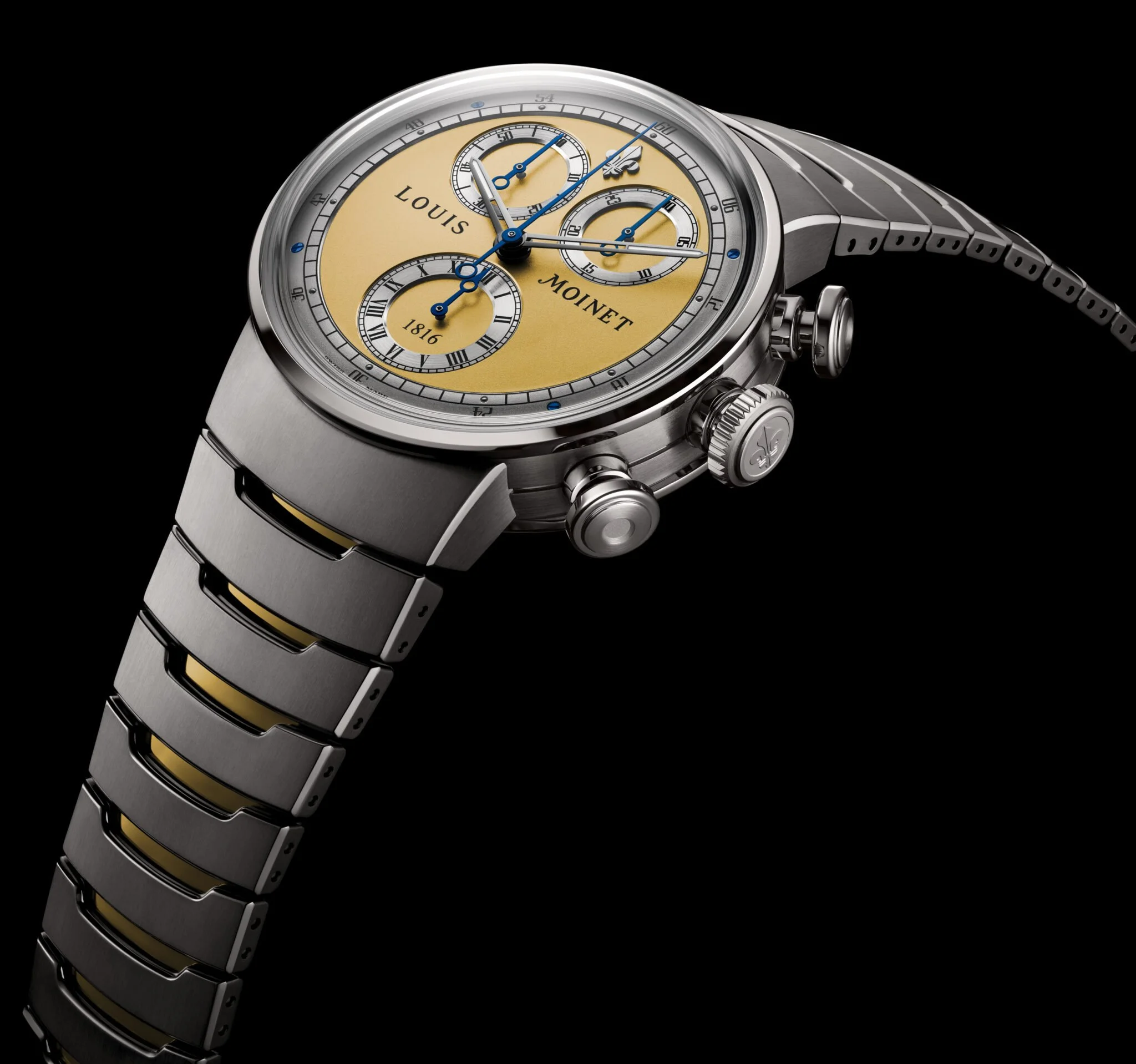
The case is unchanged from the original 1816 Chronograph: 40.6 mm in diameter, double-gadroon profile in polished and satin-finished grade 5 titanium, composed of 51 parts. The Directoire-era semi-bassine silhouette remains intact, along with the fleur-de-lys winding crown—the emblem of Bourges, Moinet's birthplace—with the two understated pushers flanking it.
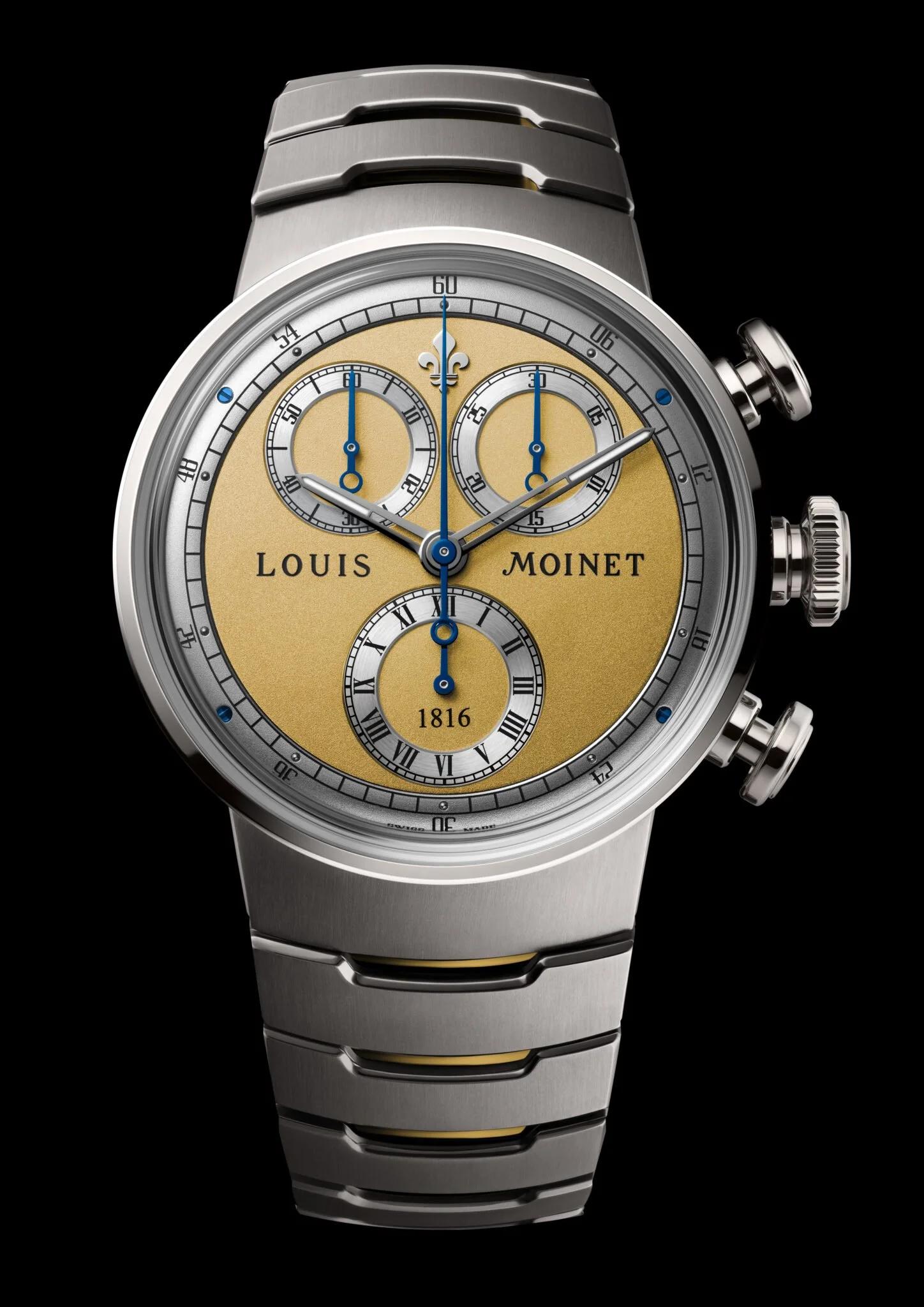
The dial is where this edition makes its statement. The warm champagne tone washes across the dial plate and the three subdial centers, adding depth and warmth where the rhodium original was deliberately cool and restrained. The effect is closer to the golden-hued bridges of the LM1816 calibre than to anything decorative—the color is meant to echo the movement itself, letting the mechanics define the character of the piece. Rhodium-plated rings on the counters create a clear visual hierarchy, preserving legibility against the warmer background. Heat-blued steel hands for the chronograph, the totalizers, and the openworked hours and minutes provide the necessary contrast.
The most historically resonant change is on the 12-hour totalizer, which now uses Roman numerals rather than Arabic ones, directly referencing the original 1816 instrument.
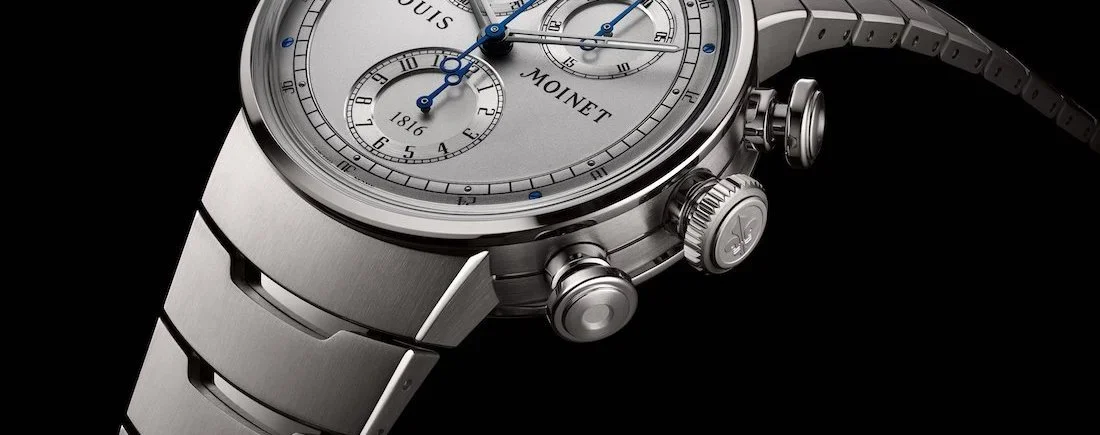
It is a small shift on paper and a meaningful one in practice: it reads differently, more archival, more connected to the source material. The subdial layout itself is unchanged with a small seconds and 30-minute jumping totalizer arranged symmetrically across the upper half of the dial, the 12-hour counter below, the flange divided in increments of six and fastened with four blued-steel screws.
The grade 5 titanium bracelet—the "Project BRIDGE" design, the first metal bracelet Louis Moinet has ever produced—receives champagne DLC (Diamond-Like Carbon) coating on its intermediate links. This picks up the dial color at the wrist, underscoring the U-shaped architecture of those links and tying the bracelet visually to the dial without forcing the connection.
The Movement
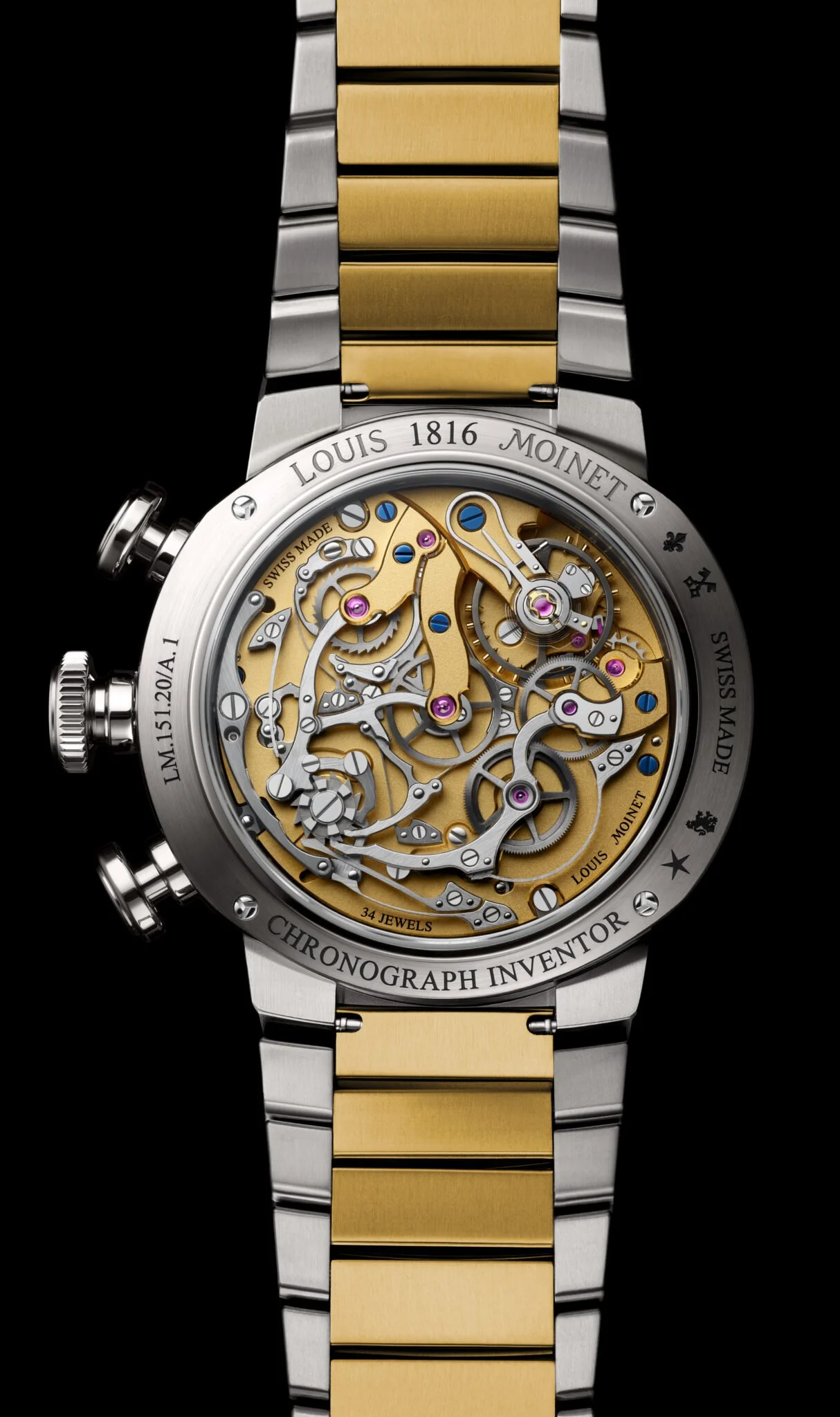
Calibre LM1816 was developed from scratch in collaboration with Concepto, its architecture dictated from the outset by the dial layout above. That's the correct order of operations: the dial defined the movement, not the reverse. The result is a manual-wound, column-wheel chronograph comprising 330 components and 34 jewels, beating at 28,800 vph to provide a 48-hour power reserve.
The instantaneous jumping minute counter is the mechanical centerpiece. Unlike a trailing counter—where the hand crawls continuously—the jumping mechanism snaps the totalizer hand to the next graduation precisely at the 60th second, enabling error-free elapsed-minute readings. A wolf-tooth wheel, cam, rocker, and pawl accomplish this with an isolator built into the reset mechanism to prevent damage on fly-back.
The column wheel coordinates the start, stop, and reset phases with the smooth engagement expected at this level. The swan-neck regulator, invented in 1867 and still the most elegantly functional regulator design in the canon, adjusts rate via micrometer screw. The open case back shows gold-plated bridges, blued screws, and red rubies in sharp contrast, a movement worth looking at.
Summary & Price
The Louis Moinet 1816 Chronograph makes its case through historical legitimacy and mechanical seriousness. The integrated calibre, the faithful dial architecture, and the brand's own founding connection to the chronograph's invention give it a coherence that few chronographs can honestly claim. This is a watch built from a real story.
Sticker Price USD 38,500. For more info on Louis Moinet click here.