When Kurt Klaus engineered IWC's first perpetual calendar in 1985, the mechanism came with an unspoken condition: let the power reserve run out, and you were in for a careful, sequenced correction to avoid damaging the calendar. IWC chipped away at that over the years, eventually allowing crown-based adjustments, but the fundamental constraint remained until Watches and Wonders Geneva 2026, where the ProSet mechanism changed the equation entirely. Forward or backward, through a single crown position, without consequence. It is the kind of improvement that makes you wonder why it took this long.
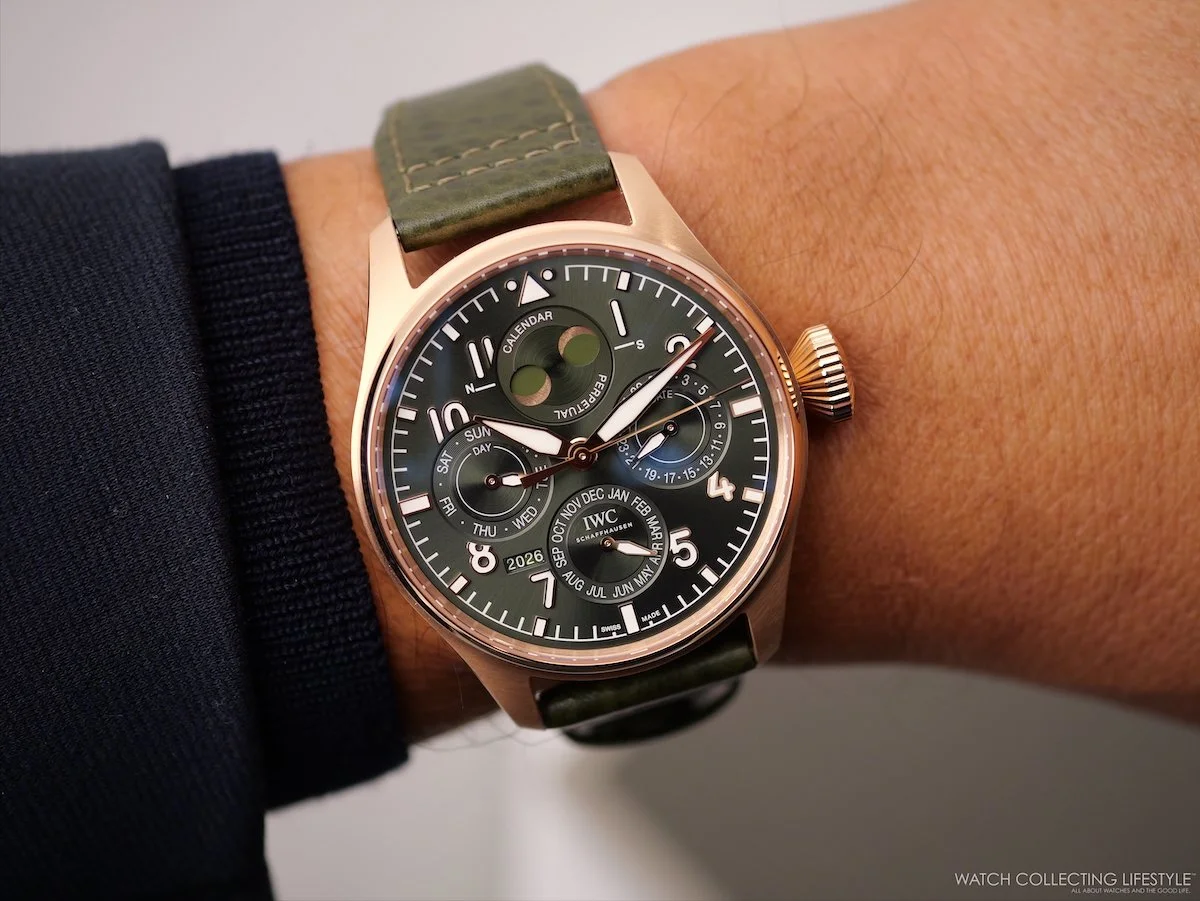
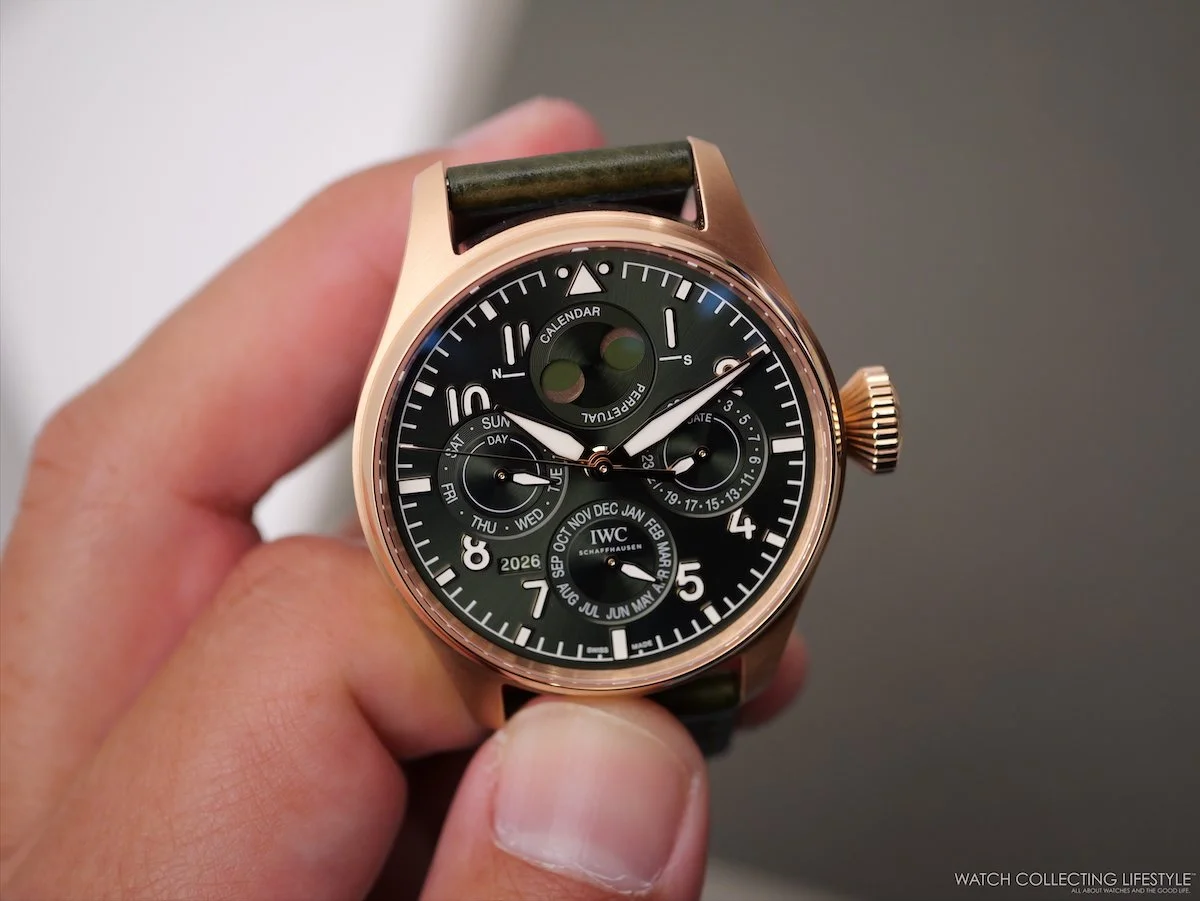
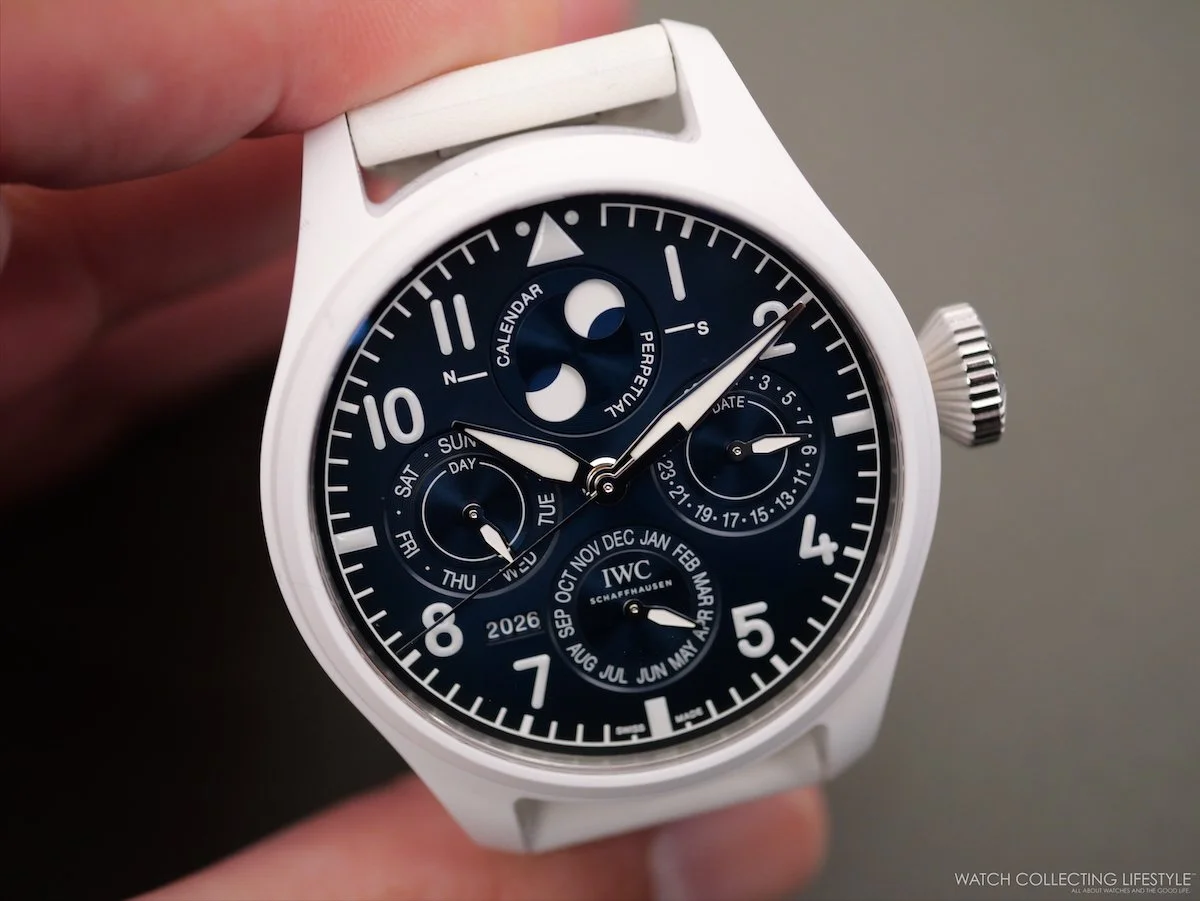
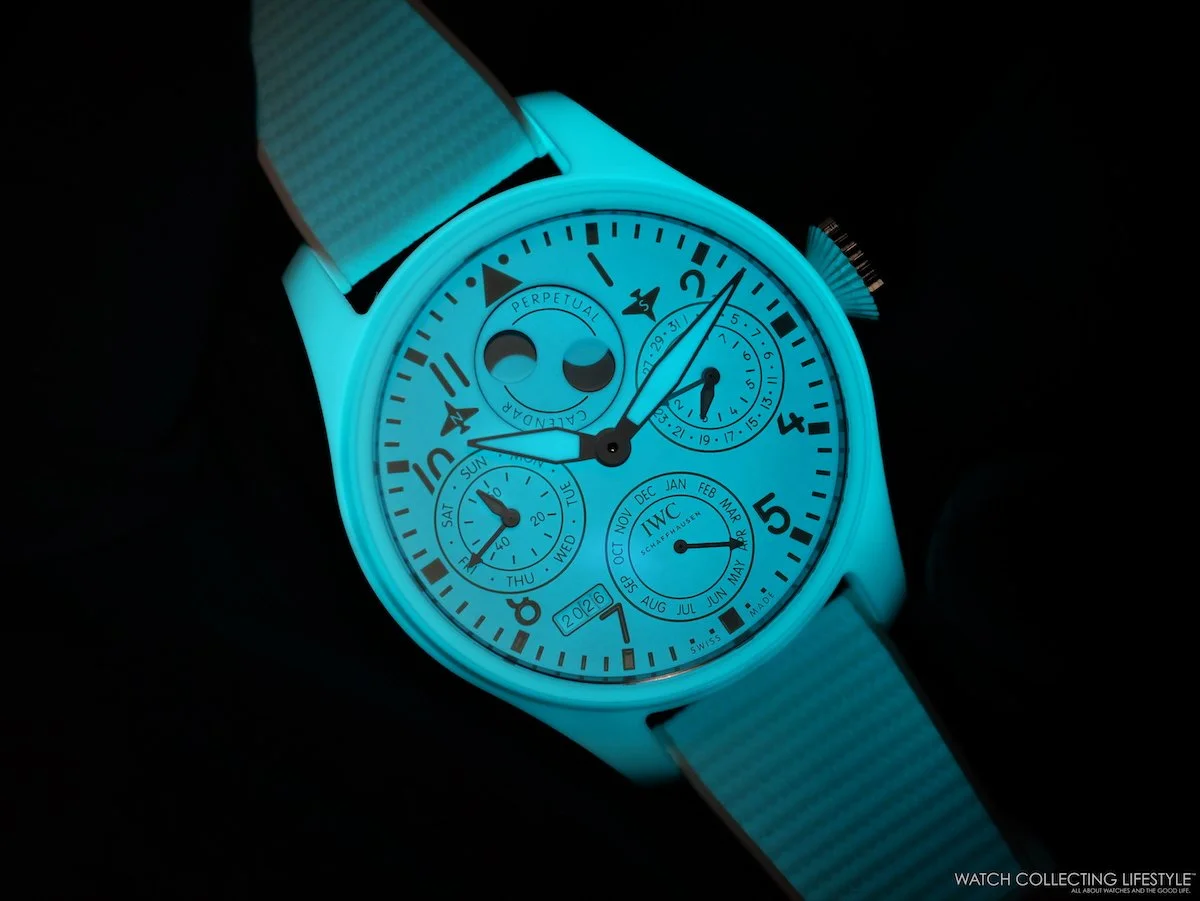
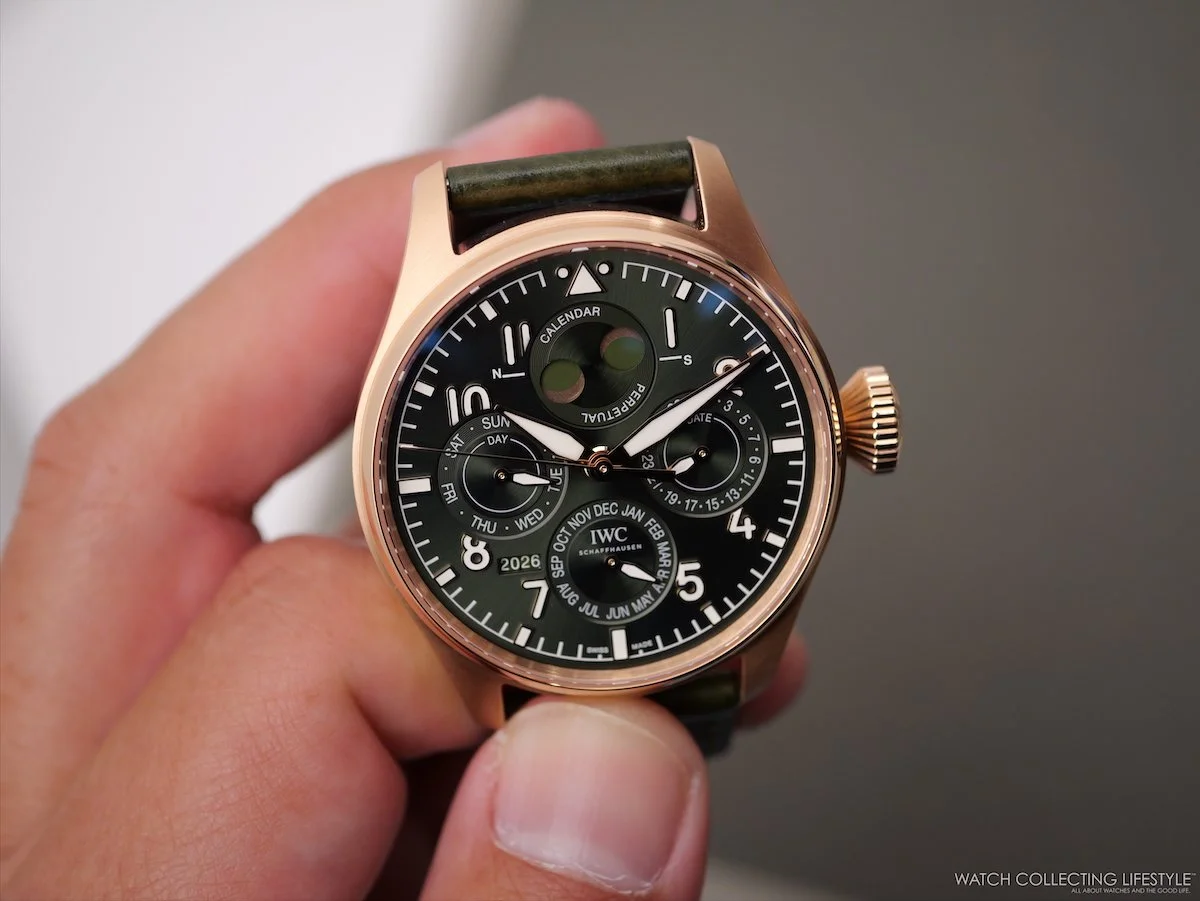
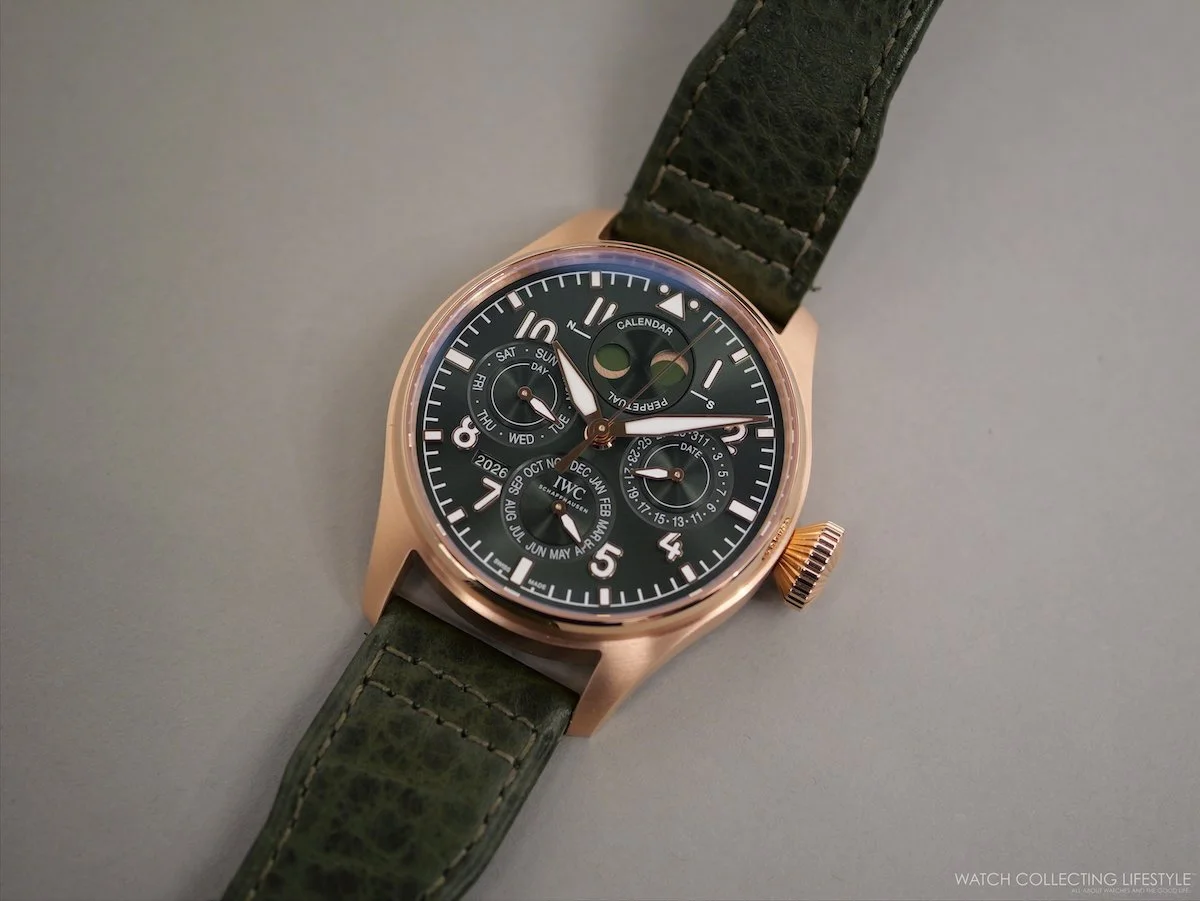
The new IWC Big Pilot's Watch Perpetual Calendar ProSet in 5N 18K gold with an olive-green sunray dial ref. IW329602 is the other version we got our hands on at the show, and it is a more interesting watch than the specification sheet suggests. The material pairing does something unexpected: gold and olive-green resolving into something coherent and quietly compelling. We previously covered the Big Pilot's Watch Perpetual Calendar ProSet Le Petit Prince—the white ceramic-cased variant with a midnight-blue gradient dial—and the two watches make for an instructive contrast in how the same movement and mechanism can read entirely differently depending on the material and dial choices surrounding them.
Things to Know About the Watch
At 42 mm across and 14 mm tall, the proportions sit at the more wearable end of the Big Pilot's range. The 5N gold case—a warm rose-gold alloy—is not the obvious choice for a pilot's watch, and that is precisely what makes it work. It recontextualizes the olive-green sunray dial, lifting it out of the field-watch register it might occupy in steel and into something with a more deliberate, almost paradoxical luxury character. Water resistance is rated to 100 meters, with a screw-down crown.
The ProSet module is what the entire collection launch is built around, and rightly so. The architecture is fully gear-based, protected by five patents, and delivers something no previous IWC perpetual calendar offered: the ability to correct the calendar in either direction from the same crown position used to set the time. Producing it required the LIGA microstructuring process—combining lithography and electroplating to achieve tolerances that conventional manufacturing cannot reach. The engineering here is substantive, not cosmetic.
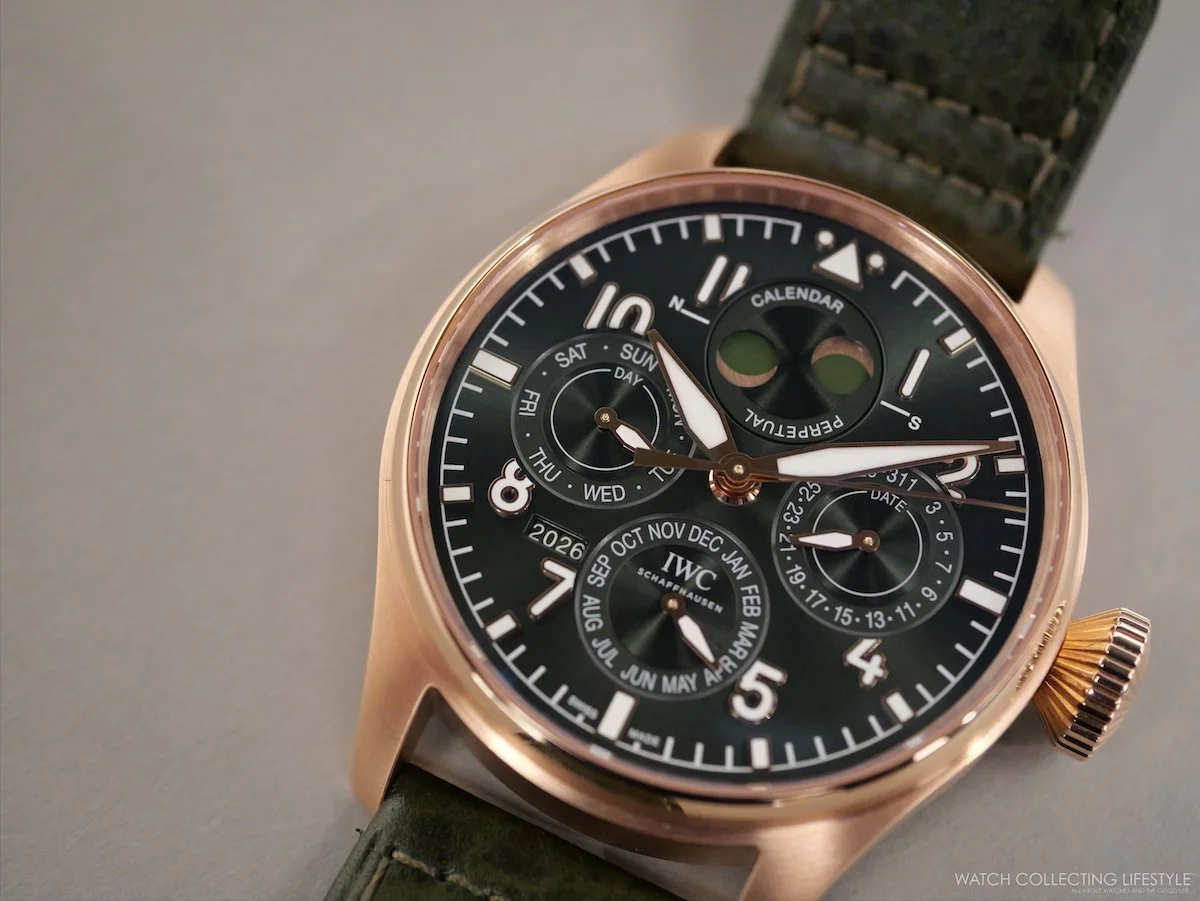
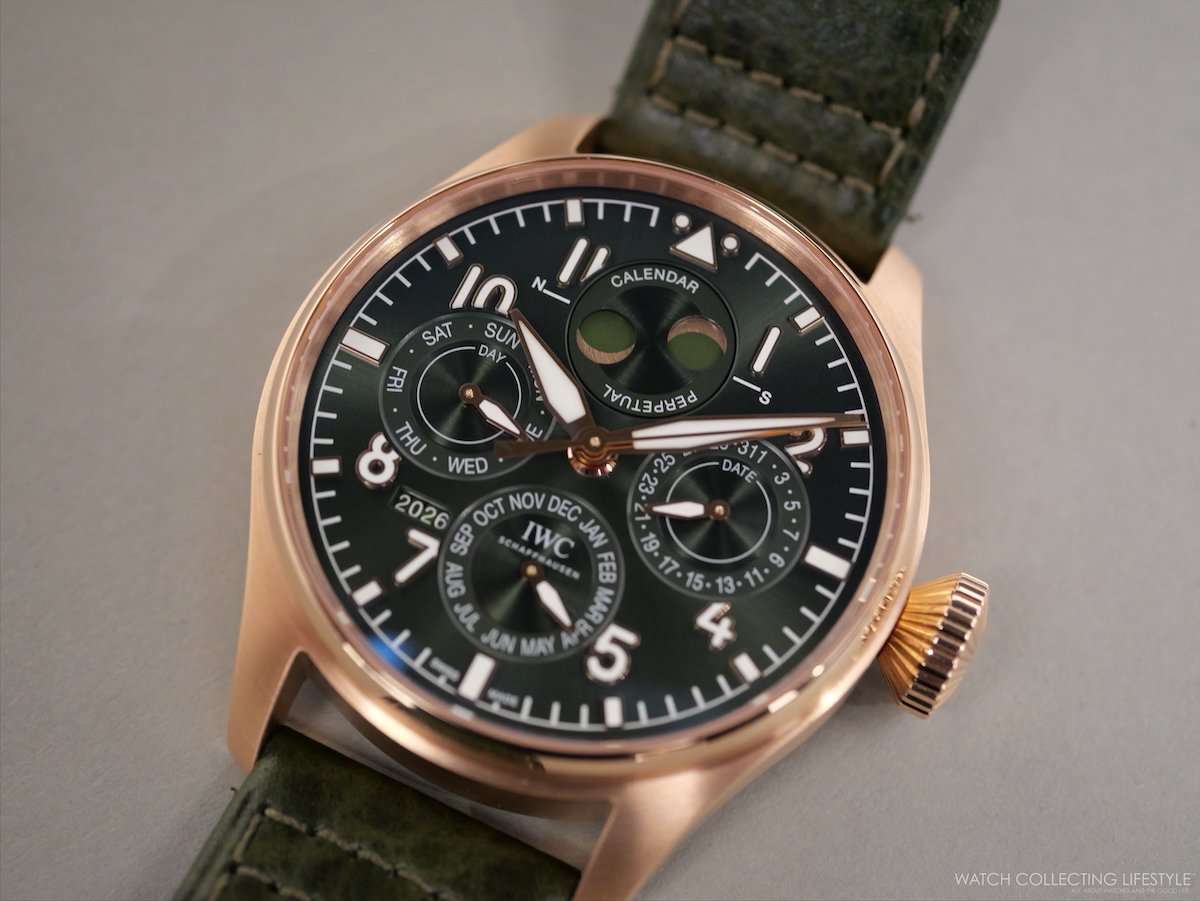
The dial layout follows the established Big Pilot's perpetual calendar format: day, date, month, and moon phase distributed across four subdials, with a four-digit year display sitting between 7 and 8 o'clock. That year display remains one of the more genuinely useful details on any perpetual calendar currently in production. The Double Moon complication tracks the lunar phase across both hemispheres simultaneously, with a deviation of just 1 day over 1,040 years. The watch wears on a green buffalo leather strap, which echoes the dial colour without replicating it.
The Movement
Calibre 82665 is IWC's in-house perpetual calendar movement with the ProSet module built in. The self-winding Pellaton system drives it, with ceramic components in the winding mechanism reducing wear to negligible levels over time. Power reserve comes in at 60 hours. The display caseback offers a clear view of the rotor and the movement architecture beneath it—worth a look, particularly given the engineering complexity of the ProSet module.

On the Wrist & Price
What holds this watch together in person is the dial. Olive-green is a color that can easily read as flat or indecisive on a watch dial, but the sunray finish prevents that entirely, as the surface shifts with the light angle, moving between a muted, almost grey-green and something considerably richer and more saturated. Against the 5N gold case, it never tips into the military aesthetic it might suggest in another material. The green buffalo leather strap sits naturally against both elements without demanding attention.
Sticker Price USD 54,700. For more information on IWC, click here.