For decades, Dominique Renaud was the watchmaker's watchmaker, the mind behind some of the most technically ambitious complications ever produced under other houses' names. Through the mythic Renaud & Papi manufacture, later acquired by Audemars Piguet, he became one of the most consequential movement architects of the modern era. And yet, until now, his name has never appeared on a dial that was entirely his own.
That changes in April 2026 with the Pulse60, the debut watch from the newly launched Dominique Renaud brand. But this isn't just a legacy watchmaker finally getting his flowers. The Pulse60 makes a technical argument that runs directly against the grain of contemporary haute horlogerie, and it's one worth taking seriously.
While the industry has spent the better part of a decade in an arms race toward higher frequencies, Zenith and TAG Heuer racing toward 1/100th-of-a-second chronograph accuracy with dedicated 50 Hz escapements and mainstream calibres climbing to 5 Hz as a marketing differentiator, Dominique Renaud has gone the other direction entirely. The Pulse60 operates at 1 Hz, or 7,200 vibrations per hour. One oscillation per second. Sixty beats per minute. The resting frequency of a human heart.
The question it asks is deceptively simple: what if slower is actually better?

Things to Know About the Watch
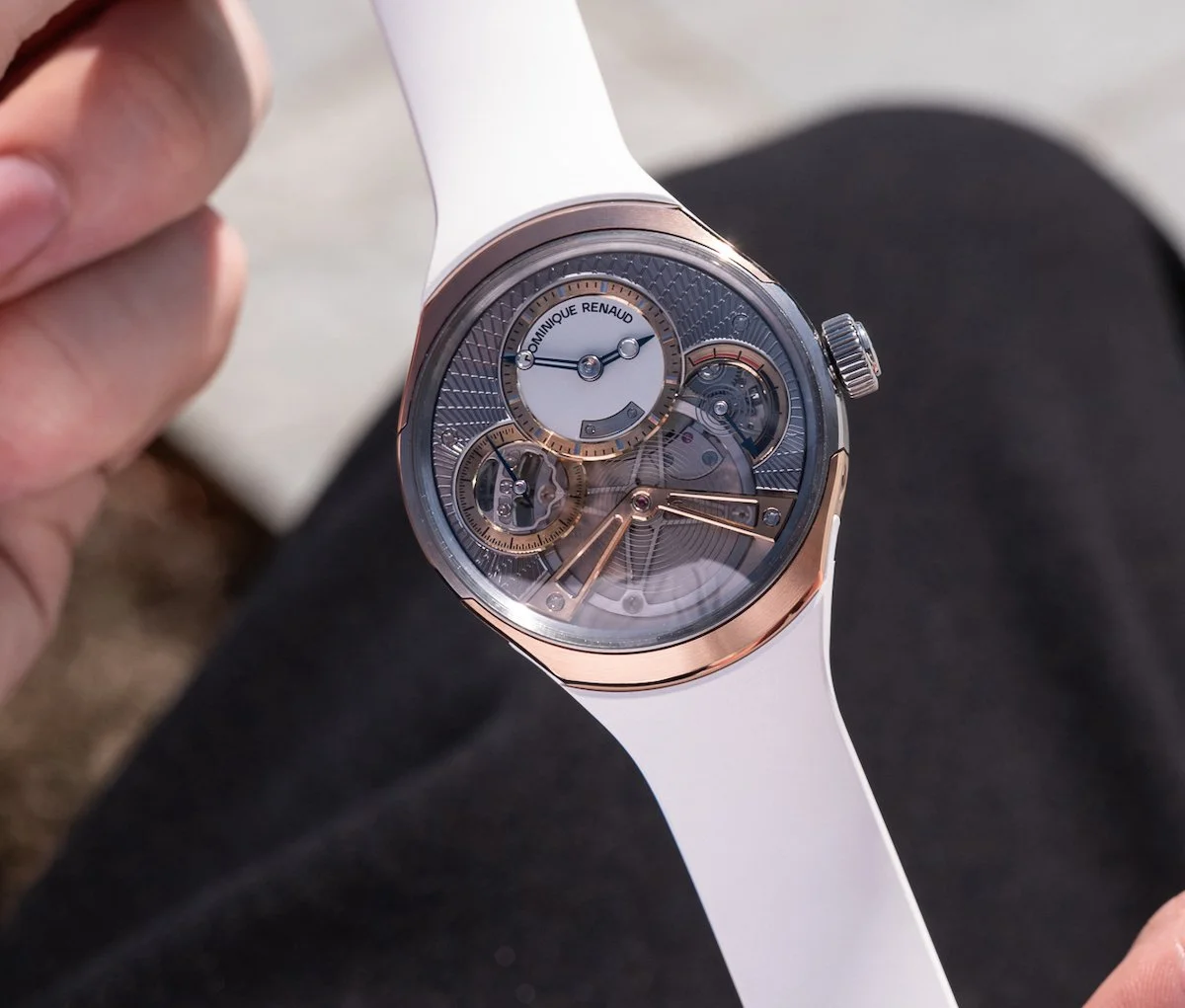
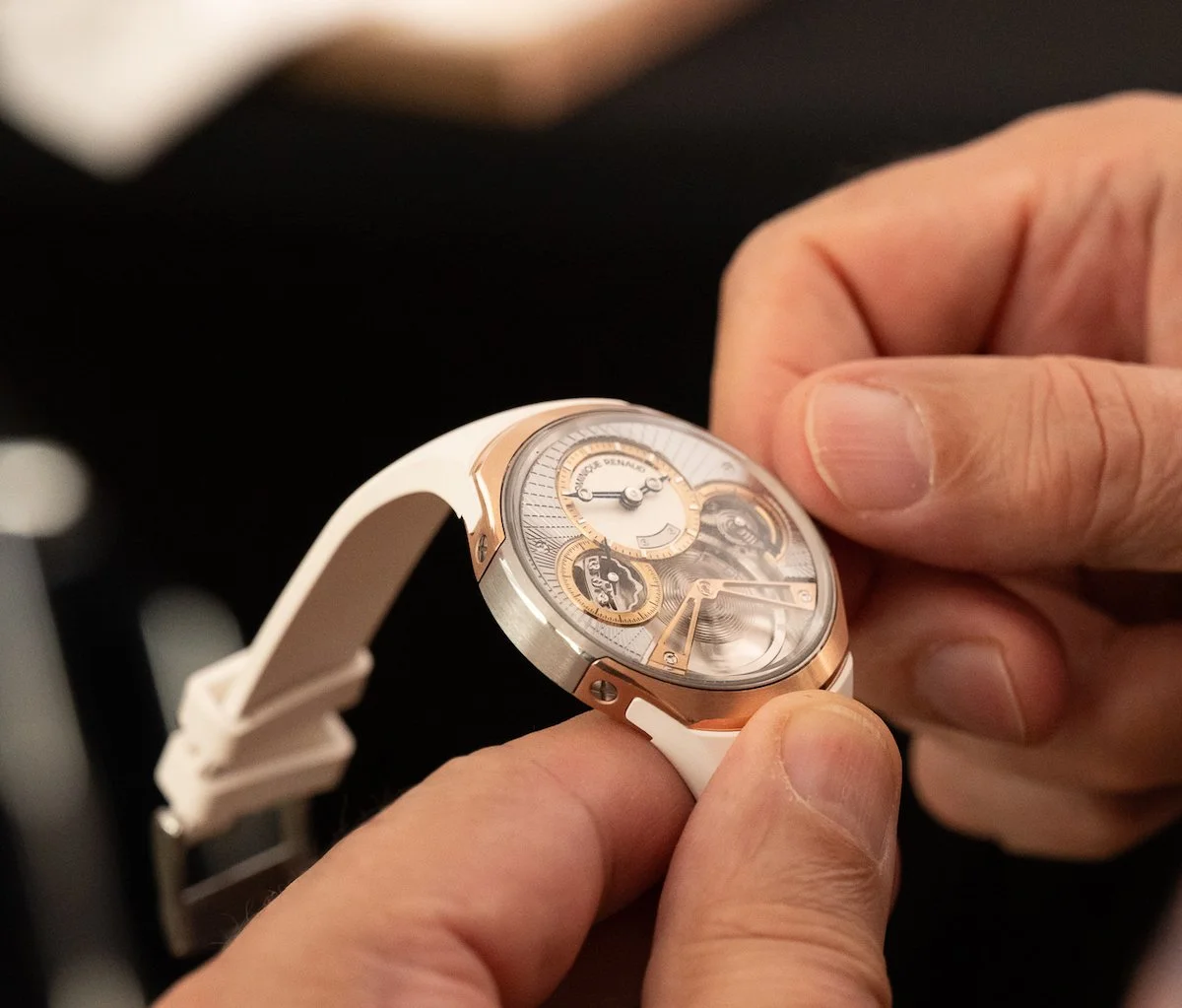
The Pulse60's case follows the same contrarian logic as its movement: strip away convention and see what remains when function dictates form. No lugs. No visible bezel as it disappears under a domed sapphire crystal with anti-reflective treatment. The three-part construction integrates the strap attachment directly into the case sides, creating a continuous line from wrist to dial.
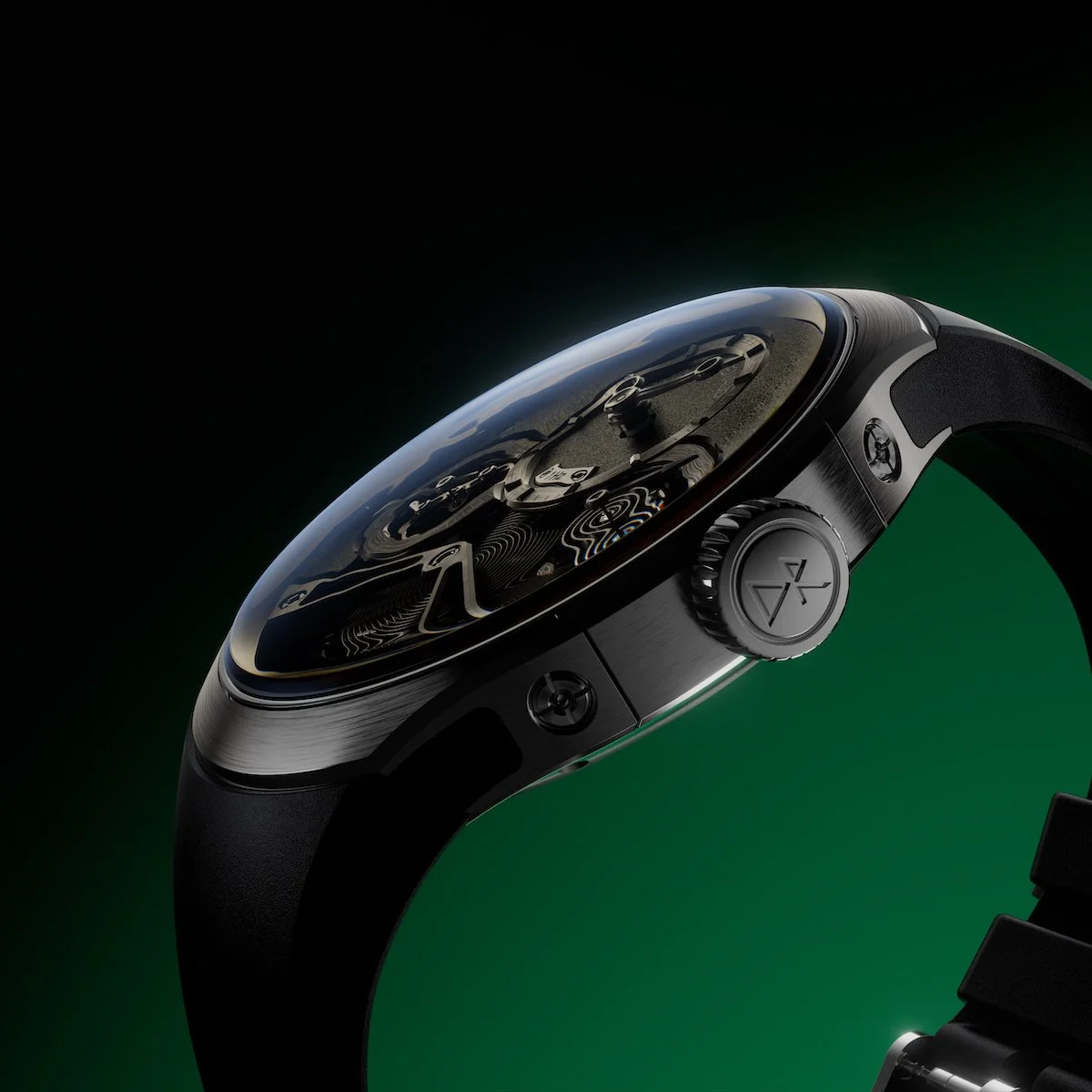
At 40 mm x 44 mm x 12 mm in Grade 5 titanium, it wears larger than a typical 40 mm round watch but avoids the bulk often associated with unconventional case architectures. Water resistance is 30 meters and there are three versions. The titanium version comes with grey or black dials, an opaline base, and diamond-cut openings. The bi-material pink gold and Grade 5 titanium variant features a guilloché dial—traditional technique, modern execution. Both versions carry a circular satin-brushed top that deliberately nods to the 1970s, a period Renaud has cited as formative for his design sensibility.
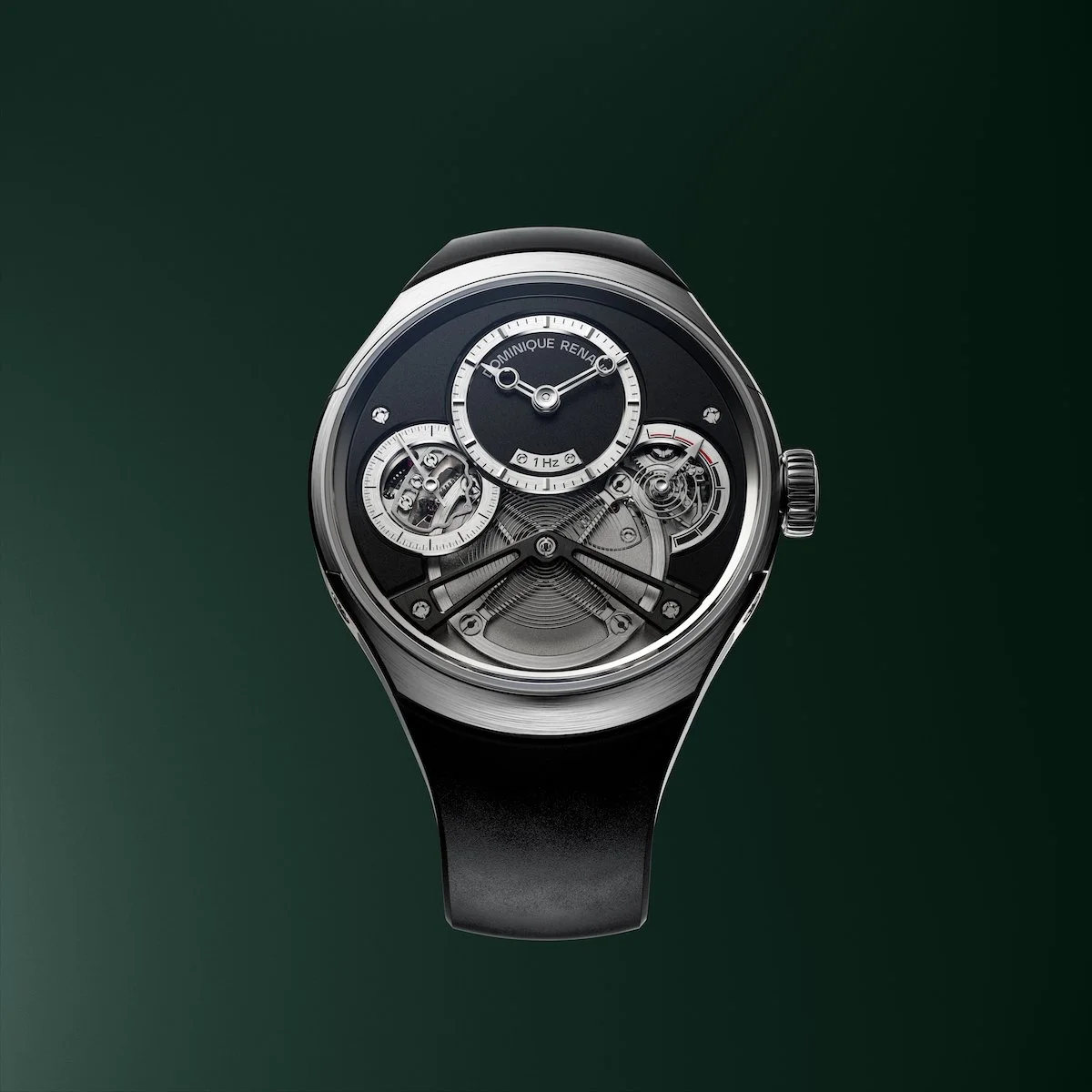
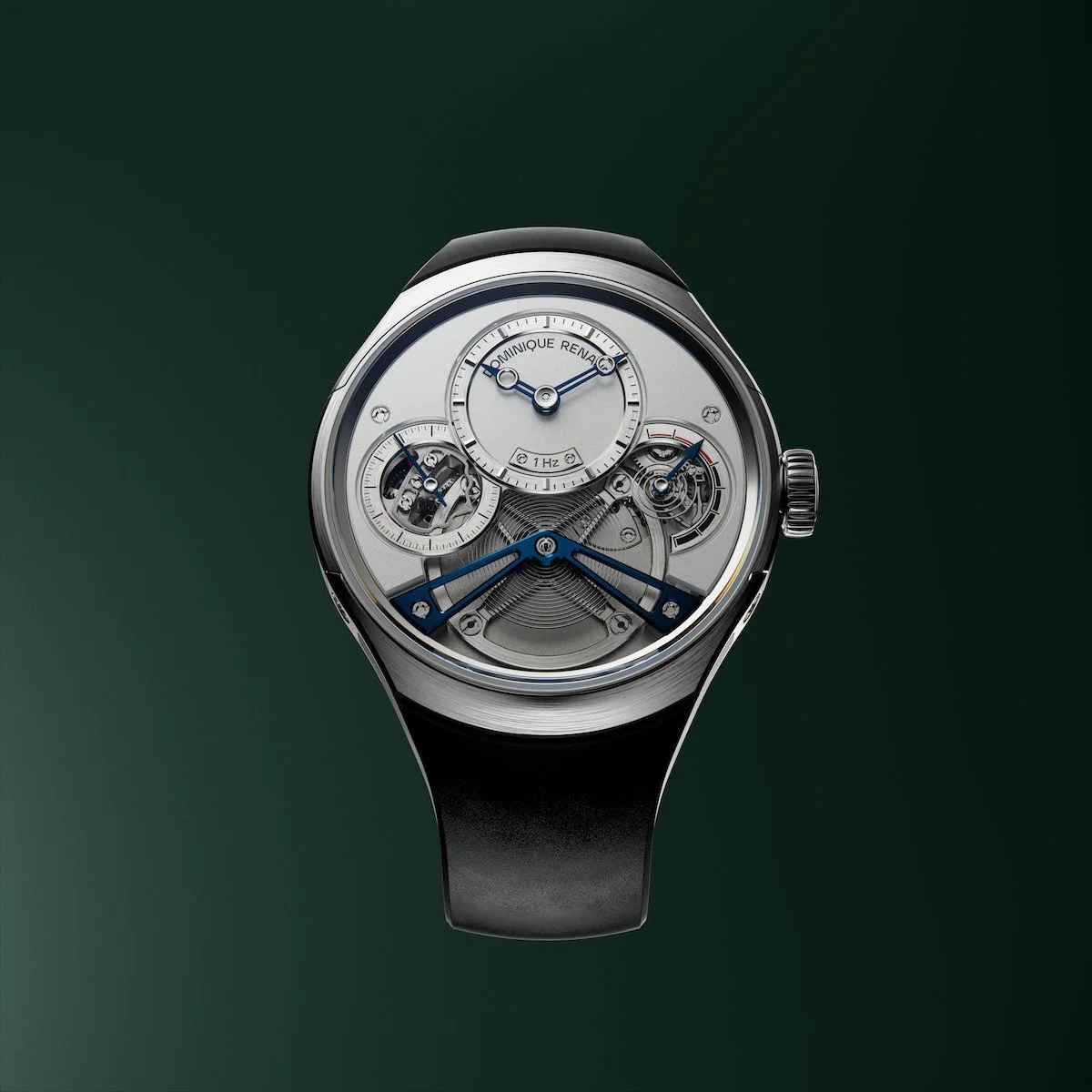
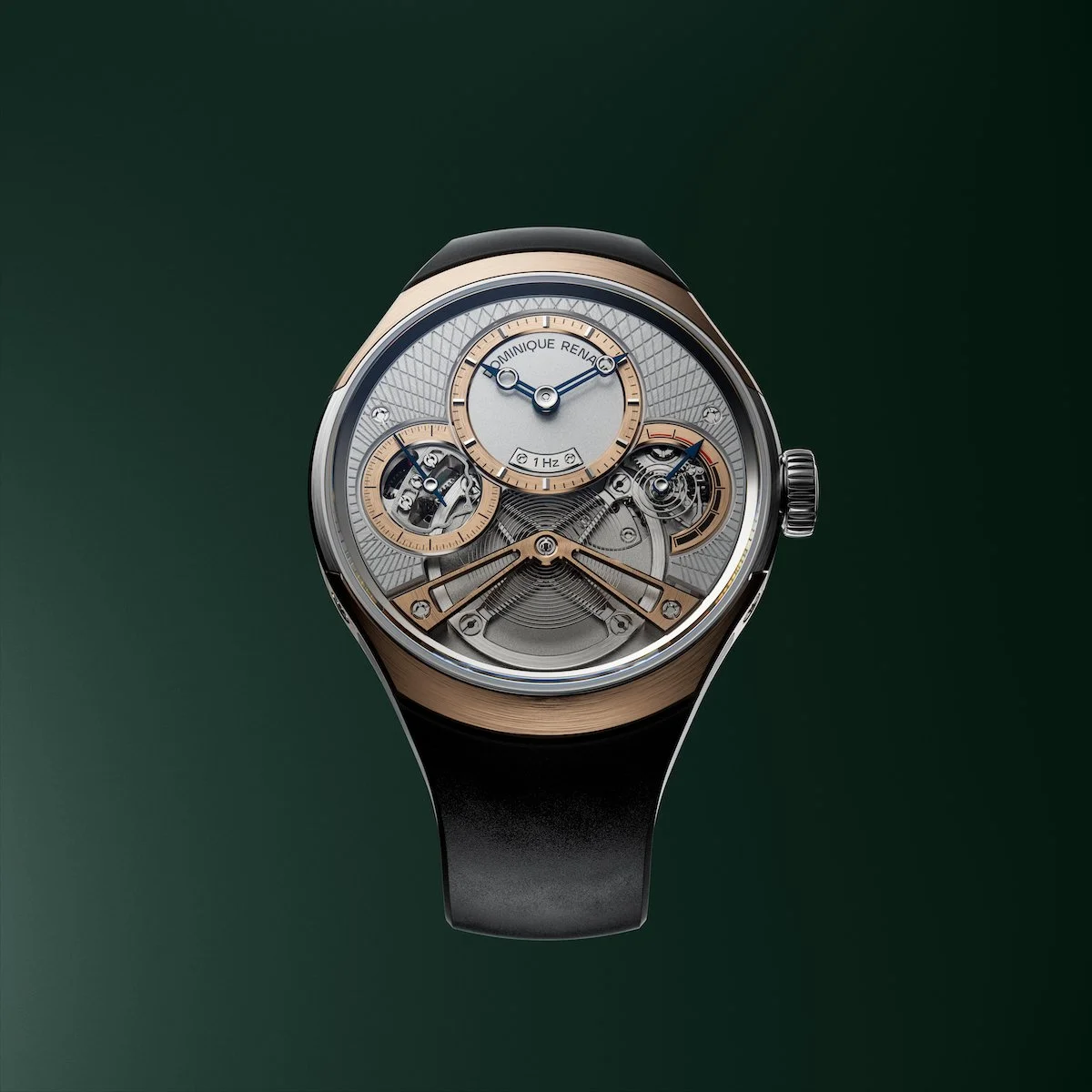
The integrated rubber strap uses an invisible push-button interchangeable system, and the watch ships with both a pin buckle and a triple-folding clasp. The flat sapphire case back—also anti-reflective—reveals the crown wheel, ratchet, and an openworked escapement line, making the offset double-roller system visible.
The Movement and Its Complexities
The movement is called BUA2024—standing for Balancier Ultra Amplitude—, with development beginning in 2024. It is a completely new 33 mm-diameter calibre with a four-day power reserve, not a modified version of an existing architecture. The 1 Hz frequency isn't retrofitted into a conventional layout; the entire movement was conceived around the implications of that single design decision.
At 1 Hz, the balance completes one full oscillation per second, dramatically reducing the impulses and shocks transmitted through the escapement over a given period. Fewer interactions between the escapement and balance mean fewer opportunities for disturbance to corrupt the rate. Where high-frequency movements pursue accuracy by averaging out errors across many oscillations, the Pulse60 pursues it by making each individual oscillation as clean and undisturbed as possible. These are fundamentally different engineering philosophies, and neither is inherently wrong, but the low-frequency approach has been almost entirely unexplored at this level of seriousness in a modern wristwatch.
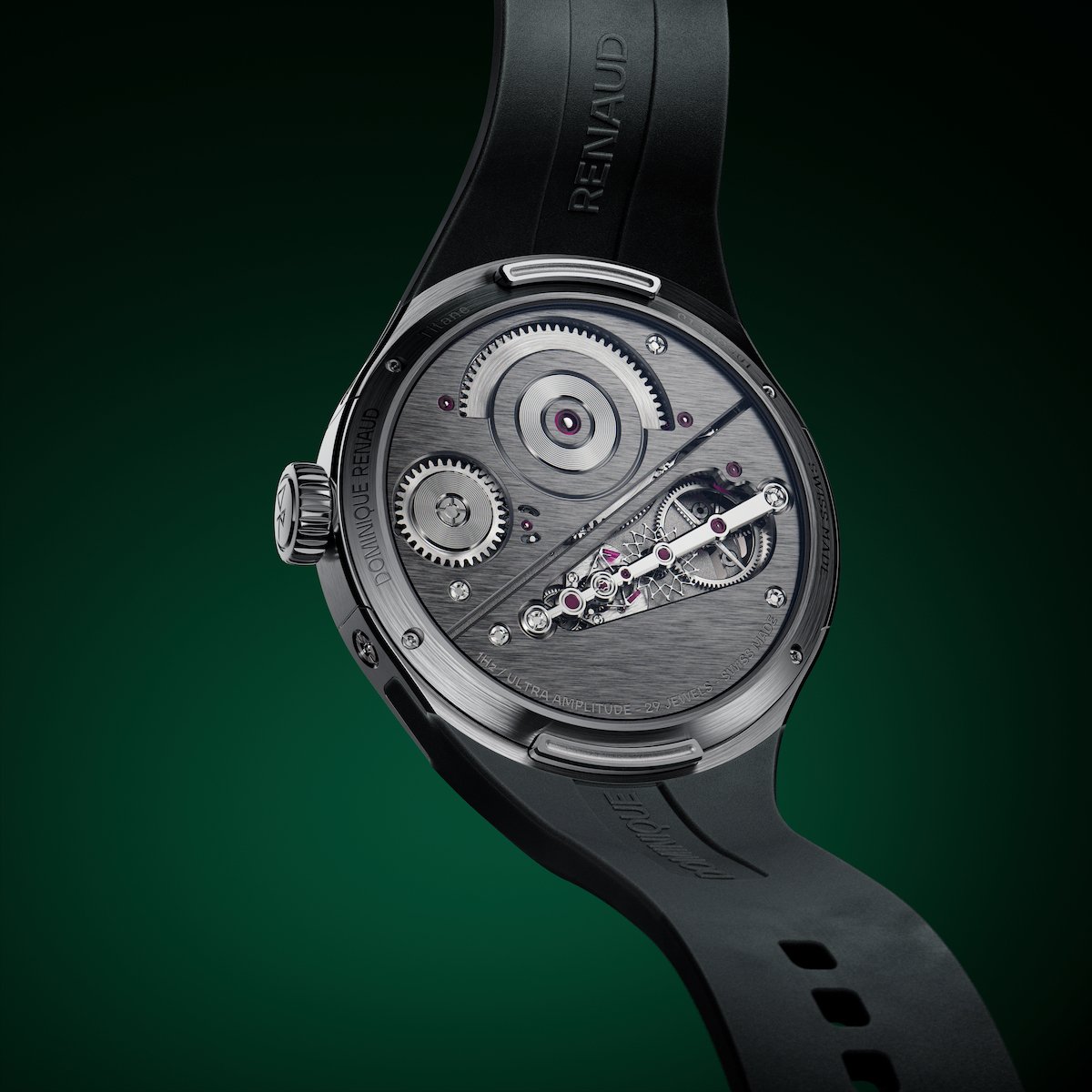
The balance wheel is 20 mm in diameter, paired with a 15 mm hairspring. That balance is enormous—closer to what you'd find in a marine chronometer than in anything designed for the wrist. Its significant rotational inertia means that once in motion, it strongly resists perturbation. The energy stored in its oscillation is so large relative to any individual disturbance that those disturbances become proportionally negligible.
Amplitude exceeds 360° without knocking. This is the most technically audacious claim in the press release. In a conventional movement, the geometry of the balance, roller, and impulse pin creates a hard ceiling on amplitude: push past it, and the balance strikes the back of the pallet fork—"knocking"—causing the watch to gain time erratically. Dominique Renaud has redesigned the entire regulating organ to push that ceiling past 360°, with a theoretical maximum of approximately 700°. The practical implication: the movement's normal operating amplitude sits far below its mechanical limit. Where a traditional movement operates near its redline, the Pulse60 cruises in the middle of its power band.
The regulating system is positioned outside the balance wheel—a patented offset index assembly that allows the full 20mm balance to be displayed on the dial side without obstruction. Engineering and design converge here rather than competing.
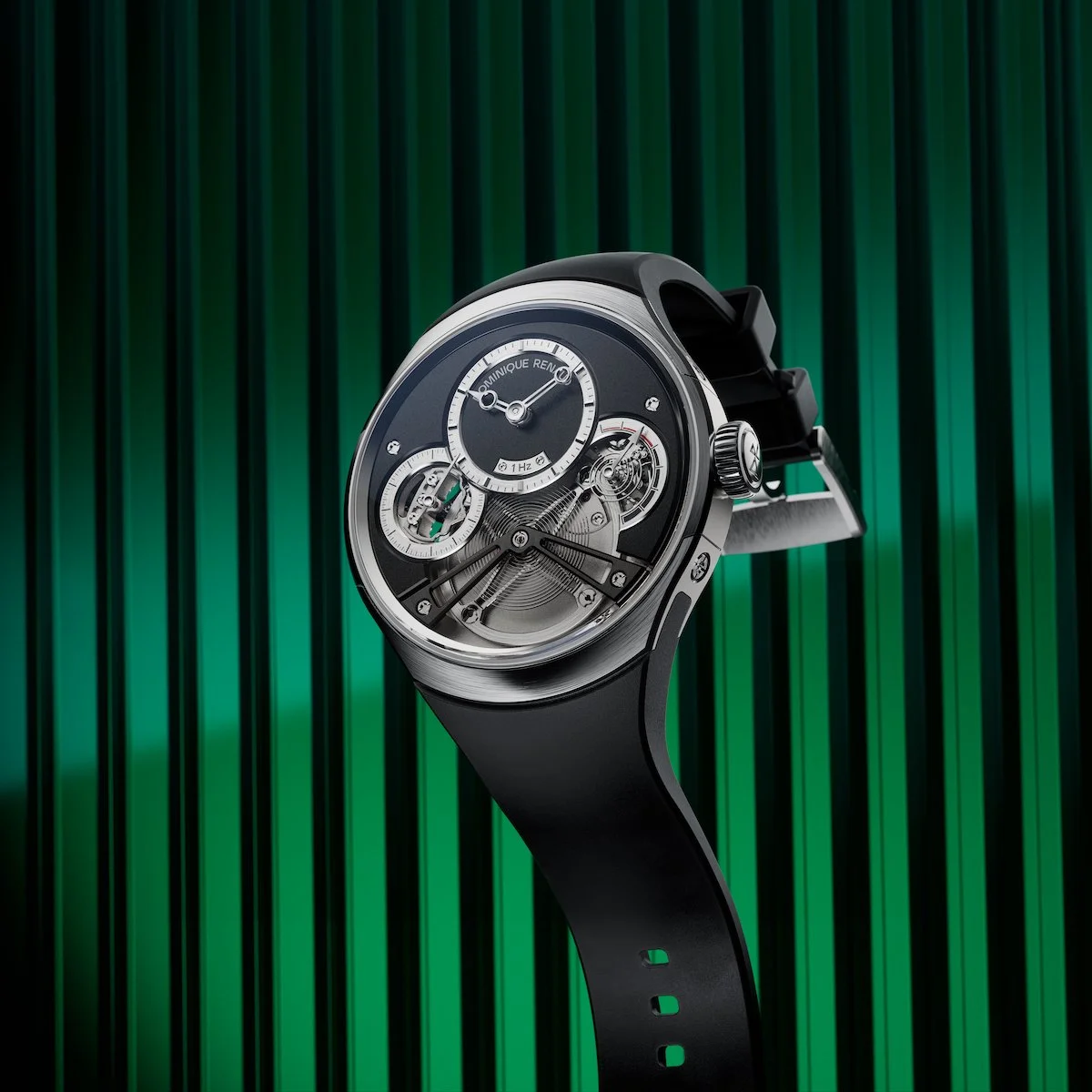
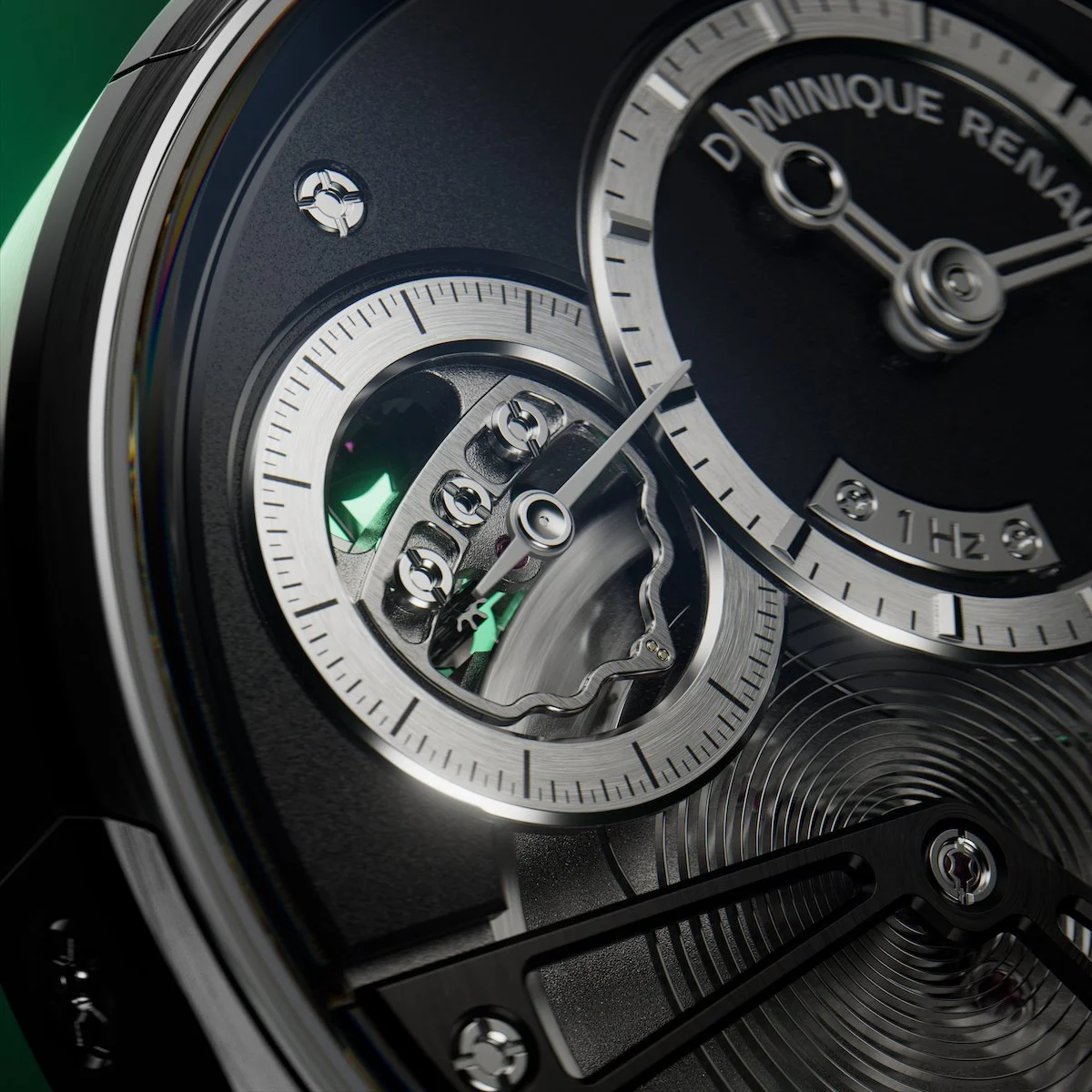
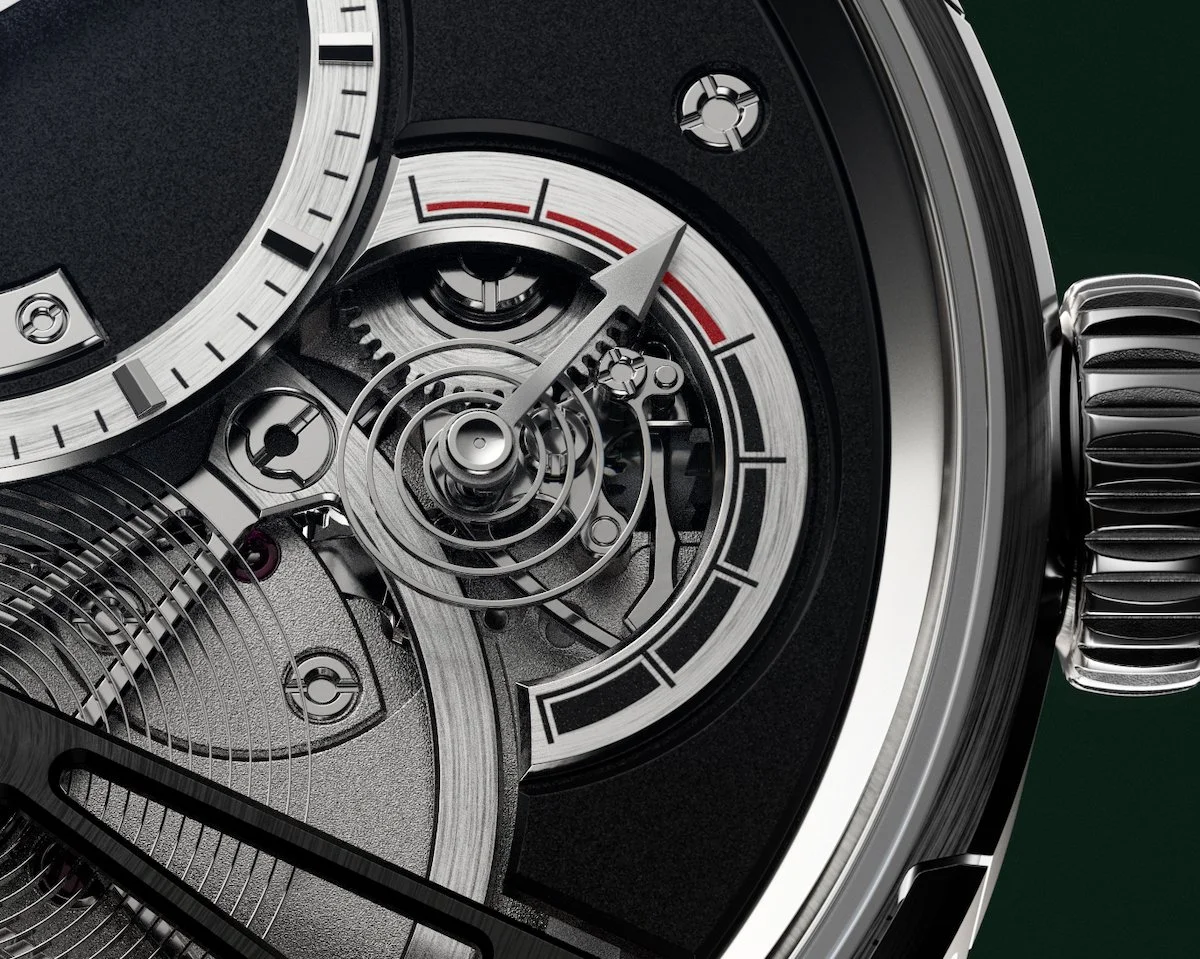
The dial organizes three functions across a tri-register layout: hours and minutes at 12 o'clock, a seconds counter at 9 o'clock, and a torque indicator at 3 o'clock. The seconds display is a natural dead half-second— at 1 Hz, one complete oscillation corresponds to exactly one second, producing a dead-beat hand that advances in two distinct half-second jumps without any additional mechanism. It's an inherent consequence of the frequency, not an added complication. The torque indicator reads directly from the barrel rather than functioning as a conventional power reserve display, measuring actual mainspring torque across that four-day reserve. It's a system Renaud first developed during the Renaud & Papi era, now refined for this context.
Why This Watch Really Matters
The watch industry loves to talk about innovation, but most of what passes for it involves incremental refinements to established architectures. The Pulse60 does something rarer: it starts from a first-principles question about frequency and rebuilds the regulating organ around the answer. Whether or not you agree with the low-frequency thesis, it's the kind of work that advances the field by expanding the range of what's been seriously attempted.
Then there's the structure being built around Renaud. The Pulse60 launches under the Dominique Renaud brand, but that brand is the second expression of Haute Horlogerie Dominique Renaud—HHDR—, which also houses Renaud Tixier. HHDR is part of DR Group, which holds a minority stake in Niton, relaunched in February 2026. What's emerging is not a watch brand but a multi-brand incubator.
Final Thoughts
This is not a brand launch built on hype. It's built on a career's worth of credibility, deployed at the exact moment when it can no longer be ignored. It arrives at a price point that, for this level of movement innovation, positions it aggressively against established independents. It demonstrates technical conviction rather than market-tested caution. And it carries a name that the industry's most knowledgeable insiders have respected for decades, now finally visible on the dial.
The Dominique Renaud Pulse60 will be presented at Time To Watches in Geneva from April 14 thru 19, 2026, and will be available through all authorized retailers from April 2026. Full hands-on review to follow after we report from Geneva.
Sticker Price CHF 49,000—approx. USD 62,500—for titanium and CHF 59,000—approx. USD 75,000—for pink gold and titanium. More info on Dominique Renaud here.