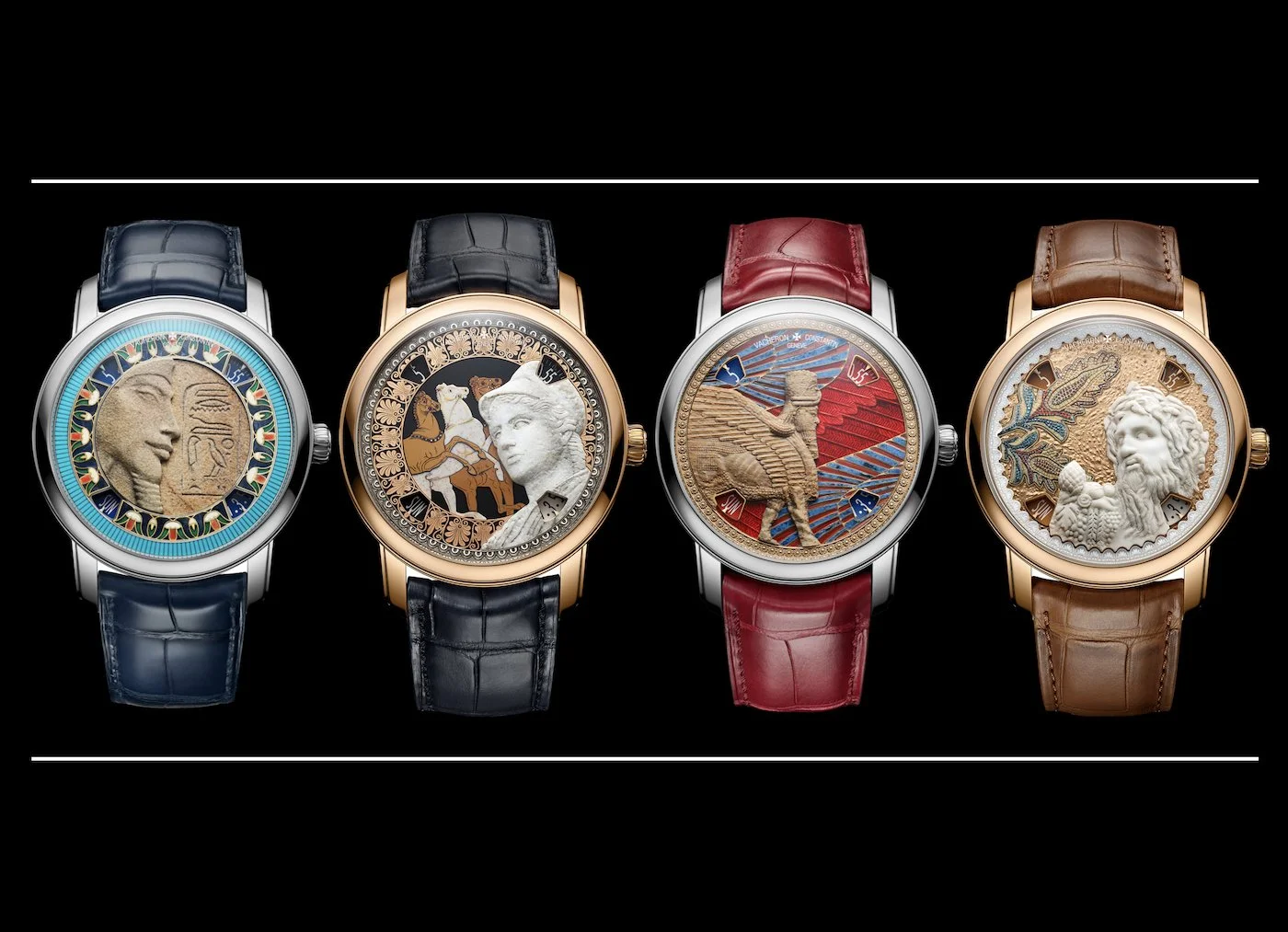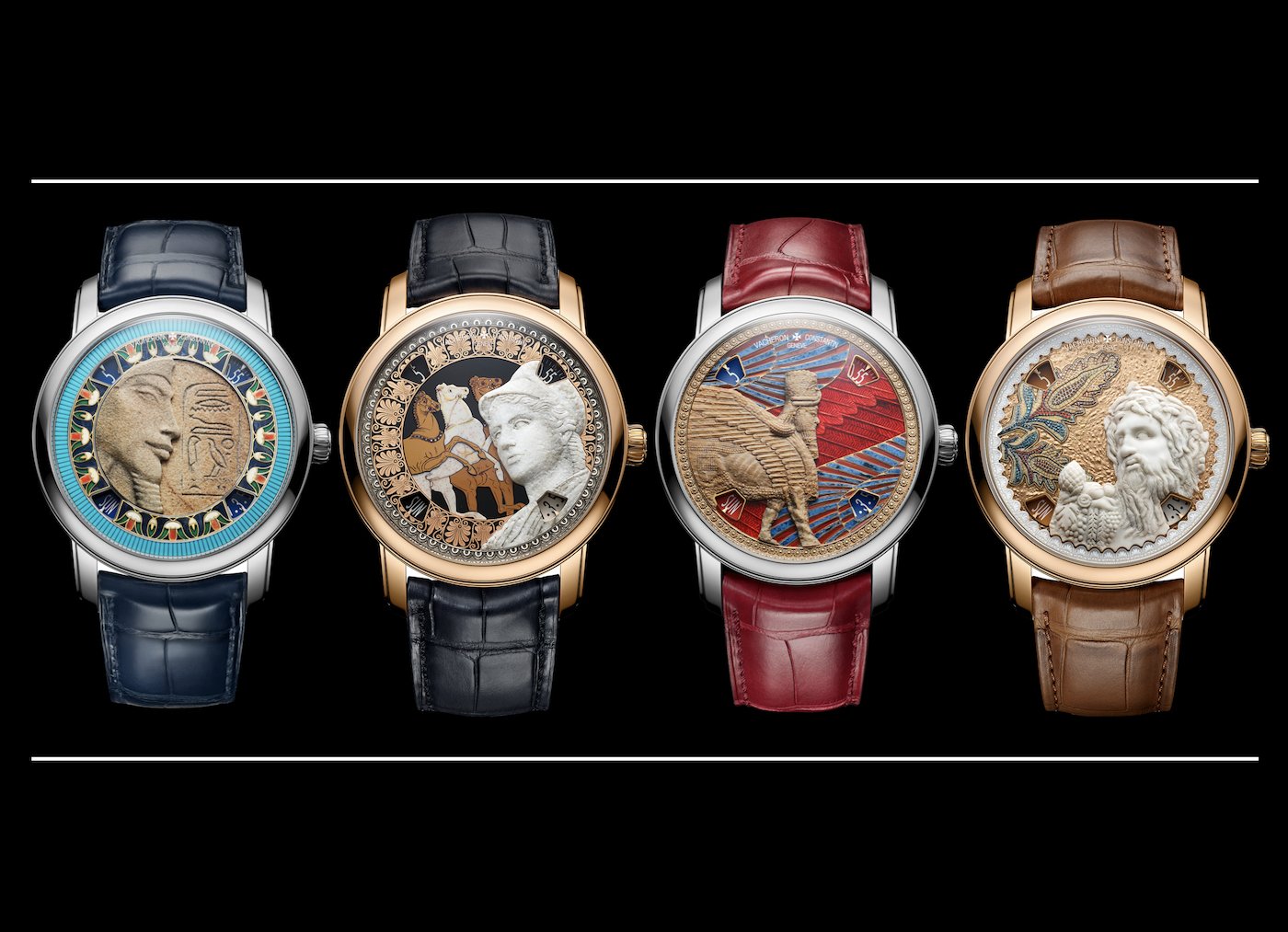
The second chapter of the Vacheron Constantin and Musée du Louvre partnership brings Ancient Egypt, Assyria, Greece, and Rome to a 42 mm dial through nine decorative crafts and stone carving on a watch face for the first time. The Vacheron Constantin and Louvre partnership, formalized in 2019, has produced some of the most ambitious dial work in contemporary haute horlogerie. The first Métiers d'Art Tribute to Great Civilizations series arrived in 2022. Three years of development later, the Maison presents four new pieces honoring the same ancient civilizations—this time pushing further into material authenticity by carving the central dial figures directly from the same stone types used in the original Louvre sculptures. It is a first for Vacheron Constantin.
Things to Know About the Watches
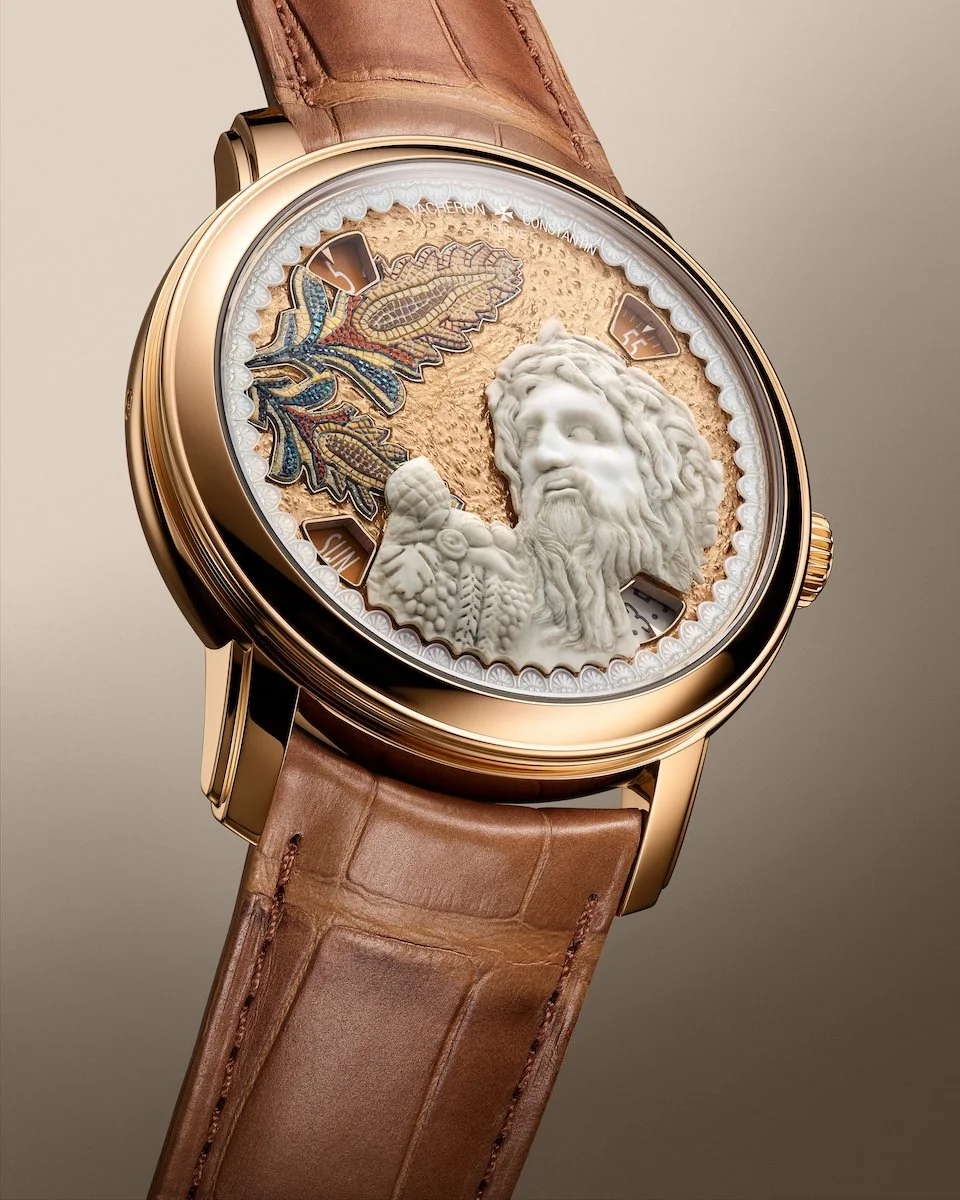
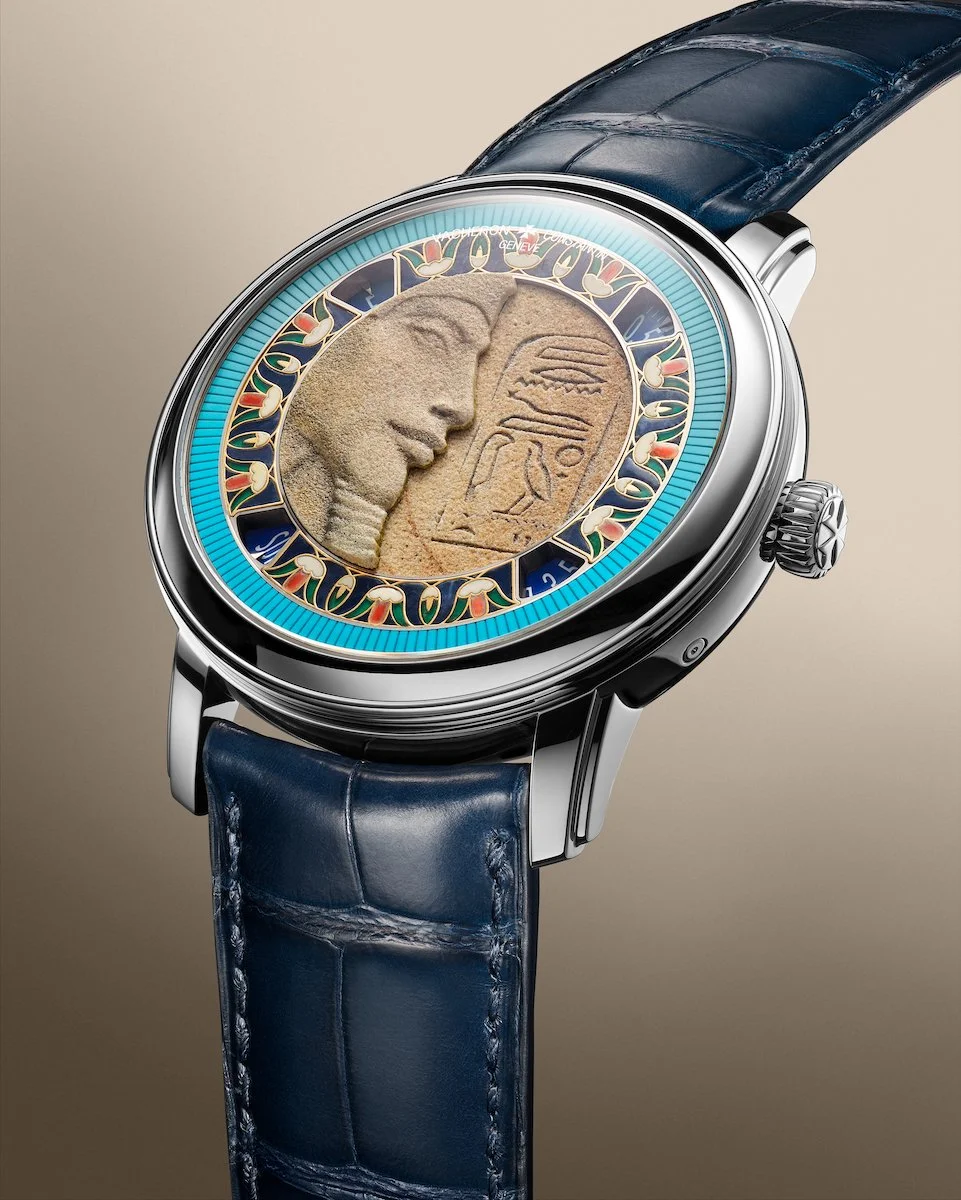
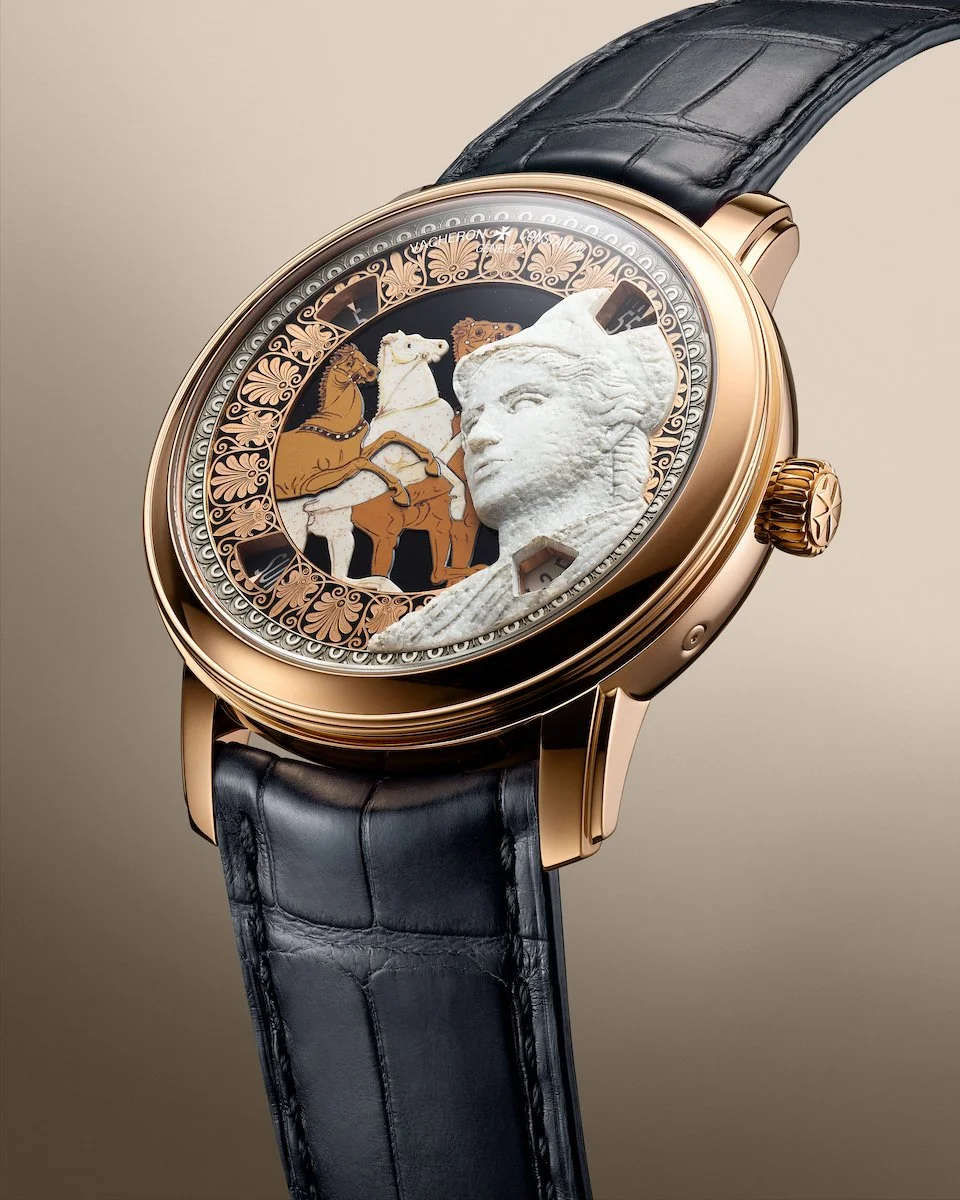
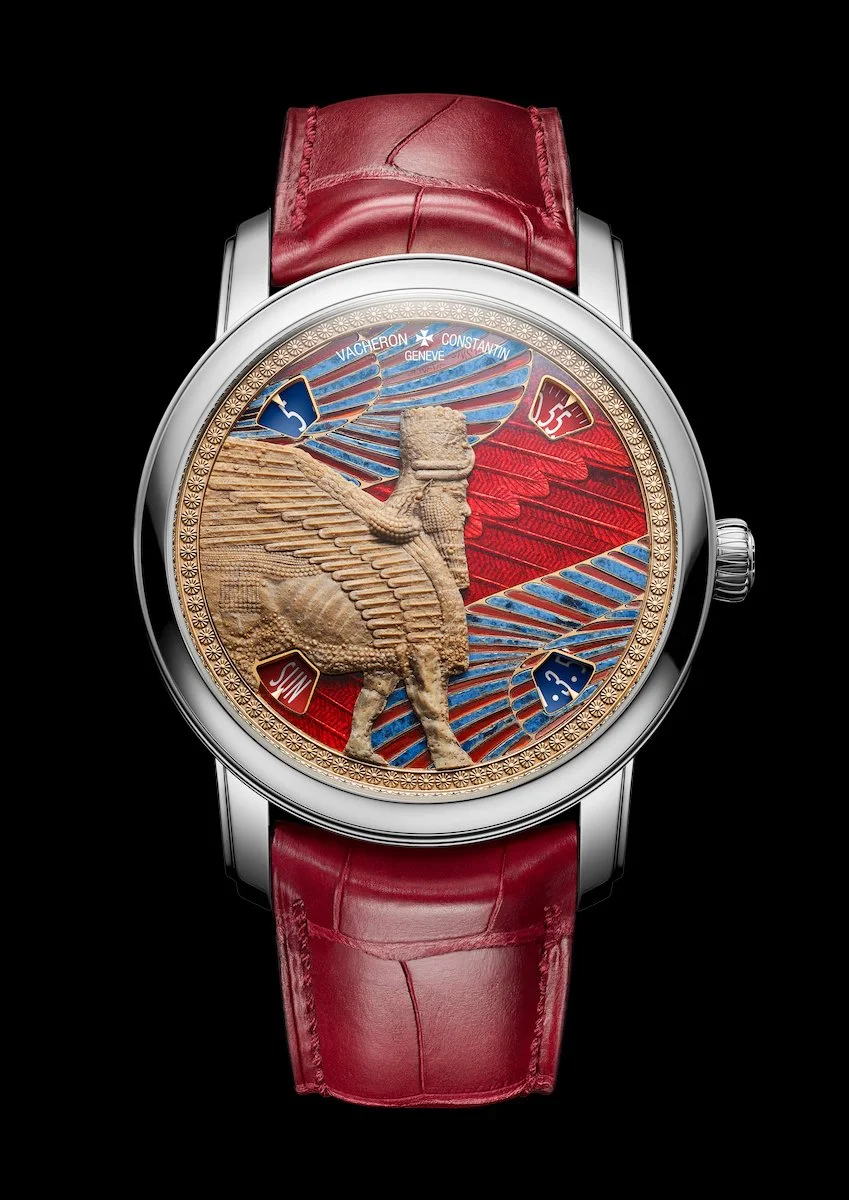
All four references share the same 42 mm, 12.9 mm-thick case—two in 18K white gold (Akhenaten and Lamassu), two in 18K 5N pink gold (Athena and Tiber) — with the Calibre 2460 G4/2's hands-free architecture freeing the entire dial surface for the artisans.


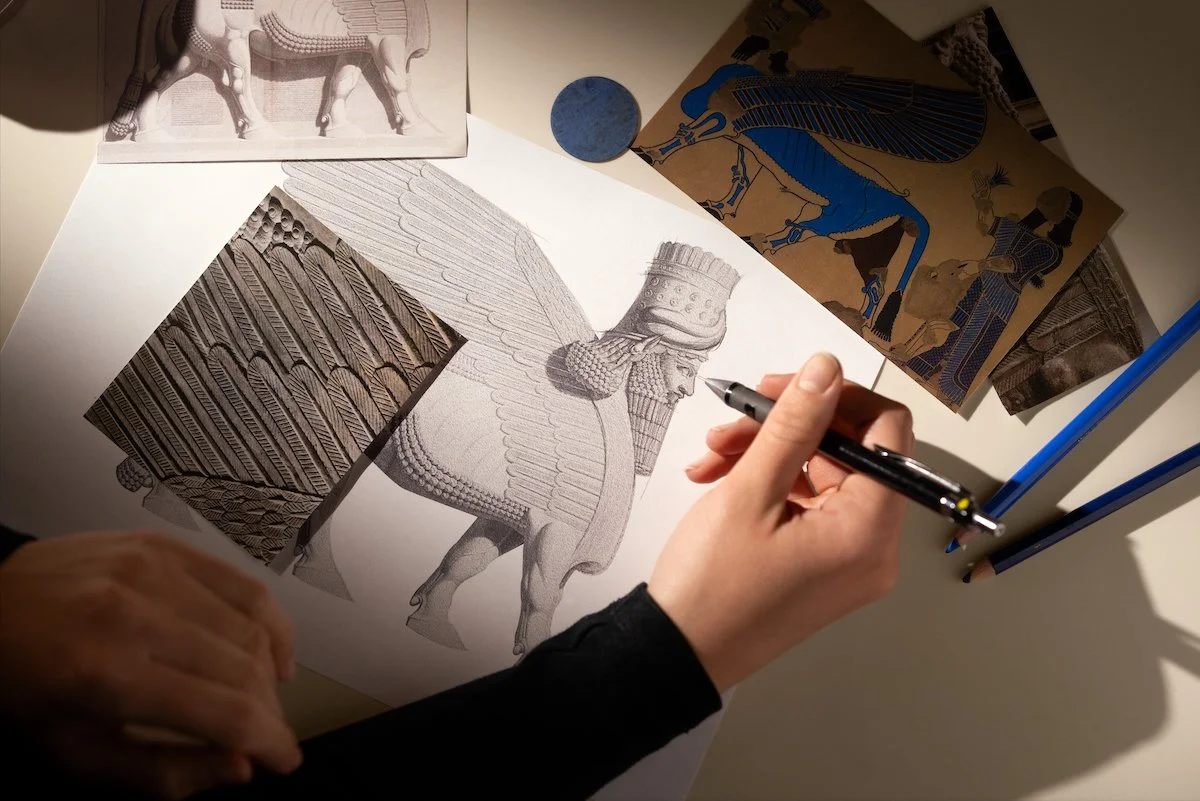

Each dial is a layered construction in which a central glyptic appliqué—stone-carved in relief under binocular microscope—sits on a gold base plate surrounded by inner and outer friezes executed in distinct techniques. The Akhenaten Egyptian bust is carved from Sinai limestone sandstone matching the original Louvre statue; the Lamassu from Italian limestone sandstone; Athena from Paros marble matching Cresilas's original; the Tiber from Italian marble sourced to the same quarry type as the sculpture seized by Napoleon in 1797.
Every stone was hand-patinated to recover the shadow and volume that millennial weathering gives to the originals. Between 120 and 220 hours of work are required per dial, depending on complexity.

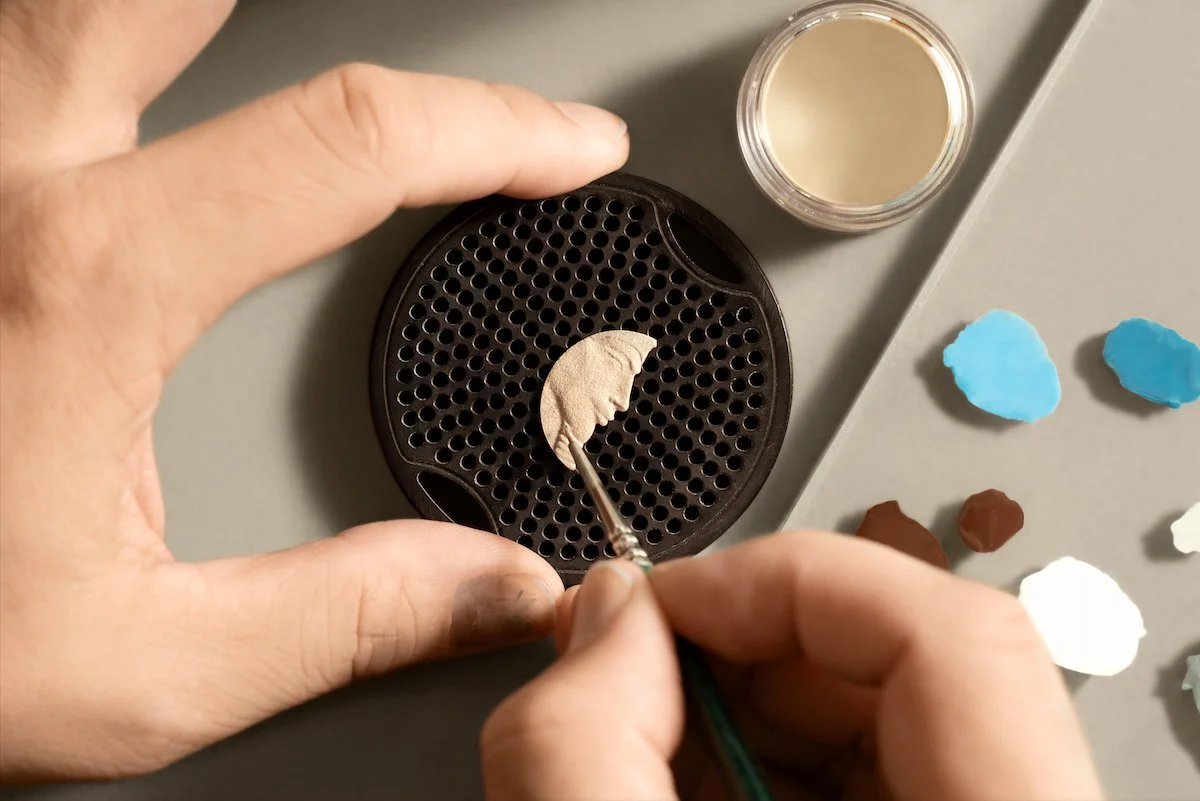

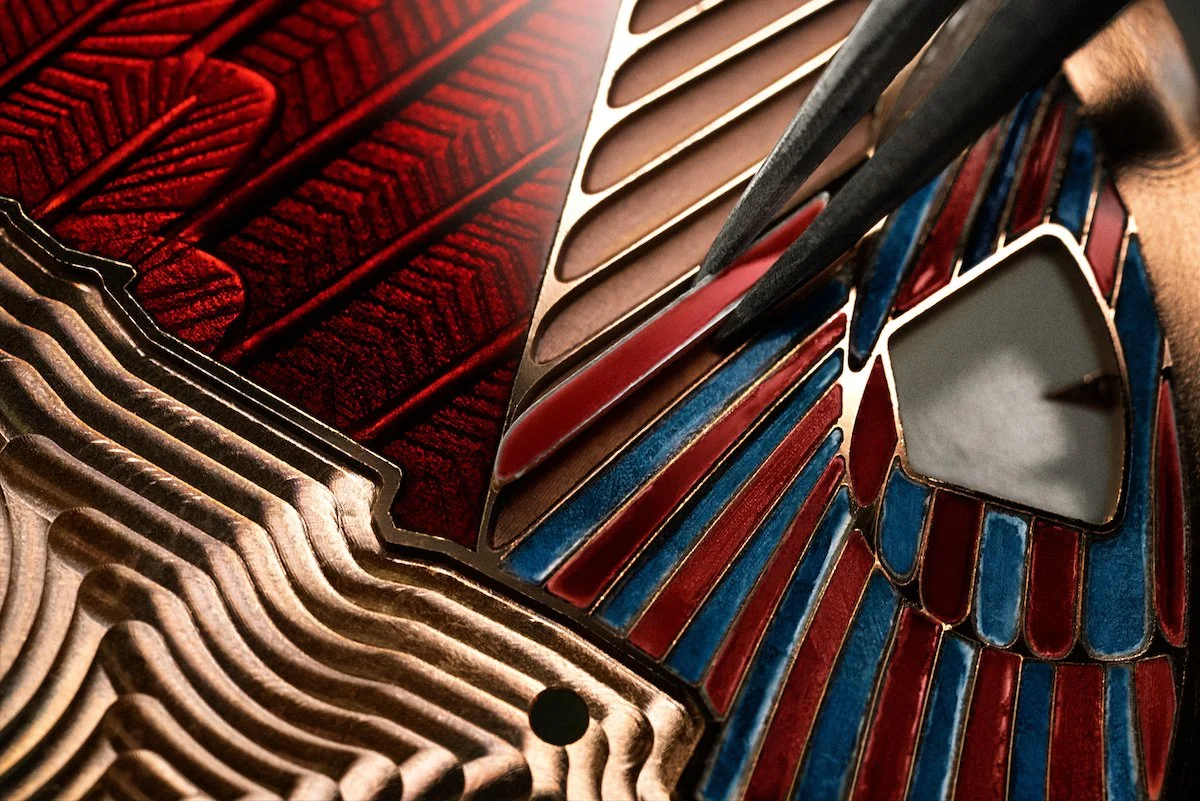
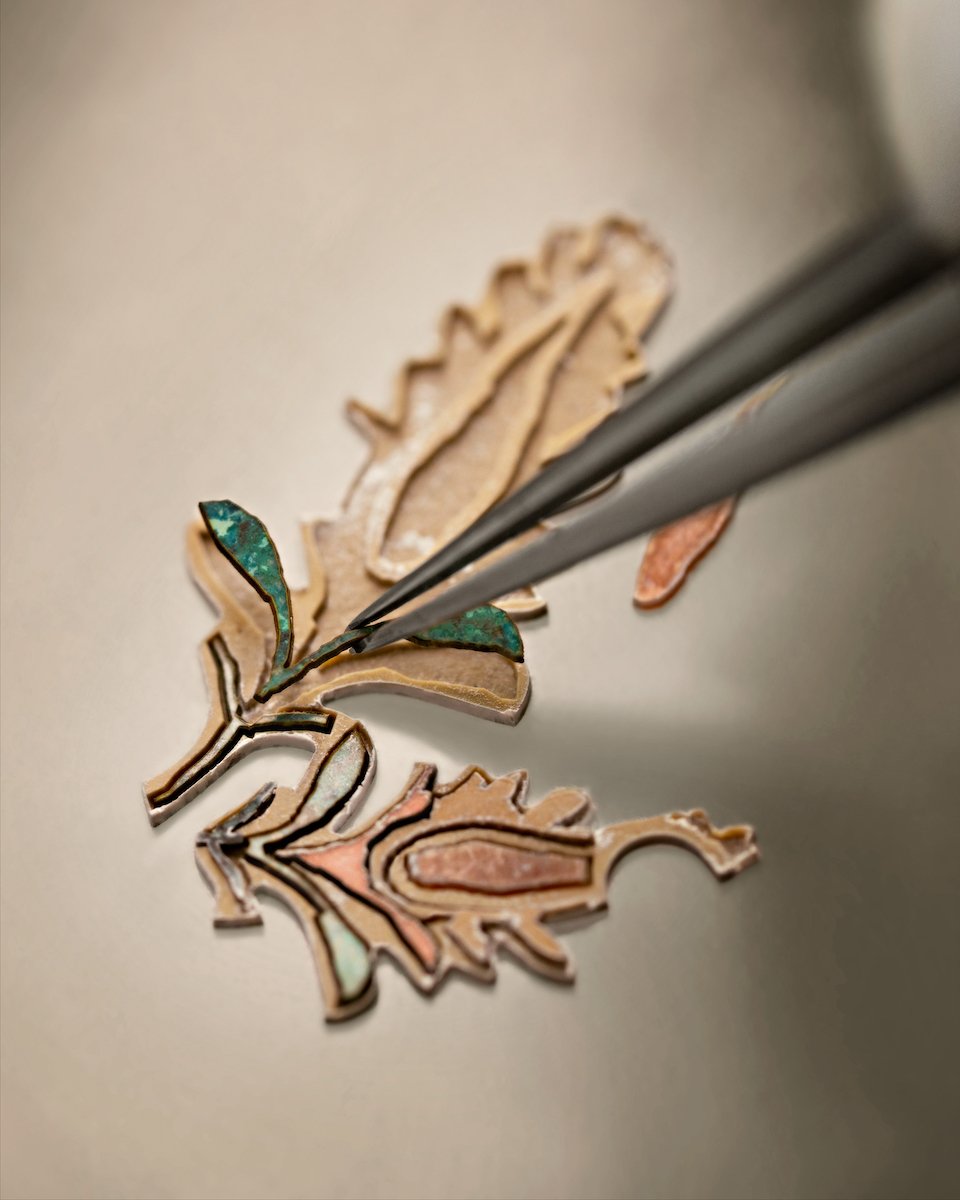
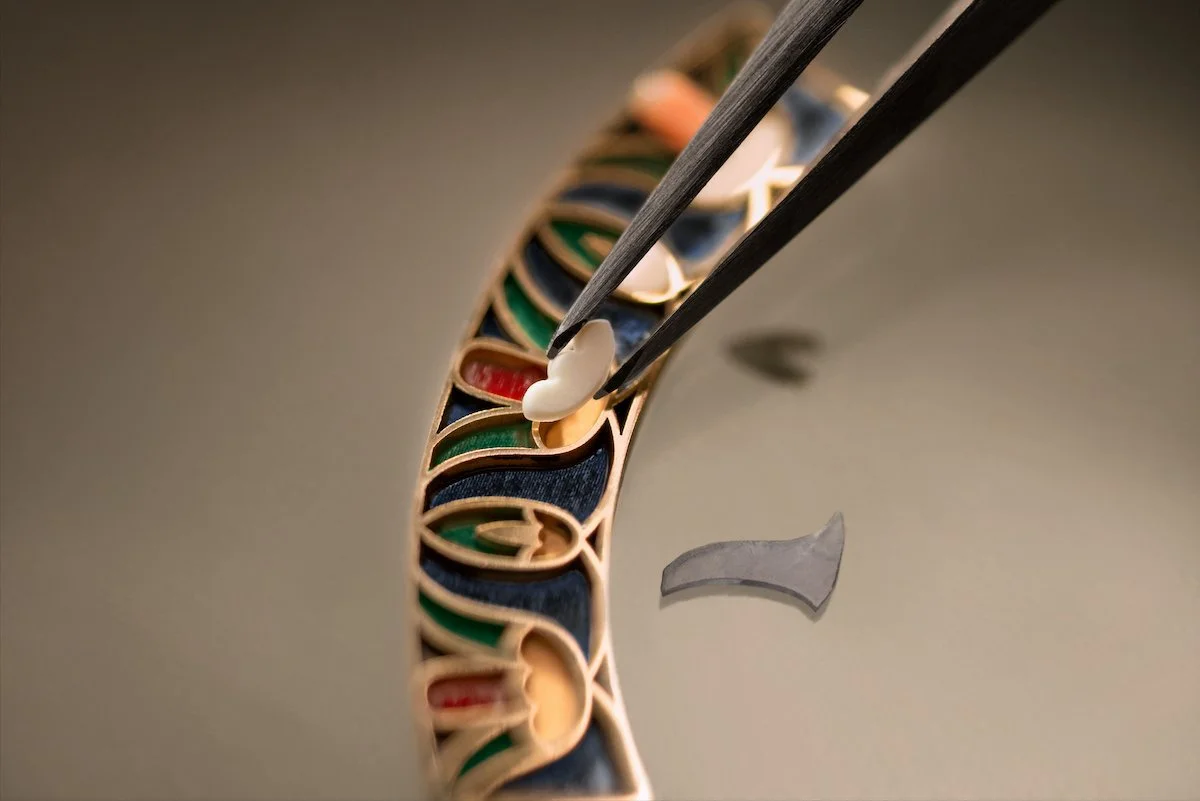
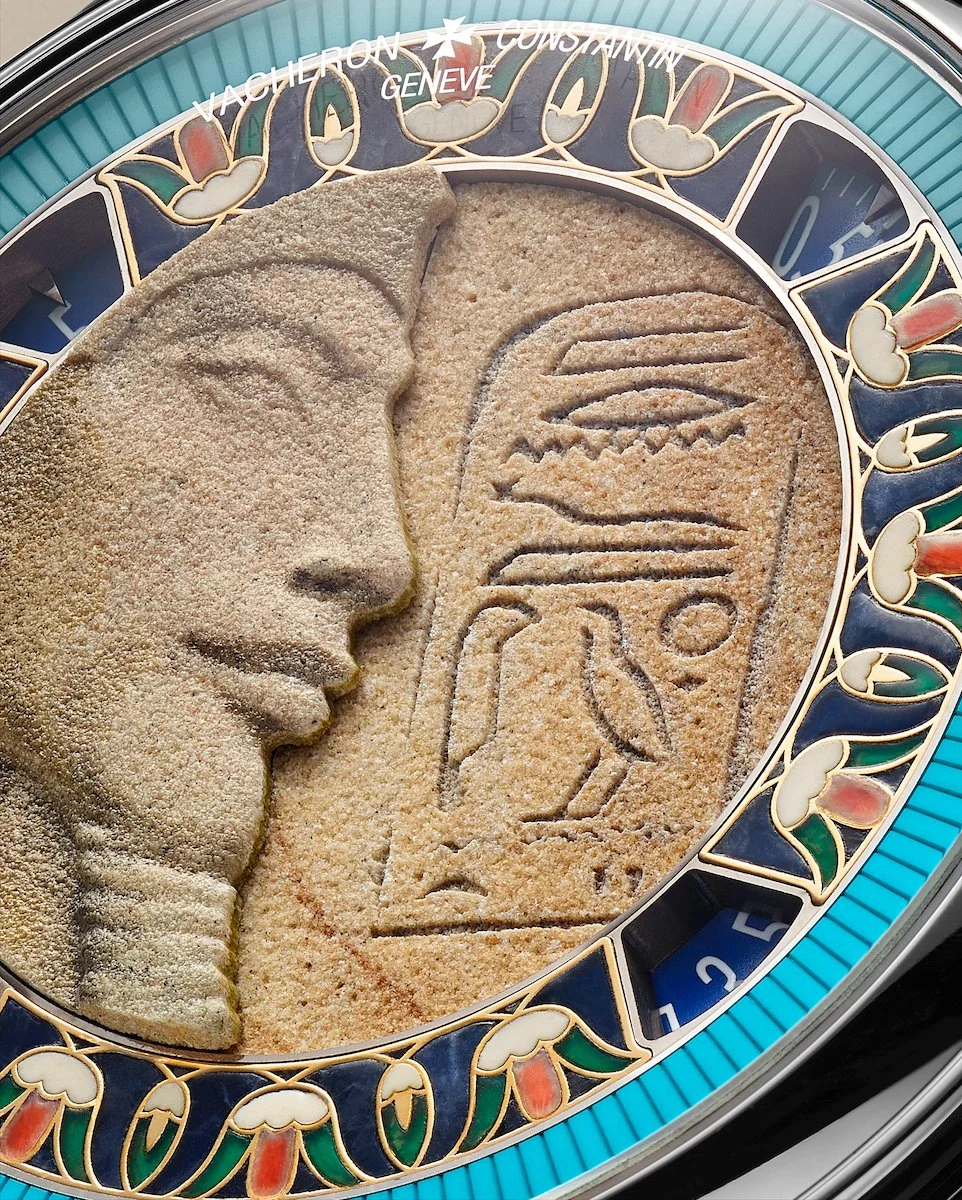
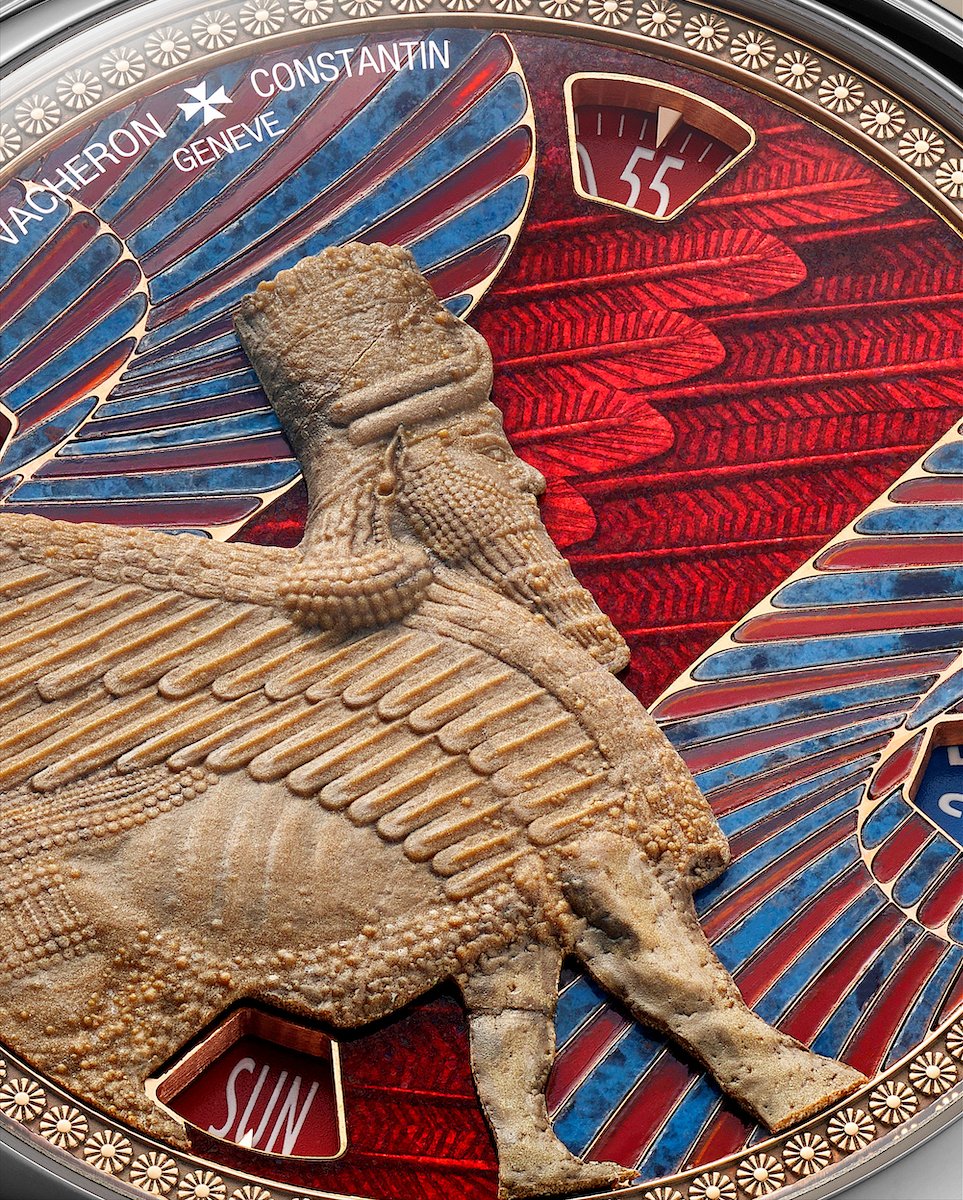
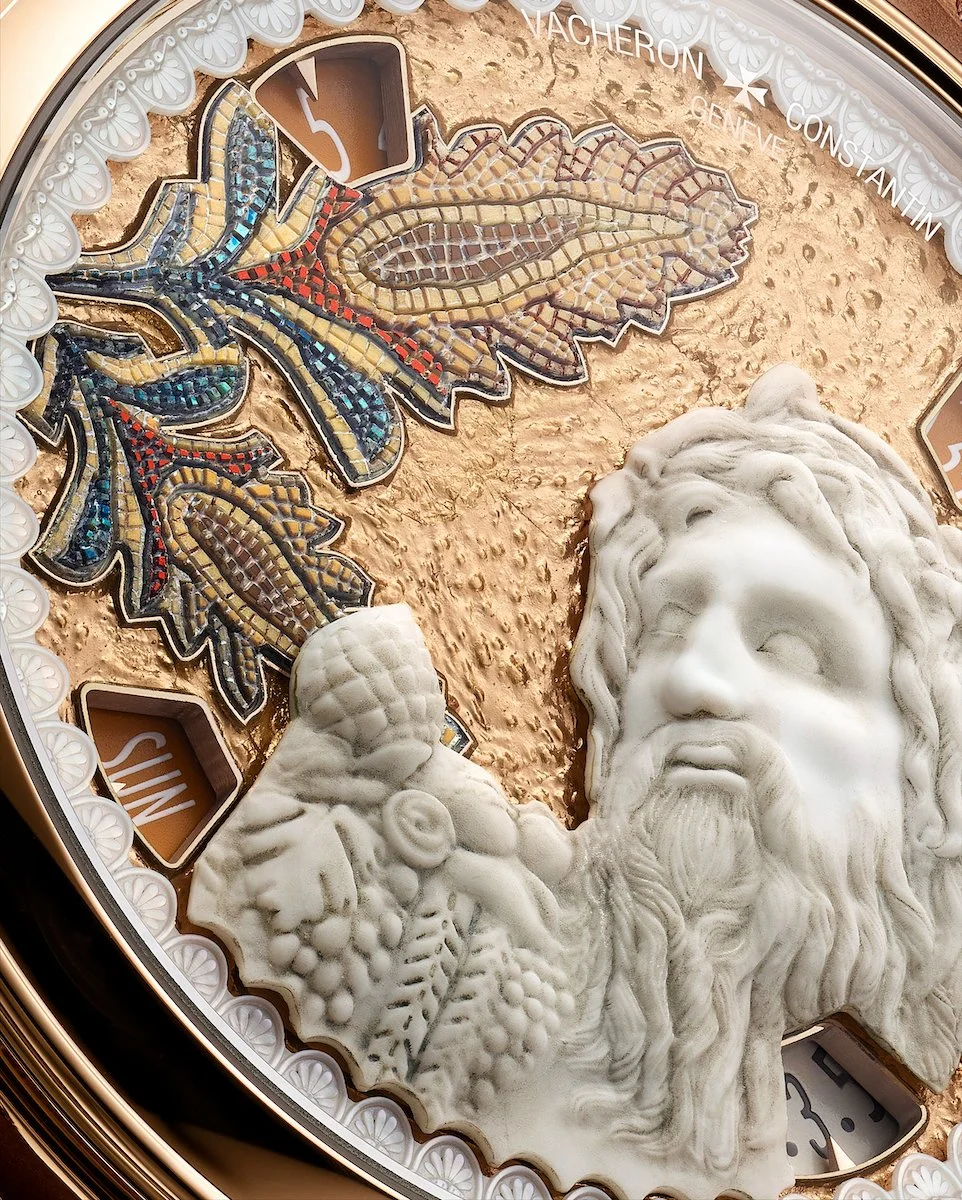
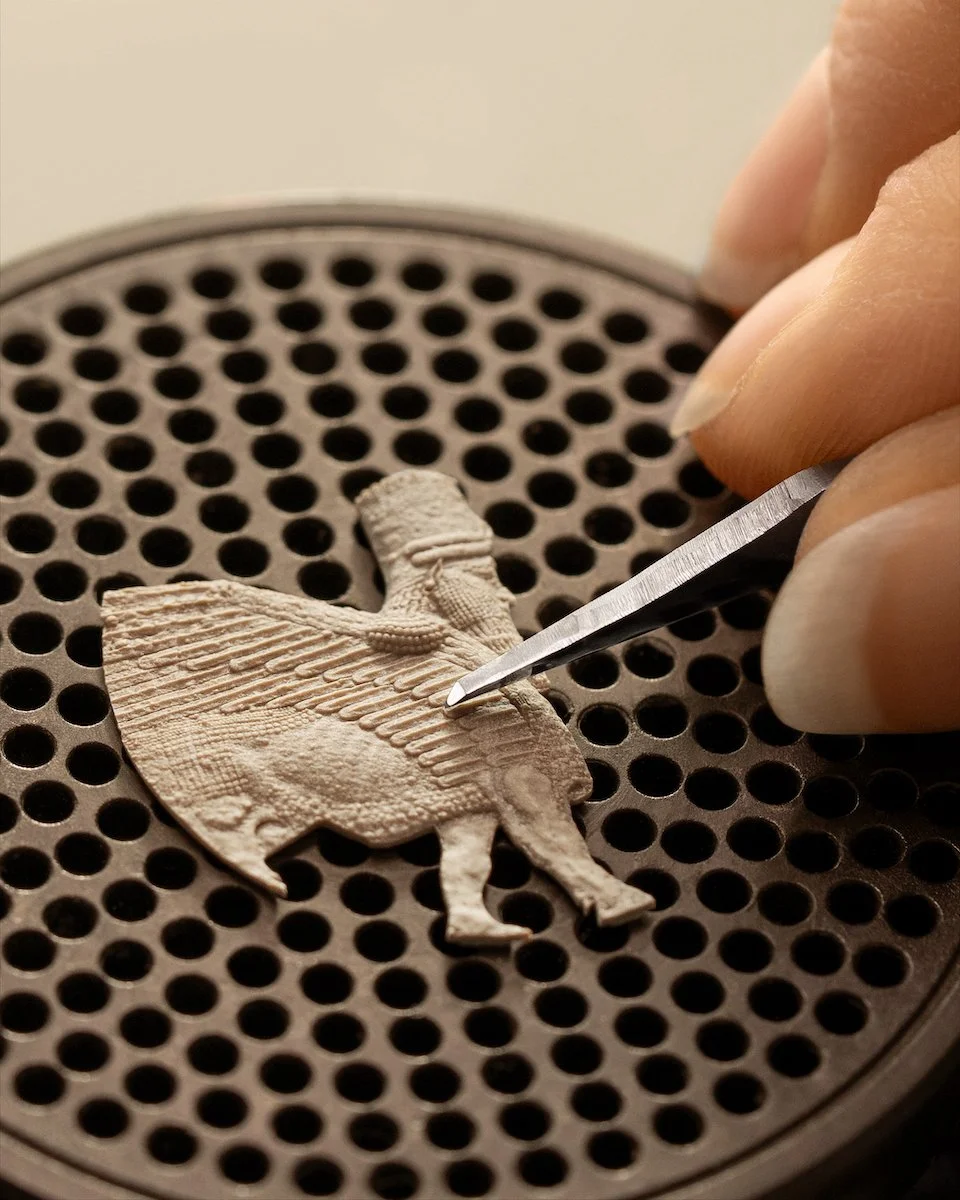

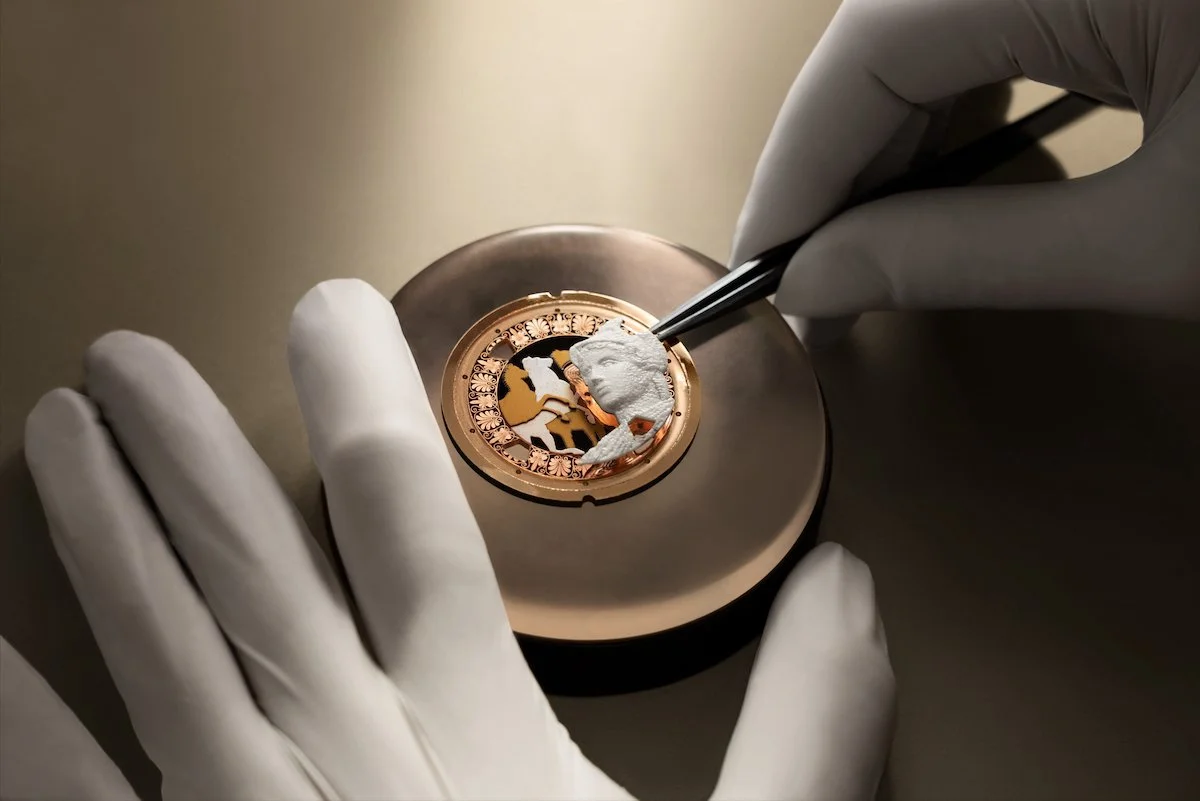
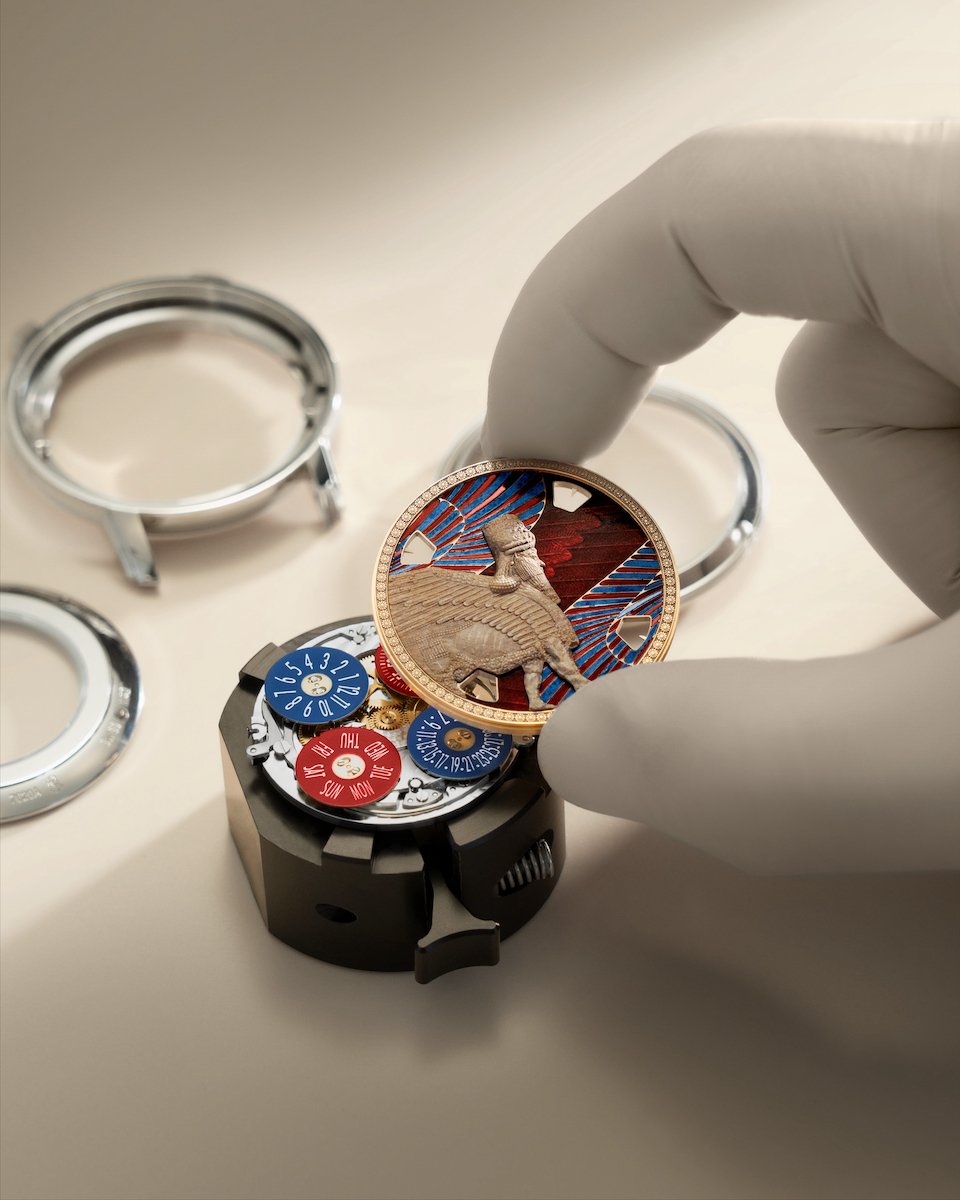
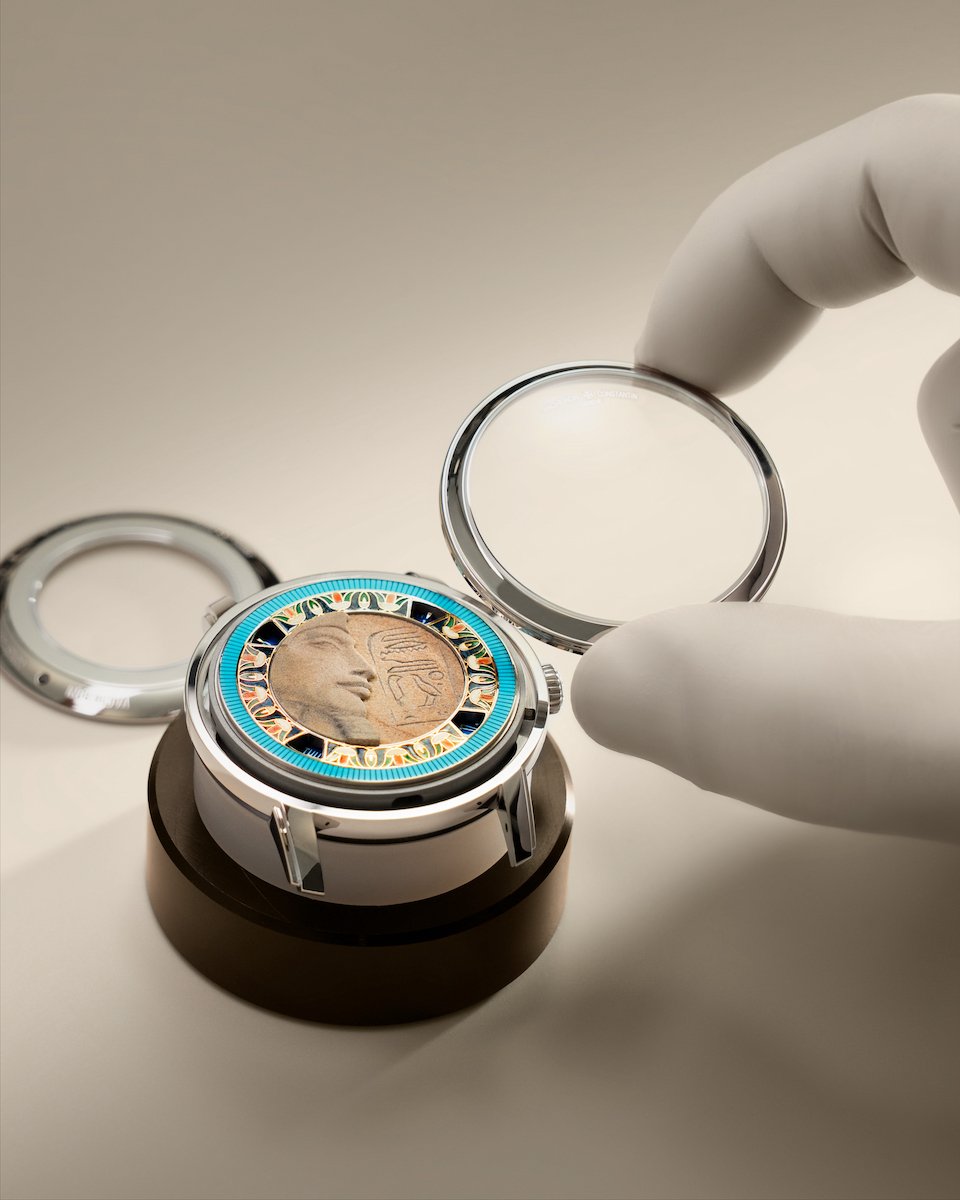
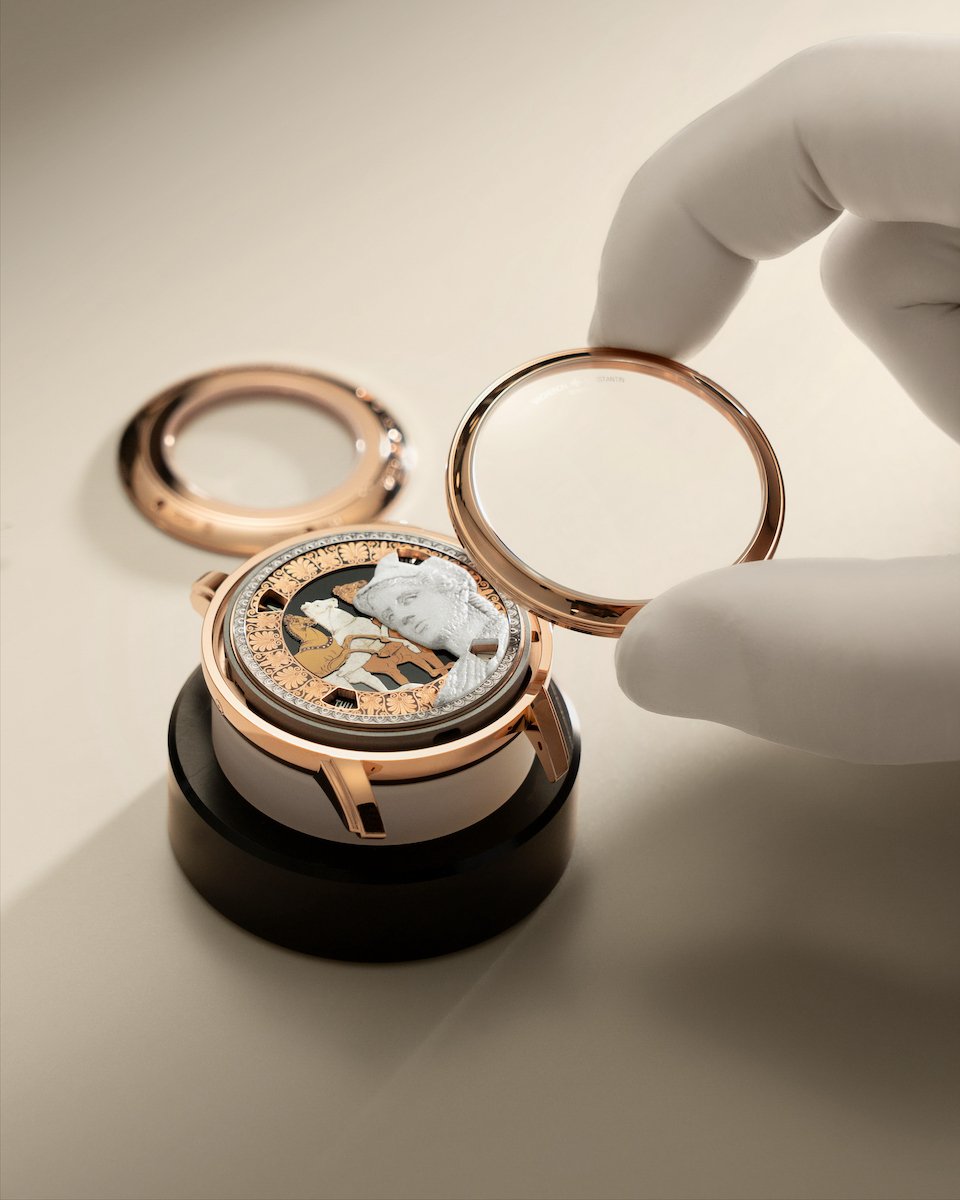
The nine decorative crafts deployed across the series—glyptics, sculpture, micro-mosaic, marquetry, cloisonné marquetry, champlevé enamel, flinqué enamel, miniature enamel painting, engraving, and gilding—are not applied arbitrarily. Each technique was chosen for its historical correspondence with the decorative arts of the civilization depicted. Louvre Museum curators guided both the selection of central works and the identification of additional museum pieces that inspired the peripheral friezes.
The Movement
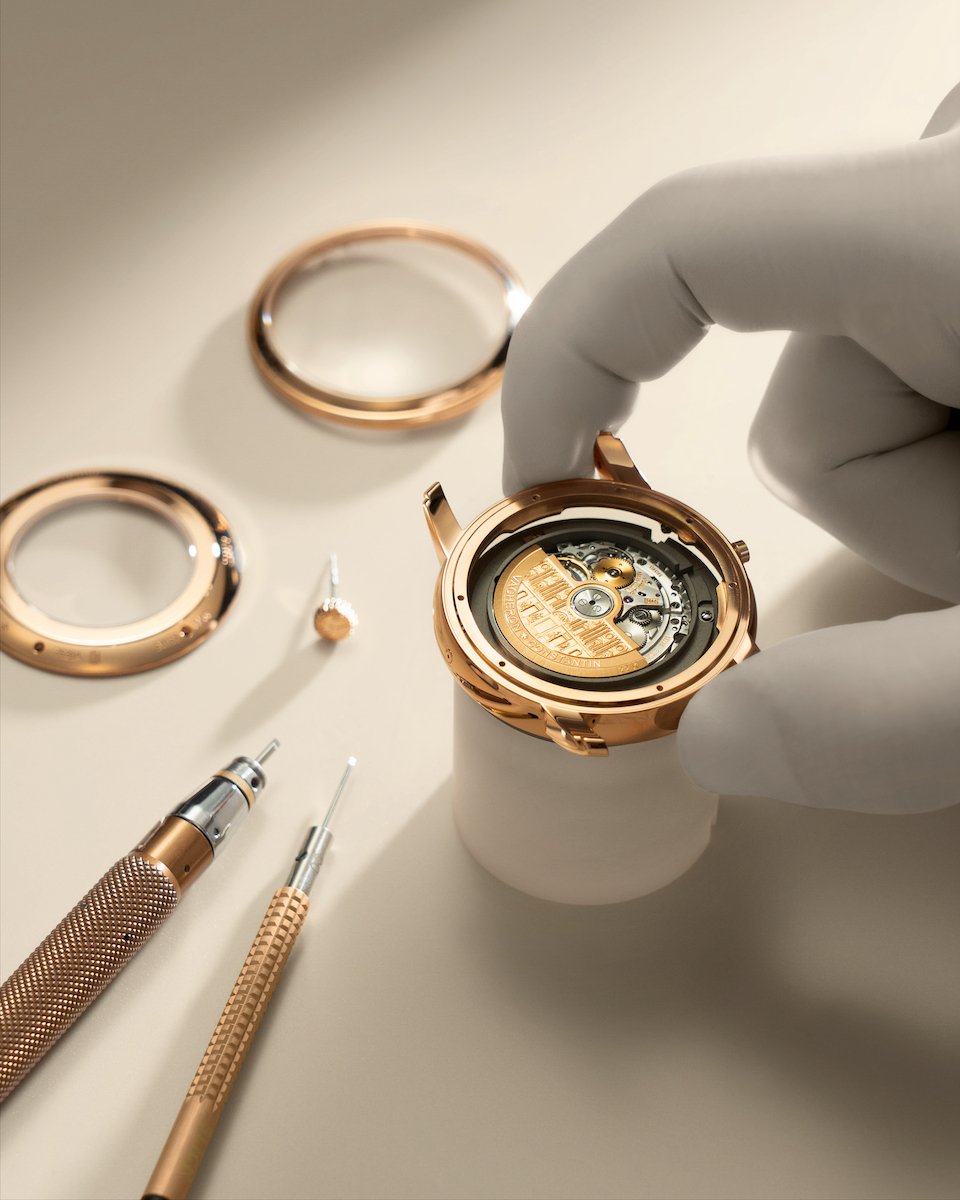
To power these Métiers d’Art Tribute to Great Civilizations watches, Vacheron Constantin has chosen its automatic Calibre 2460 G4/2, which features four discs indicating the hours, minutes, days, and dates. The apertures for reading the time and calendar indications, symmetrically positioned around the dial periphery, thus leave a vast field of expression for the artisans. No hands disturb the view of these miniature masterpieces.
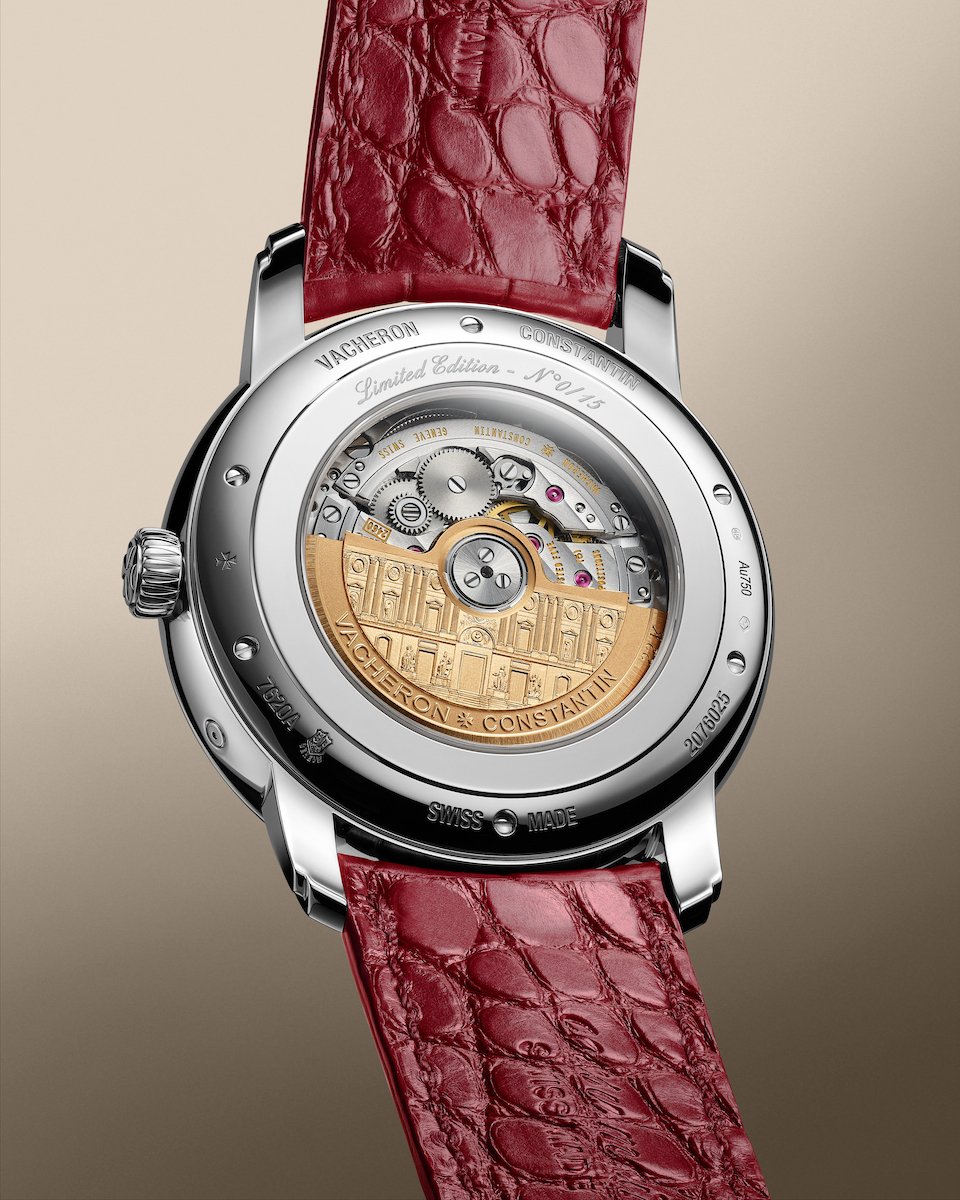
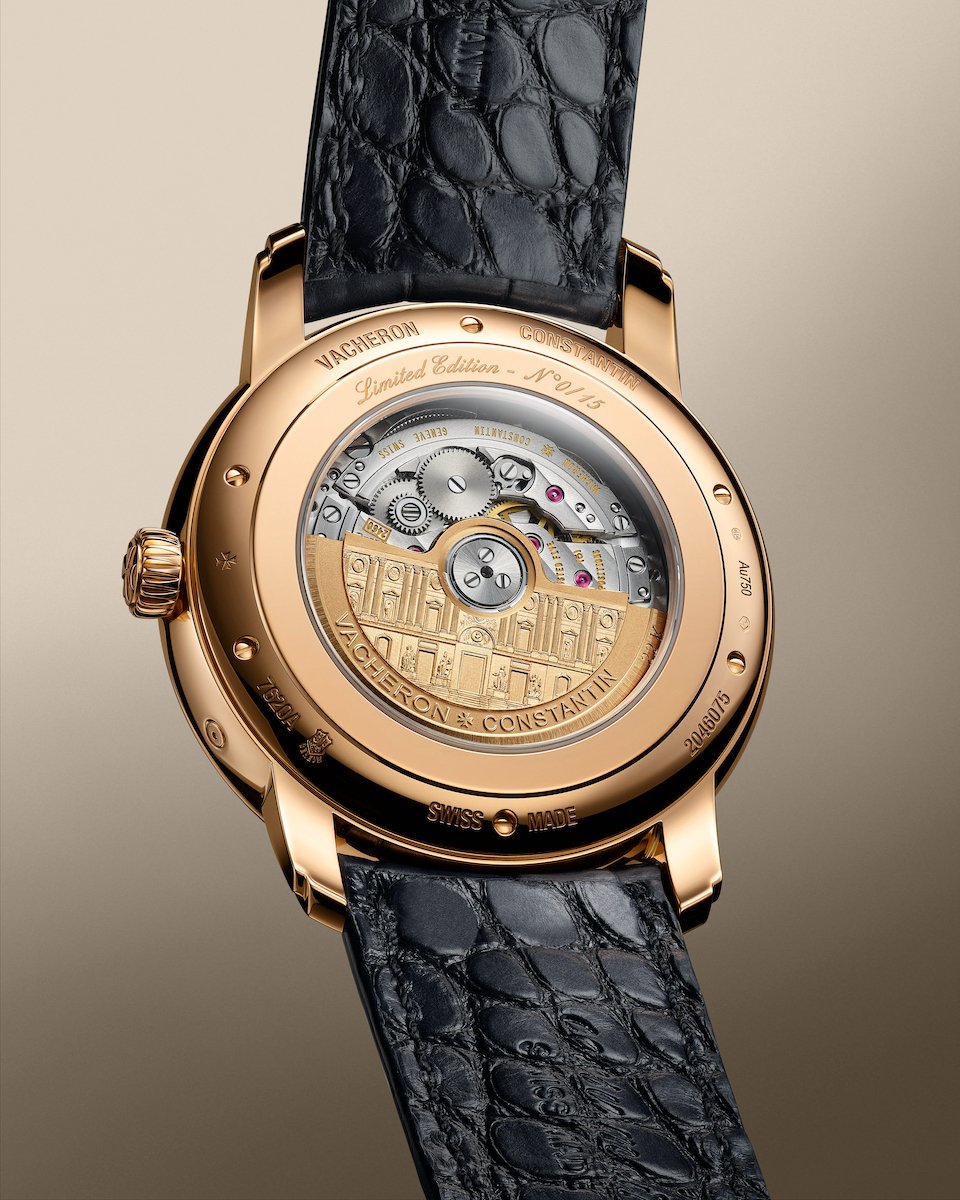
On the back of the movement, beating at 28,800 vph and comprising 237 components, the oscillating weight has also received special attention. It features a depiction—based on an 18th-century lithograph—of the east facade of the Louvre and its magnificent colonnade inspired by the work of Louis Le Vau and Claude Perrault, based on an 18th-century etching. The design matrix was hand-sculpted and then used to stamp the 60 oscillating weights that compose the series.
Summary & Price
These four watches make a persuasive case for what the Louvre partnership can produce when Vacheron Constantin gives it sufficient development time and genuine material commitment. Stone glyptics on a watch dial is genuinely difficult work, and the results are genuinely difficult to compare to anything else in production today. All four pieces are limited to 15 individually numbered examples, available exclusively through Vacheron Constantin boutiques.
Sticker Price Upon Request. For more information, visit vacheron-constantin.com.