Posts filed under News

News: Pre-Baselworld 2014 Girard-Perregaux Presents the New Chrono Hawk Steel Bracelet. A Well Needed Addition to the Hawk Collection.

A steel bracelet for the Chrono Hawk collection. The Chrono Hawk line is now available with a stainless steel bracelet in a design and perfect finish that once again demonstrates Girard-Perregaux’s excellence.
The new bracelet of Girard-Perregaux’s Chrono Hawk line instills power and elegance into this resolutely masculine range. Its links form a pattern of remarkable purity and their lines epitomize contemporary watch design. This aesthetic is matched by equally advanced technical qualities, honing the multiple connections between these steel parts for optimum comfort when wearing. This new bracelet has a distinctive functional geometric style combining two types of links ; the first type generates a powerful line running along the middle, while the second surrounds the first. Subtly interwoven, they also exhibit alternating polished and satin finishes on the two outer bevels of the central links.

The fusion between these two types of links forms a finely balanced and well-proportioned ribbon, making a perfect fit with the strong lines of the Hawk Collection’s watch cases. The bracelet closes easily with a secure folding clasp and features a micro-adjustment system to ensure wearing comfort. Finally, it is interchangeable with the rubber version and can be ordered separately. The Hawk collection honors more than 130 years of technical watchmaking tradition, tracing back to 1880, when the Manufacture in La Chaux-de-Fonds provided specially designed watches for the German Navy. Directly descended from the Sea Hawk line, launched in 1940 and adapted for diving in 1970, and the Laureato, a sport model introduced in 1975, the Chrono Hawk has both sleek and sporty lines. Its asymmetric case formed of successive planes is the mark of its modern character, unparalleled in high-end watchmaking. It is topped by a bezel divided into two parts, one circular and the other octagonal, creating a unique visual effect. The technical dial, perfectly
legible and built on several levels, is decorated with a pattern using the shape of the famous Girard-Perregaux Tourbillon Bridge.

In this all-steel version, it is available in two colors: silver as ref. 49970-11-133-11A and metallic blue as ref. 49970-11-431-11A. Inside, the exclusive mechanical self-winding caliber GP03300 displays hours, minutes, seconds, date and chronograph function.

TECHNICAL SPECIFICATIONS OF THE CHRONO HAWK STEEL BRACELET
Case in steel
Diameter: 44.00 mm
Crystal: anti-reflective sapphire
Case-back: sapphire crystal, secured by 6 screws
Water resistance: 100 meters (10 ATM)
Girard-Perregaux movement
GP3300-0074 (metallic blue dial)
GP3300-0075 (silver dial)
Mechanical, self-winding movement
Diameter: 30.00 mm (13 ’’’)
Frequency: 28,800 Vib/h - (4 Hz)
Power reserve: min. 46 hours
Jewels: 61
Functions: hour, minute, date, small second, chronograph
Steel bracelet with steel folding buckle micro-adjustable

For more info on Girard-Perregaux click here.

News: Pre-SIHH 2014 Jaeger-LeCoultre Presents the Duomètre Unique Travel Time. A Fascinating World Timer Complication.

Duometre Unique Travel Time.jpg

The Grande Maison in the Vallée de Joux undeniably owes its incredible destiny to the inventive spirit of its founder, Antoine LeCoultre. Since 1833, every watch bearing the Jaeger-LeCoultre signature is crafted with the same passion, guided by a constant quest for technical enhancement. Each masterpiece, heir to over 180 years of expertise, benefits from state-of-the-art research. A fresh interpretation of the revolutionary Dual-Wing movement, the Duomètre Unique Travel Time watch in pink gold reflects the technical breakthroughs achieved by the Manufacture in the field of world-time watches and offers original solutions for travelers with a love of Fine Watchmaking.

The Duomètre Unique Travel Time is the first world-time watch enabling to-the-minute adjustment of the second time zone. This enables travelers to accurately set the second time zone on all continents and countries regardless of the time difference. In keeping with the technical and aesthetic spirit of the creations by the Duomètre line signed Jaeger-LeCoultre, the Duomètre Unique Travel Time watch reveals the various facets of horological excellence by the Manufacture in the Vallée de Joux. Past, present and future converge in perfect harmony in this exceptional creation.

For this movement, the Dual-Wing system is divided into two distinct mechanisms: the first is devoted to displaying the local time, and the second to showing that in a second time zone. The two mechanisms share the same regulating organ but each has its own independent source of energy, thereby avoiding the losses due to interaction between the mechanisms. The operation of the dual time-zone display does not in any way influence the running of the watch, a fact that considerably enhances the precision of the watch. Each mechanism has a 50-hour power reserve and, governed by a wish to achieve ideal user-friendliness, the same crown serves to wound both barrels. The timekeeping barrel is wound by a counter-clockwise rotation, and the travel-time barrel by a clockwise rotation.

Given the complexity of the functions, the finely grained dial provides impeccable clarity. Two magnificent symmetrically arranged sub-dials lend a perfectly balanced touch to this horological creation: the first sub-dial at 2 o’clock sets the stage for the hour and minute hand; while the second at 10 o’clock hosts the jumping hour and minutes of the travel time. The globe at 6 o’clock displays a world map surrounded by the time-zone indications and the day/night ring. The globe is synchronized with the travel time. The single crown is used to adjust the local time in position two and the travel time in position one, and, as well as to wind the mainsprings when in position zero. Once both time zones are synchronized, the traveler can simply use the push-pieces at 8 and 10 o’clock to adjust the jumping hours in the left sub-dial according to the destination, and in case of a non-standard time zone, the minutes can be adjusted separately using the crown in position one.

Duometre Unique Travel Time copy.jpg

Jaeger-LeCoultre Calibre 383, a remarkably beautiful and exquisitely finished movement is revealed through the sapphire crystal caseback. Its bridges and gear trains are hand-chamfered and feature polished sinks. The moving parts, also hand-chamfered or adorned with polished sinks, are graced with a snailed or smoothed finish. These decorative touches are clearly inspired by the grand tradition of the brand’s pocket-watches and lay new milestones through their exceptionally refined finishing. The engraved names of the cities corresponding to the world’s 24 time zones are also visible through the back.

A worthy heir to the Duomètre line, the pink gold Duomètre Unique Travel Time is a celebration of technical and precious Fine Watchmaking, vividly illustrating over 180 years of history while prefiguring the watchmaking of tomorrow.

Technical Specifications of the Jaeger-LeCoultre Duomètre Unique Travel Time:

Movement: New mechanical manually-wound movement, Jaeger-LeCoultre Calibre 383, crafted, assembled and decorated by hand. 50-hour power reserve for each of the two barrels, 498 parts, 54 jewels, 7.25 mm thick, 34.30 mm in diameter, 28'800 vibrations per hour.

Dial: Grained, silver-toned

Hands: Leaf-type

Functions: Hours, minutes —Home time—, Hour —jumping; 2nd time-zone display—, minutes and world map indication of the two power reserves

Case: Pink gold, 13.65 mm thick, 42 mm in diameter, Polished lugs and satin-brushed caseband.

Water resistance: 5o meters.

Strap: Alligator leather, pink gold pin buckle.

Reference: Q6062520

For more info on Jaeger-LeCoultre click here.

News: Corum Opens New Boutique in Paris. Located in the Heart of the Golden Triangle.

Corum opens new boutique in Paris' 8th arrondissement on Rue Pierre Charron. The new flagship store is located in the heart of the Golden Triangle, a high luxury area on the right bank of Paris and offering the finest showcase to celebrate the end of the year.
 
Corum continues to strengthen its direct distribution by launching an exclusive new boutique in the heart of the French capital. It is in collaboration with Kronometry 1999 that the brand with a key “unlocked” this prestigious space entirely dedicated to the universe of the La Chaux-de-Fonds Maison.
 
Nestled in a historical building, embellished by the charm of ashlar stones, the store is dressed in accordance with the codes of the brand: the purity of the white intersecting with the character of the ebony softwood. Adorned with premium materials, the boutique will receive the iconic collections of the brand, Admiral's Cup and Corum Bridges, plus a few timepieces of its legendary Heritage collection.
 
This Haute Horlogerie store will offer not only a collection of exclusive timepieces, but also serve as a showcase for the history, know-how and brand philosophy.

For more info on Corum click here.

Posted on January 9, 2014 and filed under News, Watch Shopping.

News: Presenting the New Audemars Piguet Royal Oak Offshore Doha Boutique Limited Edition. An Offshore with Satin-Brushed Slate Dial.

In celebration of the new Audemars Piguet Doha Boutique opening in Qatar, Audemars Piguet is delighted to unveil a very special version of its Royal Oak Offshore sports watch in the form of a limited edition model specifically designed to honor Qatar and only available at Audemars Piguet Doha Boutique. This new watch features a titanium case measuring the traditional 42 mm in diameter of the Royal Oak Offshore and is fitted with black ceramic bezel. Beyond that, this particular version of the Royal Oak Offshore becomes even more special than most because each of the 100 examples of this limited edition features a satin-brushed, slate grey dial with contrasting anthracite counters for recording elapsed times of 60 seconds, 30 minutes and 12 hours. The luminescent Arabic numerals and main hour and minute hands are satin-brushed, and two of the chronograph indicators and the central seconds hand are lacquered in a vibrant red.

Another small, red detail found at the five o'clock position on the tachymeter scale further identifies this particular version of the Royal Oak Offshore. Turning the watch over, meanwhile, reveals Audemars Piguet's characteristic winding rotor through a sapphire crystal display back surrounded by a titanium border.

Each watch will be delivered on a grey alligator strap designed to complement its unique dial design and will be supplied in a special presentation box.

For more info on Audemars Piguet click here.

Technical Specifications of the new Audemars Piguet Royal Oak Offshore Doha Boutique Limited Edition ref. 26219IO.OO.D005CR.01

Calibre:

Selfwinding Manufacture calibre 3126/3840

Function:

Chronograph, hours, minutes, small seconds, date

Case:

Titanium case, black ceramic bezel, titanium caseback, numbered XXX/100, black rubber pushpieces and screw-locked crown, water-resistant to 100 m, diameter 42 mm.

Dial:

Satin-brushed slate-grey dial, anthracite counters, satin-brushed  Arabic numerals, hands with luminescent coating, center seconds hand and hands of the counters at 9 o’clock and 6 o’clock painted in red. “Audemars Piguet” printed in white at 3 o’clock. “SWISS MADE” printed in white at 6 o’clock. Anthracite inner bezel with “135” printed in red.

Strap:

Hand-stitched “large square scale” grey alligator strap with titanium AP folding clasp.

Quantity:

Limited Edition of 100 pieces

Réf : 26219IO.OO.D005CR.01

News: Pre-SIHH 2014 Cartier Unveils Two Amazing Rotonde Timepieces. Presenting the Rotonde de Cartier Earth and Moon and the Rotonde de Cartier Astrocalendaire.

Celebrating Cartier style in Fine Watchmaking is the Maison's creative approach for 2014. Style is a question of elegance and balance. It is the fountain-head of constant research, supported by technical expertise with a drive that redefines and questions watchmaking conventions by reinventing traditional complications such as the perpetual calendar or by transforming the timeless Tank model. Cartier's achievements in Fine Watchmaking are the fruit of a constantly innovative approach at the service of highly distinctive aesthetics. Its past as an inventor and designer has given rise to a style that favors volume and shapes. The same drive can be seen in the Maison's technical concepts: their freedom and importance have enabled Cartier to revolutionize the representation of time with Fine Watchmaking pieces that adhere to the Manufacture's highest standards. For this 2014 edition of the Salon International de la Haute Horlogerie, Cartier expresses the excellence of its craftsmanship with the launch of innovative timepieces bearing the Maison's creative seal.

The Rotonde de Cartier Earth and Moon watch is the fruit of a technical and creative ambition that for Cartier consists of bringing together two complications in a daring display. Removed from its strictly horological role, in which it serves as a guarantee of precision and prestige, a tourbillon has been incorporated into a moon phase complication, with each one dependent on the other. The watch owes its name to the stylized portrayal of the globe and the moon represented by a tourbillon. Together, they form a creative and animated world with skeletonized Roman numerals surrounding this dynamic feat of watchmaking. The moon-phase mechanism of the Rotonde de Cartier Earth and Moon watch is founded on a creative and complex design that combines a tourbillon, moon phase on demand and a second time zone. The Tourbillon mechanism is a complex complication that falls within the expertise of a limited number of watchmakers. Its main function is to fight against the effects of gravity when the watch is in a vertical position. Because it appears in its original form and exists only when its user wishes it to, the moon phase on the Rotonde de Cartier Earth and Moon watch reveals a technical creativity that is doubly innovative. By pressing the push-button situated at four o'clock on the side of the case, a panels descends and partially obscures the Tourbillon carriage. The crescent thus formed reproduces exactly the moon's shape in the sky.

The second time zone of the Rotonde de Cartier Earth and Moon watch is indicated by a 24-hour disc that was entirely redeveloped by for the calibre 9440 MC due to the sophistication of its disc display. The result of painstaking work, polished lapis lazuli is used for the dial and the moon panel on the Rotonde de Cartier Earth and Moon watch. The hours and the second time zone are surrounded by a meticulously polished grid in 18-carat white gold. A three-dimensional dial is one of the signature features of the Cartier Fine Watchmaking collection, alongside Roman numerals that are openworked and chamfered by the hand of a master decorator in a manner akin to a skeleton movement. The exceptional finishes of the 9440 MC are all the more remarkable because the semi-skeletonized bridges on the back of the movement are structured in a star shape, echoing this precious timepiece's lunar and terrestrial character on the case back. With the the Rotonde de Cartier Earth and Moon watch, the Maison Cartier has created a timepiece that displays an exceptional level of creativity and craftsmanship.

Technical Specifications of the Rotonde de Cartier Earth and Moon

Case: platinum
Diameter: 47 mm
Crystal: sapphire
Case back: sapphire
Crown: beaded in platinum set with a blue sapphire cabochon
Dial: Lapis lazuli with an 18-carat white gold grid in the form of Roman numerals
Bezel: platinum
Hands: sword-shaped blued-steel
Casing-up diameter: 47 mm
Case thickness: 16.65 mm
Strap: black alligator-skin
Clasp: double adjustable folding buckle in 18-carat white gold
Water-resistance: 30 meters / 3 bar / 100 feet
Movement: Manufacture mechanical with manual winding, calibre 9440 MC, tourbillon, second time zone, moon phase on demand
Casing-up diameter: 17¼ lines, i.e. 38.8 mm
Total diameter: 40 mm
Thickness: 5.65 mm
Number of jewels: 40
Number of parts: 362
Balance: 21,600 vibrations/hour
Power reserve: approx. 3 days
Limited series of 50 numbered pieces.


The Rotonde de Cartier Astrocalendaire watch transforms the very essence of the perpetual calendar's functioning and appearance. The Maison's idea involves inventing a creative central display that stems from a revolutionary concept. Designed like an amphitheater, with the intention of clarifying the perpetual calendar's indications, the Rotonde de Cartier Astrocalendaire's display is an incredible watchmaking feat. It overcomes numerous readability issues that are specific to the traditional approach to this complication, which requires the juxtaposition of twelve months, seven days, the date and the type of year in a diameter of just a few centimeters. Arranged three-dimensionally in concentric levels, the display of the perpetual calendar's functions is spread over the different levels: the day is indicated on the first. It is followed by the month on the second, which is itself surmounted by the date. Thin windows move along these tiers. The perpetual calendar's final function is indicated by a hand located on the back of watch and shows what type of year it is: a leap year or a normal year.

Consisting of gear trains, the construction of the Rotonde de Cartier Astrocalendaire watch's movement is a watchmaking feat that solves all the functional and ergonomic problems connected with this type of complication. It breaks away from the design of traditional perpetual calendars and introduces an alternative that enables any risk of breakage to be anticipated, adjustment errors to be resolved and chronometry to be improved. Partially patented, the gear train system of the Rotonde de Cartier Astrocalendaire's 9459 MC movement replaces the traditional lever and spring mechanisms with a gear train mechanism that substantially limits the risk of breakage when the watch is over-wound at inadvisable times. The traditional design of a perpetual calendar prohibits any manual correction several hours before and after midnight at the risk of breaking the mechanism. The adjustments made using four minuscule push-pieces on the side of the case are impractical and never clearly identified. This operating problem no longer exists with the Rotonde de Cartier Astrocalendaire watch's movement thanks to a setting system that uses the crown.
In addition to the traditional setting of the hour and minute, the crown also controls the date and month indicators. This ease of use is further increased by the possibility of correcting the functions both forwards and backwards. Wearers of the Rotonde de Cartier Astrocalendaire watch need no longer fear going beyond the current date as this error is easily corrected.

The Rotonde de Cartier Astrocalendaire watch houses at its heart a flying tourbillon: a complication that is emblematic of the Fine Watchmaking collection. The Rotonde de Cartier Astrocalendaire watch is certified "Poinçon de Genève", in accordance with the new regulations' requirements. The self-winding calibre 9459 MC is assembled and adjusted in the new Cartier Fine Watchmaking workshops located in the heart of Geneva, upstairs from the Cartier boutique on the rue de Rhône. Its finishes were carried out according to the standards of the most prestigious watchmaking certification. Combining watchmaking innovation and technical creativity, the Rotonde de Cartier Astrocalendaire watch follows in the footsteps of the Rotonde de Cartier Astrorégulateur and Rotonde de Cartier Astrotourbillon watches, thus taking its place as a major complication in Cartier's repertoire of watchmaking craftsmanship.

Technical Specifications of the Rotonde de Cartier Astrocalendaire

Case: platinum
Diameter: 45 mm
Crown: beaded in platinum, set with a blue sapphire cabochon
Crystal: sapphire
Case back: sapphire
Dial: silver-colored Bezel: platinum
Hands: sword-shaped blued-steel
Casing-up diameter: 45 mm
Case thickness: 15.1 mm
Strap: black alligator-skin
Clasp: double adjustable folding buckle in 18-carat white gold
Water-resistance: 30 meters / 3 bar / 100 feet
Movement: Manufacture mechanical with automatic winding, calibre 9459 MC, tourbillon and perpetual calendar with circular display, "Poinçon de Genève" certified timepiece
Casing-up diameter: 14 lines, i.e. 31.38 mm
Total diameter: 32 mm
Thickness: 8.1 mm
Number of jewels: 51
Number of parts: 382
Balance: 21,600 vibrations/hour
Power reserve: approx. 50 hours
Limited series of 100 numbered pieces.

For more info on Cartier click here.

News: Pre-Baselworld 2014 Zenith Presents the Pilot Montre d'Aeronef Type 20 GMT 1903. A Limited Edition of 1,903 Pieces.

In their bicycle shop in Dayton Ohio, Wilbur and Orville Wright dreamed of wideopen spaces and freedom. These natural-born inventors conceived a first glider that they launched on the Kitty Hawk dunes in North Carolina. At the same time, they built a wind tunnel to study various technical aspects such as the profile of the wings. Constantly perfecting their prototypes, they installed a stabiliser at the front of a second glider, and then a steering rudder at the back of a third that could thus be controlled: a world first in the field of aeronautics! After hundreds of trials, the two brothers decided to move a step forwards by equipping their glider with an engine. Lying face down on the lower wing of the twin-propeller aircraft named “Flyer”, Orville Wright achieved the first powered, heavier-than-air controlled flight in history, on Kitty Hawk beach. The young man covered a distance of 40 metres at a height of 60 centimeters off the ground. The date was December 17th 1903. Representing a major milestone in aviation history the year 1903 now gives its name to a timepiece created by Zenith as a tribute to the Wright brothers: Pilot Montre d’Aéronef Type 20 GMT 1903.

Zenith was one of the first watch manufacturers to create flight instruments to equip various aircraft and spaceships manned by the aviation pioneers. Known for their precision and exceptional ability to withstand vibrations, magnetic fields and variations in temperature, the Zenith altimeters, watches, onboard and wristworn chronographs became extremely popular with pilots, who were thus accompanied in their feats by the brand with the guiding star. In just over a century, Louis Blériot, Léon Morane, or more recently Felix Baumgartner, accomplished their destiny and put their name in the history books with a Zenith instrument on their wrist or on their cockpit controls.

Drawing upon these historical roots, the piece features a case made of black DLC-coated titanium that is therefore ultra-light despite its 48mm diameter. The ratcheted crown typical of historical aviator watches ensures a perfect grip even with pilot’s gloves. The five-time sandblasted black dial reproduces the generous original Arabic numerals ensuring perfect readability day or night. The luminous glow of these delightfully vintage figures stems from a first “old radium” treatment covered with a more classic superluminova treatment. The effect is fascinating and the resulting appearance truly unique, since this ingenious combination creates a creamy shade enlivened by tiny retro accents that cannot be identically reproduced from one watch to the next. Each dial thus becomes unique and further heightens the exclusive character of the 1903-piece limited edition, of which the individual number appears on a special plate screwed to the case band, like an aircraft rivet.

The piece serves as an invitation to travel thanks to a second time-zone indicator powered by the Elite Calibre 693 movement. Finelyadorned with a Côtes de Genève motif even though it remains hidden from sight, it ticks off time at the rate of 28,800 vibrations per hour and has a 50-hour power reserve. Beneath this elegant mechanical heart, the case-back, is adorned with a stamped insignia depicting Orville Wright about the “Flyer”, with his brother Wilbur running along Kitty Hawk beach to follow the feat being accomplished on December 17th 1903.

A sturdy wristband crafted in beige suede leather sets the finishing touch to this model. Its lining features a heat-embossed motif in which connoisseurs will note the inscription “Zenith Flying Instruments” as well as the brand’s historical logo, thus underlining the spirit of an era in which the skies were still waiting to be conquered.

Sticker Price TBC For more info on Zenith click here.

Technical Specifications of the Zenith Pilot Montre d'Aeronef Type 20 GMT 1903 ref. 96.2431.693/ 21.C740

MOVEMENT
Elite 693, automatic
Calibre: 11 ½ ‘‘‘ (Diameter: 25.6 mm)
Thickness: 3.94 mm
Components: 186
Jewels: 26
Frequency: 28,800 VpH – (4 Hz)
Power-reserve: min. 50 hours
Finishes: Oscillating weight with “Côtes de Genève” pattern

FUNCTIONS
Hours and minutes in the center
Small seconds at 9 o’clock
24-hour second time-zone indicator

CASE, DIAL & HANDS
Material: Titanium case with DLC (Diamond Like Carbon) coating
Diameter: 48 mm
Diameter opening: 40 mm
Thickness: 15.80 mm
Crystal: Box-shaped sapphire crystal with anti-reflective treatment on both sides
Case-back: Zenith Flying Instruments logo
Water-resistance: 10 ATM
Dial: Matte black
Hour-markers: SuperLuminova SLN Old Radium
Hands: Black ruthenium, satin-finished with
SuperLuminova SLN Old Radium

REFERENCE
96.2431.693/ 21.C740
Vintage-effect nubuck heat-embossed with “Zenith Flying Instruments” logo
Steel pin buckle with black DLC coating

Experience: Happy New Year 2014. May All Your Dreams Come True.

Today on the first day of the New Year 2014, we want to wish everyone health, love, happiness and wealth for the new year that just started. We would also like to thank you for your undivided support last year and may all your dreams come true this year.

Meanwhile —as we get ready to go back to our usual schedule and publishing frequency tomorrow—, enjoy this image of the Jaeger-LeCoultre Master Grande Tradition Gyrotourbillon 3 Jubilee ref. 5036420.

Happy New Year 2014!!!!

Experience: 2013 The Year in Review. 12 Amazing Watches in 24 Pictures.

As we wrap up the year and we say goodbye to the old to welcome the new, here are twelve amazing timepieces we reviewed this year to celebrate each month of the year. These 24 images tell a story and capture the best of these fascinating watches. If you want to check the full review for each timepiece, just click on the watch's name.

While there are many more amazing timepieces that we reviewed or that were presented in 2013, we feel that these timepieces are some of our favorites and all of them are great examples of fine horology.

May the new year bring you and your families lots of health, love, happiness and wealth to buy more watches!!! Happy New Year 2014 from Watch Collecting Lifestyle!!!.

Now, enjoy.

A. Lange & Söhne 1815 Rattrapante Perpetual Calendar

Experience: Our First Nine Months in Pictures. This is Why Watch Collecting is Our Passion.

During the short but exciting existence of our blog —only nine months live— we've come to realize how fulfilling it is to have such a large following in such a short period of time. Our watch blog was launched on April 1st, 2013 and so far it has been a very exciting adventure.

We would like to thank our contributors, the manufactures that have allowed us review their collections, but foremost, we thank each and everyone of you that come read our content on a daily basis or a few times a week. To all those of you that have stumbled upon our blog while searching for that next grail or that special watch that you just have to have, we thank you deeply for bookmarking our site and becoming regulars.

As we approach the end of the year, looking forward to our new watch adventures that will kick-off at the SIHH 2014 in Geneva, we would like to do a quick recap of our first nine months with a photo essay that will show you why watch collecting is our passion and why we love what we do for you.

Now, click on the gallery below and enjoy the ride as much as we had so far.

News: Pre-Baselworld 2014 Jaquet Droz Unveils Three New Ateliers d'Art Watches. Commemorating the Chinese Year of the Horse.

In 2014, Jaquet Droz will be launching three new Ateliers d’Art models that pay tribute to the sign of the Horse. The horse has been a key part of Man's history since the beginning of time. In 2014, China will mark the arrival of a new year with this sign, the seventh in the Chinese zodiac, which is celebrated by Jaquet Droz every year. It is a way of remembering the connection between the brand's founder —the first watchmaker to walk through the gates of the Forbidden City— and the Middle Kingdom. The brand thus continues its annual tradition by honoring this trusty companion and symbol of loyalty, creativity and daring in its Ateliers d'Art series. Three exclusive models have been created using the exclusive know-how of Jaquet Droz's master craftsmen, specialized in highly complex techniques: engraving, painting and Grand Feu enamel. Two Arab thoroughbreds – considered the most beautiful horses in the world – have been delicately painted on the ivory enamel dial of the Petite Heure Minute 39 mm.

Captured in full gallop, they seem to want to catch up with the sculptural mustang that appears on the dial of the Petite Heure Minute 43 mm. Extremely wild and difficult to tame, this horse from the American Northwest —depicted in red gold and engraved in bas-relief— seems to jump out from the black enamel. The champlevé technique, used here for the first time by Jaquet Droz, highlights the movement of the mane and the tail, both filled in with black Grand Feu enamel.

On each of these models, a horse's head is also represented on the back of the white gold oscillating weight.

The dial of the Petite Heure Minute 41 mm has been chosen as the showcase to depict a horse rearing up on its hind legs against a backdrop of the Great Wall of China, engraved and patinated by hand on a mother-of-pearl dial. Bold, powerful and elegant, this fearless horse in 18-carat red gold appears to protect the Great Wall, which is also hand engraved on the 22-carat red gold oscillating weight next to the Jaquet Droz signature of two stars.

Loyal to its spirit of exclusivity, Jaquet Droz is offering each of these new models in a limited edition of 88 pieces with a red gold case and available on a brown or black alligator leather strap. An opportunity to celebrate all the promises of the new year with constant refinement.

For more info on Jaquet Droz click here.
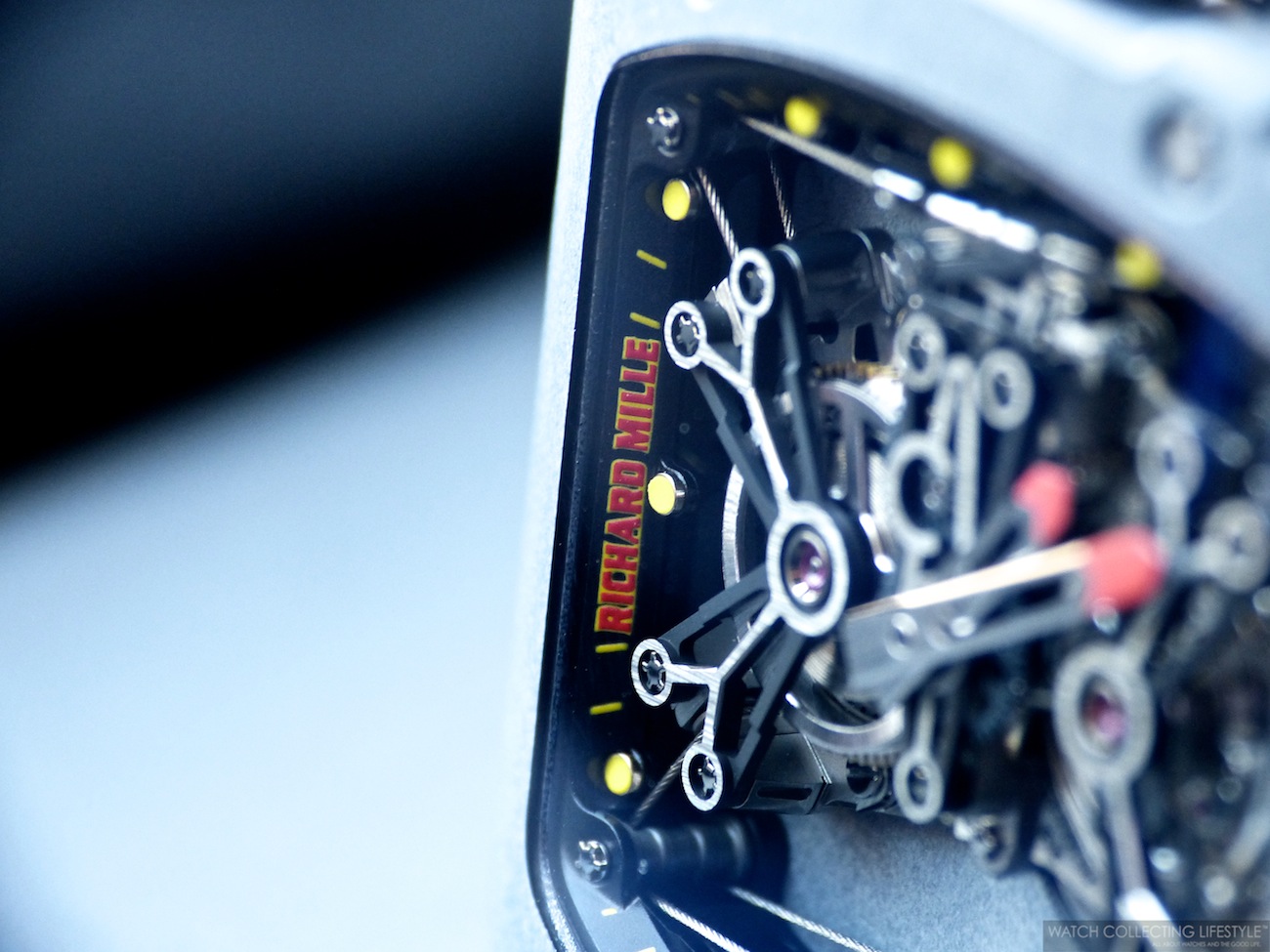
News: Pre SIHH 2014 Piaget Presents the Altiplano 38mm 900P. The World's Thinnest Mechanical Watch Merging Calibre and Case.

Neither entirely a movement nor exactly a case – or rather both at once: introducing the Altiplano 38mm 900P, the world’s thinnest mechanical watch. Merging the hand-wound calibre with the case elements, it is designed as a single entity in order to achieve record-breaking slenderness at just 3.65 mm thin. Representing a crowning achievement in over half a century of virtuoso skills displayed in the realm of ultra-thin watchmaking where Piaget reigns supreme, it conveys the excellence of the two integrated Manufactures run by the Maison. Places where the skills of the watchmakers, case constructors and designers converge in giving life to this masterpiece of reliability and precision.

2014 is a vintage year for Piaget! The Maison is celebrating its 140th anniversary and marks the occasion by launching a model that is set to defy the conventions of ultra-thin Fine Watchmaking for many years to come: the Altiplano 38 mm 900P. While clearly geared towards cutting-edge innovation, it is also a nod to history, since it gets the 900P part of its name from Calibre 9P, which was the first ultra-thin hand-wound movement made by Piaget in 1957. That particular mechanism measured just 2 mm thin and sealed Piaget’s destiny in the field of ultra-thin horology. By 1960, Piaget was ready to set a first record with its Calibre 12P, the world’s thinnest automatic movement at just 2.3 mm. The following years witnessed a spate of new slimness records in the fields of hand-wound and automatic models, with or without horological complications – like Calibre 600P, the world’s thinnest hand-wound shaped tourbillon movement; and 1208P, an automatic movement that was also the thinnest in its category, to mention just a couple of these feats. Constantly reaffirming its unconditional love of slim mechanisms, the Manufacture de Haute Horlogerie Piaget has produced no less than 23 ultra-thin calibres out of the 35 movements developed and produced in-house, of which 12 have set new records for thinness over the past few years and are now part of the collection.

While the Altiplano 38 mm 900P merges the case and movement to establish itself as the thinnest mechanical watch ever, it also stems from another fusion without which such a feat would have been impossible: that of the two Manufactures Piaget – one based in La Côte aux Fées, where the movements are traditionally made; and the other in Plan-les-Ouates, where the cases are crafted. These skills are now inextricably intermingled, since within the Altiplano 38mm 900P, the mechanism and the external components form a single indivisible entity. For a full three years, watchmakers, case constructors and designers worked together at each stage of development, production, adjustment and finishing in order to give life to this slender marvel. Each technical choice had an aesthetic impact, and vice versa. While each of the 145 parts composing the Altiplano 38 mm 900P has been trimmed to a size sometimes barely thicker than a hair’s breadth –including some wheels measuring a mere 0.12 mm thin compared with 0.20 mm on a classic movement– special care has been devoted to clearances. In other words, the process involved cleverly arranging the components to within the nearest hundredth of a millimetre so as to create optimal play between the fixed and mobile organs, while being careful to ensure that the later move freely and thus guarantee the smooth running of the mechanism.

Nonetheless, the true secret of this extreme slenderness lies in the structure of the case itself, of which the back also serves as the mainplate. Thereby merging calibre and case, the latter was machined directly from the case back in order to house the mechanical parts. This highly complex architecture meant reversing movement construction so as to fit the bridges on the dial side —an approach that also has an aesthetic effect by keeping them visible. To save another precious few millimetres, the entire mechanism and the hand-fitting system are contained within the thickness of the balance-wheel itself, thus entailing an off-centered display of the hours and minutes entirely in tune with the iconic design features of the Altiplano line. These characteristics are further enhanced by the entirely visible wheeltrain that invites the owner of the watch to plunge into the very heart of this supremely slender and technically sophisticated mechanism. Working within this extremely confined space, Piaget has devised a suspended barrel hanging from a single bridge on the dial side, contrary to classic barrels that are also fixed to the mainplate side. This highly unusual device is no way detrimental to the performance of the mechanism, since the Altiplano 38 mm 900P has a generous power reserve of around 48 hours.

When a watch is subjected to strong pressure, such as when immersed in water, its glass or crystal is slightly deformed. While this physical phenomenon goes relatively unnoticed on a classic timepiece, the same is certainly not true of an ultra-thin watch. Given the extremely confined space available, the glass would be liable to press on the hands when deformed, thus causing the movement to stop. To avoid this challenge to any ultra-thin model, Piaget has come up with a revolutionary device —patent pending— representing a major breakthrough in ensuring the reliability of this type of watch. Instead of fitting the hands above the bridges, Piaget has placed them underneath, thereby freeing up space between the cannon-pinion and the crystal. When the latter is deformed by the effects of pressure, it presses not on the hands – placed below the bridge level – but instead on the wheel-train bridge, thus avoiding any consequences on the rate of the movement. While for Piaget, the extreme slimming down of the parts in an ultra-thin watch must in no way compromise its reliability, the same goes for the level of finishing. The Altiplano 38 mm 900P is no
exception to the rule. Even though some of its 145 parts remain hidden from sight, all of them have been meticulously finished in keeping with the noblest horological traditions, through countless hours of patient work rendered even trickier by the extraordinary slenderness of the components. The mainplate carved out of the watch case-back has been satin-brushed and sandblasted, while the wheels are alternately sunburst or circular satin-brushed. Hollowed so as to reveal the subtle mechanical
intricacies at the heart of the Altiplano 38 mm 900P, the bevelled and satin-brushed sunburst bridges are black-coated to create elegant contrasts with the white gold case. The index-assembly bearing the Piaget “P” strikes a resounding signature note within this subtly orchestrated Fine Watchmaking symphony.

Sticker Price TBC. For more info on Piaget click here.

Technical Specifications

Piaget Altiplano 900P
Case Diameter: 38 mm. Thinnest ever mechanical in 18K white gold.
Calibre and case merge to form a seamless whole with a black-coated movement
Strap: Black alligator leather strap with 18K white gold pin buckle
Power reserve: approx. 48 hours
Frequency: 21,600 vph /3 Hz
Thickness: 3.65 mm (case + movement)
Number of jewels: 20
Number of components: 145 (case + movement)

Posted on December 12, 2013 and filed under News, SIHH, Piaget.

News: Pre SIHH 2014 Jaeger-LeCoultre Unveils the Grande Reverso Ultra Thin 1931 Chocolate Dial. Absolute Elegance in a Pink Gold Case.

Over the years, the Reverso has appeared in a number of different guises and been enriched with various unusual sizes and new horological complications – all the while remaining loyal to the spirit of the watch with two faces. On the occasion of the 80th anniversary of this timepiece that has become a cult object, Jaeger-LeCoultre chose to return to the very origins of a legend by presenting the Grande Reverso Ultra Thin Tribute to 1931, directly inspired by the aesthetic codes of the historical model. This creation, distinguished by an ultra-thin case, contemporary dimensions and remarkably faithfulness to the original, was enthusiastically received by devotees of the Reverso and by watch connoisseurs who expressed the wish that this vintage edition should not remain a one-off model. In response to their desires, the Manufacture already introduced the Grande Reverso Rouge with a deep red dial in 2012, followed the next year by the Grande Reverso Ultra Thin Duoface Blue. For 2014, Jaeger-LeCoultre unveils the third member of this splendid trilogy: the Grande Reverso Ultra Thin 1931 with a chocolate-toned dial.

The new model, entirely in keeping with its historical ascendance, vividly evokes the finest hours of Art Deco. Its shapes, its color and its materials are the ultimate expression of a movement that heralded the inception of industrial design while favoring hand craftsmanship executed to perfection. Entranced by this delightful color palette, the eye naturally lingers on the pleasing contrasts between the glowing chocolate shade of the watch face and the pink gold of the case, including the traditional gadroons framing the dial. This irresistible association is further underscored by the judicious reinterpretation of the aesthetic principles governing the original. Apart from the 12 o’clock numeral, the hours are shown by baton-shaped hour-markers, while the hour and minute hands feature a dagger-type profile. The small seconds at 6 o’clock perform a once a minute rotation on the dedicated rectangular subdial. This picture of pure, restrained refinement would not be complete without a mention of the “REVERSO” inscription exactly reproducing that appearing on the historical model. Everything might seem to have been said, and yet it is only now that the distinctive emotional ties uniting an owner and his Reverso can begin to be woven.

The usual chestnut brown alligator leather strap with pink gold pin buckle is just one of the options proposed by the Grande Maison in the Vallée de Joux for securing the Reverso Ultra Thin 1931 to the wrist. Polo players, who have been wild about the Reverso for over 80 years, are no less demanding when it comes to choosing the pair of boots they will wear to compete in various prestigious tournaments. They show no hesitation in confidently striding through the doors of Casa Fagliano, established since 1892 in the worldwide polo capital, Buenos Aires. For well over a century, the Fagliano family has been dedicated to a single craft of which it masters all the mysteries and intricacies: fine leather work. The descendants of the company founder continue to share the many duties involved in an authentic family-style division of labor. Their creations are keenly sought-after by the best polo players who simply could not imagine playing a match without their favorite boots. For the Manufacture Jaeger-LeCoultre, Casa Fagliano has agreed to produce hand-crafted straps in successive stages following the strict principles of time-honored tradition in working with cordovan leather, which is renowned for its exceptional resistance. Delivered along with each watch, the strap made in the Casa Fagliano workshops is distinguished by its elegant suppleness and hand-made mode of production that makes it truly one of a kind. The Manufacture Jaeger-LeCoultre is proud of this partnership that further strengthens the ties between polo and the Reverso. Over eight decades since its birth, aesthetes will be more delighted than ever to welcome the Grande Reverso Ultra Thin 1931, which combines passion and prodigious expertise with the legendary quality characterizing all timepieces bearing the Jaeger-LeCoultre signature.

For more info on Jaeger-LeCoultre click here.

Technical Specifications

Grande Reverso Ultra Thin 1931 Chocolate Dial ref. Q2782560.

Movement: Mechanical manually-wound movement, Jaeger-LeCoultre Calibre 822/2, crafted, assembled and decorated by hand. 21,600 vph, 19 jewels, thickness of 2.95 mm, 45-hour power reserve.

Dial: Chocolate dial with powdered numerals and hour-markers.

Hands: Baton-type, faceted, gold plated

Case: 18-carat pink gold with a height of 46.8 mm, a width of 27.4 mm and a thickness of 7.3 mm with a polished finish.

Water-resistant: 3 bars/30 meters.

Straps and buckle: Matte brown alligator leather 20/18 and 2nd strap in cordovan leather, crafted by “Casa Fagliano” of Buenos Aires fitted with a pin buckle in 18 carat pink gold.

News: Pre SIHH 2014 A. Lange & Söhne Unveils the Grand Lange 1 Moon Phase. More Than 300 Laser-Cut Stars on its Moon Phase Disc.

Pre SIHH 2014, A. Lange & Söhne unveils the new Grand Lange 1 Moon Phase that gives the exactly calculated to 122.6 years moon phase display a shiny appearance on the dial. A patented method of coating the moon's disk gives this astronomical complication a highly detailed appearance. The moon is a fascinating celestial body. It determines not only the tides, but also affects the rhythm of life of many creatures and plants. A moon phase display is therefore highly appreciated by many watch lovers.

Since its relaunch, the Saxon manufacture has presented twelve models with such a complication. However, never before the moon phase display has been so prominent as it is in the new Grand Lange 1 Moon Phase. The popular astronomical display received a large stage on the dial. You can now clearly see how the moon phase display follows the actual phases of the moon in a remarkably realistic manner because it is linked to the continuum of the hour. Thus, it is — just like the moon itself— always on the move and in such small steps that you cannot detect this movement with the naked eye.

In addition, the moon phase indicator represents the time from new moon to new moon with an accuracy of 99.9978 percent. 29 days, 12 hours, 44 minutes and 3 seconds , the average synod lunar months. For simplicity, the cycle is therefore rounded in most classical moon phase displays to 29.5 days. This leads per cycle to a deviation of 44 minutes and 3 seconds, which adds up after two and a half years to one day. The much more accurately calculated seven-gear on the Grand Lange 1 Moon Phase reduces the deviation per lunar cycle to less than a minute. Once set up properly, you would have to correct the display by one day after 122.6 years. With a corrector pushpiece between 7 and 8 o'clock on the case band, the display can be adjusted. The solid gold moon disc testifies the perfection claim of the Lange product developers. The result of extensive research and development work is a patented coating process that through an unparalleled color brilliance and sharpness of all the details meets the highest aesthetic standards. Due to interference effects —the superposition of reflections— all non-blue color components of the incoming daylight are absorbed. So is in the eye of the beholder an intensely blue color impression. The more than 300 stars of different size are cut so sharply drawn with a laser that they act like a miniaturized representation of the Milky Way .

With the combination of decentralized dial design, large date and technically advanced caliber, the Grand Lange 1 Moon Phase bears all the marks of the most famous family of watches from A. Lange & Söhne. The calibre with an impressive power reserve of 72 hours is only 4.7 mm thick thanks to the use of only one barrel. The case, available in yellow gold, rose gold or platinum has a diameter of 41.0 mm. With a balance spring developed and manufactured in-house, a three-quarter plate made of untreated German silver and intricately hand decorated parts, the Lange calibre L095.3 features all the classic elements of the timepieces from this manufacture.

For more info on A. Lange & Söhne click here.

News: Jaeger-LeCoultre's Two Unique Pieces Raised $790K USD at RED Auction.

Press Release

Two of the world’s foremost design pioneers, Sir Jonathan Ive, KBE, and Marc Newson, CBE, have collaborated with musician and philanthropist Bono to organize a (RED) Auction celebrating the very best of design and innovation. Proceeds from the November 23, 2013 sale at Sotheby’s New York will benefit The Global Fund to fight AIDS, Tuberculosis and Malaria. The auction featured icons of design selected by Sir Jonathan Ive and Marc Newson and works that were personally customized by the pair:

The custom Jaeger-LeCoultre Atmos 561 clock with unique red accents created for the (RED) Auction and estimated at $20,000-30,000 USD resulted in $425,000 USD. 

The Jaeger-LeCoultre Memovox Tribute to Deep Sea watch which has been customized with a unique red dial and the (RED) logo engraved on the back of the watch, estimated at $10,000-15,000 USD, sold for $365,000 USD.

Jaeger-LeCoultre’s two unique pieces raised $790,000 USD at (RED) Auction, while the auction raised $12,883,000 USD to fight against AIDS in Africa.

For more info on RED click here and on Jaeger-LeCoultre here.

News: Pre-SIHH 2014 Audemars Piguet Presents the Royal Oak Concept GMT Tourbillon.

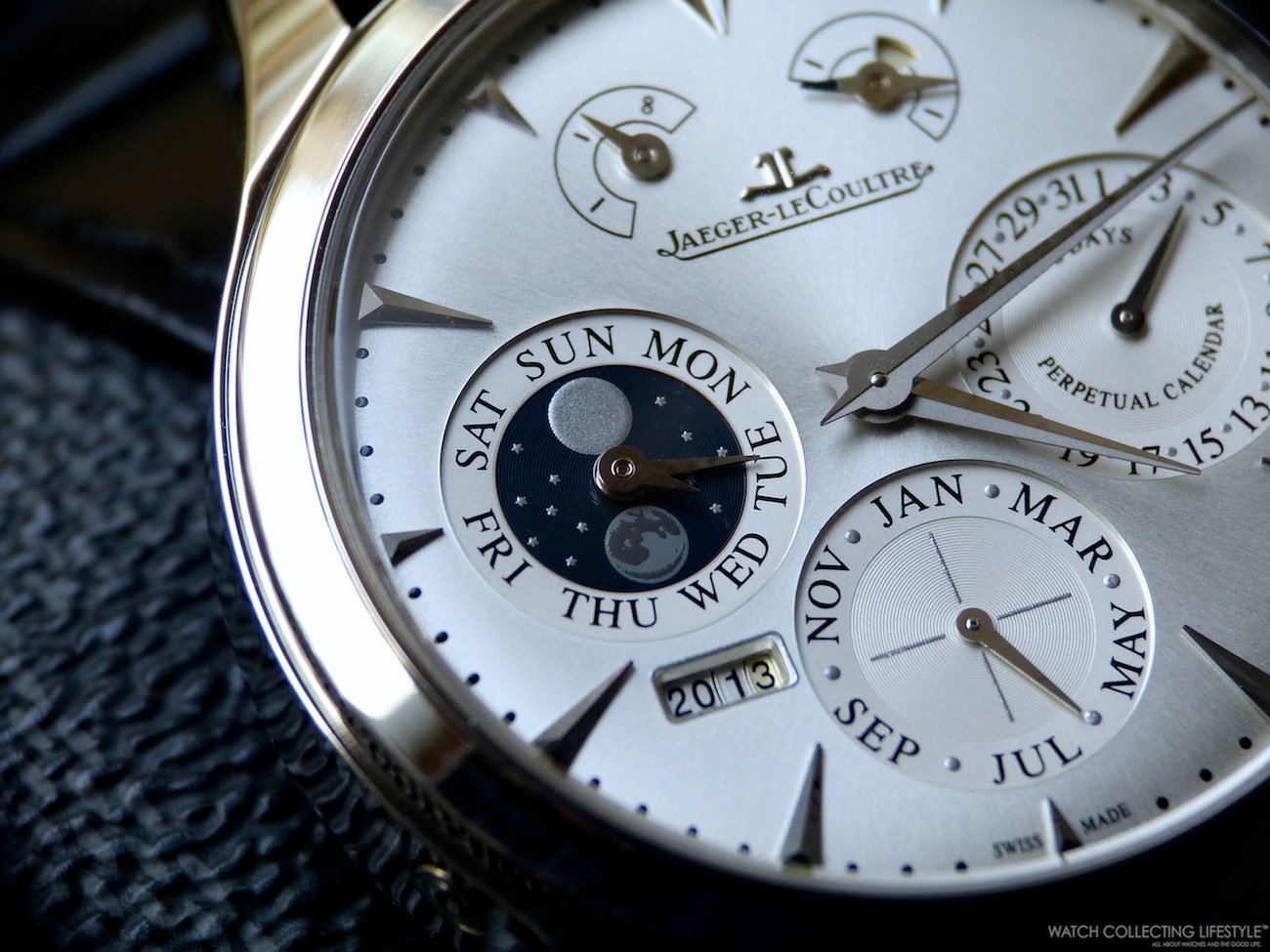
Bright, white, sleek and powerful, the Royal Oak Concept GMT Tourbillon to be presented for the first time at the SIHH —Salon International de la Haute Horlogerie— 2014 in Geneva is a watch for avant-garde collectors and connoisseurs that brooks no compromise in either technical or aesthetic terms.

Its sculpted titanium case middle  and integrated rubber strap combine with a white ceramic bezel to frame the highly architectural array of tourbillon carriage and second ‘GMT’ time-zone display inside —case and movement in perfect harmony. New for 2014, however, is the flash of pure white center-stage: an intricately machined upper bridge made of white ceramic —only possible now, thanks to Audemars Piguet’s ongoing advances in materials science.
The Concept evolution

The Royal Oak Concept was first unveiled in 2002 as an avant-garde, 30th-anniversary tribute to Audemars Piguet’s legendary octagonal Royal Oak – designed by Gérald Genta as the world’s first luxury watch in stainless steel.
The Concept’s ultra-hard Alacrite 602 case was more rounded to highlight Genta’s signature octagonal bezel and its eight hexagonal screws. The dial was left off, exposing the advanced micro-mechanics ticking within. All these revolutionary design codes have persisted throughout the Concept series, from 2008’s Royal Oak Carbon Concept Tourbillon and Chronograph – an ultra-light timepiece that was the first to combine a forged-carbon case and movement mainplate – to the Royal Oak Concept GMT Tourbillon of 2011, with ultra-light, ultra-resistant titanium case and black-ceramic octagonal bezel, push pieces and crown.

This year’s Royal Oak Concept GMT Tourbillon features a white ceramic bezel, crown and push pieces instead of black, all heightening the contrast with the titanium case middle. However, in typical, trailblazing style, the Manufacture has now gone one step further and incorporated ceramic into the movement itself, replacing the blackened upper bridge of Calibre 2913 with white ceramic. As a result, the new Calibre 2930 is visually transformed, its dazzling, hourglass-shaped bridge further enlivened by the double symmetry of the tourbillon bridges and GMT display.

Materials know-how

White ceramic is about nine times harder than steel, meaning the manufacture of the Royal Oak Concept GMT Tourbillon’s bezel, push pieces, crown and especially its intricately shaped upper bridge was a complex and lengthy process.

Ceramic is an almost totally scratch-proof composite material that can be scratched only by diamonds, calling for the use of special milling-cutter machines equipped with diamond-tipped tools. Treating the roughed-out surfaces and edges to a polished or satin-brushed finish represents a daunting technical challenge, due to ceramic’s inherent resistance to abrasion. It takes around 8 hours to make the Royal Oak Concept GMT Tourbillon’s bezel, compared with 45 minutes if it were steel, calling upon all the savoir-faire of the watchmakers and engineers. As well as giving an exceptionally smooth final appearance, ceramic has a practical purpose, displaying extreme resistance to wear.

Similarly, the titanium used for the case middle and sapphire surround is ultra strong, comfortable to wear twice and as light as steel – advantageous for a watch of such generous 44mm proportions. Further demonstrating Audemars Piguet’s deeply entrenched knowledge of high-tech metals and materials, the inner flange circling the dial is made of lightweight aluminum, hardened by anodization.

This daring cocktail of ceramics and metals is just the latest chapter in Audemars Piguet’s ongoing quest to push the envelope when it comes to materials science —a quest that started over 40 years ago with the Manufacture’s most daring move of all, using steel in a luxury watch for the very first time.

Technical tour de force

The defining characteristic of Audemars Piguet’s Concept watches has always been the coherence of case and movement. The ultra-modern ‘engine’ is seamlessly integrated within its ultra-modern ‘chassis’, whose techy aesthetic perfectly complements and showcases the exposed micro-mechanics.

An impressive feat in its own right, the Royal Oak Concept GMT Tourbillon’s hand-wound Calibre 2930 features a twin barrel ensuring 10-day power reserve, tourbillon and second time-zone ‘GMT’ display.

Its timekeeping is regulated by a 3Hz (21,600vph) escapement, rotating inside a tourbillon carriage every 60 seconds, compensating for the effects of the Earth's gravity when the watch is oriented vertically for any length of time.

The tourbillon cage comprises 85 components, yet only 0.45g in weight. An experienced watchmaker spends almost three days assembling its 85 components, including two full days to install the cage, while the full workings will require over two weeks of work. Audemars Piguet is still one of the few manufactures to have mastered all the intricacies of this complication, with over 25 different movements featuring a tourbillon. Each component is beveled, polished, assembled and balanced by hand.

The GMT display provides an instant reading of the time in a second time-zone. It is adjusted using the push piece at 4 o’clock (one press adjusts the time by one hour). The indication of the second time-zone, based on 12 hours, comprises two superimposed discs, making it easy to tell the time. The first, on which the figures are inscribed, completes one turn in 12 hours. The second, just below, completes a turn in 24 hours and has 2 colored areas: a white half for daytime and a black half for night-time. This makes it easier to read the figures.

Audemars Piguet’s proprietary parallel double barrel system ensures the Royal Oak Concept GMT Tourbillon runs for as many as 10 days before it needs to be manually wound again, generating a constant force during some 237 hours of autonomy, enhancing timekeeping precision.

The energy from Calibre 2930’s two 10-day barrels is fed into the geartrain at the same time via a single pinion bridging the two. This is a far gentler means of transmitting energy than the usual system of two series-linked 5-day barrels. It also reduces pressure in the gearing, the friction in the barrels is used to offset torque variations, and it gives increased running precision, greater power reserve and enhanced reliability.

The Royal Oak Concept GMT Tourbillon also features a selection indicator mechanism. According to the position of the winding stem, the hand positioned on the dial at 6 o’clock indicates the function selected. The H, N and R indications correspond to the three positions of the winding stem, meaning time-setting, neutral and winding respectively.

For more info on Audemars Piguet click here.

Technical Data

Movement

Calibre 2930, hand-wound manufacture
Total diameter: 35.60mm (15 ¾ lines)
Thickness: 9.90mm
Number of jewels: 29
Number of parts: 291
Power reserve: 237h
Frequency of balance wheel: 3Hz (21,600vph)
White ceramic upper bridge
Finishing: hand-finished bridges and mainplate, hand finished cut-out parts, polished angles, hand-drawn file strokes on upper surface and matt finish beneath.

Case

Titanium case
Glareproofed sapphire crystal and caseback
White ceramic bezel
Screw-locked crown and white ceramic push piece
Water-resistant to 100m

Display

Openworked
Second time-zone indicator at 3 o’clock
Crown position indicator at 6 o’clock
Tourbillon at 9 o’clock with black anodized aluminum bridge
White gold Royal Oak hands with luminescent coating
Black anodized aluminum inner bezel

Bracelet

White rubber strap with titanium AP folding clasp

Function

24-hour GMT display
Day and night indicator
Functions selection
Hours and minutes

Reference

RO 26580IO.OO.D010CA.SDT


Posted on November 22, 2013 and filed under Audemars Piguet, News, SIHH.

News: Pre-SIHH 2014 Vacheron Constantin Presents the Malte Tourbillon Collection Excellence Platine. A 50-Piece Limited Edition.

Pure, rare, and eternal, platinum is the ultimate material in the field of Fine Watchmaking. To honor this intrinsic alliance between pure mechanical refinement and inestimably precious material, Vacheron Constantin created the Collection Excellence Platine in 2006, composed of creations issued in limited series and designed for collectors of outstanding timepieces. This year the Malte Tourbillon —introduced in pink gold in 2012— joins this exceptional collection. It is in this spirit that Vacheron Constantin offers a new interpretation of this stunning complication with the new Malte Tourbillon Collection Excellence Platine.

On a pure, uncluttered 950 platinum dial with a sandblasted finish, discreetly adorned with the inscription “Pt 950” appearing between 4 and 5 o’clock, along with white gold Roman numerals and hour-markers, the tourbillon bearing the seconds hand finds its natural place, perfectly integrated within the new refined lines of the Malte collection. Its 6 o’clock position implied subtly offsetting the axis of the hour and minute hands that thereby stand out majestically above their beating heart.

The Malte Tourbillon Collection Excellence Platine comes with a curving 38 x 48.24 case in 950 platinum. Secured by a 950 platinum folding clasp, the dark blue Mississippiensis alligator leather strap is graced with a saddle-stitched finish, hand-sewn with silk and 950 platinum threads lending an ultimate touch of perfection. This model is released in a 50-piece individually numbered edition.

Such an exceptional watch naturally deserved an equally exceptional movement. The 169-part mechanical hand-wound Calibre 2795 endows this model with an almost two-day power reserve. This tonneau-shaped movement perfectly tailored to the case is entirely developed and crafted within the Manufacture.

The tourbillon carriage, inspired by the brand’s signature Maltese cross emblem, provides a splendid showcase for the exceptional level of finishing of each movement part, including a number of naturally hand-bevelled interior angles. Rounding off the tourbillon bar alone called for 12 hours of hand craftsmanship in order to meet the finishing criteria established by Vacheron Constantin. This technique, referred to in French as berçage, consists of filing the tips of the arms with perfect regularity so as to give them a conical and semi-cylindrical shape, while respecting the limits of the center and the heels. To finalize the operation, the artisans smooth it down using stones, buffs, wooden pegs and special pastes in order to achieve a perfectly polished effect.

The Malte Tourbillon Collection Excellence Platine also meets the requirements of the Poinçon de Genève or Hallmark of Geneva. Instated by the Grand Council of the Republic and Canton of Geneva in 1886, the Hallmark is a guarantee of origin, craftsmanship, durability and expertise. This guarantee of quality no longer applies to the movement alone, but instead to the entire timepiece, thereby representing a major evolution for this independent certification that has enjoyed the longstanding support of Vacheron Constantin and has now opted to respond more fully than ever to the demands of an ever more well-informed clientele.

TECHNICAL DATA
Malte Tourbillon Collection Excellence Platine
Référence 30130/000P-9876
Hallmark of Geneva certified timepiece
Calibre 2795
Developed and manufactured by Vacheron Constantin
Mechanical, manual-winding
27.37 x 29.30 mm (12 ’’’ ¼ x 12 ’’’ ¾)
6.10 mm thick
Approximately 45 hours power reserve
2.5 Hz (18,000 vibrations/hour)
169 components
27 jewels
Indications Hours
Minutes
Small seconds at 6 o’clock on tourbillon carriage
Tourbillon
Case Platinum 950
38 mm x 48.24, 12.73 mm thick
Transparent sapphire crystal case back
Water-resistance tested at a pressure of 3 bar (approx. 30 meters)
Dial Platinum 950, sand-blasted
« Pt 950 » hallmark between 4 and 5 o’clock
Black painted indications
18K gold applied hour-markers
Strap Dark blue Mississippiensis alligator leather, hand-stitched with platinum 950 and silk, saddle-finish, large square scales
Clasp Folding triple-blade clasp in platinum

For more info on Vacheron Constantin click here.

News: Vacheron Constantin Presents The Legend of the Chinese Zodiac 2014 Year of the Horse. Only 12 Pieces Available of Each Model.

Press Release

Introducing a fresh tribute in the ongoing saga of the Métiers d’Art collection, Vacheron Constantin presents The Legend of the Chinese Zodiac —a series of captivating timepieces based on the 12-year cycle. A symbol of a lively and independent spirit, the sign of the horse will take over from the snake on February 1st 2014. To mark this occasion, the Manufacture presents two new watch creations magnificently enhanced by enameling and engraving.

Since its founding in 1755, Vacheron Constantin has excelled in the field of precious ornamental techniques and cultivates passionate ties with the artistic crafts that it has consistently promoted by nurturing the transmission of expertise from one generation to the next. This know-how provides the Geneva-based watchmaking Maison with the opportunity to highlight its fundamental values —including of course its constant quest for excellence, as well as sharing passion, passing on knowledge and openness to the world expressed through unconditional support for both native and foreign forms of artistic expression. Paper-cutting, at the crossroads of Western and Eastern cultures
China, a land with which Vacheron Constantin first began establishing a trust-based relationship from 1845 onwards, is famous for numerous discoveries including the invention of paper and also known as the initiator of the art of paper-cutting or Jianzhi. This technique appears on the UNESCO Intangible Cultural Heritage list and is echoed in Scherenschnitt, the popular art of paper-cutting born in the Pays d’Enhaut region of Switzerland. Sculpted in paper according to the principles of Jianzhi, the animals of the Chinese zodiac provide a remarkable demonstration of the art of using full and empty spaces. A challenge that Vacheron Constantin has taken up and translated into the field of watchmaking thanks to the skill of its experienced artisans. Engravers and enamelers have worked alternatively on this Year of the Horse model, crafted in pink gold or platinum and limited to 12 pieces each, reserved for Vacheron Constantin Boutiques exclusively.

The leaf motif, stemming from classic Chinese iconography, is directly engraved in the gold dial. The pattern remains semi-embedded and stands out from its gold base by a subtle stage-setting of variously accentuated reliefs creating a depth effect. The raised bamboo stalks appear to be floating over the dial. With the horse engraving, on which the details of the mane and coat measure a mere fraction of a millimeter, the artisan provides a tangible expression of the artistic vision behind this creation.

Then comes the stage of 'Grand Feu' enameling, a technique invented in Geneva and which remains the exclusive preserve of a rare breed of artisans. By applying the enamel in successive layers, the enamel specialist further enhances the visual intensity of the blue or bronze-toned dial. The necessity of maintaining tight control of the color and the reactions to the firing process that takes place in a kiln at around 800 to 900°C, calls for a specific way of reasoning that takes years to acquire. A final layer of enamel is then applied before a final firing operation that vitrifies the dial and lends a shiny glazed effect that gives added definition to the floral motif. The horse is delicately applied to the center of the dial, poised as if ready to gallop through the sapphire crystal and thus creating a truly striking effect.

Métiers d’Art The Legend of the Chinese Zodiac collection owes its superb scope for expressing the decorative arts notably to Calibre 2460 G4. In keeping with its longstanding tradition of offering a broad variety of original displays, Vacheron Constantin perpetuates the art of watchmaking by providing a hands-free display of time. It does so through four windows respectively revealing the hour, the minutes, the day and the date. The first two indications are of the dragging kind and the last two of the jumping type, and each appears through one of the four apertures arranged around the central dial motif. Beating at a rate of 28,800 vibrations per hour, the mechanical self-winding movement is equipped with a 22-carat gold oscillating weight adorned with a dynamic geometrical motif inspired by the shape of the Maltese Cross, the historical House emblem. All its parts are treated to exceptionally sophisticated finishing that meets the criteria laid down by the Hallmark of Geneva – one of the highest tokens of horological craftsmanship created in 1886 and recognized around the world. This requirement now applies to the entire timepiece, which is duly certified by the Hallmark of Geneva. The 2014, year of the horse model, part of the Métiers d’Art The Legend of the Chinese Zodiac collection, is endowed with that unique touch of soul possessed by watches bearing the Hallmark of Geneva. With this exceptional collection, Vacheron Constantin intends to pursue its special ongoing dialogue with collectors and devotees of Fine Watchmaking.

For more info on Vacheron Constantin click here.

TECHNICAL DATA
References 86073/000P-9752 - Platinum and 86073/000R-9751 - Pink gold
Automatic In-House Vacheron Constantin Caliber 2460 G4
Movement diameter 31.00 mm (11’’’ ¼ )
Movement thickness 6.05 mm
Number of jewels 27
Frequency 4Hz (28,800 vibrations/hour)
Number of components 237
Indications Hours, minutes, day of the week and date
Power reserve Approximately 40 hours
Case Platinum 950 / 18K 5N pink gold case
40 mm diameter and 12.74 mm thick
Dial 18K gold hand-engraved, coated with “Grand Feu” blue / bronze enamelling
Hand-engraved platinum 950 / 18K 5N gold Horse
Strap Dark blue / Brown Mississippiensis alligator, large square scales, hand stiched, saddle-finish
Clasp Platinum 950 / 18k 5N pink gold folding clasp
Half Maltese cross
Limited edition of 12 pieces for each model
“2014” engraved at the back of each timepiece
Note: Only available through the Vacheron Constantin Boutiques

News: Girard-Perregaux Constant Escapement L.M. Selected 2013 Grand Prix "Aiguille d'Or" at The Grand Prix d'Horlogerie de Genève.

November 15, 2013 — The 13th edition of the Grand Prix d'Horlogerie de Genève —Geneva Watchmaking Grand Prix— was held this evening at the Grand Théatre de Genève. Fourteen prizes were awarded to timepieces across different categories and a Special Jury Prize was given to Philippe Dufour. As most people in the industry were expecting, the Grand Prix "Aiguille d'Or" Watch of the Year Prize was given to the fascinating Girard-Perregaux Constant Escapement L.M. The prize was received by the CEO of the Sowind Group —Girard-Perregaux and JEANRICHARD— Mr. Michele Sofisti. Congratulations!!!!

Here's a video produced by Girard-Perregaux, showing how this fascinating timepiece works so you can further understand why this watch won the Grand Prix.

The rest of the winners of this edition of the Grand Prix are the following:

Grande Complication Prize and Public Prize - A. Lange & Söhne 1815 Rattrapante Perpetual Calendar

Men's Complications Watch Prize - Romain Gauthier Logical One

Men's Watch Prize - Voutilainen V-8R

Innovation Prize - Vianney Halter Deep Space Tourbillon

Sports Watch Prize - Zenith El Primero Stratos Flyback Striking 10th

Horological Revelation Prize - Ressence Type 3

Revival Prize - Tudor Heritage Black Bay

"Petite Aiguille" Prize - Habring2 Jumping Second Pilot

Jewelry Watch Prize - Chopard L'Heure du Diamant

Ladies' Complications Watch Prize - Van Cleef & Arpels Lady Arpels Ballerine Enchantée

Artistic Crafts Watch Prize - Chanel Mademoiselle Privé Camélia Brodé

Ladies' Watch Prize - DeLaneau Rondo Translucent Champagne

For more info the Grand Prix d'Horlogerie de Genève click here.

News: Linde Werdelin Presents the Oktopus Moon Tattoo. A 59-Piece Limited Edition in 18K Rose Gold.

Press Release

Oktopus Moon Tattoo, limited to 59 pieces worldwide is a unique state-of-the-art timepiece. “Testifying to Linde Werdelin’s commitment and skill, the latest addition to our dive series represents the most prestigious and lavish piece of our collection yet”, says visionary co-founder Jorn Werdelin.

An 18K solid rose gold case, intricately engraved with a hand drawn octopus, this masterpiece reflects the mystery and intrigue surrounding this powerful creature.
Featuring their in-house moon-phase complication, elements of the first generation Oktopus have been enriched, proving that Linde Werdelin is a company alert to the most contemporary creative offerings; continually looking to progress in terms of materials, movements and design.

Linde Werdelin’s creative mind, Morten Linde explains, ‘the marriage between modern thinking and traditional craftsmanship resonates throughout an LW timepiece. The Oktopus Moon Tattoo is the perfect balance of contemporary art, technology and innovation; transporting poetry and imagination into the world of time keeping”.
Due to the complexity of building the case, movement and dial, Linde Werdelin has challenged the ability of some of Switzerland’s finest craftsmen and succeeded in pushing the limit of what is possible, achieving such ornamental and revolutionary masterwork. Oktopus Moon Tattoo is an exclusive series of 59 pieces. The limited number signifies two moon cycles of 29.5 days each, before the moon returns to the same point on the celestial sphere. Moon phase complication is an ideal function to plan your night dives.

The engraving on the solid 18K rose gold case has been executed at different depths to create a three dimensional effect; an extremely challenging job resulting in a unique masterpiece. Linde Werdelin introduced the Oktopus series at Basel 2012 with a five-part case construction, which seals the titanium inner cylinder protecting the movement and the dial from water. Selective materials such as rose gold, ceramic and titanium have been implemented to guarantee superb anti-corrosiveness. The entire surface is subsequently treated with microbillé, followed by a gentle hand satin finish. A firm black ceramic bezel seals protects the entire case. The movement is sealed in the chamber by a titanium DLC screw in back-case featuring the iconic hand-drawn octopus. “This is the most substantial LW product launch to date”, says Morten Linde.

Oktopus Moon Tattoo takes Linde Werdelin on a further challenge since the launch of Oktopus Moon in January 2013, uniting both the in-house complication and a newly designed dial. Oktopus Moon Tattoo complication displays luminous, imaginary and hand-drawn moons-phases on its dial. Each moon is drawn and printed several times and delicately inlaid inside the pierced disk one by one. As the moon moves clockwise through its monthly cycle, more of its surface is illumined. The dial consists of multiple skeletonized layers, conveying an immediate depth to the watch. On the lower part lays the moon disk; a metallic cut out surface carrying each luminous moon.
The upper dial is skeletonized. Featuring three diamond-cut hands, it bears a beautifully engraved hand-drawn octopus in the center. All indices are deliberately luminous to enhance readability. The full moon is always indicated with a red mark visible through the lower dial. Numerals 11, 10, 9, displayed between 1 and 2 o’clock allow a more precise track of the lunar cycle.

Sticker Price CHF 42,500 ex VAT. For more info on Linde Werdelin click here.

Technical Specifications
Case:
Entirely crafted in 18K rose gold, / Hand satin finish and microbillé / Constructed with 19 components / 2.2 mm anti-reflective sapphire crystal / Screw in back case with engraved octopus drawing / screw in crown with engraved octopus symbol
Dimensions:
44mm (w) by 46mm (l) by 15mm (h)
Dial:
Multiple-layered skeletonized dial / Hands: diamond-cut hands
Movement:
In-house developed moon phase complication / Power reserve: 42 hours / Balance frequency: 28800vph, 4Hz
Water Resistance:
300m

News: Breguet Acquires Three Antique Watches at Christie's Auction in Geneva. Over 1.5 Million Swiss Francs Paid.

Press Release

November 13, 2013. Geneva, Switzerland—The Breguet Museum and its President, Marc A. Hayek, have acquired three exceptional Breguet watches that made their mark on Fine Watchmaking history, for a price of nearly 1.5 million Swiss Francs. Among the purchased lots, an extremely rare, highly complicated pocket watch, the Breguet No. 4691. Bought at Christie’s and Sotheby’s auctions in Geneva on Monday November 11th and Tuesday 12th respectively, these masterpieces complete the already important collection of the House.
 
Sold on July 3, 1833 to the Marquis d’Abercorn, the first watch, No. 5015 went for the price of 38,000 Swiss Francs. This pocket watch is one of the very first watches ever made by any watchmaker featuring a keyless stem winding and hour setting system. Created in 1830, this invention is the ancestor of all modern winding mechanisms, consisting of a knurled winding button to be turned from left to right until a stop was reached. Spanning three Breguet generations, from founder Abraham-Louis and his contribution to the development of the keyless winding and hour setting mechanism, to his son Antoine-Louis who perfected and commercialized it, then the latter’s son Louis-Clément who sold it only 6 weeks after taking reigns of the firm, the No. 5015 is an important witness of the work and legacy of the House of Breguet.

The second antique piece, well-known as the No. 4420 is a historically important 18K gold and silver hunter case cylinder watch. With eccentric hour and minute dials, gold Breguet hands and surmounted by the advance/retard slide, it was purchased for more than 240,000 Swiss Francs. This pocket watch was bought on October 3, 1825 by King George IV of Great Britain. Like his father, King George IV was an aficionado of fine watches and clocks and one of A.L. Breguet’s earliest clients, admirers and most loyal customers. With this acquisition the House took the exceptionally scarce opportunity to acquire one of the Breguet’s “Royal” watches.

Last but not least, the third watch is an extremely rare extra-flat half-quarter repeating pocket watch. Sold on October 13, 1831 to Lord Henry Seymour Conway, the No. 4691 is one of the most complicated watches to have been made by Breguet in such a slim case. With a thickness of 7.7 mm, this Repeater watch displays equation of time, power reserve indication, calendar and moon phase based on chronometer principles. Reflecting the constant search for innovation that has characterized Breguet’s production since the 18th century, boasting an exceptionally large number of complications for a watch of this time, this prestigious timepiece was purchased for more than one million Swiss Francs.

Montres Breguet is proud to announce the arrival of these treasures at its museums. This unique event confirms Breguet President and CEO Marc A. Hayek’s commitment to preserving the Manufacture’s historic and cultural legacy.

For more info on Breguet click here.