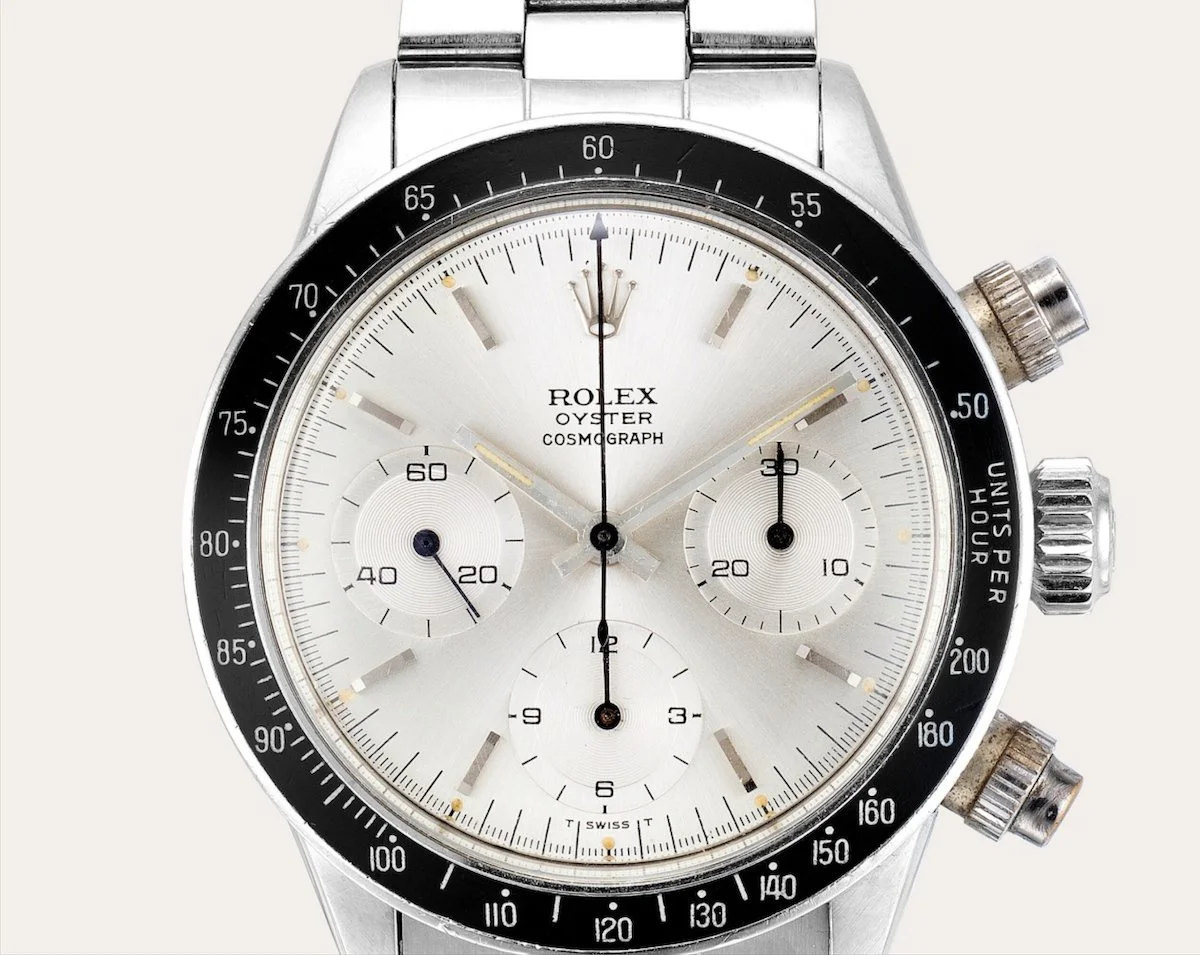
The vintage watch-collecting world values a good story when it comes to the origin, rarity, and provenance of a watch offered at auction, and even more so when it’s about a vintage Rolex Daytona. We celebrate provenance, pursue rarity, and invest not only in mechanical excellence but also in the narratives that surround exceptional timepieces. But what happens when those narratives prove to be more fiction than fact? The recent revelations by Perezcope about the so-called ‘Albino’ Rolex Cosmograph Daytona ref. 6263 offers a sobering lesson about the intersection of collector desire, market mythology, and the responsibility we all share in maintaining the integrity of our passion.
When Rarity Isn't What It Seems
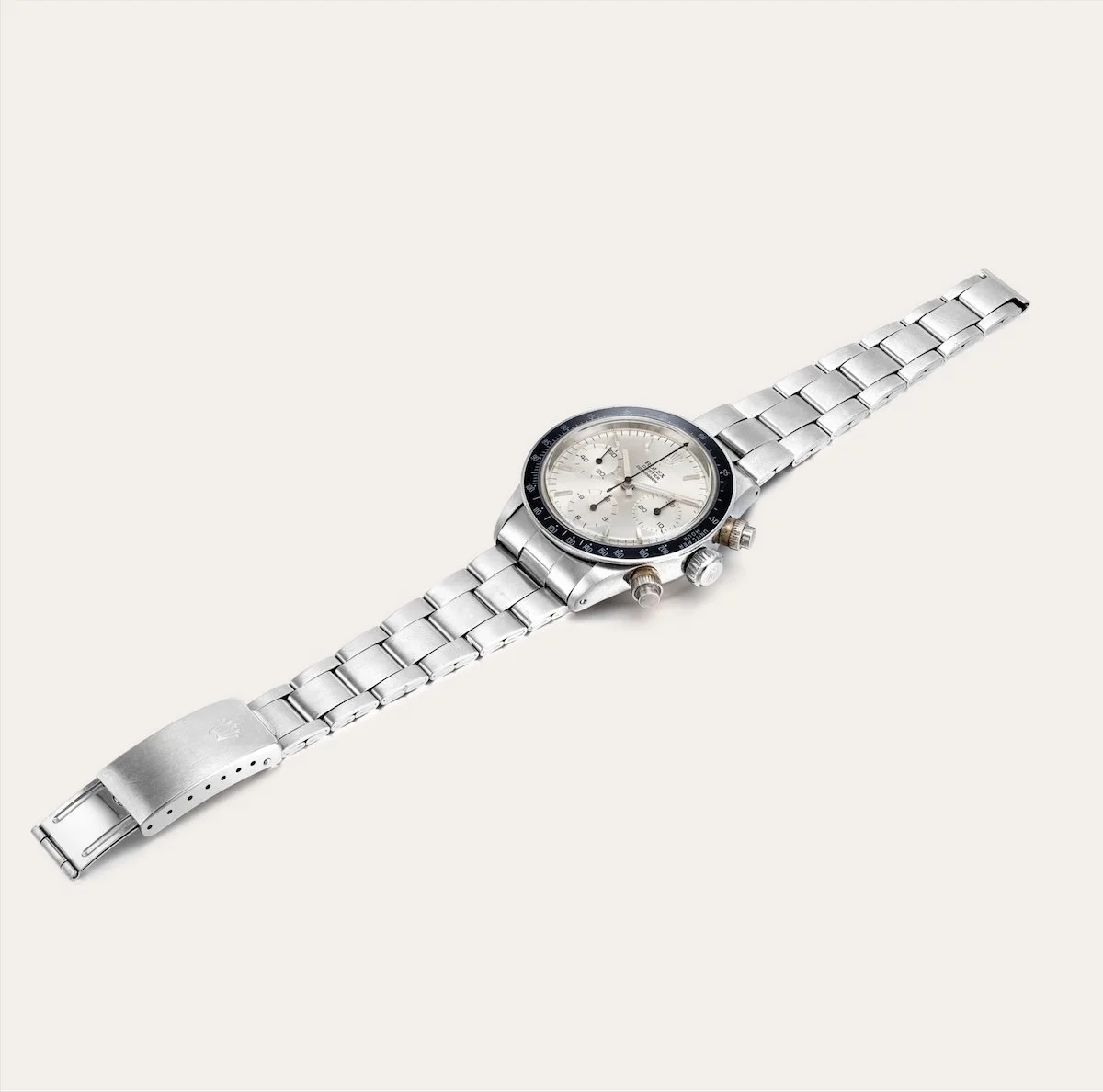
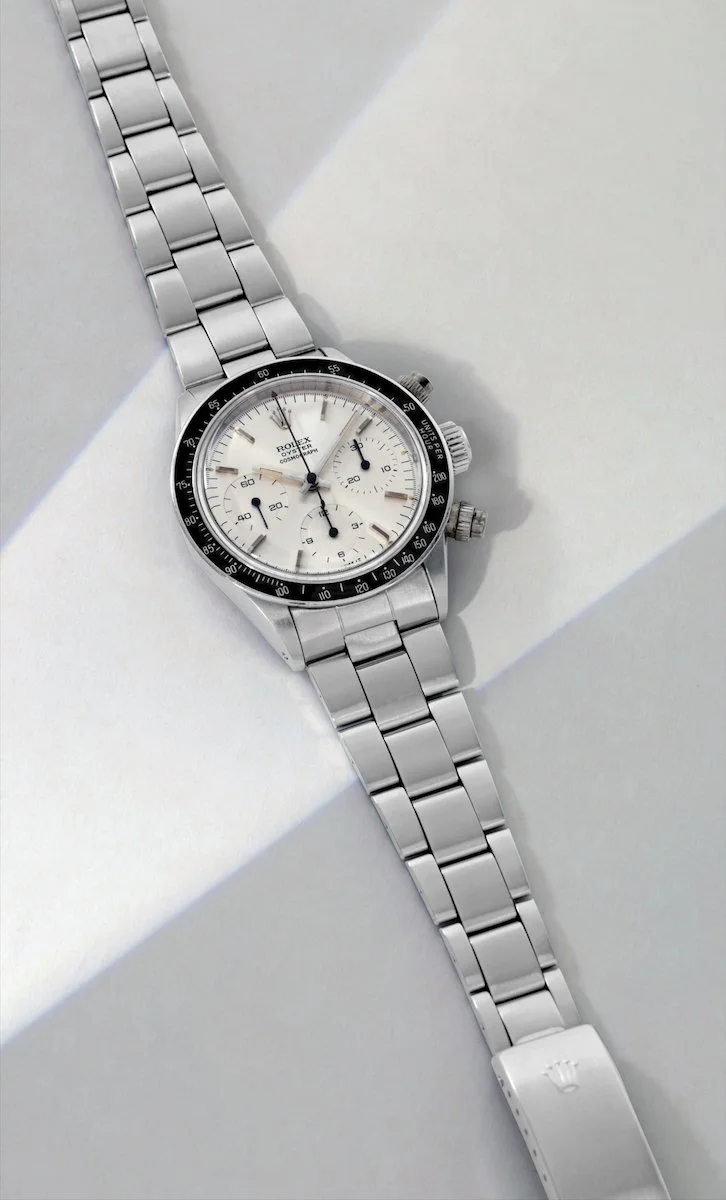
The all-silver, monochromatic dial of the ‘Albino’ Rolex Cosmograph Daytona has captivated collectors for over two decades. Eric Clapton's example alone appreciated from USD 50,190 at Christie's in 2003 to USD 1.42 million at Phillips in 2015—a staggering 28-fold increase that seemed to validate the watch's exceptional status. The moniker, coined by legendary British dealer Tom Bolt, entered the lexicon of haute horlogerie alongside evocative names such as ‘Paul Newman’ and ‘Jean-Claude Killy.’ Only three examples are known, making it one of the rarest Daytona configurations—photograph below from Phillips Watches.
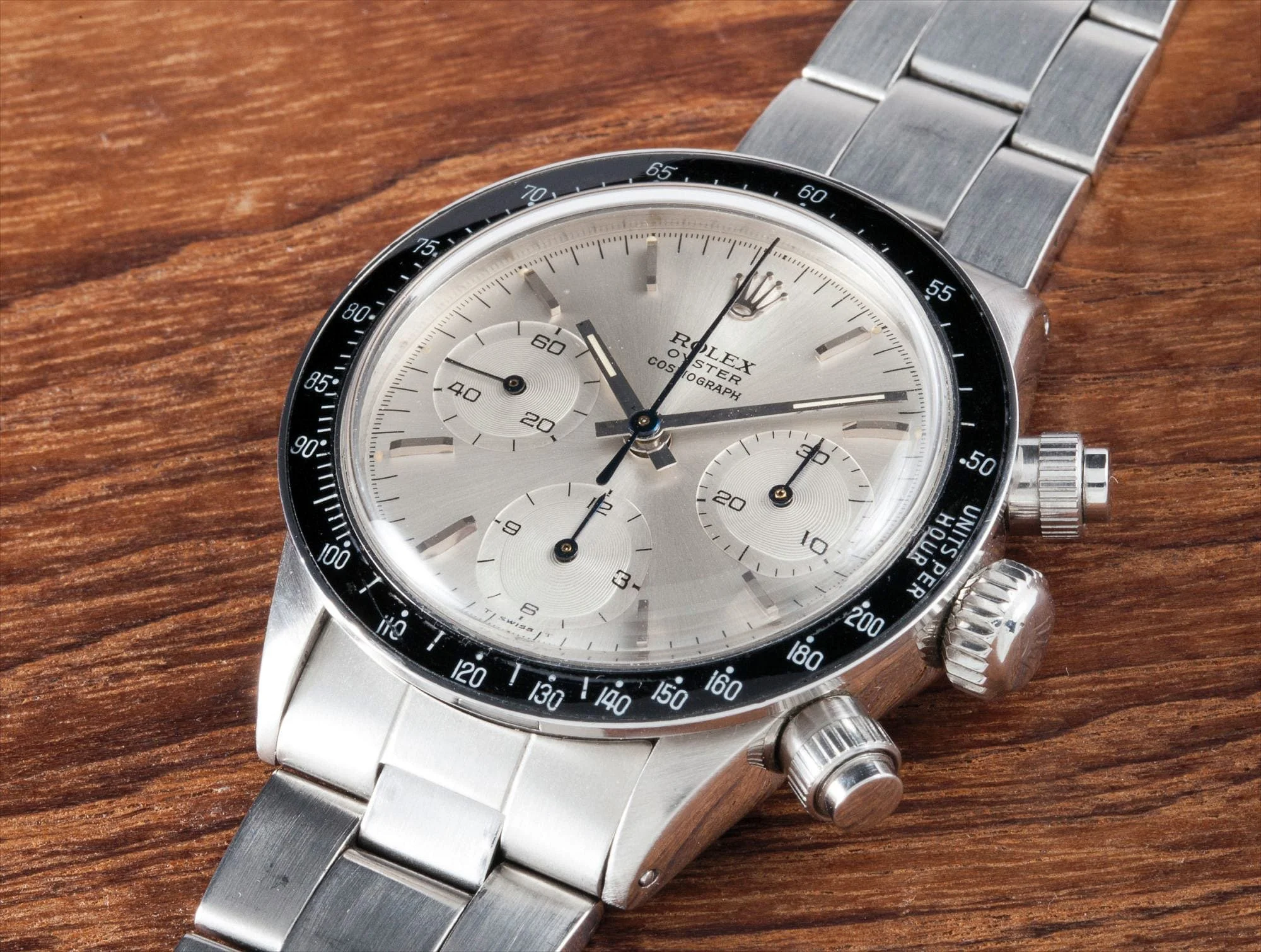
In a remarkable piece of investigative journalism published at Perezcope, Jose Pereztroika has revealed what serious students of vintage Rolex have long suspected: these ‘Albino’ Rolex Daytonas are Frankenstein watches, created by transplanting ref. 6238 Pre-Daytona service dials into ref. 6263 cases. While Perezcope worked closely with Tom Bolt during research for the Rolex Sea-Dweller Chronicles, he earned the legendary dealer's trust.
In an extraordinary display of transparency, Bolt acknowledged that he created the first example in the late 1990s, sourcing the dial from a ref. 6238, which was purchased from a South American collector. The dial, marked "Rolex Oyster Cosmograph" but lacking the typical 6238 tachymeter bezel, seemed destined for a millerighe screw-down pusher Rolex Daytona. His watchmaker completed the transformation, even transferring the blued 6238 hands when the standard Daytona hands wouldn't fit properly due to differences in subdial depth. While the watch was stunning, it was also fundamentally not what it appeared to be.
The Forensic Evidence
Jose Pereztroika's exhaustive forensic investigation at Perezcope reveals the fiction in meticulous detail. His technical analysis demonstrates that period-correct ref. 6263 subdial hands from the early 1970s are considerably wider and straight, not the thin, tapered examples found on all known ‘Albino’ pieces. These vintage hands—whether from the ref. 6238 or very early black-dial Daytonas with silver subdials had been discontinued years before the 6263 was introduced in 1969. The case number 2,648,447 on the Sotheby's example offered at the Precision & Brilliance Auction Lot. 340—sold December 5, 2025—dates it to 1971, yet it wears hands that shouldn't have existed in Rolex's parts inventory at that time.
Pereztroika's forensic eye catches what others missed. The millerighe screw-down pushers on the Sotheby's watch, showing brass beneath worn plating, are period-incorrect for that case number. They belong to the ref. 6240 or very early 6263 production, not to a 1971 case. Even more revealing, his analysis of photographs from the book Fero–150 Steel Chronographs shows the subdial hands sitting unnaturally high above the dial's recesses, suggesting modification to clear the slopes—precisely the problem Bolt's watchmaker encountered with the first example.
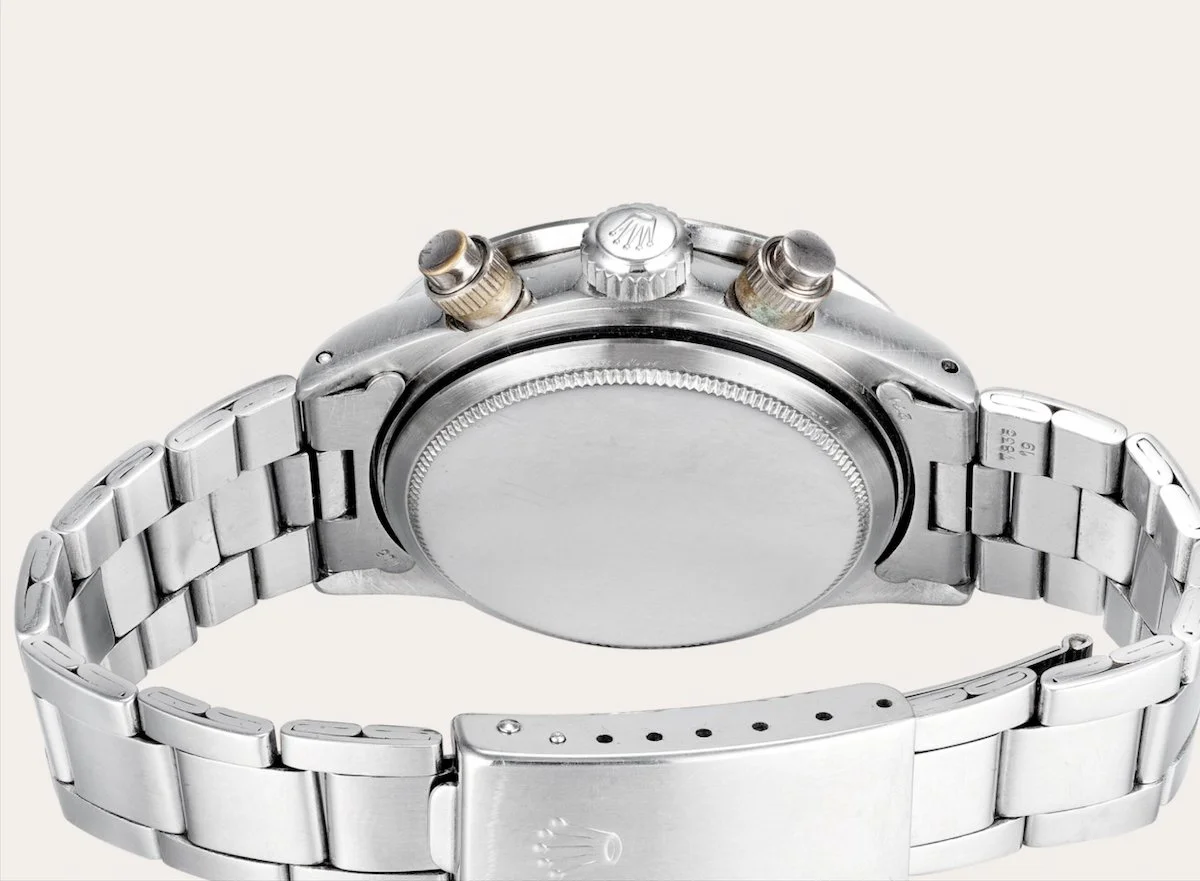
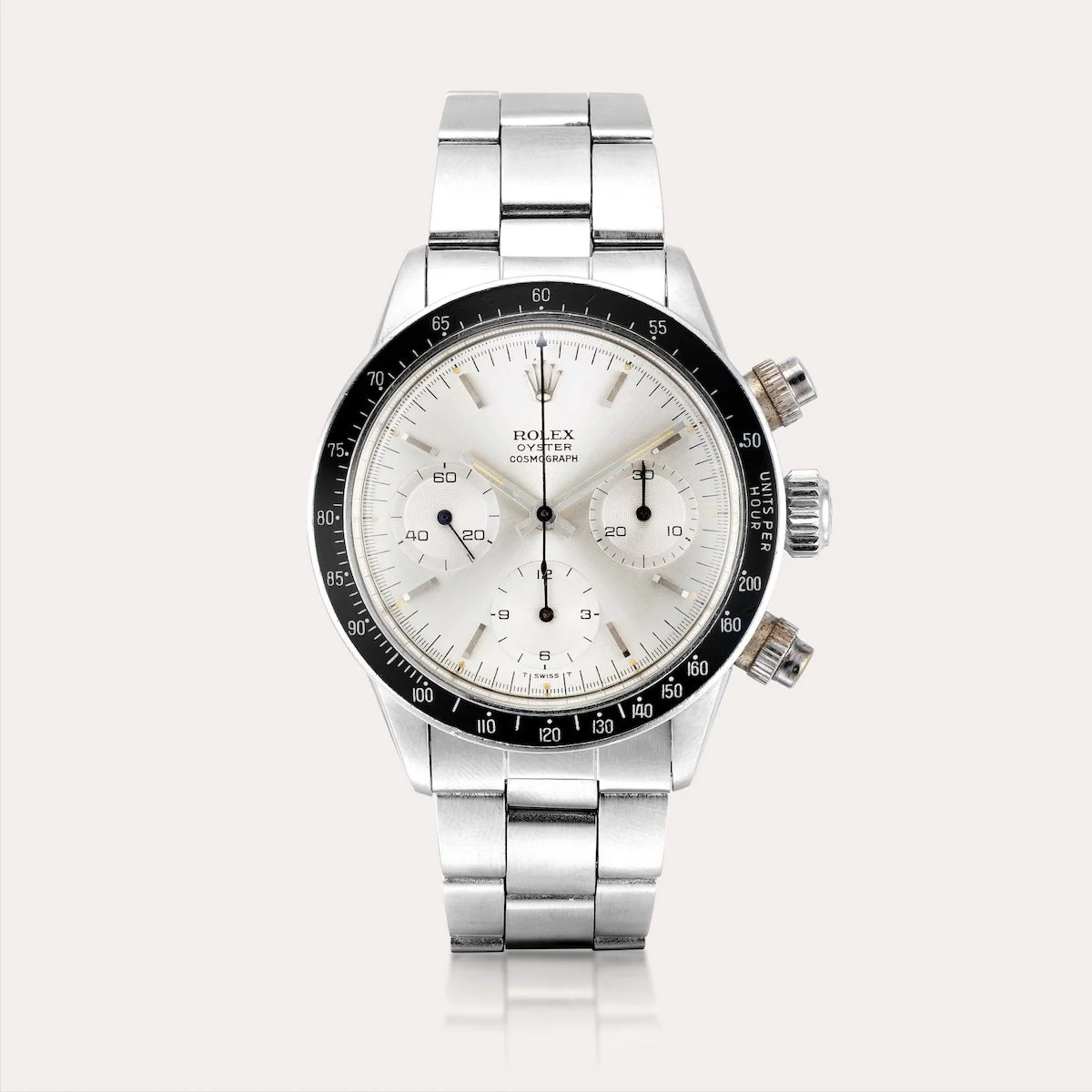
Through Pereztroika's investigative reporting, British dealer Kamal Choraria came forward with explosive information: his firm purchased a ref. 6238 with an ‘Albino’ dial, around 2012, from an Italian owner who sent his watch to Rolex for service with a damaged silver dial and received it back with a monochromatic replacement. They later sold that dial separately to a Roman dealer, who installed it in the very watch offered at Sotheby's Abu Dhabi. Perezcope's meticulous documentation has made the trail from service dial to transplanted rarity undeniably clear.
The Market's Response and a Dealer's Double Game
The watch was estimated to be worth USD 500,000 to USD 1,000,000. This watch hammered at USD 750,000 for a total of USD 952,500 including buyer’s premium. A substantial amount, but far below the 3 million dollars the previous owner reportedly paid, and dramatically less than the trajectory established by Clapton's example. Kamal Choraria, the successful bidder acting as a middleman for a major collector, appears to have engaged in what can only be described as market manipulation.
Perestroika's investigation uncovered the cynical strategy at work. Before the auction, Choraria shared forensic articles questioning the watch's originality—including Pereztroika's own exposé—on his Instagram, effectively suppressing competitive bidding. His own blog had declared months earlier that the ‘Albino’ dial wasn't initially designed for the Daytona ref. 6263 at all. It was actually a service dial intended for the Rolex Chronograph ref. 6238."
Yet immediately after securing the watch for under USD 1 million—having prepared to bid up to $3.5 million according to his own admission to Pereztroika—Choraria reversed his position entirely. The dials, he now claims, were always meant for the ref. 6263 as part of a shelved Rolex project. This stunning about-face reveals the cynical calculation at work: use controversy to suppress the price, then reconstruct the narrative to protect the investment. Instagram posts about buying a ‘USD 4 million watch for just under USD 1 million’ because of ‘all the drama involved’ only underscore the strategy.
As Perestroika documented, Choraria even thanked him via text message: “You actually did me a huge favour with that post. No one bid on it as you scared the shit out of everyone. And I got it for nothing.”
I am sorry, but this isn't watch collecting anymore. This is speculative manipulation dressed in the language of connoisseurship.
What This Means for Serious Collectors
Here's what troubles me the most: not that dealer swaps and dial changes occurred in the 1990s—they were standard practice then—but that the vintage watch market allowed mythology to override scrutiny. We have allowed rarity to excuse inconsistency. We permitted provenance to silence technical questions. Eric Clapton's ownership became a talisman that protected the watch from the very analysis that would have revealed its hybrid origins.
Tom Bolt deserves credit for his transparency, and Jose Pereztroika deserves recognition for the investigative journalism that brought this story to light. In an era when the vintage watch business desperately needs cleaning up, Bolt's willingness to acknowledge his role in creating the first "Albino" is genuinely courageous. It's also profoundly necessary. If watches are to reach the valuations of fine art and classic automobiles, as auction houses constantly promise, the market must embrace the standards that govern those fields: rigorous scholarship, full disclosure, and zero tolerance for misrepresentation.
The critical requirement is disclosure. These are not factory-original Rolex watches. They are sophisticated assemblies created using period service dials that were never intended for screw-down pusher cases. Collectors purchasing them should understand precisely what they're acquiring: historically interesting hybrids that occupy a gray zone between legitimate service replacements and modern franken-watches.
The Larger Questions to be Answered
How can the watch auction industry continue to operate with these valuations when the foundation remains unstable? When auction houses fail to update lot descriptions even after receiving definitive information about a watch's origins? When dealers manipulate narratives to serve their commercial interests? When collectors prioritize rarity over authenticity?
We can demand better from vintage watch dealers, from auction houses, from ourselves. We can insist that rarity doesn't excuse fraud, that provenance doesn't override physics, that even the most romantic stories must yield to evidence.
This isn't about being petty or trying to destroy the magic of watch collecting. It's about building a market worthy of the extraordinary mechanical achievements we celebrate. The watches themselves, the genuine pieces that emerge from Geneva, Glashütte, and Le Brassus, are magnificent enough without embellishment. They don't need fictional origin stories to justify their value.
Investigative journalism like Pereztroika's work at Perezcope—combining forensic analysis, dealer testimony, and documentary evidence—represents the standard our community should embrace. His willingness to challenge accepted narratives, even when they involve million-dollar watches and influential market players, demonstrates the kind of intellectual courage that strengthens rather than weakens our passion.
And just like I call a spade a spade when it comes to modern watches, I will continue to publish editorials like this one, shedding light on the realities of some of these vintage record-breaking watches sold at auction. The watch industry doesn’t need any more smoke and mirrors; it needs true clarity and transparency.
The Original Editorial from Perezcope is here.
Note: Images ©Sotheby’s and Phillips