Artisans de Genève is an independent company specializing in the personalization of timepieces. Artisans de Genève is not affiliated with Rolex SA nor authorized by them to intervene in their products for any reason whatsoever. Artisans de Genève is a watchmaking workshop based in Geneva, Switzerland, offering an exclusive service of watch modification for private customers. Their modifications are made exclusively upon request in a very limited capacity, in their workshops in Switzerland, by independent and highly skilled craftsmen. Artisans de Genève is an independent workshop, and that independence is a testament to quality and creativity.
When starting a personalization, each project holds unique stories, and reminiscences engraved in a timepiece.
About the Project
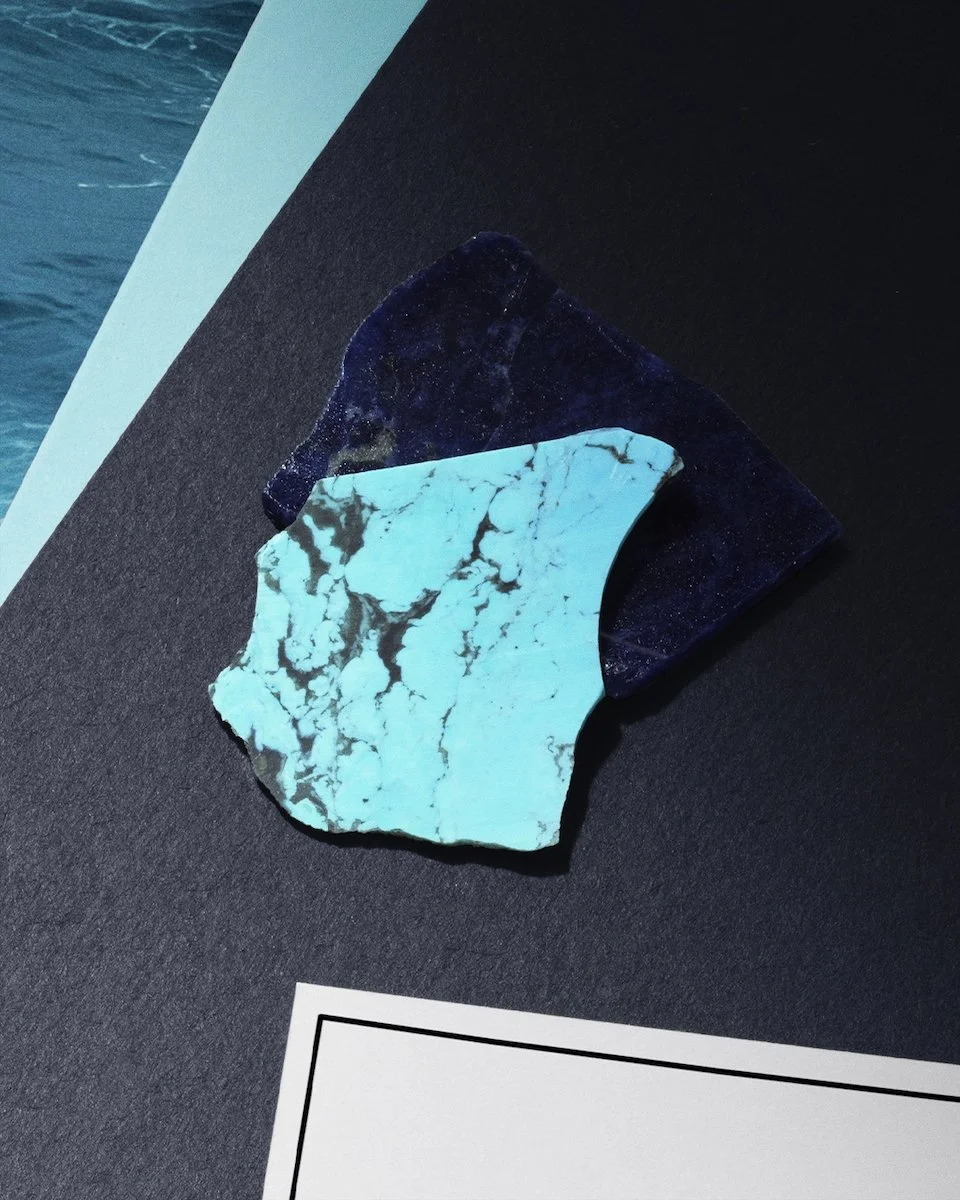
Their latest project, the ‘Spider Challenge,’ commissioned by a client identified only as Mr. S.C.L., is among the more compelling executions we've seen from the atelier: a Rolex Cosmograph Daytona ref. 116520 rebuilt around a dial carved from Spiderweb Turquoise sourced directly from Arizona's Kingman mine.
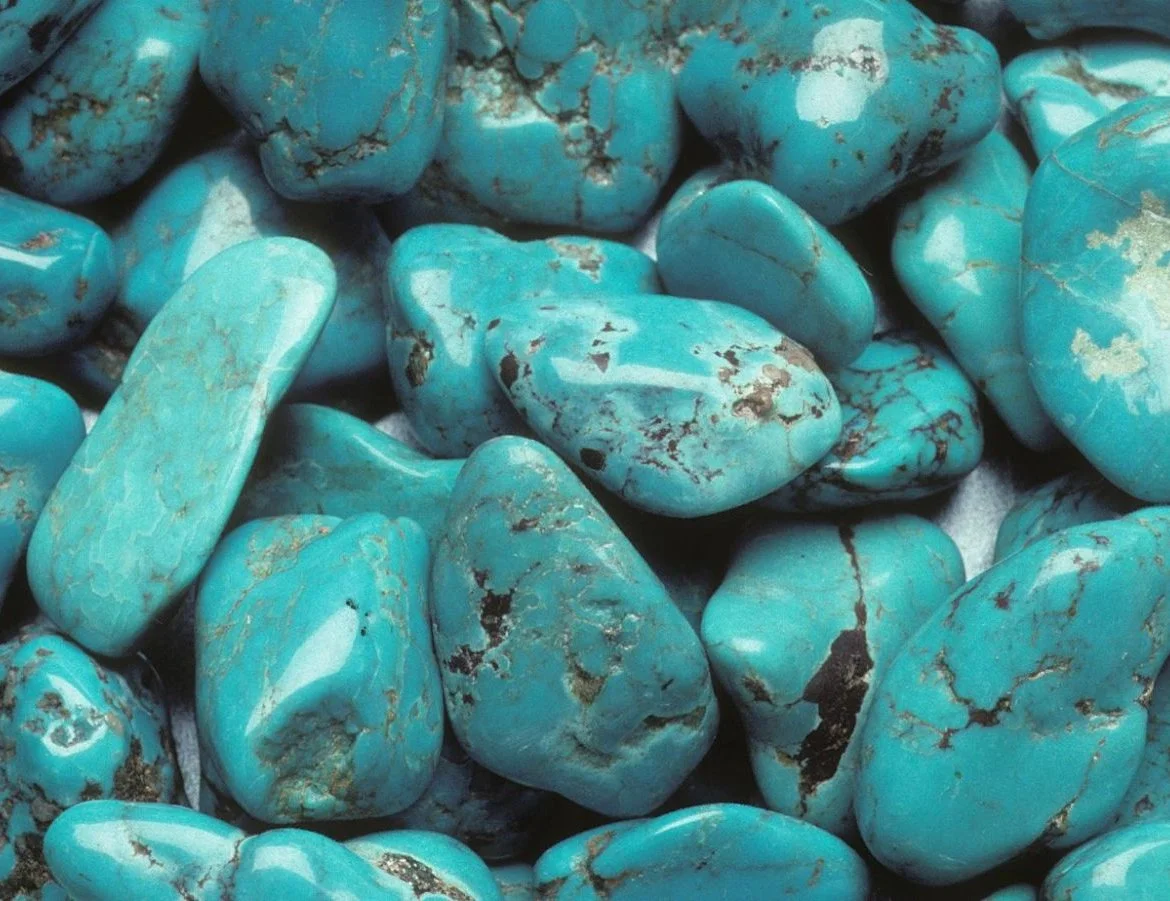
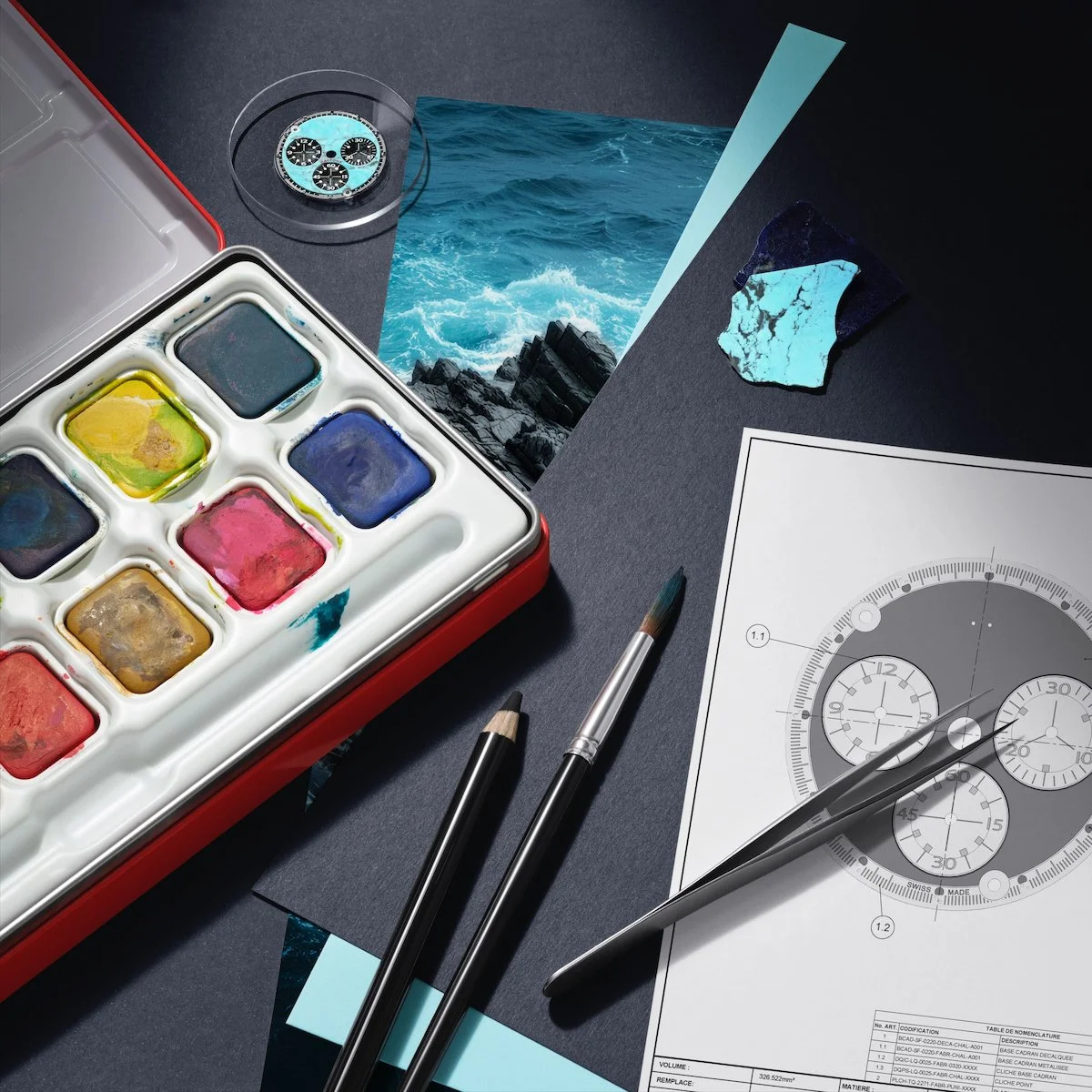
The sourcing story matters here. The team travelled to Arizona specifically for this commission, extracting a roughly 4 kg block from the Kingman mine—one of the most historically significant turquoise sources in the American Southwest. From that mass, the artisans selected only the section where the pattern was most harmonious and the colour most saturated.

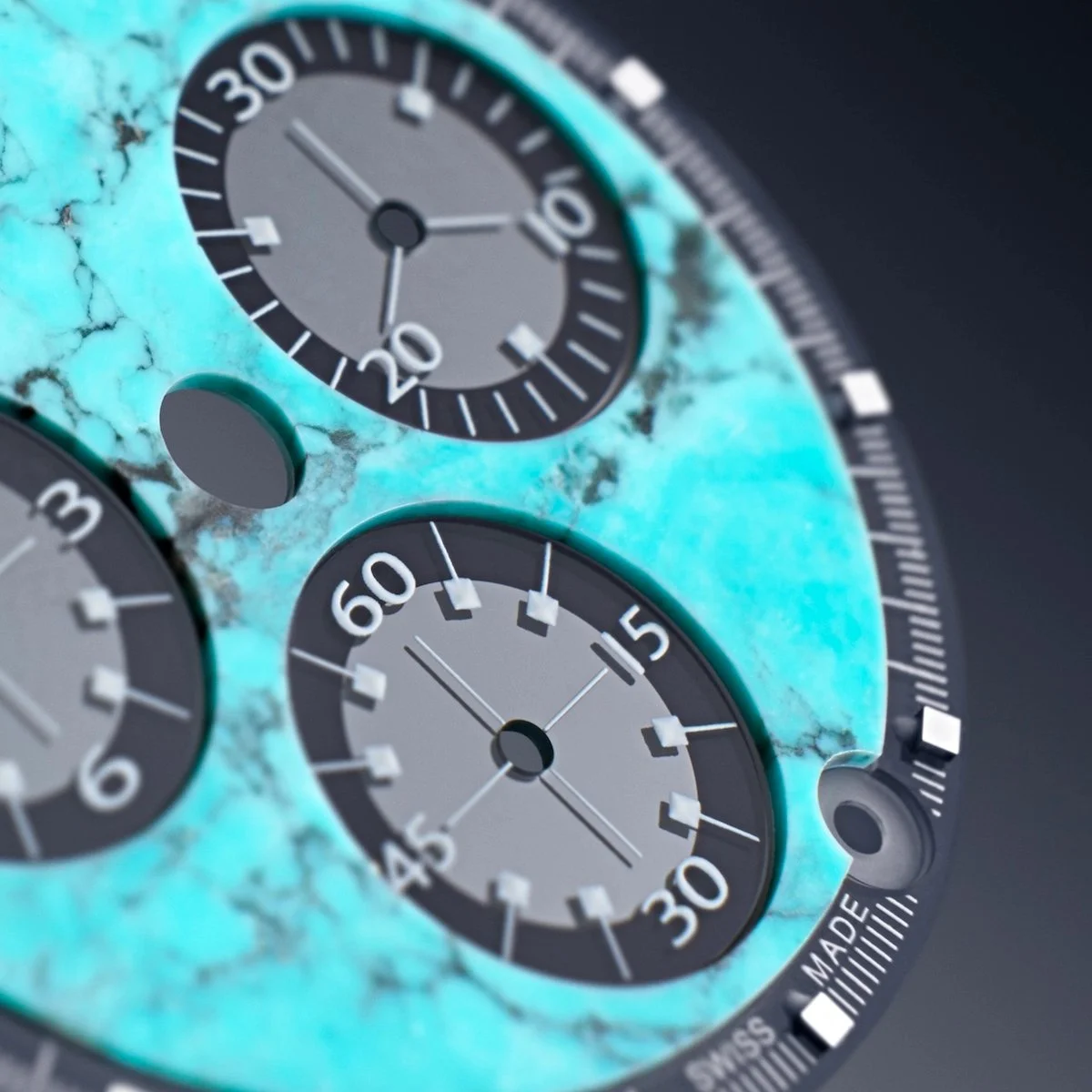
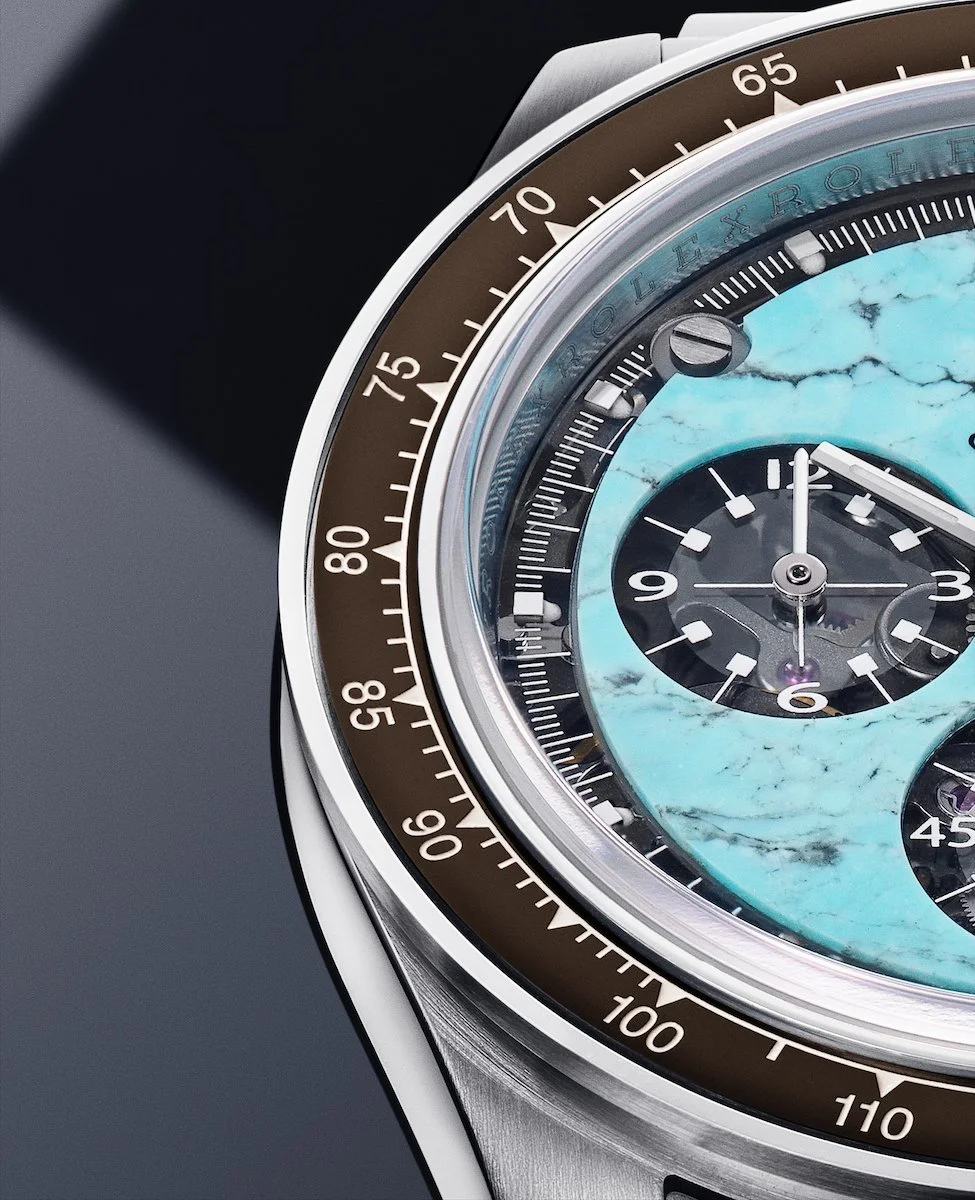
What makes this project interesting from a collecting perspective is less the concept of a turquoise Daytona dial—stone dials on Daytonas are not new territory, and Rolex itself has explored the material in precious-metal configurations—and more the way Artisans de Genève has approached its execution. The turquoise used here is not the clean, uniform blue you typically see in factory stone dials. Spiderweb Turquoise is defined by its dark limonite matrix, a network of fine veins that runs through the stone in irregular, web-like patterns. Every piece is different. That means this dial could never be replicated, even if you returned to the same block of material.
The finished dial plate measures just 0.5 mm thick, a dimension at which Spiderweb Turquoise becomes genuinely fragile. The stone can fracture along its own vein pattern at that thinness, meaning the cutting and finishing process demanded extraordinary care from the dial-maker.
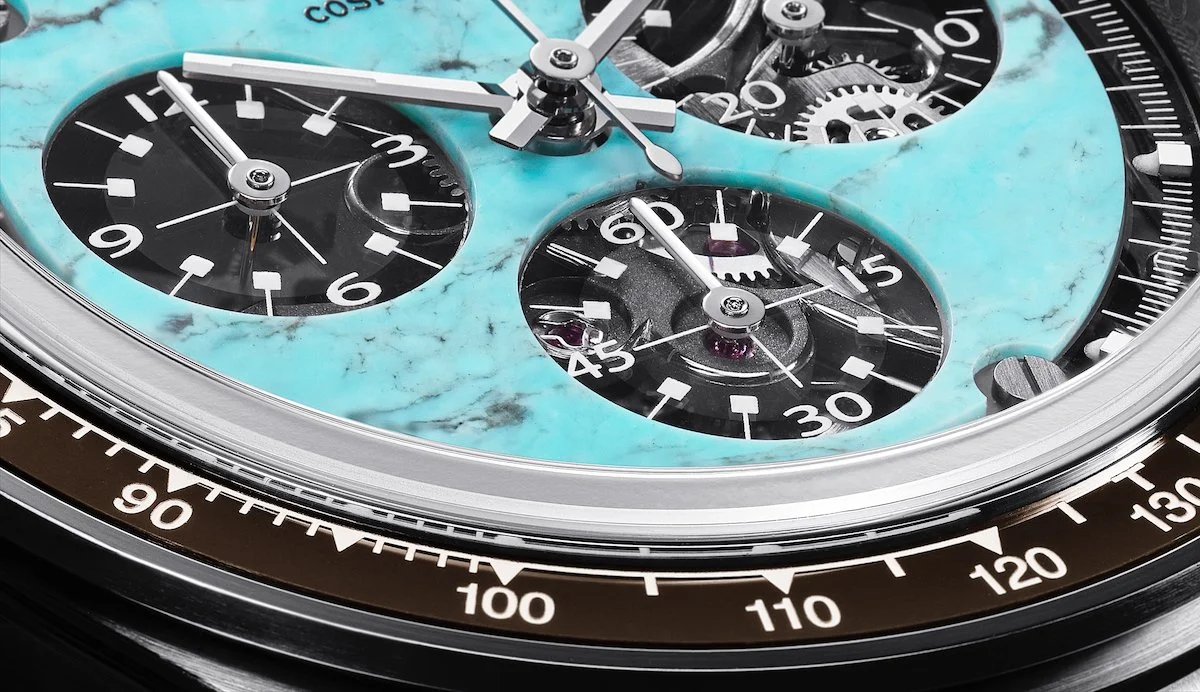
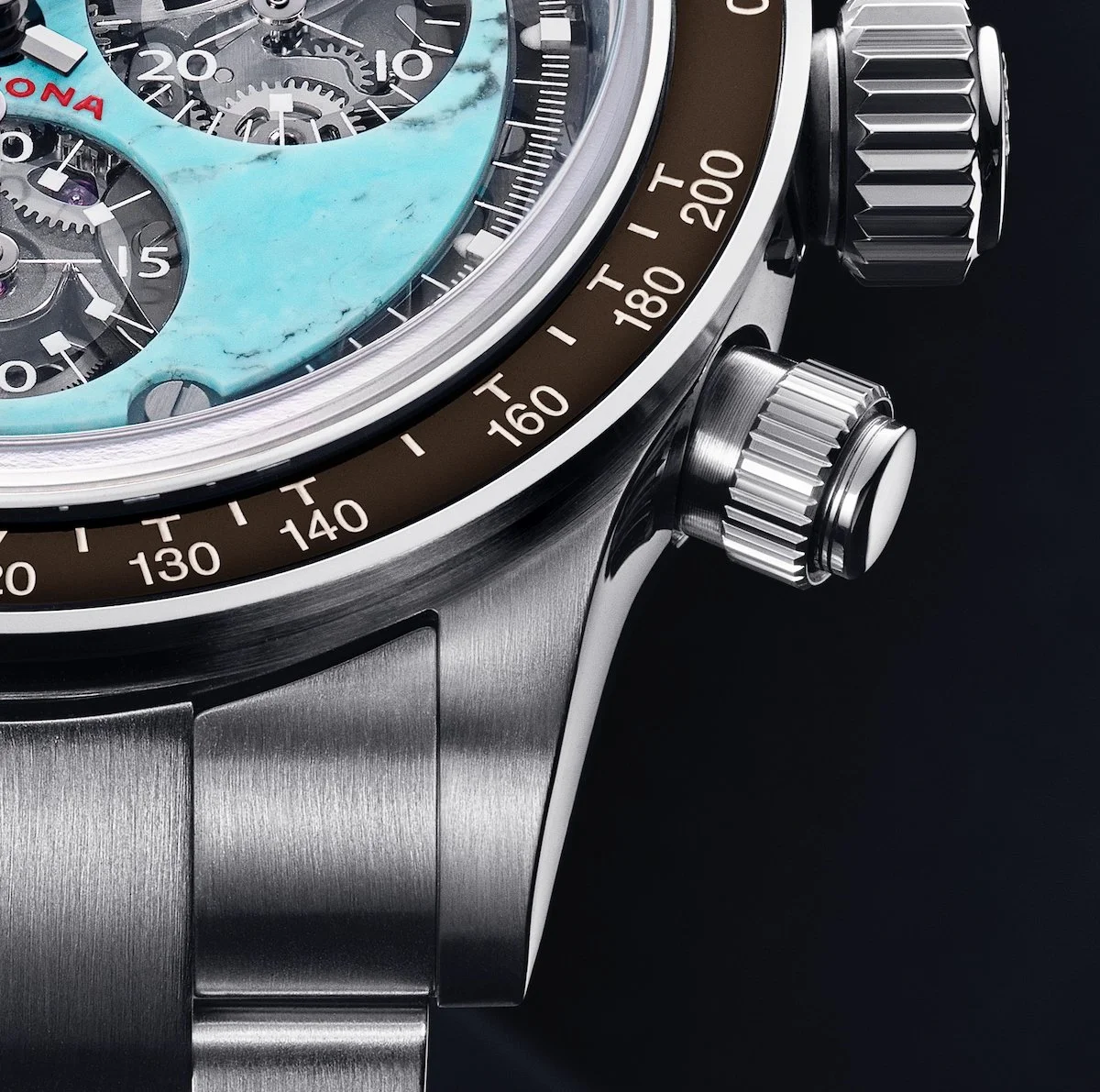
The turquoise plate sits on a sapphire dial base, and this is where the piece gets visually interesting beyond the surface material. The transparency of the sapphire allows light to pass through and around the stone, with the pattern shifting depending on the viewing angle and illumination. Through the three chronograph sub-dial apertures, the skeletonised movement is visible beneath. It's a layered composition—turquoise over sapphire over mechanism—that creates genuine depth on the wrist in a way that a solid dial simply cannot.
Personalization of the Case
On the exterior, the most immediately visible modification beyond the dial is the bezel. The original steel tachymetre bezel has been replaced with a deep brown ceramic insert. The colour choice is deliberate: brown echoes the limonite veins running through the turquoise, creating a chromatic link between the bezel and the dial material. The tachymetre markings are retained, with "TACHYMETRE" rendered in red—another nod to the Daytona's identity even as the watch departs from it.
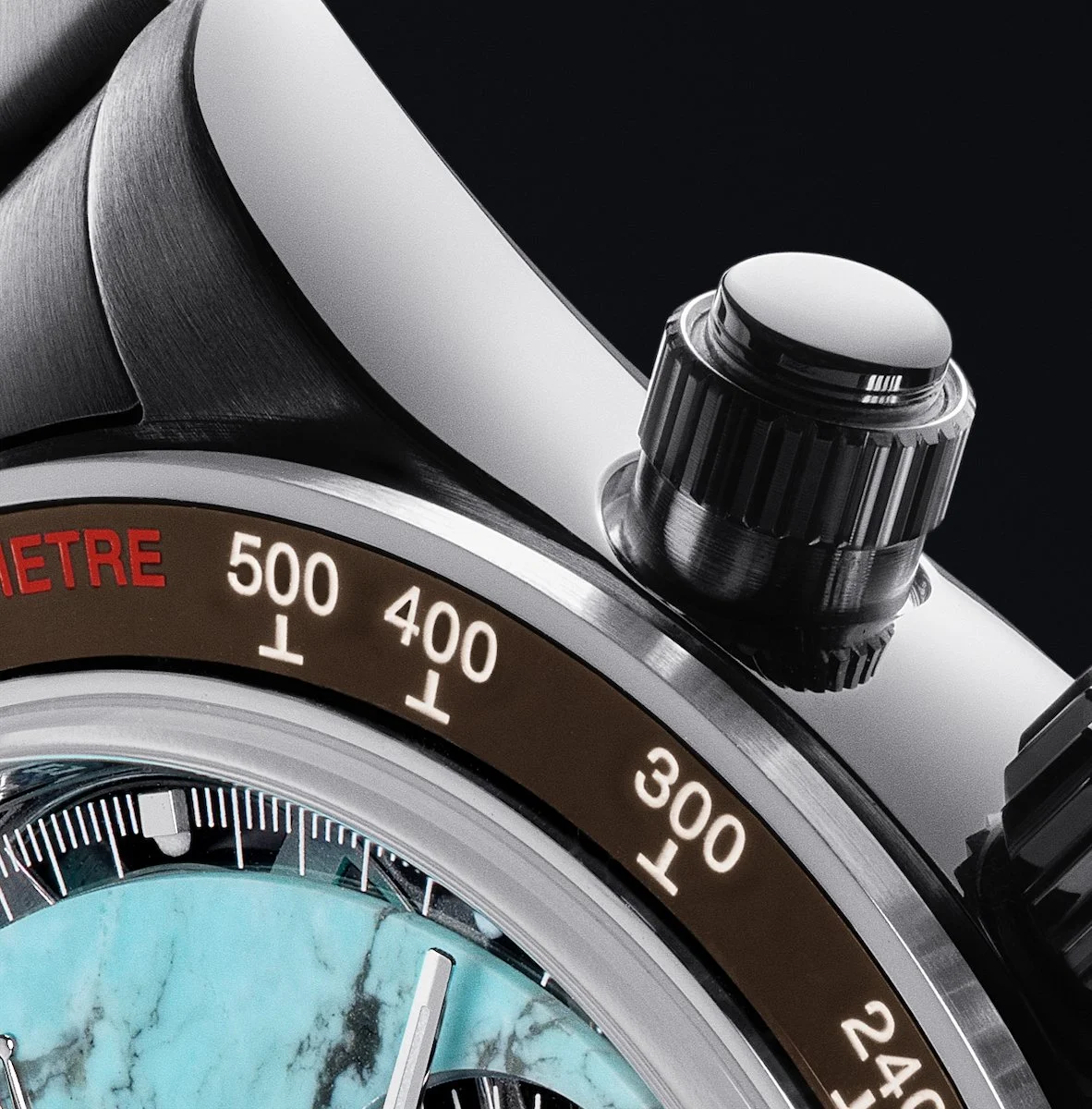
The case itself has been refined, most notably by removing the crown guards. This is a modification Artisans de Genève has executed on previous Daytona projects, and it gives the case profile a cleaner, more vintage-inflected silhouette that recalls the pre-ref. 16520 era. The pushers are polished steel. The hands are rhodium with white paint and SuperLuminova GL C1, featuring stamped and angled heads—a small finishing detail that elevates them beyond the standard Daytona hand set. The bracelet is the client's original Oyster bracelet, left unmodified.
Modifications to the Movement
Beneath the stone, the Rolex Calibre 4130 has been skeletonized in what Artisans de Genève describes as a "neon-style" architecture. The bridges and plates are finished in matte anthracite, giving the visible movement a dark, contemporary tone that contrasts sharply with the vivid turquoise above. The balance bridge is a signature Artisans de Genève element: cut from a block of hardened steel, hand-bevelled, and finished with black polish. The wheels are nickel palladium. Viewed through the sub-dials or through the display caseback, the movement reads as deliberately industrial—the kind of aesthetic language you'd associate with independent watchmaking rather than a Rolex calibre.
The case back is also worth noting. The rotor is custom-made in tungsten and bears an X logo executed in grand feu enamel, a small but technically non-trivial detail that adds a signature flourish visible only to the owner. The case back engraving reads "Artisans de Genève" and includes the client's initials.

Summary & Price
For a collector drawn to the idea of a truly singular Daytona—one whose dial is shaped by geology rather than industrial production—the Spider Challenge makes a persuasive case. The turquoise will never look quite the same as any other piece of turquoise, and the combination of materials and finishing techniques employed here puts this firmly in the territory of applied art rather than accessory modification.
Sticker Price CHF 39,520—approx. USD 49,500. The price of the service does not include the watch
and varies based on the level of personalization required. The watch has to be supplied by the owner for personalization. The project was commissioned privately and does not constitute a commercial offer. For more info on Artisans de Genève, click here.